
Sign up to save your podcasts
Or

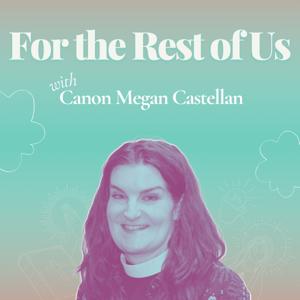


In this episode of For the Rest of Us, Canon Megan and Adam take a good, hard look at one of the most complicated and misunderstood figures of the New Testament: Saint Paul.
Paul is often remembered as the author of verses that have been used to prop up conservative Christianity—“wives obey your husbands,” “slaves obey your masters,” and “women be silent in church.” But who was Paul really? What did he actually write? And how did his letters go from problem-solving notes to scripture that shaped entire traditions?
Megan and Adam explore:
Along the way, they talk about Willem Dafoe as Jesus (and the Green Goblin), diner coffee, carnivorous seals, and why it helps our faith to remember that Paul was human—zealous, flawed, inconsistent, and yet deeply convinced of God’s overwhelming love.
This episode, Canon Megan and Adam tackle a topic that’s equal parts fascinating and misunderstood: exorcisms.
From the ministry of Jesus to modern-day Episcopal practice, they explore where exorcisms come from, what they mean, and—maybe most importantly—what they are not. Along the way, they unpack cultural perspectives, biblical roots, and the ways ritual and truth-telling can be part of real healing.
But don’t worry—this isn’t Hollywood horror. Megan and Adam keep the conversation grounded, thoughtful, and full of insights about how the Church approaches healing in body, mind, and spirit.
What You’ll Walk Away With:
If you’ve ever wondered what exorcisms look like beyond the movie screen—or how they actually fit into Anglican life and theology—this episode is for you.
Links Mentioned This Episode:
Lent Madness: https://www.lentmadness.org/
DIO CNY Podcast Network: https://cnyepiscopal.org/dio-cny-podcasts/
This time, Canon Megan leads the way as she and Adam dive into the remarkable life of Maria Skobtsova—a Russian Orthodox nun, poet, and activist who lived out her theology in radical and courageous ways during the occupation of Paris.
From her early years as an atheist and artist to her transformation into a fierce advocate for the marginalized, Maria’s story challenges us to ask: What does it really mean to live a Christian life? Megan and Adam reflect on how Maria’s life—marked by service, suffering, and ultimately martyrdom—calls today’s Christians to respond to injustice with action, compassion, and faith.
If you’ve ever wondered what radical Christian love looks like in practice—or how ordinary faith can lead to extraordinary courage—this episode is for you.
AI Disclosure: To support our staff in their limited time, many of our episode summaries are first generated by AI and then edited by the Communications Director to accurately reflect and preview our podcast episodes.
This episode, Canon Megan and Adam tackle a big, thorny question: Can there ever be such a thing as a “just” war?
They dig into the history of Just War Theory, how it emerged from Christian thought, and what it says about ethics, responsibility, and the real human cost of conflict. From ancient philosophy to the realities of modern military technology, this episode explores how faith and morality intersect with some of the hardest choices nations and individuals ever face.
It’s a thoughtful, honest look at a tough topic—and a reminder that even in the fog of war, theology and ethics still matter.
Whether you’re a history buff, a person of faith, or just wondering how Christians think about violence and peace, this episode will give you tools to wrestle with the questions that don’t have easy answers.
AI Disclosure: To support our staff in their limited time, many of our episode summaries are first generated by AI and then edited by the Communications Director to accurately reflect and preview our podcast episodes.
This episode, Canon Megan and Adam get into the movement of worship—literally. From crossing yourself to bowing to sharing the peace, they explore all the little physical gestures you see (and maybe wonder about) during Episcopal services.
They break down where these traditions come from, what they mean, and why they matter—not as rigid rules, but as opportunities for personal expression, reverence, and connection to God.
Whether you’re someone who’s never made the sign of the cross or you’ve been doing it since you were in the nursery, this is a great reminder that our bodies can be part of our prayer—and that how we worship is just as personal as why.
AI Disclosure: To support our staff in their limited time, many of our episode summaries are first generated by AI and then edited by the Communications Director to accurately reflect and preview our podcast episodes.
Canon Megan and Adam are back for round two of one of the hardest questions in the Christian life: Why do bad things happen to good people? This time, they turn to the Book of Job—not for easy answers, but for real, pastoral wisdom.
Together, they unpack what Job’s story teaches us about presence, suffering, and what not to say when someone’s in pain. They reflect on how faith doesn’t always mean fixing—it can mean sitting in the ashes with someone and refusing to look away.
Along the way, they talk about finding joy in the midst of grief, how suffering can be transformative, and why being with someone is more powerful than explaining their pain away.
What You’ll Walk Away With:
This episode is for anyone who’s ever felt helpless in the face of someone else’s pain—or carried grief themselves and wondered where God might be in it.
AI Disclosure: To support our staff in their limited time, many of our episode summaries are first generated by AI and then edited by the Communications Director to accurately reflect and preview our podcast episodes.
This episode, Canon Megan leads the charge into one of the oldest and hardest questions out there: If God is good, why do bad things happen to good people? Adam’s along for the ride as they unpack what philosophy, theology, and real life have to say about suffering.
They explore different ways Christians have tried to make sense of evil, from the ancient to the modern—and why those answers often feel deeply unsatisfying when you're the one hurting.
Instead of offering a tidy solution, this episode leans into the mystery, highlighting how presence, empathy, and compassion matter more than perfect logic. It’s not about having the right answer—it’s about showing up with love.
What You’ll Walk Away With:
If you’ve ever struggled to find meaning in the midst of pain—or tried to comfort someone who’s suffering—this episode offers grace, honesty, and a space to breathe.
AI Disclosure: To support our staff in their limited time, many of our episode summaries are first generated by AI and then edited by the Communications Director to accurately reflect and preview our podcast episodes.
In this episode, Canon Megan and Adam take on one of the trickiest theological questions out there: What does it really mean to say that God is sovereign?
They dive into the influence of Arthur Pink’s writing and it's influence modern Reformed theology, the challenges of hyper-Calvinism, and how different traditions—including Episcopalians (and Anglicanism) —understand God’s power, justice, and love. Spoiler: not everyone sees God as a puppet master pulling every string.
Instead, Megan and Adam offer a vision of a God who chooses relationship over control—and who gives us freedom not in spite of divine sovereignty, but because of it.
What You’ll Walk Away With:
If you’ve ever wondered how to make sense of God’s will, human freedom, or whether everything really “happens for a reason”—this episode is for you.
AI Disclosure: To support our staff in their limited time, many of our episode summaries are first generated by AI and then edited by the Communications Director to accurately reflect and preview our podcast episodes.
(aka There's Something About… well, you get it)
Canon Megan and Adam take on one of the most iconic—and sometimes misunderstood—figures in Christianity: the Virgin Mary.
They explore how Mary has been seen over the centuries, from quiet mother to bold revolutionary. Whether it’s the Magnificat turning the world upside down, or the many cultural depictions of Mary through time, this conversation invites us to look beyond the stereotypes and see Mary’s real, radical significance.
She’s not just a symbol—she’s a person. And for many of us, she’s one of the most relatable, powerful figures in the whole story of the Christian faith.
What You’ll Walk Away With:
If you’ve ever wondered what to make of Mary—or just want a deeper, more thoughtful take on her story—this one is for you.
AI Disclosure: To support our staff in their limited time, many of our episode summaries are first generated by AI and then edited by the Communications Director to accurately reflect and preview our podcast episodes.
In this episode, Canon Megan and Adam shine a spotlight on someone you really ought to know—Frances Perkins. She was the first woman to serve in a U.S. presidential cabinet, a driving force behind the New Deal, and an Episcopalian whose faith shaped her fierce commitment to justice.
They dig into her early life, her time as a labor activist, and how a moment in a New York church changed everything. Frances wasn’t just a policymaker—she was a public servant on a mission, grounded in the belief that faith should mean something for real people in real need.
If you've ever wondered what holiness looks like in politics, Frances Perkins is a pretty great place to start.
---
What You’ll Walk Away With:
Frances Perkins was the first woman in the U.S. cabinet—Secretary of Labor under FDR.
Her work helped create the social safety net we still rely on today, including Social Security and the 40-hour work week.
She was deeply influenced by the Episcopal Church and saw her work as a calling.
A tragic fire in New York City helped shape her lifelong commitment to workers' rights.
Perkins believed that public policy could—and should—be an expression of compassion and justice.
She wasn’t always welcomed with open arms, but she stayed the course.
Her legacy lives on in labor protections, social welfare programs, and the fight for women’s rights.
Frances reminds us that sainthood doesn’t always look like a halo—it can look like a woman in a sensible suit, getting things done.
If you’ve ever wondered whether you’re inherently bad (you’re not), or just want a clearer understanding of why Christians talk about original sin at all—this is a great place to start.
AI Disclosure: To support our staff in their limited time, many of our episode summaries are first generated by AI and then edited by the Communications Director to accurately reflect and preview our podcast episodes.
From the publisher's feed

90,560 Listeners

171,939 Listeners

57,657 Listeners

109 Listeners

102 Listeners
17 Listeners
7 Listeners