
Sign up to save your podcasts
Or



Summary
In this episode, Canon Megan and Adam explore the approach Episcopalians take towards the Bible. They discuss the importance of context in scripture interpretation, the role of community in understanding biblical texts, and the significance of reading the Bible together. The conversation emphasizes that the Bible is a complex and multifaceted text that should be engaged with critically and thoughtfully, recognizing its historical context and the diverse experiences of its readers. They also provide insights on choosing the right Bible translation and encourage listeners to embrace the Bible as a resource for everyone, regardless of their faith background.
Takeaways
-Episcopalians approach the Bible with seriousness and context.
-The Bible was historically written by the dispossessed, not the powerful.
-Reading scripture in community enriches understanding.
-Context is crucial for interpreting biblical texts accurately.
-The Bible is a living document that reveals new insights over time.
-Choosing the right translation is important for personal study.
-The Bible should be accessible to everyone, not just the clergy.
-Engaging with the Bible can lead to personal and communal growth.
-Understanding scripture requires recognizing diverse perspectives.
-The Bible's complexity invites ongoing exploration and discussion.
Chapters
00:00 Introduction to the Bible and Episcopalian Approach
03:11 Understanding Scripture: Context and Interpretation
06:04 The Role of Community in Biblical Understanding
09:04 The Bible's Historical Context and Its Implications
12:10 Interpreting the Bible: The Importance of Perspective
15:07 Choosing the Right Bible Translation
17:46 Engaging with the Bible: Personal and Communal Practices
21:05 Final Thoughts and Recommendations
AI Disclosure: To support our staff in their limited time, many of our episode summaries are first generated by AI and then edited by the Communications Director to accurately reflect and preview our podcast episodes.
Summary
In this episode, Canon Megan and Adam delve into the significance of the Eucharist within the Episcopal Church and its broader Christian context. They explore the definition of sacraments, the historical evolution of the Eucharist, and various theological perspectives, including those from the Reformation. The discussion emphasizes the importance of the Eucharist as a foundational ritual in Christianity, its role in worship, and the diverse interpretations that have emerged over time. In this conversation, Adam Eichelberger and Megan Castellan explore the significance of the Eucharist within the Episcopal Church, discussing the presence of Jesus in the sacrament, the importance of personal piety, and the structure of the Eucharistic prayer. They delve into the concepts of substance and form, the historical context of the Donatist heresy, and the role of the community in worship, emphasizing that the Eucharist is a shared experience meant for all believers.
Takeaways
-The Eucharist is a central sacrament in Christianity.
-Sacraments are outward signs of inward grace.
-God's presence is experienced in the Eucharist.
-The Eucharist has historical roots in early Christian gatherings.
-Theological explanations of the Eucharist have evolved over time.
-Reformers challenged traditional views on the Eucharist.
-The act of communion involves the participation of the community and that embodies the presence of Christ in the world..
-Different denominations have varying interpretations of the Eucharist.
-The Episcopal Church embraces a blend of theological perspectives.
-Personal piety allows for a spectrum of belief within the church community.
Intent and understanding are crucial in liturgical practices.
-The Donatist heresy highlights the importance of God's grace over human worthiness.
-The church encourages believers to focus on Jesus and his transformative power.
Chapters
00:00 Introduction to the Eucharist
03:10 Understanding Sacraments in the Episcopal Church
06:06 The Role of the Eucharist in Christian Worship
09:04 Historical Context of the Eucharist
11:57 Theological Perspectives on the Eucharist
14:58 Reformation Views on the Eucharist
18:00 Contemporary Understanding of the Eucharist
27:26 The Eucharist: A Connection Across Time and Space
28:18 Understanding the Presence of Jesus in the Eucharist
29:50 The Beauty of Reverence and Relationship in Worship
31:58 Personal Piety and Freedom in Worship
34:53 The Importance of Intent in Liturgical Practices
35:49 Substance and Form: The Essentials of the Eucharist
43:31 The Structure of the Eucharistic Prayer
48:49 The Donatist Heresy: Validity and Worthiness in Sacraments
AI Disclosure: To support our staff in their limited time, many of our episode summaries are first generated by AI and then edited by the Communications Director to accurately reflect and preview our podcast episodes.
Summary
This episode, Canon Megan and Adam explore the concept of sainthood within the Episcopal Church, focusing on the life and legacy of Oscar Romero, an influential figure in the fight for justice in El Salvador. The conversation covers the differences between the Catholic and Episcopal views on saints, the significance of Romero's martyrdom, and the lessons his life offers for contemporary faith practices. Through Romero's story, they highlight the importance of social justice, the church's role in advocating for the oppressed, and the transformative power of faith in action.
Takeaways
-The Episcopal Church has a more flexible approach to sainthood compared to the Catholic Church.
-Oscar Romero was a significant figure in the fight for justice in El Salvador.
-Martyrdom can elevate a person's status to sainthood in the Episcopal Church.
-Romero's sermons emphasized the importance of social justice and economic equality.
-The church must confront injustices and advocate for the oppressed.
-Sainthood is not about perfection but about living a faith that inspires others.
-Romero's life illustrates the connection between faith and social action.
-The Episcopal Church recognizes saints from various Christian traditions.
-Romero's legacy continues to influence contemporary discussions on faith and justice.
-The church's prophetic voice is essential in today's world.
Chapters
00:00 Introduction to Saints in the Episcopal Church
05:00 Oscar Romero: A Saint's Journey
12:36 The Impact of Romero's Martyrdom
22:34 The Episcopal Church's View on Sainthood
28:10 Lessons from Oscar Romero's Life
AI Disclosure: To support our staff in their limited time, many of our episode summaries are first generated by AI and then edited by the Communications Director to accurately reflect and preview our podcast episodes.
Summary
In this episode, Megan and Adam delve into the incarnation, exploring its significance in Christianity, particularly within the Anglican tradition. They discuss the historical context of the incarnation, the theological debates that shaped its understanding, and the various heresies that emerged over time. The conversation emphasizes the implications of the incarnation for human experience, social justice, and the political nature of Jesus' message. The episode concludes with personal reflections on prayer and the importance of engaging with God authentically.
Takeaways
-Every Christian denomination believes in the incarnation, but emphasizes it differently.
-The incarnation means God became human in the person of Jesus.
-The early church spent about a hundred years defining the incarnation.
-The incarnation has massive implications for understanding humanity and divinity.
-Docetism and Arianism are two heresies that emerged in early Christianity.
-The church ultimately decided that Jesus must have fully experienced human suffering and death.
-Nestorianism argues that Jesus was two separate persons, which the church rejected.
-Adoptionism suggests Jesus became divine at his baptism, which is also rejected.
-The incarnation sanctifies the human experience, making it holy.
-Jesus' life and teachings are inherently political and instructive for Christians.
Chapters
00:00 Introduction to the Incarnation
01:07 Understanding the Incarnation in Christianity
02:04 The Historical Context of the Incarnation
05:02 Theological Debates on the Incarnation
10:14 Exploring Heresies: Docetism and Arianism
15:54 Nestorianism and Adoptionism Explained
20:08 The Implications of the Incarnation
23:11 The Political Nature of Jesus' Message
30:07 Conclusion and Personal Reflections on Prayer
AI Disclosure: To support our staff in their limited time, many of our episode summaries are first generated by AI and then edited by the Communications Director to accurately reflect and preview our podcast episodes.
Summary
In this episode, Megan and Adam dive into the Book of Revelation, exploring its often misunderstood themes and the historical context in which it was written. They discuss the misconceptions surrounding the rapture, the true message of hope found within Revelation, and the significance of its coded language as a form of political critique. The conversation emphasizes the relevance of Revelation in today's world, particularly in the face of societal challenges, and encourages listeners to find comfort and purpose in its teachings.
Takeaways
Chapters
00:00 Introduction to Revelation and Its Context
02:53 The Misinterpretation of Revelation and the Rapture
06:05 Historical Context of Revelation and Its Genre
09:01 The Message of Hope in Revelation
11:57 Symbolism and Allegory in Revelation
14:59 The Role of the Lamb in Overcoming the Beast
18:00 Coded Language and Political Critique in Revelation
21:06 Revelation's Relevance Today
23:52 Conclusion and Call to Action
AI Disclosure: To support our staff in their limited time, many of our episode summaries are first generated by AI and then edited by the Communications Director to accurately reflect and preview our podcast episodes.
Summary
In our first episode of 'For the Rest of Us,' Canon Megan Castellan and co-host Adam Eichelberger explore the topic of women's ordination within the Episcopal Church. They discuss the historical and scriptural context surrounding the ordination of women, addressing common misconceptions and the authority of scripture. The conversation highlights the experiences of women in ministry, the role of Mary Magdalene, and the implications of the Immaculate Conception, ultimately affirming the presence and importance of women in the church.
Takeaways
Chapters
00:00 Introduction to the Podcast and Hosts
04:23 Exploring the Ordination of Women
10:18 Scriptural Interpretations and Historical Context
17:00 Authority and the Role of Women in the Church
23:21 Witnessing Women in Ministry
27:39 Mary and the Immaculate Conception
AI Disclosure: To support our staff in their limited time, many of our episode summaries are first generated by AI and then edited by the Communications Director to accurately reflect and preview our podcast episodes.
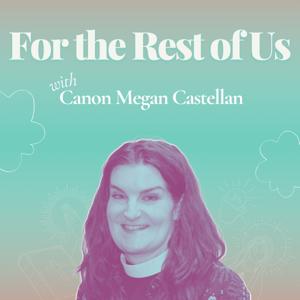
Join Canon Megan Castellan, a priest of the Episcopal Diocese of Central New York, and her co-host, Adam Eichelberger, as she explores theology, the Bible, faith, and life through the lens of the Episcopal tradition. With wit, wisdom, and a down-to-earth approach, this podcast dives into what it means to engage with Christianity in a way that’s open, thoughtful, and accessible. Whether you’re a lifelong Episcopalian or just curious, this is "Christianity for the rest of us."
From the publisher's feed

90,560 Listeners

171,939 Listeners

57,657 Listeners

109 Listeners

102 Listeners

17 Listeners

7 Listeners