
Sign up to save your podcasts
Or

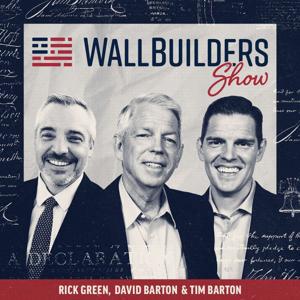

Ever wondered whether America’s promise of religious liberty was designed to be wide open—or tethered to a shared moral code? We tackle a pointed listener question about the founders’ intent and explore why the early American consensus protected the rights of conscience while expecting public behavior to align with Judeo-Christian ethics. That balance—pluralism with guardrails—helped secure inalienable rights under a common rule of law without policing private theology.
We dig into John Adams’s claim that the “general principles of Christianity” united the generation of independence, then look at early state constitutions and their broad theistic oaths for office. The thread is accountability: leaders and citizens who believe they’ll answer to God tend to tell the truth, keep their word, and respect others’ rights. From there, we draw lines around pluralism: a neighbor’s faith is welcome, but practices that infringe on life, liberty, or equal justice are not. It’s the Declaration’s architecture in action—rights from God, government to secure them, law to restrain harm.
Then we pivot to the present with the high-stakes governor’s race in Virginia to show how worldview drives policy—and why short bursts of mobilization aren’t enough. If you’re tired of the one-step-forward, two-steps-back cycle, this conversation lays out a practical playbook: recruit strong candidates early, train year-round teams, shore up election processes, and cultivate civic discipleship that restores moral clarity on issues culture calls “political.” Small, steady work between election days is how communities build durable freedom.
If this resonates, share the episode with a friend. Your voice helps shape a freer, wiser public square.
Support the show
 View all episodes
 By Tim Barton, David Barton & Rick Green

4.8
21152,115 ratings
Ever wondered whether America’s promise of religious liberty was designed to be wide open—or tethered to a shared moral code? We tackle a pointed listener question about the founders’ intent and explore why the early American consensus protected the rights of conscience while expecting public behavior to align with Judeo-Christian ethics. That balance—pluralism with guardrails—helped secure inalienable rights under a common rule of law without policing private theology.
We dig into John Adams’s claim that the “general principles of Christianity” united the generation of independence, then look at early state constitutions and their broad theistic oaths for office. The thread is accountability: leaders and citizens who believe they’ll answer to God tend to tell the truth, keep their word, and respect others’ rights. From there, we draw lines around pluralism: a neighbor’s faith is welcome, but practices that infringe on life, liberty, or equal justice are not. It’s the Declaration’s architecture in action—rights from God, government to secure them, law to restrain harm.
Then we pivot to the present with the high-stakes governor’s race in Virginia to show how worldview drives policy—and why short bursts of mobilization aren’t enough. If you’re tired of the one-step-forward, two-steps-back cycle, this conversation lays out a practical playbook: recruit strong candidates early, train year-round teams, shore up election processes, and cultivate civic discipleship that restores moral clarity on issues culture calls “political.” Small, steady work between election days is how communities build durable freedom.
If this resonates, share the episode with a friend. Your voice helps shape a freer, wiser public square.
Support the show
1,414 Listeners
2,734 Listeners
2,091 Listeners

3,751 Listeners

884 Listeners
5,377 Listeners

2,199 Listeners
438 Listeners

3,707 Listeners

1,592 Listeners
1,524 Listeners
2,473 Listeners

922 Listeners
13,086 Listeners
859 Listeners