
Sign up to save your podcasts
Or

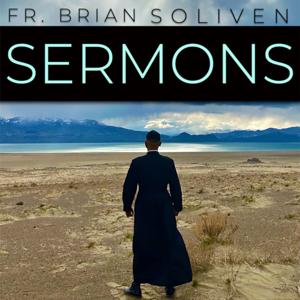


***Bonus*** After the homily is a 3 minutes special chant that is sung before the beginning of the Traditional Latin Mass. Called the "asperges," meaning "sprinkling" or "washing," it recalls the saving water from of baptism.
There is one defining teaching that separates the Catholic Church from all the other churches in town. It is our belief that every time we go to Mass, a profound miracle happens before our very eyes. Bland, boring bread and cheap tasting wine, are literally transformed into “the body, blood, soul of divinity” of Jesus Christ. Our Lord becomes fully present in the Eucharist, yet hidden behind the mere appearance of that bland, boring, “bread” and cheap, tasting “wine.” So much so that as Catholics, our vocabulary even changes after the priest says those infamous words that have echoed over 2,000 years of history up until now,, “This is my body… This is my blood.” We now dare say “host” and “precious blood.” This Sunday, our Lord in the Gospel passage introduces this great, mind-boggling teaching. How can we penetrate this mystery?
How can the crucifixion be "Good News"? It's ugly, graphic, and bloody hideous. All very true. The "good" can be beautifully found when asked why did Jesus allow himself to be tortured in such a way? The answer reveals the eternal love God has for each of us. That is why the brutal cross will always be good.
Without faith-filled Christians, the world is bland and dark. Our Lord tells us today in the Gospel, we are the "salt of the earth" and the "light of the world."
Today, the Church remembers one of her famous sons, St. Ignatius of Loyola. He is the 16th century founder of the Jesuit Order. His conversion story shows us what God can do when a Christian finally stops rebelling against God and surrenders his all.
Have you ever wondered why you have faith while others do not? It's a great mystery why God gives this gift the way he does. One thing is for certain, the gift of faith is meant for others.
This Sunday Gospel is the remarkable conclusion of what began three weeks ago. If we recall, Jesus sent out the Twelve disciples with divine authority “two by two…. So they went off and preached repentance. The Twelve drove out many demons, and they anointed with oil many who were sick and cured them.” (Cf. Mark 6:7-13). The Twelve return after this mission and report the miraculous results: people confessed their sins, demons were expelled and amazingly, illnesses were healed. As word of their power spreads, it’s not surprising a huge crowd now begins to follow them. They want more. As we recount from last Sunday’s reading, “People were coming and going in great numbers, and they had no opportunity even to eat.” (Cf. Mark 6:31). When Our Lord saw the desperate crowd, were told that his heart was pierced with “pity for them, for they were like sheep without a shepherd….” (Cf. Mark 6:34).
As modern-day Christians, who strive to make attendance at Sunday Mass a part of our lives. Why? Because we are like the crowds. Like them, we see something in Jesus that is absolutely attractive, compelling, and impossible to ignore. He is the radiant, illuminescent flame in the dank, cold darkness. We are the flailing moth insect, fluttering about haplessly in the wind, compelled and drawn to this flaming light. This is why for the Christian to be utterly ravished by Christ, he must first begin by recognizing this hunger deep within his soul. Catholicism at its core is a religion for starving people. We feast on delights of this world yet we still leave the table famished and in need. Once we realize the hunger of spirit is different and indomitable by anything the world can offer, we are ready to look to Jesus for the answer.
The vast crowds are ready for Jesus. They’ve come far and wide looking for him whom they heard has cured the sick. They saw him and his followers cast out the demons of their loved ones. And even more so, his words and teaching soothe the soul like no other. The crowds get a small taste of what Christianity offers. This tiny morsel of truth satiates their hunger far more than all the worldly riches combined. They want more. We want more! We’re told this Sunday in the Gospel that this hungry crowd swelled to over 5,000. “A large crowd followed him, because they saw the signs he was performing….” (Cf. John 6:1). What happens next will be one of the most memorable miracles our precious Lord will ever perform. It is the only miracle of Jesus recounted in all four Gospels of Matthew, Mark, Luke, and John. No other miracle left such a lasting impression. Jesus takes the “five barley loaves and two fish” prays over them and gives the Heavenly Father praise and thanksgiving. Suddenly, the bread and fish are multiplied and the vast desperate crowd are fed. As if this miracle is not amazing enough, Jesus still has another miracle in store for us. The feeding with the loaves and fish is only a preparation for something even more magnificent. All of this is pointing to the greatest gift he will give us at the Last Supper, where the True Bread of Heaven will finally be given. Jesus will give us his very Body and Blood to feast upon. And this miraculous “bread” is available at every single Holy Mass.
If you've ever wondered why God allows evil and good to exist side by side in our lives, our Gospel passage this morning is for you.
In today's Gospel, St. James makes an appearance. Still stuck in his worldly thinking, Jesus shows him the better path. The Christian is meant for a higher path than mere material wealth and lofty titles. True riches are found in becoming poor.
In this Sunday’s gospel passage, the disciples return to Jesus after their mission. It’s the continuation of what began in last Sunday’s reading when Our Lord sends them out “two by two.” “Jesus summoned the Twelve and began to send them out two by two”, we heard, and (he) gave them authority over unclean spirits…. So they went off and preached repentance. The Twelve drove out many demons, and they anointed with oil many who were sick and cured them.” (Cf. Mark 6: 7,12-13). Let’s pause here for a moment and look at the problem Jesus is focusing on. He gave his disciples authority over people’s deepest pain. They preached “repentance”, meaning, bring to the surface your greatest mistakes of your lives. Face your ugliest shame. We all have done horrible things we truly regret and deal with them in one way or another; we bury them, hide them, pretend they are not there. Or maybe we even grab the closest bottle of liquor to deaden the pain, at least for a while? The disciples go there to that darkness.
They also drive out demons from the people. Demons, these fallen, rebellious angels who hate humanity are our real enemies in this life. They constantly stalk us, tempt us to join their revolt against God, keeping us from the glory that God intends for us. St. Paul reminds us, “For our struggle is not against flesh and blood, but against the rulers, against the powers, against the world forces of this darkness, against the spiritual forces of wickedness in the heavenly places.” (Cf. Ephesians 6:12). The Disciples are empowered to battle this foe for us. We are not alone.
And finally, the Twelve are given the supernatural power to cure the diseases that inflict us. We all deal with physical pain sooner or later as we age or watch our dearest loved succumb to some sickness. It’s the inevitable end we all face, regardless of how hard we try to exercise or eat well. We’re reminded of this reality everytime we look in the mirror and notice a new gray hair or wrinkle on our face. Even worse still, when we hear the doctor’s terminal diagnosis. In all of this anxiety, the Twelve go precisely there and miraculously heal. Jesus wants to come into our darkness, our anxiety, our heartache.
Now let us return to this Sunday’s passage. The result of the mission is successful beyond their wildest expectations. The disciples come back full of excitement. Yet, we’re told, Jesus doesn’t match their enthusiasm. He is not surprised in the least at the outcomes. Afterall, it was his authority that he gave them to do all these amazing acts. All that Jesus does is say to them, “Come away by yourselves to a deserted place and rest a while.” (Cf. Mark 6:30-31). Jesus redirects their attention back to the heart of the matter. Everything we do must focus on Jesus Christ. He and he alone, is the only answer. He alone is enough for us.
The Incarnation changes how we deal with our suffering. God is not longer out there somewhere in the ether, indifferent to our pain. Rather, he is in us. Once we realize that, the yoke becomes easy and the burden light.
From the publisher's feed

227,419 Listeners

4,983 Listeners
6,224 Listeners
7,651 Listeners

2,154 Listeners

28,197 Listeners
1,272 Listeners

39,379 Listeners
61,784 Listeners
662 Listeners
11,367 Listeners

5,702 Listeners

10,585 Listeners
5,220 Listeners