
Sign up to save your podcasts
Or

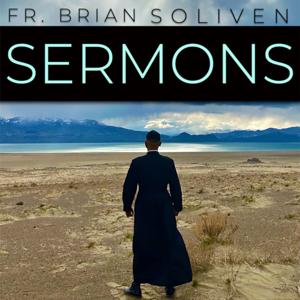


Let me ask you a great question. What do you think God wants? At this very moment, what does he want? It’s a strange question. We often don’t think about this perspective when we think about God. Oftentimes, we focus on what’s happening in our lives and the tremendous burdens that we carry. We petition God to help with our family, our sicknesses, and the myriad of other problems. When we go about our normal day, we wonder about what we have to accomplish. We think about our jobs. We think about what we’re going to cook for dinner? We think about what we need to do for our family? All great things. But what does God want?
I remember once on a pilgrimage toTurkey, a group of my classmates decided to fly to Turkey and follow the path of St. Paul. We were still seminarians. We wanted to visit the places that Paul visited, two-thousands years before. On this particular trip, there happened to be another American couple from Oakland. There were retired, probably in their late sixties or seventies. As we were walking up a cobblestoned street, the woman had trouble, almost tripping. At that moment her husband rushed to her side and grabbed her right hand with his, and with the other hand, wrapped it around her waist. He gently walked beside her with each precarious step. He smiled at her the whole time, keeping his eyes on her. I watched this whole scene unfold with fascination. Here was this husband, taking care of his bride, in their old age. At that moment, I heard God say to me, Brian, “The Church will be your bride. Love Her. Take care of her like this man.”
If you were like me high school, you learned a very specific narrative about the Crusades in public school. It probably went something like this: the big bad Catholic Church in its thirst for power and money attacked the peace loving Muslims. That's complete garbage. When we study the real Crusades, the reality is much more complex. They were launched after 400 years of unchecked aggression from the armies of Islam. The Byzantine emperor, Alexios I of Constantinople, wrote a letter to the pope in Rome, Urban II, begging him for help. He reminded the pope of their shared Christian roots. On November 27th, 1095, the Catholic armies of Europe responded.
The great Italian mystic, St. Padre Pio, famously said, "Prayer is the oxygen of the soul." How do we do this well? If we want to succeed in anything in the Christian life, we must follow the example of Christ himself. He shows us how to pray like the saints we're meant to be.
The spiritual battle begins! Lent gives us that glorious opportunity to grow in holiness, as we join Jesus in the coldness of the desert for the next 40 days. This is probably my favorite liturgical season, even more than Easter and Christmas. Like our Lord, we confront the Devil in Lent and the false claimants to our hearts. God simply wants our love; he will not settle for second place.
The only job of the Devil is to make us forget this. He wants to distract us from practicing our faith to the full. He wants our hearts to fall in love with the other glittery things in the world. St. John, the Beloved Disciple, wrote about this cunning ploy in his letter. He writes:
Do not love the world or the things in the world. If anyone loves the world, the love of the Father is not in him. For all that is in the world— the lust of the flesh and the lust of the eyes and pride of life—is not from the Father but is from the world. (Cf. 1 John 15-16)
Each Lent we look at the devil straight in the face and yell, "NO! You are a liar! My heart is created for God and he alone, will I serve."
In warfare, the nuclear bomb is the weapon of desperation. It's the choice when political and military leaders feel they have no choice. In one way, Jesus gave the Christian something similar, minus the destruction, as we see in the encounter with a possessed boy in Mark 9. The disciples ask him why they were unable to cast out a demon. They tried everything in their arsenal. Our Lord tells them, "This kind can come out by nothing but prayer and fasting." (Cf. Mark 9:29) There it is! Fasting. This is the spiritual weapon of last resort. If you find yourself exhausted, hanging by a thread, at the point of near surrender, try this ancient tactic of the saints.
In the summer of 2004, my bags were packed, all my affairs were in order and I was shipping off to seminary. Years of prayerful discernment had finally come to an end -- God was calling me to the priesthood. Yet weeks before leaving, a tidal wave of doubt suddenly hit me, "What was I doing? I can't do this." Then as if on theatrical cue, I heard the devil's voice.
Lent has begun! As we enter with Jesus into the desert for the next 40 Days, the false claimants of our hearts will be unmasked. St. John called them the "lust of the flesh, lust of the eyes, and the pride of life." (Cf. 1 John 2:15-16). All these things the world dangles before us but they will always fail to deliver the happiness they promise. Christ shows us the way.
*Please note* The following homily was given at our Traditional Latin Mass, which follows a different liturgical calendar. The Epistle is from 1 Corinthians 13:1-13 and the Gospel is from Luke 18: 31-43.
The addict, the atheist, and the saint all have one thing in common -- they search for healing. We're all broken in some way. It's part of the human condition, whether we like it or not. "It is what it is", as they say. Christ offers what no one else can.
Muslim extremist groups like ISIS and Al Qaeda, mockingly call us the "People of the Cross". To my ears, there's no better compliment to hear.
From the publisher's feed

227,416 Listeners

4,982 Listeners

6,222 Listeners

7,657 Listeners

2,151 Listeners

28,197 Listeners
1,278 Listeners

39,374 Listeners

61,755 Listeners
660 Listeners

11,371 Listeners

5,708 Listeners

10,572 Listeners
5,220 Listeners