
Sign up to save your podcasts
Or

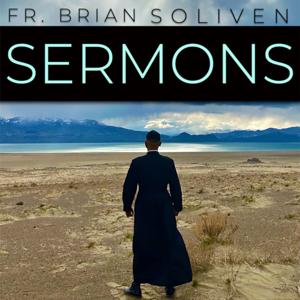


I am excited to officially announce an amazing opportunity for our parish. This November, we are embarking upon a pilgrimage to the very places where the Church began – the Holy Land. In the bulletin this Sunday, you will see a detailed itinerary of the amazing sites we will pray and visit. To see and touch the very places where Jesus walked will change how you read the Bible. It will open up the biblical world in fresh new ways. Christ will come alive. For the past few Sunday’s we've been hearing in the Gospel readings the famous account of Jesus' Sermon on the Mount, which one Scripture scholar called, “the greatest sermon ever preached.” (Cf. Matthew 5). Imagine now reading that very sermon on the exact mountain he said it. The glistening sunlight reflecting off the surface of the Sea of Galilee will be in the background. The same green, soft grass will be beneath your feet. You will hear the words of Jesus like never before.
Follow the link for more details: http://www.pilgrimages.com/frsoliven
Adam was shocked when he first laid eyes on Eve. "At last!" He exclaimed in our First Reading today. "Bone of my bones and flesh of my flesh." (Cf. Genesis 2:23) Her beauty must have been blinding. It should not shock us after all, women are the pinnacle of God's creation.
The worth of every human soul is rooted in Genesis as we hear today in the first reading: "the LORD God formed man out of the clay of the ground and blew into his nostrils the breath of life, and so man became a living being." (Cf. Genesis 2:7) The sin of Adam and Eve destroyed this "breath". Jesus comes to restore it in the most unexpected of ways.
One of the greatest gifts of being a Christian is that we are no longer beholden by what people think of us. Often times we can place our dignity on silly things -- my job title, how my body looks, how much money I have, etc. Jesus breaks those chains. Rather, he alone tells me my deepest worth; He alone gives me my purpose. And that, my brothers and sisters, brings freedom.
Fun fact: the first Christian nation on earth is Armenia. In the year 301, King Tiridates III converted, along with the entire nation. Why is always the question. There was no earthly benefit at the time. What convinced him to accept Jesus as the Lord of all was the powerful witness of simple, holy Christians, unafraid to live the faith. We are called to be the same.
Since the time of the Prophet Ezekiel, God's presence left the Temple in Jerusalem because of their infidelity. Nothing could have been more devastating. Yet despite their sins, God promised one day he would return. As we celebrate the great Feast of the Presentation of the Lord, God comes back in the most unexpected of ways.
The next time you are in a Catholic church, pay attention to where the altar is built. No matter what church you walk into, whether you're in the jungle of Sao Paulo, Brazil, a Gothic cathedral in Paris, or a suburban parish in rural Dixon, you’ll soon notice a familiar pattern. The altar is always built on a raised platform. The only way to get to it is by climbing stairs. Even if it’s only one step or an entire flight, like the Basilica of St. Peter’s in Vatican City, you always have to ascend upwards. Why? The answer is found in the gospel this Sunday.
Mountains are places of encounter with the true God. As Jesus ascends the mountain to teach the eight beatitudes, the message is clear to the Jewish audience. God has come.
As Christians we are always tempted to conform to the ways of the world and change our teaches to align with the current trends. We must resist. Like our Lord, we are called to transform society, not the other way around. As the Church remembers saints Timothy and Titus today, who traveled with St. Paul we remember, the high bar we are called to live by. When writing to them, Paul would always tell them to be faithful faithful faithful, to the Gospel of Jesus Christ. His message still resounds in our day.
He went from a killer to a saint in a matter of seconds. The direction of his life changed radically on that road to Damascus (Cf. Acts 9:1-22). To a persecutor of the faith he loathed to the Church's greatest evangelist, St. Paul's conversion changed the world as we know it.
The photo attached to this homily post was taken in the summer of 2008 during a pilgrimage to the Holy Land. I had just finished my third year in the seminary when the school offered to take a group of us to see the very places where Jesus walked and lived. Oftentimes, when we read the stories in the bible the places they name can seem utterly foreign and mysterious to us, especially with names like “Zubulan and Naphtali.” They don’t seem real. The moment we landed everything changed. The Bible came alive! As we hear in the Gospel today, it said that Jesus left his small little town of Nazareth in the hill country to live by the Sea of Galilee. What does it look like, we can wonder? Surprisingly, the Sea of Galilee reminded me a lot of Lake Tahoe, without all the trees, million-dollar mansions, and tourists. It seemed to stretch as far as the eye could see. What hit me the most was how quiet and still it was. As I stood there with the other seminarians, we must have all thought the same thing – this is the place where Jesus called the first priests. The Gospel tells us how it happened: “Simon who is called Peter, and his brother Andrew, casting a net into the sea…He walked along from there and saw two other brothers , James the son of Zebedee and his brother John.” (Cf. Matthew 4:8-12). As future priests, 2,000 years later, the power of the moment was not lost on us. This was where it all began.
From the publisher's feed

227,416 Listeners

4,982 Listeners
6,222 Listeners
7,657 Listeners

2,151 Listeners

28,197 Listeners
1,278 Listeners

39,374 Listeners

61,755 Listeners
660 Listeners
11,371 Listeners

5,708 Listeners

10,572 Listeners
5,220 Listeners