
Sign up to save your podcasts
Or

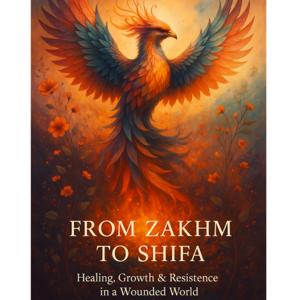


Did anyone tell you what you were actually signing when you said qabool? The wedding was planned in detail. The dress, the food, the flowers. But the conversation about your rights — the one Islam says you were supposed to have — most of us never had.
This episode is that conversation. We talk about what Islam actually gave Muslim women in marriage — financial rights most women do not know they have, conditions they could have put in the nikah contract but were never told about, and the right to independent living that Islamic scholars have confirmed across every major school of jurisprudence. We also talk about the other side — what a woman brings to the marriage, how to ask the right questions before the contract is signed, and why honesty before the wedding is always kinder than pretending after it.
This episode is for the young woman who is about to get married and the mother who wants to give her something real before she leaves. Not just advice about patience — actual knowledge about what Islam says she is entitled to.
If this helped you, please leave a rating. It helps other women find us.
More on this episode: fromzakhmtoshifa.pages.dev/episodes/s3e10/
This episode speaks to three women: the one who is preparing and wants to know what she might face, the one who is in the middle of it right now and exhausted, and the one who has come through it — with a child or without one. Both endings are honoured here. Because your worth was never in your womb. It was always in you.
Resources for fertility support, miscarriage grief, and Muslim-aware counselling are included below.
Azoospermia & Infertility Support for Muslim Couples: Islamic Medical Association of North America (IMANA) — imana.org
Fertility Matters Canada: fertilitymatters.ca — patient support, clinic finder, community
RESOLVE: The National Infertility Association (USA): resolve.org — support groups, resources, advocacy
Muslim mental health support during fertility journey: Nisa Helpline — 1-888-711-6472
Miscarriage support: The Miscarriage Association — miscarriageassociation.org.uk (international resources available)
Faith-sensitive fertility counselling: ask your Islamic centre for referrals to Muslim-aware therapists
If this helped you, please leave a rating. It helps other women find us.
More on this episode: fromzakhmtoshifa.pages.dev/episodes/s3e9/
Your daughter just told you she is bisexual. You love her completely. You also hold a faith that is clear about what it permits. And right now those two things feel like they are pulling in opposite directions.
This episode is for the Muslim parent who is sitting in that tension — and for the parent who wants to be ready before the moment arrives. Because ready is better than reactive. And your child deserves a parent who has thought about this.
Today we talk about what a teenager is actually telling you when she makes this disclosure — and what she is not. We talk about what Islam says, all of it, including the distinction between attraction and action that our community conversations almost never make clearly. We talk about what the Prophet modelled when someone came to him with something he did not expect. And we talk about what to say in the first moment, and what to say when you are both calmer, and why the goal is not to win an argument but to remain the most important voice in your daughter's life.
Your faith is clear. And your love does not have to be conditional for that to remain true. This episode is about holding both of those things at the same time — because your daughter needs you to.
Note: this episode discusses questions of sexual identity and Islamic guidance on same-sex attraction. Resources for Muslim families are provided at the end of the episode.
If this helped you, please leave a rating. It helps other women find us.
More on this episode: fromzakhmtoshifa.pages.dev/episodes/s3e8/
She loves her children. She has never stopped loving them. And she is completely, utterly done. This episode is for her.
Today we talk about something Muslim mothers are almost never given permission to say out loud: the exhaustion that goes so deep it stops feeling like tiredness and starts feeling like collapse. Parental burnout is a real, documented condition — and it is not a sign that you are a bad mother. It is a sign that you have been carrying too much, for too long, with too little support.
We talk about the gap between what Islam asks of mothers and what Muslim communities actually provide. We talk about what research shows happens to children when their mothers run on empty — not to add guilt, but to make clear that supporting mothers is not optional, it is essential. And we talk practically about what refilling actually looks like when you are this depleted and when asking for help feels impossible.
Whether you are raising children alone or in a marriage where you still feel completely alone in the parenting — this episode sees you. And it will give you one true thing to hold onto before you go back to all of it.
Note: this episode mentions thoughts of wishing you had not had children — a real experience for many mothers in burnout. Crisis resources are included at the end of the episode for anyone who needs them.
#FromZakhmToShifa #MuslimMotherhood #IslamicParenting #MuslimWomen #MentalHealthMatters #MomBurnout
If this helped you, please leave a rating. It helps other women find us.
More on this episode: fromzakhmtoshifa.pages.dev/episodes/s3e7/
There is something you have been carrying for a very long time. You have never given it a name. But your body has never forgotten it. This episode is for you.
Today we talk about childhood sexual abuse — all of it. Not just physical contact, but every form: exposure to sexual content, grooming, being watched or photographed, being touched in ways that felt wrong even when someone called it something else. Every one of these is abuse. And every woman who has spent years telling herself it was not that bad deserves to know: it was. You were a child. It was wrong.
We talk about the silence that children keep and why that silence is survival, not shame. We talk about what Islam actually says — that the full moral weight belongs to the person who caused harm, that you are not required to forgive on an abuser's timeline, and that protecting yourself is an act of faith. We talk about two paths: speaking and not speaking. And we make clear that both are honoured here, and that healing does not require disclosure.
This episode does not spare Muslim families from the truth that this happens inside our homes, with people we trust, with relatives we invite in. And it gives every woman who has carried this alone the one thing she may never have been given: permission to put some of it down.
Content note: this episode discusses childhood sexual abuse in all its forms. Crisis resources are listed below.
Assaulted Women's Helpline (Canada): 1-866-863-0511
Nisa Helpline (Canada): 1-888-711-6472
RAINN (USA): 1-800-656-4673
Kids Help Phone: 1-800-668-6868
If you are in immediate danger: call 911.
If this helped you, please leave a rating. It helps other women find us.
More on this episode: fromzakhmtoshifa.pages.dev/episodes/s3e6/
Your family found someone for you. You said no. They did not listen. This episode is about what you do next — and why the next conversation you have matters more than you think.
Today we follow one sister's story — from the pressure that started quietly and built over months, to the night her father woke her from her sleep with Quranic verses about obedience, to the moment she named what her faith actually says about a woman's consent in marriage. And what she did after that, when the first approach did not work, and the second, and what she eventually built from all of it.
We bring in Khadija bint Khuwaylid — the first Muslim woman, who did not wait to be chosen. She chose. And we bring in the research on what happens to women, their spouses, and their children when a marriage is built on obligation rather than genuine consent.
This episode also speaks honestly to parents, because most families pushing their daughters toward arranged marriages are not acting from cruelty. They are acting from love and fear. And this episode holds both truths at the same time: your parents' love is real, and your voice is also real. Both deserve to be in the room.
Resources
Canadian Council of Muslim Women (CCMW): ccmw.com — support, counselling referrals, advocacy for Muslim women
Nisa Helpline Canada: 1-888-711-6472 — confidential, culturally sensitive support
Islamic Social Services Association (ISSA): issacanada.org — Muslim family mediation and counselling
#FromZakhmToShifa #MuslimWomen #GenerationalHealing #ArrangedMarriage #MuslimMotherhood
If this helped you, please leave a rating. It helps other women find us.
More on this episode: fromzakhmtoshifa.pages.dev/episodes/s3e5/
Your teenager just revealed something that stopped your heart — and your first reaction may have already cost you something. This episode is for the Muslim parent who is sitting in the aftermath of one of the hardest moments of their parenting life.
Today we talk about a teenager sharing intimate images. We talk about what Islam actually gives you as a guide — not just the parts that close doors, but the parts that keep them open. And we talk about how to find your way back to your child after a reaction you are not proud of.
Research on adolescent disclosure is clear: when a teenager opens up to a parent and receives a reactive response, they are significantly less likely to open up again — to anyone. The door that closes in that moment is not just between parent and child. It is between the child and safety itself. This episode is about making sure that door stays open — because your child needs you on the other side of it, now more than ever.
If this helped you, please leave a rating. It helps other women find us.
More on this episode: fromzakhmtoshifa.pages.dev/episodes/s3e4/
In this personal episode, I speak as both a mother and a woman who made the hardest decision of her life so that her daughters would grow up knowing what love is not supposed to feel like. This is not a general conversation about divorce. This is a conversation from the inside of it.
We talk about the invisible burden that children of divorce are handed — often by well-meaning people — to bring their parents back together. We talk about what it looks like to protect children from adult conflict without lying to them. And we talk about what it means to deliberately build something in your children because of what they went through with you.
And then we talk about sons.
Because the conversation about children of divorce almost always centres daughters. But boys carry these wounds just as deeply — they just carry them quietly, behind a face that says 'I don't care.' That face is a facade. And our community does not say nearly enough about what boys actually need: permission to feel, and real male role models who show them in practice what a man looks like.
If this helped you, please leave a rating. It helps other women find us.
More on this episode: fromzakhmtoshifa.pages.dev/episodes/s3e3/
This episode explores domestic violence and emotional abuse within Muslim marriages, focusing on how fear and community expectations can be mistaken for faith. Through a composite story, it follows a woman whose decision to leave was shaped over years, not a single moment. It speaks directly to those who recognize the harm but struggle to act, and to what comes after—doubt, loneliness, and second-guessing. At its core, the episode challenges the belief that endurance in harm is righteousness. Islam does not ask you to sacrifice your well-being to preserve a marriage—your body is an amanah.
If you’re listening from anywhere in the world, please reach out to a trusted local resource, a crisis line, or someone in your community like a trained imam or counsellor—you don’t have to go through this alone.
#FromZakhmToShifa #IslamAndWellness #MuslimWomenHealing #FaithAndMentalHealth
If this helped you, please leave a rating. It helps other women find us.
More on this episode: fromzakhmtoshifa.pages.dev/episodes/s3e2/
You have spent two seasons learning how to heal — how to name your pain, set boundaries, survive grief, and find your voice. That work was real. Season 3 of From Zakhm to Shifa begins exactly where healing leaves off — with the question nobody asks after the breakthrough: now what? This episode introduces the shift from surviving to building, through the story of Fatima al-Fihri, the Muslim woman who founded the world's first university in 859 CE, and through the eight thousand Muslim women scholars and builders who came before you and never waited for perfect conditions.
If this helped you, please leave a rating. It helps other women find us.
More on this episode: fromzakhmtoshifa.pages.dev/episodes/s3e1/
From the publisher's feed