
Sign up to save your podcasts
Or



Based on Podcast App listening data
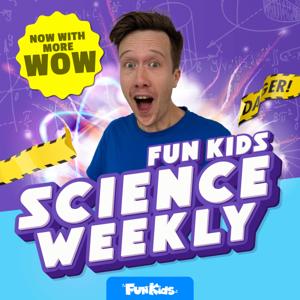
It's time for another trip around the solar system on the BIGGER and BETTER Science Weekly!
This episode of the Fun Kids Science Weekly we continue our bigger and better podcast where we put YOUR questions to our team of experts, have scientists battle it out for which science is the best & learn all about a UK zoo trying to save 97 species from extinction.
Dan starts with the latest science news, where we learn China's lunar probe and it's successful takeoff from the far side of the moon, the huge wings of a Jurassic Pterosaur that's been discovered in the UK and Brian Zimmerman from the Bristol Zoological Society tells us all about their project to save 97 species on the brink of extinction.
Then we delve into your questions where Dan answers Etienne's question about what are the rarest eye colours and we pose Natalie's question on why moths are attracted to light to Samuel Fabian from Imperial College London.
Dangerous Dan continues and we learn all about the Soldier Ant which causes chaos all over the world and why it's actually a help to humans
The Battle of the Sciences continues where Dan chats to Dr Sean Jordan from Dublin City University about why Astrobiology is the best kind of science?
What do we learn about?
- Why China's probe to the far side of the moon is so important?
- The Jurassic Pterosaur that's been excavated in Oxfordshire
- How Bristol Zoo is saving 97 species on the brink of extinction?
- Why are moths attracted to light?
- Is Astrobiology the best type of science?
All on this week's episode of Science Weekly!
Join Fun Kids Podcasts+: https://funkidslive.com/plus
See omnystudio.com/listener for privacy information.
It's time for another trip around the solar system on the BIGGER and BETTER Science Weekly!
This episode of the Fun Kids Science Weekly we continue our bigger and better podcast where we put YOUR questions to our team of experts, have scientists battle it out for which science is the best & learn all about the world's smallest foxes which can now be found in a zoo in the UK!
Dan starts with the latest science news, where we learn about a rare fern plant in New Caledonia entering the record books because of its DNA, why the first stegosaurus to be sold at auction is going to sell for millions of pounds and Tina Rowtcliff from Exmoor Zoo tells us all about the Fennec Fox and why the world's smallest species of fox can now be found at a Zoo in Devon in the UK.
Then we delve into your questions where Dan answers Karis' question about why bones crack and we pose Darcee's question on how long it would take to get to the moon to Dhara Patel from the National Space Centre.
Dangerous Dan continues and we learn all about the Curare Vine which causes venomous chaos in the Amazon Rainforest
The Battle of the Sciences continues where Dan chats to Dr Abigail McQuatters-Gollop from the University of Plymouth about why Marine Biology is the best kind of science?
What do we learn about?
- A rare plant in the pacific ocean which has broken a DNA record
- The stegosaurus being sold at an auction for millions on pounds
- World's smallest species of fox being brought to a UK zoo
- How far away really is the moon?
- Is Marine Biology the best type of science?
All on this week's episode of Science Weekly!
Join Fun Kids Podcasts+: https://funkidslive.com/plus
See omnystudio.com/listener for privacy information.
It's time for another trip around the solar system on the BIGGER and BETTER Science Weekly!
This episode of the Fun Kids Science Weekly we continue our bigger and better podcast where we put YOUR questions to our team of experts, have scientists battle it out for which science is the best & learn all about the London Zoo's 200th Anniversary History Hive project!
Dan starts with the latest science news, where we learn about a satellite that's been launched to see the effect of clouds on our climate, why the North Atlantic Ocean could have up to SEVEN major hurricanes this year and Tina Campanella from the Zoological Society of London tells us all about London Zoo's History Hive project ahead of their 200th anniversary in 2026.
Then we delve into your questions where Dan answers Lucy's question about why screens make it harder for us to fall asleep and we pose Max's question on how weather satellites work to Professor Douglas Parker from the University of Leeds.
Dangerous Dan continues and we learn all about the ambush predator in the sand dunes of Africa - The Six Eyed Spider!
The Battle of the Sciences continues where Dan chats to Alex Easton from Durham University about why Neuroscience is the best kind of science?
What do we learn about?
- What effect clouds have on our climate?
- The 7 hurricanes that could be reaching the North Atlantic Ocean this year
- London Zoo's History Hive project celebrating its 200th anniversary
- How do weather satellites work??
- Is Neuroscience the best type of science?
All on this week's episode of Science Weekly!
Join Fun Kids Podcasts+: https://funkidslive.com/plus
See omnystudio.com/listener for privacy information.
It's time for another trip around the solar system on the BIGGER and BETTER Science Weekly!
This episode of the Fun Kids Science Weekly we continue our bigger and better podcast where we put YOUR questions to our team of experts, have scientists battle it out for which science is the best & learn all about Neanderthals and why they're so important!
Dan starts with the latest science news, where we learn about the return of the Northern Lights to the UK with the newest sun storms, a 'Blue Fireball' lighting up the Spanish sky and Dr Emma Pomeroy from the University of Cambridge tells us all about the discovery of a 75,000 year old Neanderthals' face.
Then we delve into your questions where Dan answers Etienne's question all about antimatter and bananas and we pose Owen's question on how our brain's work to Professor Laura Boubert from the University of Westminster
Dangerous Dan continues and we learn all about the ambush predator in the deep depths of the ocean - The Frilled Shark
The Battle of the Sciences continues where Dan chats to David Rothery from the Open University about why Planetary Science is the best kind of science
What do we learn about?
- Why you could see the Northern Lights in the UK again?
- A blue fireball lighting up the Spanish sky
- How a 75,000 year old Neanderthals' face was discovered?
- How do our brains really work?
- Is Planetary Science the best type of science?
All on this week's episode of Science Weekly!
Join Fun Kids Podcasts+: https://funkidslive.com/plus
See omnystudio.com/listener for privacy information.
It's time for another trip around the solar system on the BIGGER and BETTER Science Weekly!
This episode of the Fun Kids Science Weekly we continue our bigger and better podcast where we put YOUR questions to our team of experts, have scientists battle it out for which science is the best & learn all about some scientists in Wales experimenting making healthier bread
Dan starts with the latest science news, where we learn the dark secrets behind the Darna Squid, why residents in Kent STILL can't swim in the sea and Dr Catherine Howarth from the University of Aberystwyth tells us all about her project to help grow healthier white bread.
Then we delve into your questions where Dan answers Claire's question on why our hair turns grey and we pose Arun's question on why uranium is so dangerous to Professor Tom Scott from the University of Bristol.
Dangerous Dan continues and we learn all about the Shoebill Stork found in the swamps of Africa.
The Battle of the Sciences continues where Dan chats to David Thomas from the University of Oxford about why geomorphology is the best kind of science
What do we learn about?
- The dark secrets of the Darna Squid
- Why Kent residents can't swim in the ocean
- How Welsh scientists are making bread healthier
- What makes Uranium so dangerous?
- Is Geomorphology the best type of science?
All on this week's episode of Science Weekly!
Join Fun Kids Podcasts+: https://funkidslive.com/plus
See omnystudio.com/listener for privacy information.
It's time for another trip around the solar system on the BIGGER and BETTER Science Weekly!
This episode of the Fun Kids Science Weekly we continue our bigger and better podcast where we put YOUR questions to our team of experts, have scientists battle it out for which science is the best & learn all about Pig Kidney Transplants!
Dan starts with the latest science news, where we learn about former Paralympian John McFall and his quest to join the space race working with the European Space Agency, a double celebration for a endangered Suffolk Punch Foal horse called Jedi John and Emily Mullin from WIRED explains all about why human's are starting to have pig kidney transplants.
Then we delve into your questions where Dan answers Lily's question on why water is see through and we pose Lucas' question on what's under a turtle's shell to Zoologist Rachael Funnell
Dangerous Dan continues and we learn all about the Gaboon Viper, one of the scariest looking snakes in the world, found in the Sahara Desert.
The Battle of the Sciences continues where Dan chats to Louise Gentle from Nottingham Trent University about why Conservation Biology is the best!
What do we learn about?
- One former Paralympian's journey to join the space race
- Jedi John, the Suffolk Punch Foal, and why he's so special
- The science behind humans having Pig Kidney Transplants
- What's under a turtle's shell?
- Is Conservation Biology the best type of science?
All on this week's episode of Science Weekly!
Join Fun Kids Podcasts+: https://funkidslive.com/plus
See omnystudio.com/listener for privacy information.
It's time for another trip around the solar system on the BIGGER and BETTER Science Weekly!
This episode of the Fun Kids Science Weekly we continue our bigger and better podcast where we put YOUR questions to our team of experts, have scientists battle it out for which science is the best & learn all about why some hedgehogs in Gloucestershire have 'ballooned?
Dan starts with the latest science news, where we learn about NASA's Voyager One resuming sending updates back down to earth, why the sun's damage on Antarctica's wildlife has increased & Emily Harper from Wild Hogs Hedgehog Rescue explains why some have been found to have 'ballooned' in Gloucestershire, England.
Then we delve into your questions where Dan answers Kitty's question on how touch screens work and we pose Harry's question on what molecules are made of to Dr Catherine Walsh from the University of Leeds.
Dangerous Dan continues and we learn all about the Giant Water bug causing chaos across the world more commonly known as the 'Toe Biter'
The Battle of the Sciences continues where Dan chats to Jimmy Waldron from Dinosaurs Will Always Be Awesome about why Palaeontology is the best!
What do we learn about?
- The return of NASA's Voyager One
- Why the Sun is causing damage to Antarctica's wildlife?
- What's causing Gloucestershire's hedgehogs to 'balloon'?
- What are molecules made of?
- Is Palaeontology the best type of science?
All on this week's episode of Science Weekly!
Join Fun Kids Podcasts+: https://funkidslive.com/plus
See omnystudio.com/listener for privacy information.
It's time for another trip around the solar system on the BIGGER and BETTER Science Weekly!
This episode of the Fun Kids Science Weekly we continue our bigger and better podcast where we put YOUR questions to our team of experts, have scientists battle it out for which science is the best & learn all about why grey squirrels on the run is so dangerous for their red counterparts?
Dan starts with the latest science news, where we learn about the UK's latest astronaut, why NASA's plan to bring Mars' rocks down to earth has hit a snag & Dr Craig Shuttleworth from Bangor University explains why grey squirrels are the talk of the town after their recent escapades in Wales.
Then we delve into your questions where Dan answers Amelia's question on how old is the world's oldest tree and we pose Zoe's question on why can some animals only eat vegetables or meat when humans can eat both to Dr Carlo Meloro from Liverpool John Moores University
Dangerous Dan continues and we learn all about the Strangling Fig and why it's a tree's worst enemy around the globe.
The Battle of the Sciences continues where Dan chats to Aoife Morrin from Dublin City University about why Analytical Chemistry is the best.
What do we learn about?
- Rosemary Coogan, The UK's latest astronaut
- Why NASA's plans to bring back rocks from Mars is on hold?
- Why grey squirrels are so dangerous to red ones?
- Why some animals only eat meat or vegetables?
- Is Analytical Chemistry the best type of science?
All on this week's episode of Science Weekly!
Join Fun Kids Podcasts+: https://funkidslive.com/plus
See omnystudio.com/listener for privacy information.
It's time for another trip around the solar system on the BIGGER and BETTER Science Weekly!
This episode of the Fun Kids Science Weekly we continue our bigger and better podcast where we put YOUR questions to our team of experts, have scientists battle it out for which science is the best & learn all about why NASA want the Moon to have its own time zone?
Dan starts with the latest science news, where we learn about rope bridges have been installed in the UK's Forest of Dean to help its mice, the reason for the earth's biggest ever burst of light and Catherine Heymans, the Astronomer Royal for Scotland, joins us to talk all about why the Moon could soon have its own time zone.
Then we delve into your questions where Dan answers Edith's question on whether fireworks are harmful to the planet and we pose Ben's question on how batteries work to Marshall Brain from How Stuff Works.
Dangerous Dan continues and we learn all about the Bobbitt Worm which can be found lingering waiting to attack in the Pacific and Indian oceans.
The Battle of the Sciences continues where Dan chats to Dr Robin Kramer from the University of Lincoln all about Faces! Then we pay a visit to Techno Mum to learn all about fingerprint technology.
What do we learn about?
- Mice using rope bridges in the Forest of Dean
- What caused the biggest ever burst of light?
- Could the moon have its own time zone?
- How do batteries work?
- Why the study of spiders is the best type of science?
All on this week's episode of Science Weekly!
Join Fun Kids Podcasts+: https://funkidslive.com/plus
See omnystudio.com/listener for privacy information.
It's time for another trip around the solar system on the BIGGER and BETTER Science Weekly!
This episode of the Fun Kids Science Weekly we continue our bigger and better podcast where we put YOUR questions to our team of experts, have scientists battle it out for which science is the best & learn all about an Viking artefacts discovered in Ipswich, England.
Dan starts with the latest science news, where we learn the solar eclipse which left many North Americans in darkness, an extremely rare animal spotted in the Australian Outback and Archaeologist Ian Riddler joins us to talk all about the Viking combs, yes COMBS, discovered in Ipswich, Suffolk.
Then we delve into your questions where Dan explains how cameras work and we pose Cassidy's question on why we blow our nose to Laurie Dove from How Stuff Works
Dangerous Dan continues and we learn all about the Iriomote Cat from the small Japanese Island why it's so rare and dangerous.
The Battle of the Sciences continues where Dan chats to Dr Sara Goodacre from University of Nottingham all about Arachnology! Then we pay a visit to Bene and Mal as they let us know why humans get colds?
What do we learn about?
- The North American Solar Eclipse
- An extremely rare mole discovered in Australia
- What Vikings were doing in Ipswich, England?
- Why we blow our nose?
- Why the study of spiders is the best type of science?
All on this week's episode of Science Weekly!
Join Fun Kids Podcasts+: https://funkidslive.com/plus
See omnystudio.com/listener for privacy information.
From the publisher's feed
Exploring the coolest and most incredible stuff in science, from way back when dinosaurs roamed the Earth to a future where humans live in space!
Fun Kids Science Quest is hosted by Dan and is the perfect science podcast for kids and families everywhere. Each week, you'll find episodes from series like Deep Space High, Age of the Dinosaurs and Professor Hallux.
There's also a special guest, top experts answering all your science questions and Dangerous Dan - something scientific that’s also a little bit deadly!
You can listen to Dan on Fun Kids (weekdays from 1pm) on DAB Digital Radio across the UK, on the free Fun Kids app and online at funkidslive.com
Plus, when you become a Fun Kids Podcasts Plus subscriber, you get access to hundreds of episodes of the Fun Kids Science Weekly, but able to listen ad-free and get new episodes early! It's out of this world! Not only that you'll get similar benefits on over 30 Fun Kids podcasts plus you'll be safe in the knowledge that you're supporting Fun Kids in bringing high-quality, entertaining, and safe content for your family.
Find out more at FunKidsLive.com/plus
Ranked by our users in the last 21 days
13,751 Listeners
2,642 Listeners
27 Listeners
21 Listeners
14 Listeners
45 Listeners

5,170 Listeners
21 Listeners
22 Listeners
0 Listeners
28 Listeners
6,202 Listeners

7 Listeners
30,113 Listeners
4,841 Listeners
14,123 Listeners

1,649 Listeners

6,437 Listeners

180 Listeners
18,652 Listeners
55 Listeners
695 Listeners

10 Listeners
576 Listeners
116 Listeners
7 Listeners
9 Listeners
223 Listeners
3 Listeners
2 Listeners
24 Listeners
0 Listeners
0 Listeners
13 Listeners