
Sign up to save your podcasts
Or

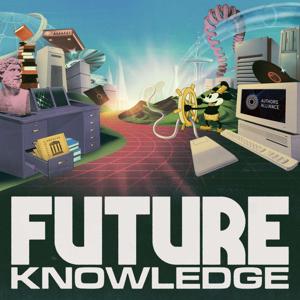


As the Internet Archive turns 30, founder Brewster Kahle looks back at the origins of the Archive and considers the future of libraries, digital preservation, and access to knowledge. In this wide-ranging conversation, Kahle explores how libraries can work together to preserve our digital culture, build collections that remain accessible, and make use of new technologies—including AI—without giving up their role as stewards of knowledge. Joining Kahle in conversation is Stephen Wyber of the International Federation of Library Associations and Institutions (IFLA).
This conversation was originally recorded by IFLA as part of its Futures Club series on September 15, 2026. https://www.youtube.com/watch?v=ChQunGkIO9E
Check out all of the Future Knowledge episodes at https://archive.org/details/future-knowledge
In this episode of Future Knowledge, Alexis Durante-Tierney and Helen Vogelsong-Donahue, hosts of the Born Digital podcast, explore how growing up under constant surveillance may be changing the way young people socialize, experiment, and have fun. From smartphones and social media to school surveillance and cameras in public spaces, they ask what happens when there’s no expectation of privacy—or forgetting. The conversation also considers what mass recording and preservation mean for libraries and archives, and for our ability to let the past disappear.
This conversation is based on the Born Digital essay, "How Fun Became Dystopian: On Gen Z, Flock cameras, and the death of fun," by Helen Vogelsong-Donahue, Alexis Durante-Tierney, and born digital on Substack. https://b0rndigital.substack.com/p/how-fun-became-dystopian
This conversation was recorded on 9/22/2026.
Check out all of the Future Knowledge episodes at https://archive.org/details/future-knowledge
As AI reshapes how information is created and accessed, libraries, publishers, and educators are confronting a new question: open for whom? In this live discussion, we explore the tensions between open knowledge and AI—from the strain on library infrastructure and concerns about AI training to the challenges facing Open Educational Resources. How can we address legitimate concerns about AI while preserving broad access to knowledge? Joining the conversation are Chris Bourg of MIT Libraries, Lisa Petrides of ISKME, and Charles Watkinson of University of Michigan Press.
This conversation was recorded on 9/10/2026. Watch the full video recording at: https://archive.org/details/open-for-whom
Check out all of the Future Knowledge episodes at https://archive.org/details/future-knowledge
The public record is the foundation of an informed democracy, but in the digital age, it is more fragile than ever. In this timely conversation, Merrilee Proffitt (Democracy’s Library at the Internet Archive), James Jacobs (Stanford University), and Christopher Marcum (Federation of American Scientists) examine the growing challenges of preserving government information in the digital age. As government websites, scientific datasets, public health guidance, and other public records can be altered, removed, or lost with unprecedented speed, they explore the critical role libraries, archives, and civil society organizations play in safeguarding trustworthy public knowledge.
This conversation was recorded on 6/23/2026.
Check out all of the Future Knowledge episodes at https://archive.org/details/future-knowledge
In Big Fiction, author and Emory University professor Dan Sinykin examines how decades of mergers and acquisitions have transformed the publishing industry, and how those changes have shaped what it means to be an author. Sinykin explores the rise of the “Big Five” publishing houses, the pursuit of blockbuster titles, and what the consolidation of publishing means for the books we read and the culture they create. Joining Sinykin in conversation is humanities scholar Ted Underwood.
Grab your copy of Big Fiction: https://cup.columbia.edu/book/big-fiction/9780231192941/
This conversation was recorded on 5/9/2024.
Check out all of the Future Knowledge episodes at https://archive.org/details/future-knowledge
In Reclaiming Fair Use, copyright scholars Patricia Aufderheide and Peter Jaszi argue that fair use is not merely an exception to copyright law, but one of its core principles, enabling creativity, scholarship, journalism, education, and cultural participation. In this discussion they explain how fair use works in practice, dispel common misconceptions, and show how creators, educators, librarians, filmmakers, and others can confidently exercise their rights. Joining Aufderheide and Jaszi in conversation is co-host Dave Hansen from Authors Alliance.
Grab your copy of Reclaiming Fair Use: https://press.uchicago.edu/ucp/books/book/chicago/R/bo28242133.html
This conversation was recorded on 9/24/2024.
Check out all of the Future Knowledge episodes at https://archive.org/details/future-knowledge
What does it mean to preserve culture in an age of disappearing websites, platform-controlled media, and fragile digital memories? In the final episode of our special six-part series on Vanishing Culture, Future Knowledge hosts Dave Hansen and Chris Freeland sit down with musician and series host Vida Vojić and producer Alice Bridgwood to reflect on the conversations, ideas, and lessons that emerged throughout the series.
Read Vanishing Culture for free at the Internet Archive or purchase in print: https://archive.org/details/vanishing-culture-2026
Languages can vanish just as easily as books, websites, or archives, and when they do, entire ways of understanding the world can disappear with them. In the fifth episode of our special six-part series on Vanishing Culture, host Vida Vojić speaks with Peter Scholing of Biblioteca Nacional Aruba and the Coleccion Aruba digital heritage platform about the importance of preserving Papiamento, Aruba’s creole language, and the cultural heritage it carries.
Read Vanishing Culture for free at the Internet Archive or purchase in print: https://archive.org/details/vanishing-culture-2026
Folktales are living records of culture, identity, and collective memory. In the fourth episode of our special six-part series on Vanishing Culture, host Vida Vojić speaks with writer and researcher Helen Nde, founder of Mythological Africans, and folklorist Laura Gibbs about the importance of preserving African folklore in the digital age. Together, they explore how stories help communities understand themselves, pass down knowledge across generations, and make sense of a changing world.
Read Vanishing Culture for free at the Internet Archive or purchase in print: https://archive.org/details/vanishing-culture-2026
Queer history has often been overlooked, erased, or excluded from traditional archives. In the third episode of our special six-part series on Vanishing Culture, host Vida Vojić speaks with writer, artist, and archivist Brooke Palmieri about the vital role queer archives play in preserving memory, identity, and community. Drawing on his work with CAMP BOOKS and his research into LGBTQ+ history, Brooke explores why archives matter—not just as collections of records, but as tools for helping people understand where they come from and imagine new futures.
Read Vanishing Culture for free at the Internet Archive or purchase in print: https://archive.org/details/vanishing-culture-2026
From the publisher's feed

6,788 Listeners

9,653 Listeners
508 Listeners

210 Listeners

1,582 Listeners

8,833 Listeners

111,800 Listeners

15,581 Listeners

3,341 Listeners
573 Listeners

5,558 Listeners

16,033 Listeners

4,596 Listeners

9,404 Listeners
397 Listeners