
Sign up to save your podcasts
Or



Based on Podcast App listening data
Looking for support as a parent of a gender-questioning youth or young adult? Attend a Wider Lens Parent Retreat in 2025! Registration is now open. Visit https://widerlens.events/parent-retreat-2025 to learn more and secure your spot.
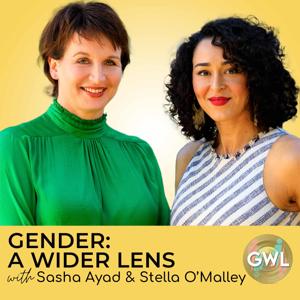
In this episode, Sasha and Stella delve into the intricate world of family estrangement with psychologist and author, Dr. Joshua Coleman. Coleman's insights highlight the complexity and emotional strain of estrangement, emphasizing empathy, responsibility, and strategic communication as essential tools for parents navigating these challenging dynamics.
For links and resources relevant to this episode, access the full show notes at https://www.widerlenspod.com/p/episode-166
Buy Our Book – When Kids Say They’re Trans: A Guide for Thoughtful Parents at https://whenkidssaytheyretrans.com/
Join Our Listener Community to Access Exclusive Content at https://www.widerlenspod.com/
Support the Show at https://www.widerlenspod.com/p/support-the-show
Join the conversation on YouTube at www.youtube.com/@widerlenspod
For more information about Sasha’s & Stella’s parent coaching membership groups, visit:
Sasha Ayad: https://sashaayad.com/parenting-coaching
Stella O’Malley: http://www.stellaomalley.com/parent-coaching
To learn more about our sponsors, visit:
Therapy First at https://www.therapyfirst.org/
Genspect at https://genspect.org/
This is a public episode. If you’d like to discuss this with other subscribers or get access to bonus episodes, visit www.widerlenspod.com/subscribe
In today's internet age, so many are encountering the complex effects of cancel culture affording its victims a wide spectrum of implications, from severe career-ending scenarios to minor social ostracism and even family tensions and divisions.
The digital revolution is not only exacerbating the dynamics between parents and their activist-minded children, but is also dramatically shifting generational dynamics as well. This is further complicated by societal reverence for youth and intellect, often overshadowing the value of life experience and the idea that “with age comes wisdom”.
The profound influence of the internet becomes evident as we witness the ever-evolving impact of digital tech, transforming the way people engage with each other and the world around them, reshaping not only societal norms but also personal relationships, and fundamentally altering how individuals interact and connect.
In this bonus episode for premium subscribers, Meghan Daum reflects with a nostalgia for the freedom and authenticity of past decades. The discussion explores the profound changes shaping our social landscape in contrast with historical contexts of youth culture, the erosion of respect for older generations' experiences, and the adverse effects of prioritizing youthful perspectives over seasoned wisdom.
Watch our full length episode with Meghan Daum: https://www.widerlenspod.com/p/episode-165
To listen to our premium content in your favorite podcast app click here for Substack instructions on setting up a private feed. (https://support.substack.com/hc/en-us/articles/4519588148244-How-do-I-listen-to-episodes-on-my-podcast-app)
Sasha and Stella sit down with the multifaceted Meghan Daum, distinguished author, cultural commentator, and fellow podcast host, for a compelling exploration of societal change, the complexities of modern life, and coping through humor. Known for her incisive commentary and fearless exploration of complex topics, Meghan shares her personal reflections on identity and the central and contentious nature of gender in modern culture.
For links and resources relevant to this episode, access the full show notes at https://www.widerlenspod.com/p/episode-165
Buy Our Book – When Kids Say They’re Trans: A Guide for Thoughtful Parents at https://whenkidssaytheyretrans.com/
Join Our Listener Community to Access Exclusive Content at https://www.widerlenspod.com/
Support the Show at https://www.widerlenspod.com/p/support-the-show
Join the conversation on YouTube at www.youtube.com/@widerlenspod
For more information about Sasha’s & Stella’s parent coaching membership groups, visit:
Sasha Ayad: https://sashaayad.com/parenting-coaching
Stella O’Malley: http://www.stellaomalley.com/parent-coaching
To learn more about our sponsors, visit:
Therapy First at https://www.therapyfirst.org/
Genspect at https://genspect.org/
This is a public episode. If you’d like to discuss this with other subscribers or get access to bonus episodes, visit www.widerlenspod.com/subscribe
In this bonus episode for premium subscribers, Freya India highlights the complex interplay between mental health treatment, marketing psychology, medication side effects, and sexual identity.
"If you strip back some of this, marketing and look at actually what it is…what they're saying is women can't handle life without constant intervention and solutions and medication and products. And it's so patronizing."
SSRIs, or Selective Serotonin Reuptake Inhibitors, are a class of antidepressant medications commonly used to treat depression, anxiety disorders, and certain other mental health conditions. Reported side-effects of many SSRI’s and antidepressants include decreased libido and difficulty achieving orgasm. As western cultures observe a trending rise in asexuality among young women as well as a rapid increase in the widespread use SSRIs and other antidepressants for depression and anxiety, could there be link between post-SSRI sexual dysfunction (PSSD) and the identification of some individuals as asexual? As these kinds of drugs are being so regularly prescribed, are patients being adequately warned about the potential for long-term sexual side-effects?
Freya India wrote about this in her article, Are You Asexual Or On Antidepressants?: You deserve to know if your sexual identity is a side-effect.
And are the mental health companies targeting women with patronizing marketing tactics implying that women need pharmaceutically induced wellness?
Looking for support as a parent of a gender-questioning youth or young adult? Attend a Wider Lens Parent Retreat in 2025! Registration is now open. Visit https://widerlens.events/parent-retreat-2025 to learn more and secure your spot.
Stella and Sasha welcome writer and columnist Freya India to the show this week, offering deep insights about the impact of screens and technology on young people and practical advice for balanced living in the digital age. They explore Gen Z's relationship with Instagram and dating apps, the fixation on mental illness and identity, and the misleading notion that you can buy your authentic self.
For links and resources relevant to this episode, access the full show notes at https://www.widerlenspod.com/p/episode-164
Buy Our Book – When Kids Say They’re Trans: A Guide for Thoughtful Parents at https://whenkidssaytheyretrans.com/
Join Our Listener Community to Access Exclusive Content at https://www.widerlenspod.com/
Support the Show at https://www.widerlenspod.com/p/support-the-show
Join the conversation on YouTube at www.youtube.com/@widerlenspod
For more information about Sasha’s & Stella’s parent coaching membership groups, visit:
Sasha Ayad: https://sashaayad.com/parenting-coaching
Stella O’Malley: http://www.stellaomalley.com/parent-coaching
To learn more about our sponsors, visit:
Therapy First at https://www.therapyfirst.org/
Genspect at https://genspect.org/
This is a public episode. If you’d like to discuss this with other subscribers or get access to bonus episodes, visit www.widerlenspod.com/subscribe
“Chestfeeding”. A controversial term recently adopted from inside the critical social justice movement as inclusive language for discussing breastfeeding. But is it biologically plausible for men to induce lactation? Is it even milk? Is it safe? Natural mammalian lactation possesses evolutionary significance beyond basic sustenance and often provides broader biological functions in human development.
In this bonus episode for premium subscribers, Heather Heying offers up an evolutionary perspective on breastfeeding and the value of breast milk, discussing the broader implications and functions of breast milk beyond just nutrition. The conversation also explores the parenting practices observed in hunter-gatherer cultures in comparison to the trend of over-parenting in more modern American households.
Evolutionary biology, gender dynamics, societal norms, chemicals, technology…there is no denying the intricate interplay between biological, psychological, technological and cultural factors in shaping human behavior and identity. Sasha and Stella welcome guest, Heather Heying to the show for a grounding conversation exploring the complexity of human behavior, the inevitability of making mistakes, the anxieties and fears prevalent among the younger generation, and the importance of understanding risk thresholds in navigating life's uncertainties.
For links and resources relevant to this episode, access the full show notes at https://www.widerlenspod.com/p/episode-163
Buy Our Book – When Kids Say They’re Trans: A Guide for Thoughtful Parents at https://whenkidssaytheyretrans.com/
Join Our Listener Community to Access Exclusive Content at https://www.widerlenspod.com/
Support the Show at https://www.widerlenspod.com/p/support-the-show
Join the conversation on YouTube at www.youtube.com/@widerlenspod
For more information about Sasha’s & Stella’s parent coaching membership groups, visit:
Sasha Ayad: https://sashaayad.com/parenting-coaching
Stella O’Malley: http://www.stellaomalley.com/parent-coaching
To learn more about our sponsors, visit:
Therapy First at https://www.therapyfirst.org/ (formerly GETA)
Genspect at https://genspect.org/
In the past decade, it seems a cultural shift toward individualism has created a reluctance among friend groups to share personal struggles, often reserving them for therapy instead. It is important to acknowledge that there exists a delicate paradox in promoting the value of friendships as a source of support while also recognizing that not all issues can be effectively managed solely through peer relationships and do in fact require professional intervention. However, the current climate tends to magnify every subtle emotional fluctuation, hindering resilience and stability in young people. And lo and behold, there is a growing body of reports suggesting that the hyper-focus on mental health may inadvertently contribute to distress and loneliness rather than alleviating it.
All of us parents, we're kind of going, ‘I think I should say, get a grip and go back and do your homework’. But the world is telling me I should work with this. And we end up indulging it. And so these kids are constantly fed that this is appropriate. And the kid ends up in a very self-indulgent place around it. And they're not the better for it. They're more brittle. They're they're less strong. They're less resilient. And they could have done with some humor and some ‘you'll be okay, you can figure this out’.
It's important to recognize that even difficult emotions serve a purpose and should be respected. Understanding the normal fluctuations in emotional states and appreciating the potential functions of a wide range of emotional experiences is key. True wellness isn't solely about the absence of distress but involves achieving a balanced approach to coping and self-regulation amidst the highs, the lows and everywhere in between. This entails taking responsibility for one's own well-being and exploring various management strategies beyond therapy alone.
In this bonus episode for premium subscribers, Sasha and Stella critique the culture of over-reliance on therapy and offer alternative approaches for parents, such as encouraging self-reliance and exploring various resources beyond traditional therapy. They highlight the need for parents to take a lighter touch and consider broader solutions for their children's well-being.
Let's take off the gender glasses altogether. And let's think much broader about the needs of this young person.
Watch the full length episode exploring the over-treatment of young people here:
To listen to our premium content in your favorite podcast app click here for Substack instructions on setting up a private feed.
This episode covers a lot of ground, emphasizing the complexities of therapy, the necessity for critical examination of conventional wisdom, and the importance of nurturing authentic relationships both inside the family and social circles (but more specifically, outside of the clinical setting).
For links and resources relevant to this episode, access the full show notes at https://www.widerlenspod.com/p/episode-162
Buy Our Book – When Kids Say They’re Trans: A Guide for Thoughtful Parents at https://whenkidssaytheyretrans.com/
Join Our Listener Community to Access Exclusive Content at https://www.widerlenspod.com/
Support the Show at https://www.widerlenspod.com/p/support-the-show
Join the conversation on YouTube at www.youtube.com/@widerlenspod
For more information about Sasha’s & Stella’s parent coaching membership groups, visit:
Sasha Ayad: https://sashaayad.com/parenting-coaching
Stella O’Malley: http://www.stellaomalley.com/parent-coaching
To learn more about our sponsors, visit:
Therapy First at https://www.therapyfirst.org/ (formerly GETA)
Genspect at https://genspect.org/
In many regions, institutional mandates and professional standards that prioritize affirming a child's gender identity without considering alternative approaches or potential risks, are requiring therapists to adhere to gender-affirming care protocols, regardless of any personal reservations and/or evidence based recommendations for anything other than affirmation and medicalization.
My loyalty isn't just with my 13-year-old client, but that client when they're 20, when they're 25…I have to make sure that I'm not just meeting whatever need they think they have at 13. That's not doing good therapy or being a good adult in general. Adults are supposed to help guide kids and that's not what we're doing.
In this bonus episode for premium subscribers, Tamara Pietzke speaks to the pressures therapists face to conform to gender-affirming care protocols. She emphasizes the need for parents to meticulously vet therapists before commencing treatment. She discusses the nuanced nature of empathy, stressing the significance of weighing long-term consequences over immediate desires. And she reflects on her unanticipated path towards activism, driven by her innate concerns for the welfare of children.
Watch our full length episode with Tamara Pietzke:
To listen to our premium content in your favorite podcast app click here for Substack instructions on setting up a private feed.
From the publisher's feed

43,359 Listeners
9,616 Listeners

87,116 Listeners

2,177 Listeners

7,120 Listeners

2,642 Listeners

671 Listeners

1,215 Listeners
39,387 Listeners

8,430 Listeners

1,555 Listeners

81 Listeners

57 Listeners
60 Listeners

2 Listeners