
Sign up to save your podcasts
Or

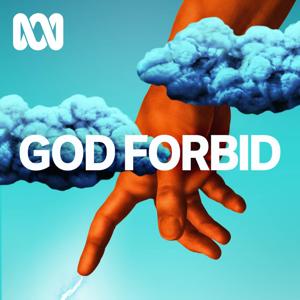


A former Dominican friar who dared to say the universe had no centre — and paid with his life.
Born in 16th-century Italy, Giordano Bruno broke with Church teachings to imagine an infinite cosmos filled with countless worlds. To him, God was not confined to heaven or hierarchy but alive in every corner of creation. The Inquisition saw it differently. After years of imprisonment and interrogation, Bruno was burned alive in Rome in 1600.
Was he a reckless heretic or a visionary thinker centuries ahead of his time — and what does his death say about the danger of new ideas?
GUESTS:
This is the second episode of God Forbid's Religious Rebels, a six-part special series exploring the lives of spiritual revolutionaries who defied empires, reshaped traditions — and sometimes paid with their lives.
A teenage peasant who claimed to hear the voice of God — and changed the course of European history.
At just seventeen, Joan of Arc convinced the French prince to let her lead an army against the English, turning the tide of the Hundred Years’ War. But her victories came at a price: captured, accused of heresy, and burned alive at nineteen. Was she a divinely inspired saviour or a dangerous fanatic?
Centuries later, her story still provokes questions about faith, gender, and power — and how belief can turn an ordinary girl into a national saint.
GUESTS:
This is the first episode of God Forbid's Religious Rebels. A six-part special series exploring the lives of spiritual revolutionaries who defied empires, reshaped traditions — and sometimes paid with their lives.
Only half of all Australians understand Jesus to be a real person who lived at a time and place in history, according to the latest Australian Community Survey.
Two in 10 Australians said Jesus was a mythical or fictional character while three out of 10 didn’t know.
Their doubts stand in contrast to those of ancient historians, classicists and New Testament scholars, who universally accept that Jesus was a real person in time and place in history.
The question here is ontological: what makes “Jesus” Jesus?
Is it enough that a man called Jesus (or Joshua or Yeshua), who became a charismatic teacher, was born around the turn of the millennium in Palestine?
GUESTS:
Sound Engineer: Antonia Gauci, Music by Russell Stapleton
This program was made on the lands of the Gadigal People
What separates humans from other animals? It’s not our brain hardware.
It’s our always changing brain software.
For so long, humans believed our brain power separates us from animals: since the earliest human species, our brain size has tripled.
But our brains haven’t grown for 30,000 - probably 300,000 years.
So, why are we the ones who build cities and fly to space?
Michael Muthukrishna calls it our collective culture.
As every generation passes our operating system gets a free upgrade, and we build on the knowledge of the generation before.
GUEST:
Professor Michael Muthukrishna is at the London School of Economics and, in January 2026, will take up a professorship at New York University
This program was made on the lands of the Gadigal People of the Eora Nation
In the Pacific Ocean right now grey, humpback and southern right whale populations are increasing.
This is important for us all ecologically. But for some of us, even more is at stake.
Because around the world, from the equator to the Arctic, from Russia to New Zealand, throughout history and today, humans revere whales, as spiritual ancestors and as harbingers of fortune and protection.
And as we’ll learn, some communities and traditions even worship whales as gods.
Which makes their near extinction in the 20th century nothing less than deicide.
GUESTS:
Two days prior to the assassination of right-wing political activist Charlie Kirk, a group of writers at US-based feminist magazine, Jezebel, published an article stating that they 'Paid Some Etsy Witches to Curse Charlie Kirk’. The magazine has since pulled the article, on the advice of their lawyers, so as not to cause any confusion about their stance on political violence of any kind.
Is it ever ethical to wish harm on someone, even if that harm is theoretical or supernatural? What code of ethics are witches bound to? And why do witches have such a complex relationship with right-wing politics?
GUESTS
This episode of God Forbid was made on Gadigal land, in Naarm, and on the land of the Eno, Tuscarora and Occcaneechi peoples.
The art of marking the body, by piercing the flesh and pushing ink into the wound, the tattoo, has had an uneasy relationship with religion.
It's sometimes seen as a desecration of the body, but equally, the tattoo is venerated as a rite of passage and as a form of worship.
Then there are tattoos in the secular context. They are so common in Australia now, it’s actually hard to find a body under the age of 40 NOT permanently marked by ink.
It’s a fascinating form of human expression, both in existence for millennia, and changing before our eyes.
GUESTS:
Two thousand years ago, Christianity was an obscure movement with no wealth, power, or friends in high places. Yet within a few centuries, its radical commitment to human dignity, charity and non-violence transformed the Roman world and helped shape the civilisation we live in today.
How did a powerless sect became the most influential religion on Earth? From ancient plagues and persecution to today’s debates about faith and society: can Christianity still turn the world upside down?
GUESTS:
This episode of God Forbid was made on Gadigal land and in Naarm.
It’s hard to believe that one in three young Australian adults go regularly to worship services – more than any other age group. But it’s true and men are leading the charge.
It’s a puzzle, because it breaks two longstanding rules of religion: believers are typically female and old.
Remember back in 2000. Even the most optimistic priest wouldn’t have predicted that would change. The Cold War was over, religion was set to fade way – replaced globally with rationalism, liberalism and democracy.
Generation Xers were finishing the work of their baby boomer parents - rejecting once and for all church moralising, hypocrisy, and dogma.
But the children of Generation X are now young adults themselves. And just as the hippie boomers rebelled, Gen Y and especially Gen Z are rebelling against their atheist parents by turning to God.
Remembering too, what the so-called rationalist generation bequeathed today’s young adults – a world of debt, insecurity, and climate chaos. Why not look elsewhere for meaning and purpose?
GUESTS:
From the publisher's feed

202 Listeners

104 Listeners

65 Listeners
122 Listeners

96 Listeners

20 Listeners

48 Listeners

1,736 Listeners

807 Listeners

756 Listeners

125 Listeners
63 Listeners

56 Listeners
46 Listeners

164 Listeners

321 Listeners

1,003 Listeners

9 Listeners

195 Listeners

114 Listeners

240 Listeners

1,009 Listeners

57 Listeners