
Sign up to save your podcasts
Or



Based on Podcast App listening data
Early Medieval Britain was more Roman than we think. The Roman Empire left vast infrastructural resources, not least roads, walls and bridges. Why have they survived so well? And what did the people who lived here immediately after the Romans think of them and do with them?
In this episode of Gone Medieval, Dr. Cat Jarman talks to Dr. Mateusz Fafinski about how the infrastructure the Romans left behind was used and adapted in the early Medieval period.
The Senior Producer on this episode was Elena Guthrie. It was edited by Thomas Ntinas and produced by Rob Weinberg.
For more Gone Medieval content, subscribe to our Medieval Mondays newsletter here.
If you'd like to learn even more, we have hundreds of history documentaries, ad free podcasts and audiobooks at History Hit - subscribe today!
To download, go to Android or Apple store.
Hosted on Acast. See acast.com/privacy for more information.
How do you go about finding your way around the history of a nation and a national identity? For the barrister and author Dominic Selwood, documents are the perfect window through which to watch a country develop and change. His new book Anatomy of a Nation: A History of British Identity in 50 Documents explores more than 950,000 years of history by examining those documents that tell the story of what has made Britain unique.
In this podcast, Matt Lewis talks to Dominic Selwood particularly about the Medieval documents he’s chosen, including the Magna Carta, Joan of Arc’s letter to King Henry VI, and the emergence of the stories of King Arthur.
The Senior Producer on this episode was Elena Guthrie. It was edited and produced by Rob Weinberg.
For more Gone Medieval content, subscribe to our Medieval Mondays newsletter here.
If you'd like to learn even more, we have hundreds of history documentaries, ad free podcasts and audiobooks at History Hit - subscribe today!
To download, go to Android or Apple store.
Hosted on Acast. See acast.com/privacy for more information.
Archaeology has a lot to contribute to our knowledge and understanding of the so-called Dark Ages, and every now and then new sites are found in places where we previously knew nothing about the people who once lived there.
In today’s Gone Medieval, Dr. Cat Jarman goes to the Ministry of Defence land on Salisbury Plain to visit precisely one such site. There she meets Richard Osgood, senior archaeologist for the MoD who is excavating a seventh-century cemetery as part of Operation Nightingale which gives excavation opportunities to injured service personnel and veterans as part of their rehabilitation.
The Senior Producer on this episode was Elena Guthrie. It was edited by Seyi AdaobI and produced by Rob Weinberg.
For more Gone Medieval content, subscribe to our Medieval Mondays newsletter here.
If you'd like to learn even more, we have hundreds of history documentaries, ad-free podcasts, and audiobooks at History Hit - subscribe today! To download, go to Android or Apple store.
Hosted on Acast. See acast.com/privacy for more information.
From an age in which women’s lives were obscured and poorly recorded, one shines brightly from the darkness. Eleanor of Aquitaine - born 900 years ago - has been the subject of scandal and legend for almost a millennium. Nevertheless, she played a central role in the pivotal events that defined nations and set relationships across Europe for centuries to come.
In this special explainer episode of Gone Medieval, Matt Lewis recounts an incredible life, separating the myths from the facts to get to the real Eleanor of Aquitaine.
The Senior Producer on this episode was Elena Guthrie. It was mixed and edited by Rob Weinberg.
For more Gone Medieval content, subscribe to our Medieval Mondays newsletter here.
If you'd like to learn even more, we have hundreds of history documentaries, ad free podcasts and audiobooks at History Hit - subscribe today! To download, go to Android or Apple store.
Hosted on Acast. See acast.com/privacy for more information.
The first of Greenland’s Viking settlements were established in the tenth century. But by the fifteenth century, they had all but vanished, their fate confounding generations of archaeologists. But new research has revealed that it was the trade in walrus ivory that was behind both their prosperity and decline.
In this edition of Gone Medieval, Dr. Cat Jarman talks to Professor James Barrett, to discuss an enterprise that traversed East and West, but ultimately crashed as stocks ran out and elephant ivory became more accessible.
The Senior Producer on this episode was Elena Guthrie. It was edited by Thomas Ntinas and produced by Rob Weinberg.
For more Gone Medieval content, subscribe to our Medieval Mondays newsletter here.
If you'd like to learn even more, we have hundreds of history documentaries, ad free podcasts and audiobooks at History Hit - subscribe today! To download, go to Android or Apple store.
Hosted on Acast. See acast.com/privacy for more information.
Parish churches were at the heart of English social life in the Middle Ages. But how did they come into existence? Who staffed them? And how were the buildings used?
In this episode of Gone Medieval, Matt Lewis talks to Professor Nicholas Orme, whose new book Going to Church in Medieval England was shortlisted for the 2022 Wolfson History Prize, the UK’s most prestigious history writing award. Together, they explore how worship touched everyone’s lives, what happened in the daily and weekly services, and how churches marked festivals and the great events of life.
The Senior Producer on this episode was Elena Guthrie. It was edited and produced by Rob Weinberg.
For more Gone Medieval content, subscribe to our Medieval Mondays newsletter here.
If you'd like to learn even more, we have hundreds of history documentaries, ad free podcasts and audiobooks at History Hit - subscribe today!
To download, go to Android or Apple store.
Hosted on Acast. See acast.com/privacy for more information.
Trees have been universally important to humanity throughout history - not only as the source of fruits and nuts, but also wood for tools, weapons and buildings, and fuel for transport.
So integral were trees to early Medieval society that their names were used for places throughout England - such as Acton (oak settlement) or Ashby (ash farm).
In this edition of Gone Medieval, Dr. Cat Jarman talks to Jessica Treacher whose PhD research has been looking at the environmental and cultural role of trees and what we can learn from place-names about people’s relationship with nature in the Middle Ages.
The Senior Producer on this episode was Elena Guthrie. It was edited by Thomas Ntinas and produced by Rob Weinberg.
For more Gone Medieval content, subscribe to our Medieval Mondays newsletter here.
If you'd like to learn even more, we have hundreds of history documentaries, ad free podcasts and audiobooks at History Hit - subscribe today!
To download, go to Android or Apple store.
Hosted on Acast. See acast.com/privacy for more information.
The twelfth and thirteenth centuries were a time when the close friendship or petty feuding between monarchs could determine the course of history. The Capetians of France and the Angevins of England waged war, made peace, and intermarried. The lands under English control once reached to within a few miles of Paris, and those ruled by the French, at their peak, crossed the Channel and encompassed London itself. Influential women of the two royal families - including Eleanor of Aquitaine and Blanche of Castille - helped create the familial bonds that shaped the fate of the two countries.
In this episode of Gone Medieval, Matt Lewis talks with Dr. Catherine Hanley to trace the great clashes and occasional friendships of two intertwined dynasties that shaped the present and the future of England and France.
The Senior Producer on this episode was Elena Guthrie, the Producer is Rob Weinberg. Edited and Mixed by Seyi Adaobi.
For more Gone Medieval content, subscribe to our Medieval Mondays newsletter here.
If you'd like to learn even more, we have hundreds of history documentaries, ad free podcasts and audiobooks at History Hit - subscribe today!
To download, go to Android or Apple store.
Hosted on Acast. See acast.com/privacy for more information.
Few early medieval gods are as well-known and as popular as Thor. He’s currently thrilling moviegoers worldwide with his new outing for the Marvel Cinematic Universe, Thor: Love and Thunder. But behind the countless films and works of fiction, what’s the real origin story for Thor? How was he worshipped? And how has he secured such an enduring place in popular culture?
In this episode of Gone Medieval, Dr. Cat Jarman speaks to Professor Carolyne Larrington, an expert in Norse literature and mythology, to find out more about the god behind the superhero.
The Senior Producer on this episode was Elena Guthrie. It was edited and produced by Rob Weinberg.
For more Gone Medieval content, subscribe to our Medieval Mondays newsletter here.
If you'd like to learn even more, we have hundreds of history documentaries, ad free podcasts and audiobooks at History Hit - subscribe today!
To download, go to Android or Apple store.
Hosted on Acast. See acast.com/privacy for more information.
Gardens and gardening are aspects of medieval life that rarely get much attention. But it was a period when those with a little more land created gardens for leisure and pleasure, a place in which to stroll or entertain friends.
In this edition of Gone Medieval, Matt Lewis heads to Prebendal Manor in Northamptonshire, a unique house and garden steeped in history dating back to King Cnut. There, Matt meets the "Historic Gardener" Michael Brown to find out what medieval gardens looked like, what plants they grew and how were they tended without the benefits of modern tools.
The Senior Producer on this episode was Elena Guthrie. It was edited by Seyi Adaobi and produced by Rob Weinberg.
For more Gone Medieval content, subscribe to our Medieval Mondays newsletter here.
If you'd like to learn even more, we have hundreds of history documentaries, ad free podcasts and audiobooks at History Hit - subscribe today!
To download, go to Android or Apple store.
Hosted on Acast. See acast.com/privacy for more information.
From the publisher's feed
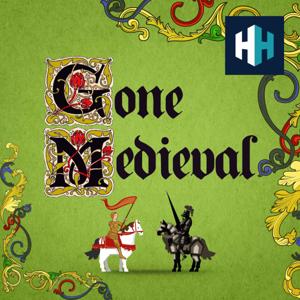
From long-lost Viking ships to kings buried in unexpected places; from murders and power politics, to myths, religion, the lives of ordinary people: Gone Medieval is History Hit’s podcast dedicated to the middle ages, in Europe and far beyond.
New episodes every Tuesday and Friday.
A podcast by History Hit, the world's best history channel and creators of award-winning podcasts Dan Snow's History Hit, The Ancients, and Betwixt the Sheets.
History Hit is part of Little Dot Studios, a Certified B Corp™
Sign up to History Hit for hundreds of hours of original documentaries, with a new release every week and ad-free podcasts. Sign up at https://www.historyhit.com/subscribe.
Hosted on Acast. See acast.com/privacy for more information.
Ranked by our users in the last 21 days

3,178 Listeners

4,764 Listeners
748 Listeners
738 Listeners
471 Listeners

3,223 Listeners

110 Listeners

3,360 Listeners

536 Listeners

15,603 Listeners

2,047 Listeners
2,833 Listeners

181 Listeners

266 Listeners
1,380 Listeners

1,594 Listeners
1,754 Listeners
1,150 Listeners