
Sign up to save your podcasts
Or

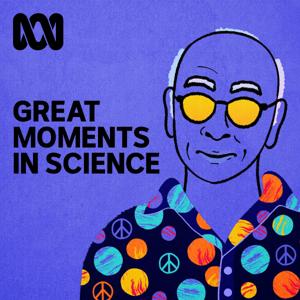


Gazing off into empty space or being the target of a ‘stare bear’, it can happen to us all. Staring into the middle distance can be relaxing and head-clearing, but fixing our eyes on nothing at all for a very long time can be just plain dangerous.
The last few episodes have considered the difference between a virus and a bacterium; wondered whether a virus is alive or not; and looked at our discovery of these incredibly tiny critters. While mysteries surrounding viruses are intriguing, without them we couldn’t have babies or even think.
This COVID-19 pandemic is the first one for 102 years. In 1918-1920 we had an influenza pandemic, which we now refer to as the Spanish Flu. Back then we didn’t know about a thing called a ‘virus’, so in 1918 no-one knew what was killing people. But we did know about germs.
Bacteria and viruses both have the genetic code needed to make babies but only a bacterium has all the biological machinery to make another bacterium. A virus has to get into a cell and make it start manufacturing copies of the virus. So, is a virus 'alive' – well, depends on the definition.
2020 will be remembered as the Year of the Virus – the first year of the COVID-19 pandemic. By early 2021 the COVID virus had truly left its mark on our population, lifestyle, and biosphere. But the universe is complicated, and viruses can be good guys too.
Trying to talk about the dollar value of a human life really sounds like cold hard economics. Knowing how the calculations are done is chilling. But human life does have a value. Bizarrely, trying to work that out began with trying to work out the "value of death".
Fake News has been around for thousands of years. You’ve probably heard of Nero, who was accused of playing the fiddle while Rome burned. But nowadays, the word gets around a lot faster. Thanks to the Internet and Social Media, a lie can travel around the world before the truth has even got out of bed. So fake news spreads quickly, and it takes more time to set straight than it took to tell the original lie.
More on how under-rated our sense of smell is – and how loss of smell can be an early indicator of COVID-19. In your DNA many of the genes associated with smell are located right next to a big bunch of genes that form your immune system. As a baseline, pre-COVID-19, about 1-5% of the general population had no sense of smell, and another 5-13% had a lessened sense of smell. But COVID-19 has bumped these percentages way up.
We see our human sense of smell as woefully inadequate compared to other animals – but awareness of our sense of smell has become more of a hot topic recently with the COVID-19 pandemic. A significant number of people who get the virus lose their sense of smell early on. It seems that a loss of smell can be a very good early sign of COVID-19 infection.
In a classic scientific 'urban myth' a physics student is asked to measure the height of a building using a barometer. In 2020 French and Italian physicists wrote a paper called 61 Ways To Measure The Height Of A Building With A Smart Phone. This opened up a bunch of extra-modern measuring methods because of the smartphone's array of internal sensory gadgets.
From the publisher's feed
100 Listeners
63 Listeners
119 Listeners

47 Listeners
28 Listeners
1,737 Listeners
770 Listeners
193 Listeners
759 Listeners
132 Listeners
22 Listeners
61 Listeners

52 Listeners
64 Listeners
160 Listeners
318 Listeners
1,119 Listeners
40 Listeners

10 Listeners

194 Listeners
114 Listeners
235 Listeners
1,007 Listeners
45 Listeners