
Sign up to save your podcasts
Or



Based on Podcast App listening data
Journalist and historian Eric Alterman joins Haaretz Weekly to discuss his new book "We Are Not One: A History of America's Fight Over Israel." From Eisenhower's confrontation with Ben Gurion to Netanyahu's clashes with Obama, Alterman walks us through some of the most important moments in the history of the U.S.-Israel relationship, and explains how the pro-Israeli lobby in America grew and transformed over the years.
Alterman also spoke about the trends within the Democratic party regarding Israel, and the divide between young, progressive American Jews and the community's establishment organizations when it comes to Israel and the Palestinians. How will Israel's new right-wing government impact these changes, and will Joe Biden be the last pro-Israeli president from his party? Listen to the full conversation with host Amir Tibon.
See omnystudio.com/listener for privacy information.
On this week’s edition of Haaretz Weekly, host Amir Tibon welcomes Washington Post political columnist E.J. Dionne and Haaretz journalist Allison Kaplan Sommer for an in-depth discussion of the results of the 2022 midterms and their impact on the U.S.-Israel relationship.
The results represented a defeat not just for Donald Trump but for his entire wing of the Republican Party, says Dionne, who is also a senior fellow at the Brookings Institution and professor at Georgetown University.
Coming right after a right-wing victory in Israel's election two weeks ago, the results in the U.S. were a disappointment for incoming prime minister Benjamin Netanyahu, who will have to work for the next two years with an emboldened President Biden and a stronger Democratic party.
Taken together the two sets of election results present “a real challenge" for Israel, says Dionne. “The swing vote in American opinion on Israel are liberal and democratic voters who have long supported the existence of Israel as a Jewish state, but also oppose settlements, are critical of Netanyahu and want a two state solution.”
See omnystudio.com/listener for privacy information.
With the most religious and right-wing Israeli government in history about to be formed following last week’s dramatic elections, what’s ahead for the U.S.-Israel relationship, and especially for Israel’s ties with American Jews?
On Haaretz Weekly, host Amir Tibon and Haaretz journalists Allison Kaplan Sommer and Ben Samuels analyze the fallout from the Israeli election and the implications of the expected outcome of the U.S. midterms, where the Republican Party is strongly favored to regain control of Congress. This follows a pitched campaign in which antisemitism and extremism played a major role.
How will the Biden administration work with an Israeli government based on the far-right? Will Benjamin Netanyahu work with Republicans in Congress against the president? And will the rise of antisemitism in the U.S. create even more distance between American Jews and Israel? Listen to the full conversation to get the answers to these and other important questions.
See omnystudio.com/listener for privacy information.
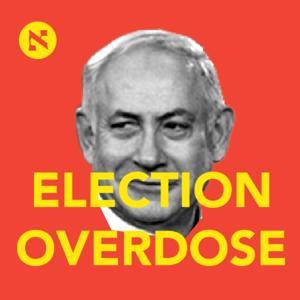
Have Israel's election results got you down? No one parses the voters' choice like Election Overdose hosts Anshel Pfeffer and Dahlia Scheindlin. In the special one-hour season finale, they walk through all the nerdy data and critical commentary to make sense of what just happened.
Learn why Netanyahu won big, but Likud fared poorly; where we think Naftali Bennett's voters went, and who really should be blamed for Meretz failing to enter the Knesset. Find out about turnout in Likud strongholds, voter breakdown in a small kibbutz in the Negev, and which Overdose host was once an outstanding dairy farmer. Bring a glass of whiskey, take two aspirin before bed, and see you for the next election.
Overdose is over, but don't stop following Dahlia (@dahliasc) and Anshel (@AnshelPfeffer) on twitter and keep read their articles and columns on Haaretz.com.
See omnystudio.com/listener for privacy information.
If one major story dominated Israel’s 2022 Knesset election, it was the surging popularity of the Religious Zionism Party. The party’s leaders Itamar Ben-Gvir and Bezalel Smotrich, claim to have moderated their extremism, but their party platform reflects their racist, supremacist, homophobic, and theocratic views.
On this episode of Haaretz Weekly, which was recorded hours before Israelis went to the polls on Tuesday, Professor Jonathan Rynhold joins host Allison Kaplan Sommer to explain the reasons behind the rise of the party and why he holds Benjamin Netanyahu responsible for mainstreaming it.
In a wider context, Rynhold does not see believe that the surge in popularity of the far-right in Israel means that the country is following behind the trend of strengthening right-wing populist and xenophobic parties in Europe or Christian nationalism and Trumpism in the United States.
Instead, he says, “I think the rest of the world has become more like Israel.”
Follow live coverage of Israel's political drama today on Haaretz.com.
See omnystudio.com/listener for privacy information.
What in the world will happen on Tuesday? In the final episode ahead of the Israeli elections next week, Election Overdose hosts Anshel Pfeffer and Dahlia Scheindlin walk through the permutations of electoral outcomes, analyze the projected deadlock between party blocs in the polls and consider the greatest uncertainties that could tip the results one way or another.
Special guest Amir Tibon, deputy editor of Haaretz English Edition, joins us to reflect on the media coverage of this campaign. We also ask, will late-breaking news, such as the Israel-Lebanon maritime border agreement, make a difference?
Subscribe to Election Overdose for the right dose of parties, people, politicians and polls in Israel's fifth election in three years. Follow Dahlia (@dahliasc) and Anshel (@AnshelPfeffer) on twitter and read more of their articles and columns on Haaretz.com.
See omnystudio.com/listener for privacy information.
Ukraine has been begging Israel for defensive weapons systems since the start of the Russian invasion, but Israel has refused, fearing the wrath of Russian president Vladimir Putin.
Security expert and Haaretz journalist Yossi Melman tells Haaretz Weekly host Allison Kaplan Sommer that Russian’s recent use of Iranian suicide drones and expected deployment of Iranian-made ballistic missiles in Ukraine should drastically changes the equation for Israeli leaders.
“Israel has always said that Iran is its number one enemy and they will fight Iran wherever they are - in Yemin, Iraq, Syria and Lebanon. So what's the difference now with Ukraine? Iran is acquiring experience on the battlefield there which will turn against Israel in the near future: they are learning, they are improving their systems, and as a result, they will be able to upgrade their drones and their missiles, and send them all over the Middle East, including against Israel.”
Also on the podcast, Haaretz journalist Sam Sokol shares stories from his recent journey across a “very very surreal” wartime Ukraine, and discusses the efforts to sustain Jewish life there and the “bitterness” he encountered regarding Israel’s refusal to offer military assistance.
See omnystudio.com/listener for privacy information.
With less than two weeks to go until Election Day, the campaign has moved to high-tempo. Or has it? This week’s Election Overdose episode tries to work out why no issues have caught the public’s attention so far in the long campaign and asks whether the controversial judicial reform proposals of the far-right Religious Zionism party will gain traction. Also: Will the public opinion polls ever move before November 1?
Subscribe to Election Overdose for the right dose of parties, people, politicians and polls in Israel's fifth in the never-ending election cycle. Follow Dahlia (@dahliasc) and Anshel (@AnshelPfeffer) on twitter and read more of their articles and columns on Haaretz.com.
See omnystudio.com/listener for privacy information.
Will religious Jewish voters tip the scales in Israel's elections? With just 25 days to go and each electoral bloc desperate for the final push to reach a 61-seat majority, Israel's national religious community faces surprisingly tough choices.
Which parties could be attractive to moderate religious right-wing voters in Israel? Why did the ultra-nationalist Jewish supremacist party call itself Religious Zionism, and why is it doing so well in all electoral surveys?
To answer these questions, Overdose hosts Anshel Pfeffer and Dahlia Scheindlin talk with Yair Ettinger, religious affairs commentator for Israel's Kan news, and author of The Great Split, a new book about the dilemmas defining and dividing the national religious community in Israel today.
Subscribe to Election Overdose for the right dose of parties, people, politicians and polls in Israel's fifth in the never-ending election cycle. Follow Dahlia (@dahliasc) and Anshel (@AnshelPfeffer) on twitter and read more of their articles and columns on Haaretz.com.
See omnystudio.com/listener for privacy information.
Former U.S. president Donald Trump divided the Jewish community and American Jews from Israel “just like he divided his political party, he divided his White House staff and he divided even his own family,” says Peter Baker, chief White House correspondent for the New York Times on the latest episode of Haaretz Weekly.
Sowing discord was no “unfortunate consequence” of Trump’s behavior: it was consistently his strategy, Baker told host Allison Kaplan Sommer in a wide-ranging interview on his new book “The Divider: Trump in the White House, 2017-2021” co-authored with his wife Susan Glasser, a staff writer at the New Yorker (and previous Haaretz Weekly guest).
Baker offers a fascinating behind-the-scenes look at Trump’s Israel policies, his falling out with former prime minister Benjamin Netanyahu over the ‘deal of the century’ and how those tensions inadvertently led to his greatest foreign policy achievement: the Abraham Accords. He also makes a prediction that if Trump were to win another term as president in 2024, his policy on Israel would look “very different” than what he did previously.
In the interview, Baker also shares juicy anecdotes about the time King Abdullah of Jordan “nearly had a heart attack” when Trump told him on the phone that he was “gonna give him the West Bank” and when President Vladimir Putin got so tired of Trump’s bragging about places being named for him that Putin said, “maybe they should just name all of Israel after you, Donald.”
See omnystudio.com/listener for privacy information.
From the publisher's feed
From Haaretz – Israel's oldest daily newspaper – a weekly podcast in English on Israel, the Middle East and the Jewish World, hosted by Allison Kaplan Sommer.
Ranked by our users in the last 21 days

1,202 Listeners

33 Listeners
307 Listeners

201 Listeners

458 Listeners

1,223 Listeners

3,229 Listeners

1,066 Listeners
14 Listeners

585 Listeners

16,055 Listeners
266 Listeners

8,480 Listeners

914 Listeners

524 Listeners

123 Listeners