
Sign up to save your podcasts
Or



Based on Podcast App listening data
All eyes are on Arab voters, as the Israeli election campaign begins in earnest. In the final hours before last week's deadline for finalizing party slates, the Joint List disintegrated, leaving three different parties to compete for the votes of Palestinian citizens of Israel. But the Joint List breakdown could also demoralize those voters so badly that their already-tepid participation rate falls even lower.
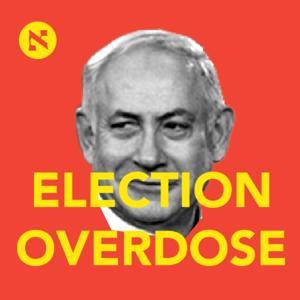
Professor Amal Jamal of Tel Aviv University joins Election Overdose to discuss what Arab voters want and what their parties are offering, from ideology to political integration to immediate social interests. This week we also track Prime Minister Lapid's United Nations speech, and why efforts to disqualify parties from running mostly fail (but not always). And what do the new polls tell us?
Subscribe to Election Overdose for the right dose of parties, people, politicians and polls in Israel's fifth and best election campaign yet. Follow Dahlia (@dahliasc) and Anshel (@AnshelPfeffer) on twitter and read more of their articles and columns on Haaretz.com.
See omnystudio.com/listener for privacy information.
As the Jewish year 5782 comes to a close, we devote the first half of this week's Haaretz Weekly to discussing the biggest stories of the outgoing year – from Israel's short-lived “government of change” to the Jewish aspects of the war in Ukraine. Haaretz Deputy Editor Noa Landau joins host Amir Tibon in the studio, and they also discuss the happy dictators of the Middle East and whether next year will bring with it another Israeli election.
Later on the show, author Nir Baram, whose novel “World Shadow” was recently published in English, joins the podcast to discuss the fate of the Israeli left, the one-state reality on the ground in Israel-Palestine, and the thought-provoking idea of a billion-man strike, which is at the heart of his book. Listen to the full conversation with Nir starting at time code 17:45.
Next week, due to Rosh Hashanah, we'll be taking a short holiday break. Shanah Tova to our listeners, we'll meet again in early October.
See omnystudio.com/listener for privacy information.
As Israeli parties submit their final lists of candidates to the Central Election Commission, the latest episode of Election Overdose goes deep into the emerging battlefield.
Why has Benjamin Netanyahu added new names to Likud's list? Who are the potential voters of the far-right Religious Zionism party? And what does the drama surrounding the Joint List tell us about Arab-Israeli voters? We’ll also be asking which list in Israeli political history represented the largest number of parties running under the same roof.
Each week, hosts Anshel Pfeffer and Dahlia Scheindlin discuss all the news, polls, history and party trivia you need to know for Israel's upcoming election. Subscribe to the show on your podcast app, follow Dahlia (@dahliasc) and Anshel (@AnshelPfeffer) on twitter and read more of their articles and columns on Haaretz.com.
See omnystudio.com/listener for privacy information.
When Lynn Novick and Sarah Botstein began work on the documentary series “The US and the Holocaust” together with acclaimed filmmaker Ken Burns, they, like other Americans, shared the common belief that America only rescued a small fraction of Europe’s Jews because it was unaware of the systematic Nazi extermination in real time.
But, as they tell Allison Kaplan Sommer on Haaretz Weekly, an abundance of research shows that this myth has little basis. Among those “desperately” trying to seek refuge in the United States - and failing - was the family of Anne Frank, one of the Holocaust’s most famous victims.
“We could have done so much more,” said Novick. “And that idea is very much in conflict with Americans’ sense that we hold ourselves to a higher standard.”
Earlier on the show, Haaretz English editor-in-chief Esther Solomon reviews the life and legacy of Elizabeth II, and explains why so many British Jews revered the monarchy: “There is a strong connection between the welfare of a minority community like the Jewish community, and a stable political entity, of which the queen was the ultimate symbol.”
See omnystudio.com/listener for privacy information.
On September 15th, Israeli parties must submit their final lists of candidates and be inscribed in the book of parties for the upcoming election. One week from now, parties of the left and right that have been flirting with merging or splitting must make a final decision.
Will the ultra-Orthodox United Torah Judaism split into two factions and what would that mean for Benjamin Netanyahu's chances to return to the prime minister's office?
Why do Arab voters want the three parties of the Joint List to remain glued together, and can Israel's left-wing parties Labor and Meretz work it out this time?
This week's Election Overdose breaks down the final party dilemmas and the consequences of each scenario. We also survey the dazzling new posters of Benny Gantz around town and ask what exactly was Netanyahu doing in a 700,000-shekel bulletproof glass, air-conditioned Bibi-mobile this week on a tour named "Bibiba"?
Each week, hosts Anshel Pfeffer and Dahlia Scheindlin discuss all the news, polls, history and party trivia you need to know for Israel's upcoming election. Subscribe to the show on your podcast app, follow Dahlia (@dahliasc) and Anshel (@AnshelPfeffer) on twitter and read more of their articles and columns on Haaretz.com.
See omnystudio.com/listener for privacy information.
As talks between Iran and world powers over the Islamic Republic's nuclear program continue, Israel is facing a difficult choice between bad and worse options. Should it accept a flawed deal in order to postpone a potential confrontation with Tehran? Or should it ring every alarm bell and try to stop the emerging deal, even if that means risking a regional escalation with thousands of missiles falling on Tel Aviv and Jerusalem?
On this week's episode, two of the top experts on the subject in Israel and Washington join the podcast for a heated exchange. Chuck Freilich, Israel's former deputy national security adviser, argues that a bad deal is still the best option and preferable to the current situation; Mark Dubowitz, CEO of the Foundation for Defense of Democracies, warns of a nightmare scenario that will strengthen both Iran and Vladimir Putin.
Hosts Amir Tibon and Allison Kaplan Sommer ask them both about the prospect of an Israeli military strike against Iran, the impact of Trump's decision to destroy the previous nuclear deal in 2018, and whether Israel can trust the U.S. to use military force against Iran if needed.
See omnystudio.com/listener for privacy information.
Our guest this week is Member of Knesset Yossi Shain, who joins the podcast to discuss how Yisrael Beitenu, his party, is preparing for the November 1 election. Shain argues that the secular right-wing party led by Finance Minister Avigdor Lieberman represents 'the true right-wing' in Israel, unlike the religious and far-right alliance of parties that was merged last week under pressure from opposition leader Netanyahu.
Shain also explains how Lieberman, who has a long history of harsh statements against Israel's Arab politicians, found himself in a coalition together with Mansour Abbas of the United Arab List. In his view, Lieberman hasn’t changed; but Mansour Abbas recognized Israel as a Jewish state, which made it possible for Yisrael Beitenu to cooperate with him.
In other news, Meretz elected Zehava Galon as its old-new leader; Prime Minister Yair Lapid had a heart-to-heart with President Biden about Iran, and Israel narrowly averted a teacher's strike ahead of the new school year. But will any of it matter to the voters by November?
Each week, hosts Anshel Pfeffer and Dahlia Scheindlin discuss all the news, polls, history and party trivia you need to know for Israel's upcoming election. Subscribe to the show on your podcast app, follow Dahlia (@dahliasc) and Anshel (@AnshelPfeffer) on twitter and read more of their articles and columns on Haaretz.com.
See omnystudio.com/listener for privacy information.
What lies behind the charm offensive launched by Turkish president Recep Tayyip Erdogan toward Israel that has resulted in the restoration of full diplomatic ties between the two countries last week, and how long will the honeymoon last?
Dr. Gallia Lindenstrauss, a Senior Research Fellow at the Institute for National Security Studies, and an expert in Turkish foreign policy joins Haaretz Weekly and says that when Erdogan reaches out to Israel, it’s usually a sign of weakness.
“He's at his worst point in terms of public support since he took power,” she tells host Allison Kaplan Sommer, noting that both Erdogan and Israeli Prime Minister Yair Lapid are facing elections in the coming year, and this fact also contributed to their reconciliation.
Also on this episode, Avi Scharf and Omer Benjakob unveil the new Haaretz Security, Cyber & Aviation desk and talk about some of its most interesting stories, from cyber-interference in the Israeli elections to arms trades between Russia and Iran, and also how they uncovered a fake news operation imitating a blog written by the editor-in-chief of Haaretz.
See omnystudio.com/listener for privacy information.
On this episode of Election Overdose, we ask if the famous rule of American elections, is finally making its way to Israel as well. Our guest Karnit Flug, former governor of the Bank of Israel, now at the Israel Democracy Institute and a professor at Hebrew University, breaks down myth and reality about the non-political economics of Israel. Why do Israelis constantly complain of economic woes, but hardly ever vote based on economic platforms?
Earlier on the show, we discuss the latest senior general to enter politics, former IDF Chief of Staff Gadi Eisenkot. Do the political achievements of Israel's generals justify the hype? And why did Eisenkot flirt with Prime Minister Yair Lapid for months before joining the new National Unity party of Defense Minister Benny Gantz?
Each week, hosts Anshel Pfeffer and Dahlia Scheindlin discuss all the news, polls, history and party trivia you need to know for Israel's upcoming election. Subscribe to the show on your podcast app, follow Dahlia (@dahliasc) and Anshel (@AnshelPfeffer) on twitter and read more of their articles and columns on Haaretz.com
See omnystudio.com/listener for privacy information.
After a series of dramatic decisions by the U.S. Supreme Court, the “wall between church and state is almost completely eroded,” warns our guest Dahlia Lithwick, a senior journalist at Slate and legal commentator for MSNBC.
In a conversation with host Allison Kaplan Sommer, she highlights two recent cases decided by the new conservative court majority that prioritized the “religious liberty” of school employees and have “wiped away” the idea that “schools, particularly public schools, are meant to be a place where students could not face religious proselytizing.”
Lithwick, who lived in Charlottesville during the 2017 “Unite the Right” march, also discussed the five-year anniversary of that frightening event, saying that “the deep unease that American Jews feel with being both the recipients of Christian nationalism … while also recognizing that they are white and have the privilege of whiteness even when the Nazis march … is a faultline in how American Jews think about themselves and their power.”
Lithwick, whose new book "Lady Justice: Women, the Law, and the Battle to Save America" comes out in September, also discusses why the religious beliefs of justices - from RBG’s Judaism to the Catholic judges who have banned abortion - is a “third rail” for journalists like herself, and the difference between “cynical” Israelis who have long considered their Supreme Court to be highly politicized, and Americans who have been “gobsmacked” to discover that the court “is a partisan political body.”
See omnystudio.com/listener for privacy information.
From the publisher's feed
From Haaretz – Israel's oldest daily newspaper – a weekly podcast in English on Israel, the Middle East and the Jewish World, hosted by Allison Kaplan Sommer.
Ranked by our users in the last 21 days

1,202 Listeners

33 Listeners

307 Listeners

201 Listeners

458 Listeners

1,223 Listeners

3,229 Listeners

1,066 Listeners
14 Listeners

585 Listeners

16,055 Listeners
266 Listeners

8,480 Listeners

914 Listeners

524 Listeners

123 Listeners