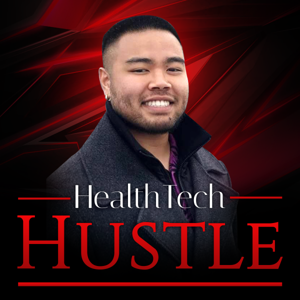
HealthTech Hustle
Download on the App Store

HealthTech Hustle episodes

  • Episode 36: "Failures and Lessons from AI Driven Technology" | Jerry Abiog, Standard Insights
    Key Takeaways
    • Software developers need to design technology and solutions to solve the key problems and address the pain points of their customers from the outset. Often they start by developing technology and then evaluate how it can be used but that is when failure due to poor execution occurs.
    • It is better to have an A-level team and a B-level product than a B-level team than an A-level product. Taking the leadership and initiative to build quality, high-performance teams is critical to the success of a company.
    • There are a lot of misconceptions about AI still, however it is a rapidly growing industry that will soon be over $500 billion. Companies like Google and Facebook are the dominant players that track data and consumer behavior across websites even though all companies can be empowered to leverage the data that is available to them to understand their customers better, improve upon their products, and have more repeat customers.

    Key moments
    • 01:10 – Jerry talks about his background and journey into AI
    • 04:12 – How to identify problems and solve them with AI
    • 05:40 – Tracking customer data to track human behavioral patterns
    • 07:22 – The metrics to track while adopting AI
    • 10:38 – Individuals that are concerned about AI and avoid using it
    • 12:23 – The impact on companies that have not adopted new technologies
    • 15:20 – Trends of AI in the healthcare industry 
    • 17:20 – Jerry’s work as CMO of Standard Insights
    • 18:41 – Strategy around content and customer communications
    • 21:57 – Rapid Fire Round

    Quote
    • “AI is not about replacing an individual in their job, it is about helping an individual do their job better.” – Jerry Abiog

    Subscribe to the podcast:Apple Podcasts - https://apple.co/2x0G3UmSpotify - https://spoti.fi/3dVzK4X Connect with Rodney:Healthtech Hustle - WebsiteRodney Hu - LinkedIn Connect with Jerry Abiog:Standard Insights - WebsiteJerry Aibog - LinkedIn

    27 min
  • Episode 35: "Behaviour Change and Overcoming Resistance in Healthcare" | Ryan Jones, Florence Healthcare
    Key Takeaways
    • Behavior change in the healthcare industry is particularly challenging because it requires you to understand the compliances and regulations for getting approvals from the FDA along with overcoming resistance to change from already overstretched health workers.
    • When you are launching your Healthtech Hustle, it is incredibly important to get specific with the problem that you are trying to solve. Within the healthcare industry, there are hundreds of problems that you can build your product around and so it is important to find your niche and develop relationships with your customers so that they can give you honest feedback.
    • When you want to scale your impact, you have to take a step back from everyday problem solving and be able to look at the bigger picture of the potential of your solution and the value that it is bringing. As entrepreneurs, we are naturally built to be curious and focus on the problem at hand but in order to grow your company, you have to prioritize scale.

    Key moments
    • 01:29 – Ryan talks about getting on the path pivoting into the health tech space and starting Florence Healthcare through document management.
    • 03:22 – What are the members and players that you work with to bring value to the market?  
    • 05:47 – The resistance faced in launching Florence Healthcare: The resistance to change in the healthcare industry coupled with the stringent FDP regulations made behavior change really difficult and required a really strong team of researchers and lawyers.
    • 08:24 – Learning what to prioritize and focus on while running the company.
    • 10:27 – Building scalability into the model instead of just focusing on problem-solving
    • 13:09 – Educating the market and building value through caring for customers
    • 15:35 – Advice for other entrepreneurs in the healthcare space
    • 18:14 – Making decisions based on customer feedback 
    • 21:39 – Rapid Fire Round.

    Quote
    • “If I were to start over, I would get my idea and niche-specific faster and make sure I am asking questions so that I get the real data.” – Ryan Jones

    Subscribe to the podcast:Apple Podcastshttps://apple.co/2x0G3UmSpotifyhttps://spoti.fi/3dVzK4X
    Connect with Rodney:
    • Healthtech Hustle - Website
    • Rodney Hu - LinkedIn

    Connect with Ryan Jones:
    • Florence Healthcare - Twitter
    • Florence Healthcare - LinkedIn
    24 min
  • Episode 34: "Teaching Others Through The HealthTech Hustle Platform” | Rodney Hu
    “My Healthtech Hustle is to really inspire people and lay the foundation of what success looks like and help as many people as I can along the way.” [09:49] The current state of Healthtech Hustle Podcast 2020 [01:10]  Rodney mentioned that he started with zero audiences on Twitter, LinkedIn, iTunes Spotify etc. Since he launched in April 2020 we have over 32 episodes publish with a total of 3101 downloads. He personally thinks this is awesome and proud of the numbers given how niche-down the health tech industry is.  Why did Rodney start the HealthTech Hustle Podcast? [02:03]   He started the podcast to get his foot on the door as far as the whole digital marketing make-money-online-game. Rodney wanted to sell video content services that he is doing on the side, by creating this podcast, he essentially developed his own distribution platform. He also wanted to make sure specialists have an outlet for them to talk about their expertise. This allowed him to gather other people’s attention, he was invited to other podcasts, speaking events based on the concept of he was getting out there for the community. What is HealthTech Hustle [04:40]  Rodney shares his story back in 2014, when he first moved to Stockton to LA to find his MRI school. He said in 2017 he graduated and got his first job in Valley Radiology in San Jose. He put in the work and time and got a high paying job and felt he was on top of the world.  A setback that became a motivation [06:04]In 2018, Rodney was diagnosed with Retinitis Pigmentosa and in the process of medical check-ups and procedures, he met a lot of experts in the field and was exposed to a lot of Health technologies and professionals available. That kind of sparked his interest or caught his attention. He thought that there are still a lot of technologies that he was still unaware of, given that he is in the HealthTech space.  Travel MRI Tech [07:45]In 2019, Rodney used his platform to become a Travel MRI Tech and was able to travel around the US. In 2020 he moved back to Idaho and went all-in in trying to figure how this digital game makes money online is. He felt he was on the rise again since 2018. What are the goals of the podcast with this slight rebranding in 2021? [10:01]Rodney sharing the journey on how he wants to leave an impact on the world through entrepreneurship and whatever endeavor he is in.
    • Creating a community
    • Finding other people that have interesting stories and giving them a platform to share their journey. 
    • Teach others through his platform. Everybody can learn from someone else’s journey. Rodney quotes what his father always told him “Your worst student is your best teacher.”
      Subscribe to the podcast:Apple Podcastshttps://apple.co/2x0G3UmSpotifyhttps://spoti.fi/3dVzK4X Connect with me:Facebook: https://www.facebook.com/RodneyHuJRInstagram: https://www.instagram.com/_jrboii_Twitter: https://twitter.com/RodneyHuJrLinkedIn: https://www.linkedin.com/in/rodney-hu-ab7a0a16a/Visit our website: https://www.healthtechhustle.com

    16 min
  • Episode 33: "The Impact of Wearable Devices in Health Technology" | João Bocas, Digital Salutem
    “When we do things, we learn from others that have been on the path before. I believe that is extremely important” [17:37:]

    Who is João Bocas? [00:11]
    João Bocas is a digital health influencer, expert, and keynote speaker in wearable technology and is a globally recognized business thought leader, mentor, adviser, and entrepreneur with 25 plus business acumen.

    Starting at the wearable technology space [00:53]
    Back in 2015, he did some consultancy work in some companies with regards to software technology. In the same year, he started doing a start-up business plan for healthcare and planned to gather all the data from all healthcare wearables to create meaningful insights. When he was doing the startup as a business developer, he was contacting the manufacturers and doing business with them and things evolved from there.

    How the consumer wearables evolved [04:17]
    João Bocas recalls how things have changed a lot 15 years ago as compared to this date, comparing the advancements of technologies today that changed from basic to using fitness trackers and wearable bands to wearables that measure recovery and the likes. He feels like we are in the 4th and 5th gen of the wearables era. 

    The future of wearables [06:20]
    Engaging himself in the wearable industry, João Bocas believes that 2021 is the year of wearable devices because the mass-market adoption is there in terms of consumer wearables like Apple and Samsung that produces smartwatches that keeps on growing every year by 30%. On the medical side, it will be an essential tool to accomplish medical delivery.

    What obstacles does the industry need to overcome? [08:29]
    Speaking about the innovation of the wearables, his fondness grew for fashion techs like smartwatches, Apple watches, Smart belts, and shoes that can be combined to achieve a certain fitness goal. As he recalls device barriers, he cites things like security issues, interoperability and communication, mistrust from users, and long-term engagements. Additionally, guidance and education on using the wearables still have a gap that needs to be filled.

    What advice he would give for wearable companies? [11:41]
    Constantly mentioning how wearable devices became slicker and sexier, saying that one missing link to these devices is making people understand in a simplistic way to increase the intrinsic motivation - why they are actually getting and using the wearable, its uses, and how to maximize the potential. 

    Who is Digital Solutem? [14:05]
    It was created at the backfire of a healthcare start-up, it is a consulting company that plays globally and works globally as well as creating brands and contents, also doing business development and healthcare consultancy. Led by João himself, Digital Solutem mainly focuses on healthcare innovations and digital health and marketing services.

    Advice to other entrepreneurs who want to grow their business online? [16:13]
    He shares how important direction, consistency, and hard work is, and that it takes time to grow, following it by saying that everything takes time and for them to be patient, also knowing how to build connections. Be organic, remind yourself that behind the brand is a person.

    What opportunities can you expect from focusing on trying to grow a brand online? [18:53]
    Throughout his years in the business, he saw how social media helped him reach a wider audience because people nowadays are online, and it also attracts people who are also working in the same space. Focus on the quality of content, to attract opportunities like speaking engagement and consultancy etc. The digital world is powerful right now with the COVID, since everyone else is adjusting and adapting to digital engagements like podcasts, blog and vlogs. 

    João Bocas answers the rapid-fire questions: [21:29]

    Subscribe to the podcast:
    Apple Podcasts
    https://apple.co/2x0G3Um
    Spotify
    https://spoti.fi/3dVzK4X

    Connect with me:
    Facebook: https://www.facebook.com/RodneyHuJR
    Instagram: https://www.instagram.com/_jrboii_
    Twitter: https://twitter.com/RodneyHuJr
    LinkedIn: https://www.linkedin.com/in/rodney-hu-ab7a0a16a/


    Connect with João Bocas:
    Email
    : [email protected]
    Twitter: https://twitter.com/WearablesExpert
    LinkedIn: https://www.linkedin,com/in/joaobocas
    YouTube: https://www.youtube.com/channel/joaobocas



    26 min
  • Episode 32: "The Power of Delegation in Business" | Kenny Schumacher, Delesign
    “After I graduated, I decided that I would rather take the risk of being an entrepreneur, take the risk of doing my own thing because for my perspective, while this wasn’t really a safe option, it was something that I thought would be valuable overtime.” [3:45]
    Who is Kenny Schumacher? [1:14]Kenny graduated as a financial accountant and has never imagined himself to be an entrepreneur. During his stint in working with an accounting firm that focuses on startups, he’s been immersed in the field ever since and became truly interested. After graduating, he said that entrepreneurship was definitely not a safe option but still he chose to take the risk and do his own thing as this offers much more valuable experience. 
    What can people expect from Delesign? [8:32]According to Kenny, there are many companies too that are doing well in designing just like Delesign. But what he personally likes and what the clients commended about Delesign is not much different. He said that if you want someone senior and experienced to be on your team and can help you brush some projects, Delesign is for you. It is for businesses that have ongoing design needs. 
    The power of delegation in Delesign [15:57]For Kenny, delegation is his biggest strength as an entrepreneur. Everyone has a skill that only them can do and it is the same principle that Kenny takes when it comes to his team. And so his goal is to always prioritize thinking about what he can do right now that others can do and how others can do it for him so he can focus on the continuous growth of Delesign. 
    Kenny’s advise on how to delegate appropriately [22:23]As per Kenny, the short answer is you have to delegate as soon as you can. You may be in a situation where you currently can’t afford to hire someone to do some tasks for you, but as soon as you get out of the situation, it is advisable that you delegate your tasks. On top of this, an entrepreneur should always look for what's cost effective and overcome mental barriers while keeping good ethics.
    How much do you need to know about a subject before you become comfortable delegating it? [29:18]Kenny believes that there are two ways to approach delegation. First, delegate everything that you can as soon as you can. Even if you’re not an expert on it, delegate the task and see what works and what isn’t. Second is to initially do everything that you could by yourself to understand the process and use it to  know what you want to look for and delegate to. 
    Delegation & automation [34:24]The way that Kenny sees it is that everything is really just under delegation. Whether it be making integration that allows you to automate tasks or hiring virtual assistants for you, it all boils down to delegation. The only thing that varies is the cost of the matter. 
    Kenny answers the rapid-fire round of questions. [36:36]

    Subscribe to the podcast:

    Apple Podcasts
    https://apple.co/2x0G3Um
    Spotify
    https://spoti.fi/3dVzK4X

    Connect with me:
    Facebook: https://www.facebook.com/RodneyHuJR
    Instagram: https://www.instagram.com/_jrboii_
    Twitter: https://twitter.com/RodneyHuJr
    LinkedIn: https://www.linkedin.com/in/rodney-hu-ab7a0a16a/


    Relevant Links:
    Website:
    https://delesign.com/ LinkedIn: https://www.linkedin.com/in/kennyschumacher/

    45 min
  • Episode 31: "Leveraging Good Relationships and Media Relations to Support a Thriving Healthtech Business" | Rachel Ford Hutman, Ford Hutman Media
    “Working in healthtech made me feel like we're making a difference in the world. In my small way, I was contributing to the world and I loved it.”- Rachel Ford Hutman [02:08]

    What is your background? [01:23] 

    Rachel was a reporter whose focus is on journalism. She’s had extensive exposure to working a lot with PR people. In 2008, the newspaper she used to work for got laid off and she had to go searching for a new job.

    Her experience working with PR people is what propelled her to go into public relations herself. Couple that with her passion for writing and storytelling and that stamped her decision pretty quickly.

    She started working with biotech companies, life science agencies and other healthtech focused companies.  She held a senior communications position in large global healthcare communication firms and tackled the developments in digital health. 

    Recently, she founded the Ford Hutman Media company just before the pandemic started and there couldn’t have been a much better time to do that. 

    How did she identify the problem in the healthcare system and the first steps she took to offer solutions? [06:12]  In healthcare, she found communicating new technology to the public can be quite challenging. There is a lot of jargon and health-related terminologies that cannot be easily understood. And if no one understands your language, no matter how much value there is in your product, the people will not listen. Sometimes, when a company is launching a new technology for the first time, there’s a struggle in finding the right words to explain it. She used her skills in writing and storytelling to tweak the value proposition and she made sure it is communicated clearly to the stakeholders. She worked with the reporters, emphasizing educating them and helping them understand the end result that the public needed to know. 

    How did you get the word out about your company and reached the people you wanted to reach? [05:23] 

    She banked on two things: clarity and consistency. She’s learned that a clear, consistent message to stakeholders is key to spreading the message and being heard. In Healthcare, the messages can be diverse. There’s a wide range of coverage that is why it is important to work with PR and communications firms because they can help in building and spreading a clear message to the public about the value you provide. Technology also plays an important role in delivering your message especially on digital platforms and has proved to be an essential tool in making lives easier. 

    How did she put her team together? [11:14]

    She made a distinction between the different functions and roles of her team to avoid confusion. PR and marketing should not go together because they support different goals. Marketing is assigned to sales functions while PR indirectly supports sales functions. 

    How did she overcome the problems that she encountered as an entrepreneur? [08:44]

    She posed a challenge to herself and focused on not over-complicating the terminologies. She made information more accessible to the audience and simplified the message to those who do not have a clinical background. She contributed to the content and worked together on research and scientific evidence to support the content. She encouraged the PR and communications team to do away with flowery language. 

    How did she earn the trust of people on her brand? [20:28]

    She was one of the lucky few who were cut for this job from the beginning. She has a large network built from the relationships she has established in the past. For those who are trying to venture into business, know that business has always been relationship-driven. It has been easy for her because she made sure she maintained good relationships with the people she worked with. They remember the experience of working with her and that made it easy for them to support her venture and trust her brand.

    What advice would she give to her 20-year-old self? [26:40]

    “Take a gap year already. Relax, you have the rest of your life to work. Go travel the world, enjoy yourself. I always had this entrepreneurial spirit and I always thought I should have taken a year off and travel the world. All my life, all I did is hustle”

    Lisa Health answers the rapid-fire round of questions. [25:04]

    Subscribe to the podcast:
    Apple Podcasts
    https://apple.co/2x0G3Um
    Spotify
    https://spoti.fi/3dVzK4X

    Connect with me:
    Facebook: https://www.facebook.com/RodneyHuJR
    Instagram: https://www.instagram.com/_jrboii_
    Twitter: https://twitter.com/RodneyHuJr
    LinkedIn: https://www.linkedin.com/in/rodney-hu-ab7a0a16a/


    Relevant Links:

    Facebook: https://www.facebook.com/CityHealthTech/
    Instagram: https://www.instagram.com/cityhealthtech/
    Twitter: https://twitter.com/cityhealthtech?lang=en
    LinkedIn: https://www.linkedin.com/company/cityhealthtech
    30 min
  • Episode 30: "8-seconds UDI Capture" | Joan Meléndez & Dawon Hawkins, Xcelrate UDI
    “It’s one thing to talk about what you can do with a prospect, it’s another thing to show them.” [20:37]
    Who is Joan Meléndez? [1:11]Joan worked in an operating room to develop and modify the Electronic Heart Record (EHR) system. While at it, Joan identified a lot of significant roles in the system. As time went by, UDI’s became a requirement for medical providers to document medical devices. With her vast experience in the healthcare industry, that’s when she realized how overwhelming the tracking is. 
    The making of Xcelrate UDI [4:18]For Joan, the process of creating Xcelrate UDI was very eye-opening. As a consultant, she specializes in workflow and helps hospitals manage and analyze their electronic record. When she saw how overwhelming and stressful it was for healthcare professionals to keep track of their medical devices as UDI’s become more and more of a requirement, that’s when Xcelrate UDI was born. Joan really wanted to find a way to make it easier for them to parse the data seamlessly while achieving medical compliance and reducing patient risks. 
    The Xcelrate UDI Team [9:00]According to Joan, she had a unique and challenging journey. Xcelrate UDI is her second attempt in developing applications. She has overcome mental challenges of failure and still pushed through to achieve her main goal which is to help the healthcare industry. None of this would be as successful as it is now without the help of her team. One of them is Debbie who manages the business operations. And Xcelrate UDI’s Chief Operating Officer (COO) Dawon Hawkins who takes care of the business’ growth and strategic partnerships. 
    Who is Dawon Hawkins? [11:10]Dawon met Joan years ago and they just clicked in every conversation that they had. This started their friendship and soon business partnership. When Dawon came on board, the first thing they focused on was building Xcelrate UDI infrastructure. He’s making sure that whomever Joan brought on whether a code-building or technology perspective that it is solid and the business operation is sound. Dawon also supervises Xcelrate UDI’s sales, marketing, building a team, and client education. 
    Xcelrate UDI and how they reach out to their target audience [17:37]As per Joan, it always starts out with somebody reaching out. Organically, someone would reach their team and ask how the application works either through direct connections from consulting gates that Joan is affiliated to or through exposure. Dawon explained that as they take on a step further, Xcelrate UDI is now leaning more towards more strategic marketing and sales activity by proactively reaching out to the target audiences and articulating their value.
    What are the effective methods of marketing for Xcelrate UDI? [20:30]Dawon answered straight and honestly that it was their demos that are most effective for pitching their product’s value. It’s one thing to talk about what you can do in a prospect and it’s another thing to show it to your target market. 
    Challenges faced by Xcelrate UDI [25:08]For Joan, it is regulation and recall. The manufacturer is supposed to follow certain labeling regulations and UDI is part of this regulation. Recalls, on the other hand, as Joan put it, people might not realize that recalls are just voluntary. 
    For Dawon, he said that the challenges for Joan somehow coincides with his. He said that Xcelrate UDI is at a very early stage in terms of evasion perspective. According to him, the biggest barrier is getting to the right people and having the right conversation so that they can articulate their value in a way that resonates with their target market. 
    Joan Meléndez & Dawon Hawkins answer the rapid-fire round of questions. [32:22]
    Subscribe to the podcast:
    Apple Podcasts
    https://apple.co/2x0G3Um
    Spotify
    https://spoti.fi/3dVzK4X

    Connect with me:
    Facebook: https://www.facebook.com/RodneyHuJR
    Instagram: https://www.instagram.com/_jrboii_
    Twitter: https://twitter.com/RodneyHuJr
    LinkedIn: https://www.linkedin.com/in/rodney-hu-ab7a0a16a/


    Connect with Joan:Website: https://www.xcelrateudi.com/Joan’s LinkedIn: https://www.linkedin.com/in/joan-melendez-2470bb1/Dawon’s LinkedIn: https://www.linkedin.com/in/dawonhawkinsEmail: [email protected]
    41 min
  • Episode 29: "Formula to Success for Growing Digital Health Startups" | Bryan Loomis, Bryan Loomis LLC
    “In healthcare, either you start off in the healthcare side and fall backwards into being startups or you start up with startups and fall backwards into healthcare.” [00:41]
    Who is Bryan Loomis? [1:00]Bryan Loomis acquired his MBA in the town of Nashville, specializing in healthcare marketing emphasis. During his days of studying, he had a class about healthcare economics and that’s when he realized about the opportunities in the industry from the price range and the healthcare system. 
    He got involved in digital health as he saw the potential of this specific sector in the healthcare industry how it can change the game. He worked for digital health firms for years before he started his own company to help more digital health founders. 
    How does Bryan collaborate with different digital health companies? [4:24]Bryan Loomis has already helped over 25 digital health companies towards making an impact. According to him, working with different companies helped him see the pattern and realize the factors that cultivate digital health companies and the mistakes that they usually make. 
    He said that digital health startups need to gain their potential consumer’s trust by giving the value, illuminating them with the problem and helping them resolve their problems by helping them understand how your company will do it. 
    The P.A.G.E. Methodology for digital health growth [07:45]Bryan discusses the PAGE methodology that is his standard framework when mentoring digital health startups. According to him, this is what it stands for:
    Purpose: Answers the question, “Why do you do it?”Audience: Building a group of people that continually comes back to you. Gospel: Gospel is good news. Bring your audience the best news.Experimentation: Trial phase. It’s all about figuring out what works and what isn’t.
    Finding the right people [15:05]Bryan Loomis took advantage of the LinkedIn features to find the right people. According to him, the feature that enables you to identify particular job titles that help you fill in the spot. He said that finding and connecting with decision makers was a more experimental-based strategy. 
    Advice to startup founders [18:15]According to Bryan, the ultimate advice is to focus on the top of the funnel and in giving value. Invest in the long term and what it needs to look like so you can set yourself up for success.
    Bryan Loomis answers the rapid-fire round of questions. [20:39]

    Subscribe to the podcast:

    Apple Podcasts
    https://apple.co/2x0G3Um
    Spotify
    https://spoti.fi/3dVzK4X

    Connect with me:
    Facebook: https://www.facebook.com/RodneyHuJR
    Instagram: https://www.instagram.com/_jrboii_
    Twitter: https://twitter.com/RodneyHuJr
    LinkedIn: https://www.linkedin.com/in/rodney-hu-ab7a0a16a/


    Connect with Bryan:Website: https://pages.bryanloomis.com/page-guideLinkedIn: https://www.linkedin.com/in/bryanloomis/

    25 min
  • Episode 28: "Patient Engagement Is King" | Muthu Krishnan, Kencorhealth, Inc.
    “Technology is not going to solve the problem.Technology is a commodity in any work but in healthcare, a lot of handling is required. You need to understand the process with a one click.” [15:11] - Muthu Krishnan
    Who is Muthu Krishnan? [00:56]It was totally an accident for Muthu to get in the healthcare industry and now he can’t stop thinking about how to help the industry and the patients. Sixteen years ago, he worked for consulting companies that kickstarted his healthcare journey. He began communicating with the physicians and IT people who helped him understand the healthcare processes, technology and innovations.
    For him the satisfaction of helping everyone (from patients to the doctors) and serving the community can only be found in healthcare. 
    What is the mission and vision of Kencor Health? [2:59]Connecting with the patient in the simplest form. Muthu Krishnan’s rich experience in the healthcare industry has led him to realize that the opportunity lies with patient engagement. 
    According to Muthu, the aim is to keep 85-90% patient engagement rate by innovating an AI platform that has the simplest output. He said that multiple clicks will lose the user’s interest so they have created a tool that can help patients see important information with a single click. 
    Creation, innovation and testing phase of Kencor Health [06:34]The initial phase of the journey focused on cardiology as the doctors from this branch of medicine were the ones who raised the funds and invested in Kencor. 
    According to Muthu, he considers the doctors he worked with as the key opening leaders of the then starting Kencor Health. The doctors not only helped finance the tool but also provided insights about the platforms strongest points and what could be done better. 
    They’ve cautiously taken the beta testing to a remote place in Oregon where it’s a challenge to access technology. During the first beta testing, they have successfully kept 75-80% patient engagement. 
    How do Kencor Health increases the patients’ engagement? [09:14]Kencor Health engages using a bot called SAMi. SAMi is the patient’s virtual companion that will remind them about their medication and when it’s time to get the vitals. The data will then be acquired automatically without the patient manually noting it and this will be synced by the secured cloud storage. 
    There are also contents that the patients can watch videos to increase their awareness about the type of condition which are in short duration to keep the attention span at range. 
    With Kencor Health, the patients can easily connect and communicate with the doctors, if required, with a single press of a button. 
    How was the Kencor Health Team founded and created? [13:19]For Muthu, identifying your core team members is the first step towards a successful team. He said that sales and marketing officers, advisers and key opening leaders are the first few people you need. He was very particular in finding the right people that have the best interest in the healthcare industry. And for him, the stars just aligned and he was able to choose and meet the people he loves working with.
    What is the importance of sales and marketing officers? [16:40]Muthu believes that the sales and marketing officers are key components of a successful team. Sales and marketing are working correspondingly. One scenario is the marketing officer publishes a customer’s satisfied experience via content while the sales officer pitches.
    What are the obstacles Kencor Health faced and how did they overcome it? [20:04]The cycle time of healthcare is longer than the sales due to the tedious processes and data and IT standards to respect and consider. As per Muthu, understanding the mission and vision of Kencor Health as well as anything related to the healthcare industry that they’re covering took a lot of time. This is the usual roadblock for the company but it was overcome by focusing a lot more on the results and having patience on what they are trying to achieve. 
    Muthu Krishnan answers the rapid-fire round of questions. [24:09]

    Subscribe to the podcast:

    Apple Podcasts
    https://apple.co/2x0G3Um
    Spotify
    https://spoti.fi/3dVzK4X

    Connect with me:
    Facebook: https://www.facebook.com/RodneyHuJR
    Instagram: https://www.instagram.com/_jrboii_
    Twitter: https://twitter.com/RodneyHuJr
    LinkedIn: https://www.linkedin.com/in/rodney-hu-ab7a0a16a/


    Connect with Muthu:Email: [email protected]LinkedIn: https://www.linkedin.com/in/muthu-krishnan-34968012
    31 min
  • Episode 27: The Art of Egg Freezing | Brittany Hawkins, ELANZA Health
    “The actual emotional trauma that goes into fertility treatment is not being addressed enough for men. It is both men and women.” Brittany Hawkins [20:51]
    Who is Brittany Hawkins and how she got into health care and ELANZA? [00:45]
    Brittany Hawkins’ own health tech journey started when she underwent a fertility treatment called egg freezing. During these times, she learned that the process was lonely and disempowering and she didn’t want anyone to experience the challenges she faced. 
    On her journey, she realized that there’s little information about the fertility process so she and her co-author of “Everything Egg Freezing”, Catherine Hendy, shared notes regarding the matter and started to gather more information about how to optimize egg quality. They started to compile about 3,000 medical journals, talking to 25 fertility doctors and interviewed dozens of women to help with the comprehensive analysis.
    She also went through the y combinator startup school to help formulate and develop a way to help fertility patients. This led her and her team to build ELANZA, an AI platform that helps personalize patients’ journey, providing a 1-on-1 empathic assistance.
    How did ELANZA turn from vision to reality? [04:38]
    Brittany and her team are using the lean startup approach. With their mission to help patients have an improved experience on their fertility journey, ELANZA is constantly evolving and developing hypotheses to deliver the goals. This approach helped them stay focused and motivated without being too wedded to a single feature so they can acknowledge more and relevant challenges and provide optimal solutions. 
    How did data-gathering help strategize their gameplan? [06:45]
    According to Brittany, the process of data-gathering, as such compiling about 3,000 medical journals and working with fertility clinics and doctors and interviewing women, was a game-changer. She believed that understanding the nuances, advantages, techniques and goals of the interviewed people helped her and ELANZA team to calibrate their business models and understand the features that might be beneficial to provide an excellent patient’s experience. 
    What were the challenges she faced in her entrepreneurship and how did she overcome them? [08:19]
    Brittany takes every obstacle as a part of the joys and the challenges of life. She said that the main one she and her team faced was the fact that this technology has never been done before. They approached it by understanding the suitable business model for ELANZA so they have started to look at the economics of it. Calibrating the business model and revenue stream is the key. 
    How did Brittany find your team and how do they contribute to ELANZA? [10:50]
    Before co-founding ELANZA and expanding their ventures, Catherine Hendy and Brittany Hawkins met in South Africa and have been friends for a long time. Their shared experience has been the foundation of their friendship and business partnership. 
    Catherine brings new perspectives to ELANZA which makes a very good partnership as it helps them calibrate and evaluate features in different viewpoints. 
    Their CTO, Aj, has been friends with Brittany for about 10-11 years now and they’ve met in San Francisco at a dinner party. Being a big thinker, he’s one of the first few people who cultivated the concept of AI. 
    How does working remotely work for Brittany and Catherine? [15:10]

    Catherine lives in the UK while Brittany is in the US. This distance did not stop them to write their book remotely and nurture and conceptualize ELANZA through technology - WhatsApp and Google Docs. Video conferencing while brainstorming was the key in addition to flexibility in business hours and learning to adapt well. 
    Who is the target audience and how does the ELANZA team communicate with them? [18:35]
    There’s a very symbiotic relationship between the doctors and the patients, according to Brittany. However, the patients are the core target users of the platform. At the moment, ELANZA is currently at a pilot stage and the team is directly working with the doctors to help introduce the AI platform to their patients. 
    Along with this, ELANZA team’s knowledge continuously expands as they gather feedback and suggestions from the doctors on how they can still improve the product to help patients with the support tools and mechanism for improved experience.
    Men and women can both be a patient for fertility treatment, hence, both can use the ELANZA AI platform to provide them with personalized journeys and help them with their emotional needs, timeline and access to fertility treatment products and holistic clinics and doctors. 


    What advice would she give to startup entrepreneurs in the healthcare industry? [22:14]
    Brittany has two advices for startup entrepreneurs and it goes as the following: If you’re more of an entrepreneur and you’re trying to figure out what to do in the digital health space, Brittany advises to focus on the solution and not the technology. Focus on a more value-based care and holistic healthcare approach. 
    Brittany Hawkins answers the rapid-fire round of questions. [25:40]
    Subscribe to the podcast:
    Apple Podcasts
    https://apple.co/2x0G3Um
    Spotify
    https://spoti.fi/3dVzK4X

    Connect with me:
    Facebook: https://www.facebook.com/RodneyHuJR
    Instagram: https://www.instagram.com/_jrboii_
    Twitter: https://twitter.com/RodneyHuJr
    LinkedIn: https://www.linkedin.com/in/rodney-hu-ab7a0a16a/


    Connect with Brittany:Instagram: https://www.instagram.com/hawkbritt/?hl=enTwitter: https://twitter.com/hawkbritt?lang=enLinkedIn: https://www.linkedin.com/in/hawkinsbrittany/

    29 min

About HealthTech Hustle

From the publisher's feed

Are you looking for inspiration?