
Sign up to save your podcasts
Or

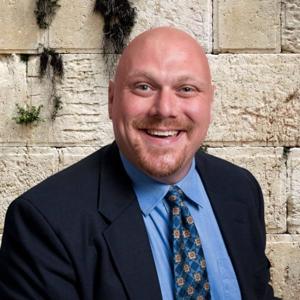

In this episode of Hebrew Voices #237 - Hanukkah - Rebellion Against the Name, Nehemia examines the early sources for the Hanukkah story to figure out what really happened and why it’s connected to the name of God.
I look forward to reading your comments!
PODCAST VERSION:
You are listening to Hebrew Voices with Nehemia Gordon. Thank you for supporting Nehemia Gordon's Makor Hebrew Foundation. Learn more at NehemiasWall.com.
Nehemia: And why is that? Who cares, right? Well, the reason that I care is because when you light these Hanukkah lamps, you say a blessing. Baruch ata Adonai Eloheinu melekh ha’olam. “Blessed art thou, Lord, King of the universe.” Asher kidshanu bemitzvotav. “Who sanctified us with his commandments.” Lehadlik ner shel Chanukah. “To light the lamp of Hanukkah.” But He didn’t command us that. Not only did He not command us to do it, it commemorates a miracle that didn’t happen.
What is Hanukkah about? And I’ve got, like, a whole bunch of teachings on nehemiaswall.com about different aspects of this, and different parts of it, but I thought I would try to drill down, and I actually learned things while preparing this. So, I learn new things all the time.
I’m going to start with the standard story I was told growing up, that there was a miracle of eight days of oil… and let’s back up. So, the Seleucid Greeks… Seleucids were these people who ruled over Israel, and they decided they want everyone in their empire to have the same religion. And they have this one little group of people at the edge of their empire who won’t follow their gods, won’t worship Zeus, and they’re like, “Wait. If there’s ever a rebellion, we can’t trust these people. They don’t worship the same as us. They’re different.”
And so, they tried to force the Jews to worship the Greek religion. And they offered sacrifices, and specifically, famously, a pig, on the altar in Jerusalem and in other altars and other places and tried to get the Jews to eat from it. And the Jews revolted, and it was this tiny little province of the Seleucid Empire against what was at the time one of the great superpowers in the world.
And the Jews defeated the Greeks, liberated Jerusalem, went into the Temple, and the menorah, which we’re commanded to light every morning and every afternoon or evening, was there, according to the standard story I was told. But they couldn’t find oil that was ritually clean, except for one vial. And it’s interesting; I was always taught it was a cruse of oil, C-R-U-S-E. And if you look up the word cruse, it’s an archaic English word for a small earthenware pot containing water or oil. But the only time you’ll see the word cruse used in modern English that I’m aware of, and when you Google it, this is what you find, is in the context of the Hanukkah story. So, I’m just going to say a vial of oil. They found a vial of oil, and that vial of oil, which was for one day, lasted for eight days.
So, let me read you what it says. This is in the Babylonian Talmud Sabbath 21B.
Lynell: Nehemia, I just want to confirm; this is the story you were told growing up, right?
Nehemia: This is the story I was told growing up.
Lynell: Okay.
Nehemia: We’re going to ask the question; is this a true story? If it is, it’s amazing! And if it’s not true, that’s amazing as well. And maybe there’s another story that’s true. Well, spoiler alert; it’s not true. Well, the beginning part’s true; they defeated the Greeks. But the thing about the oil, that doesn’t appear in the earliest sources.
So, this is in the Babylonian Talmud. It says, “Why Hanukkah?” And the context here is, they’re talking about, when you light the Hanukkah lamps, you light eight lamps. Do you start with eight and go down to one, each day diminishing by one? Or do you start with one and increase to eight, each day adding one? And then at the end, they’re like, “Okay, well, why do you even do Hanukkah lamps?” Shouldn’t that be obvious? But it wasn’t to these rabbis, and they quote a source, and the source is something called the Scroll of Fasting. And there’s two parts here; there’s the Scroll of Fasting and the commentary on the Scroll of Fasting. I’m going to paste this in here, because Nelson doesn’t have the full source here. I just finished translating it.
So, it says, “Why Hanukkah? For our rabbis taught,” and now it’s quoting the Scroll of Fasting. So, the Scroll of Fasting was written in the Second Temple period, and it was a list of days on which, if you’re a Pharisee, you’re not supposed to fast or mourn. And it was all kinds of days you’ve never heard of. Like, there was a day called Nicanor Day on the 13th of Adar. And what was Nicanor Day? It was the day they defeated the Greek general Nicanor, so, don’t fast or mourn on that day. And there were a whole bunch of different holidays.
So, the Scroll of Fasting is from the Second Temple period, but then the commentary is later. So, that’s interesting. So, the Scroll of Fasting says, “On the 25th of Kislev,” Kislev is the ninth Hebrew month. “The days of Hanukkah are eight, that one should not mourn on them and not fast on them.” So, that is from the Second Temple period. Then what’s called the scholion, which is a commentary, says, “When the Greeks entered the sanctuary, they made all the oil in the sanctuary unclean. And when the Hasmonean kingdom,” that’s what we call the Maccabees, “overcame and defeated them, they searched, but did not find but one cruse of oil,” or I’d say here vial of oil, “that was placed with the signet of the high priest, and it did not have in it oil, except to light one day. A miracle happened, and they lit from it eight days. The following year they established them as holidays with praise and thanksgiving.” And that’s interesting, the phrase “with praise and thanksgiving.” We’re going to see that repeated in pretty much all the sources. That’s, like, one of the things we know for sure is accurate.
Okay, so, this is the story I was told. There was a miracle… and there’s two versions of the miracle in Rabbinical Judaism. One is that they lit the oil on the 25th of Kislev, on the first day, and it lasted for eight days. That’s actually not what it says in the Talmud. What it says in the Talmud is that there was enough that they lit from it for eight days. So, they took one eighth of a day of oil, meaning what you would normally use for one day… and by the way, cruse of oil; so, I have a little prop here. Lynell got this. This is not a chanukiah, this is a menorah. So, this has seven branches, but it’s the same principle. Let me remove my blurred background.
So, we have these little vials of oil, and a cruse, I suppose, would be this made of pottery, right? So, today people light candles, but originally they didn’t actually have candles in the menorah in the Temple, or in the chanukiah, they had little oil lamps. Okay. So, the two versions are that they took one eighth of this, right? So, this is how much oil you need for one day. They took one eighth of that amount and it lasted the whole day. And then they did that for eight days. So, that’s an eight-day miracle. Whereas the other version is that it was a seven-day miracle. The first day wasn’t a miracle, it was just normal, right? But the Talmud actually has the version where it says that all eight days were a miracle. Okay.
So, why eight days? Just from the Rabbinical story itself, why eight days? Well, Numbers 19 tells you… well, there’s two things in Numbers 19 we have to look at. One is that if you’re ritually unclean from the dead… and what does that mean? So, they fought a war, and there were dead bodies. And if you’re in the tent, which would then be, later, after tents, would be in the same room as a dead body, some people would say the same house, but if you’re in the same space as a dead body, then you become ritually unclean and the only way to purify yourself is a seven-day ritual of purification. That’s actually mentioned in the New Testament, where Paul does this. He goes through a seven-day ritual of purification based on Numbers 19.
Well, okay, then why eight days? Because then on the eighth day, once you’re ritually unclean, you can actually manufacture the oil, and then the ninth day you have new oil. So, you need to have eight days of oil in order to make it all the way until you have the new oil, where you’re ritually clean. That’s just the plain meaning of the Rabbinical story.
Okay. So, and then look at Numbers 19 verses 14 to 15, it says, “This is the commandment of a man when he dies in a tent,” or “a person when he dies in a tent. Anyone who enters the tent…” And look, this is an opportunity to learn commandments that are kind of obscure, that we don’t normally look at, right? “Anyone who enters the tent and anyone who is in the tent, he will be unclean for seven days,” and it says, “and any open vessel which doesn’t have a string upon it, it is unclean.” In other words, they would take like a leather covering, and then they would tie it with a string, and then if that was in the tent, it couldn’t become ritually unclean, the contents of that vessel. Right?
So, what the Rabbinical story is telling us is that, yes, there was a lot of oil in the Temple, but it may have even had a string on it, but we don’t know when that string was placed, because it doesn’t have the signet of the high priest. That’s the significance of that, right? So, the rabbis are intimately familiar with all these details, and then some of the details, they’re kind of making up as well, right? So, the signet of the high priest; it doesn’t say it has to have that in Numbers 19.
But their point is, “Well, how do we know some Greek didn’t make that and he was ritually unclean? And who knows if that’s even olive oil?” I guess you could smell if it’s olive oil, but… Anyway, so they wanted to have the signet of the high priest on it to know that it hadn’t become ritually unclean, and they only found one vial of oil that had this signet of the high priest. All right. So, that’s the Rabbinical story, and that appears in the Talmud. Let’s look at 1 Maccabees 4:36-59. And the significance of 1 Maccabees is, it was written around the time of the events.
Lynell: Paul, that’s a good question. You should answer that.
Nehemia: Paul asked a question here. “They could have just lit the menorah next week, as expected. Why the rush in the story?” So, the way they tell the story is they wanted to light it immediately. They didn’t want to waste a single day. We’ll see that that’s actually not what happened, that they chose a specific day to reestablish the lighting of the menorah and the bringing of the sacrifices, and it was the anniversary on which the Temple had been desecrated by the Greeks, right? So, you’re right. Lynell asked a really good question yesterday, on Shabbat, when we were going over this story. Do you remember what your question was, Lynell?
Lynell: I was looking for it. It had to do with, you know, well, if they were ritually unclean…
Nehemia: Yeah, who lit the menorah?
Lynell: What happened when they… and how could they open the cruse of oil?
Nehemia: Like, so the moment you break the seal and take the string off and you touch the vial, if you’re ritually unclean, in the Rabbinical way of thinking, that is, right, because they have this idea that, and there are forms of this in the Torah, you could debate whether it applies here, that ritual uncleanliness from the dead is contagious. Do you remember when we used to play tag when we were kids? I don’t know if you played that. You’d hold on to the base, and then someone would hold on to you, and someone would hold on to you, and it would transmit. It was electricity, right?
So, Rabbinical thought is that, even if you let go, if you’ve once touched it, now it transmits almost… well, not perpetually, but up to a certain number of stages. So, you’re right. I never thought about that. I don’t know what the Rabbinical answer is on that, right? So, whoever breaks the seal and then pours it in, and then he’s making it unclean, isn’t he?
Lynell: Because they’re ritually unclean. Tell the story about the wine and the wedding, because I think that brings this home.
Nehemia: You mean the Passover Seder with my friend Ference?
Lynell: Yeah.
Nehemia: Okay, so my friend Ference in Israel… he lived in Israel for many years, and he’s not Jewish. But he had a Jewish girlfriend who wasn’t religious, but her parents were ultra-Orthodox. So, they do something very unusual; they invite him for the Passover Seder. Which is not normally what… I’ll give them credit; an Ultra-orthodox family normally would not have anything to do with their Jewish daughter’s non-Jewish boyfriend. But they invited him. They were very nice.
So, on Passover, you have the four glasses of wine: that’s the traditional Rabbinic Passover Seder. And he passes one of the bottles, and one of the people says, “We can’t drink from that now, because if…” And here, by the way, it’s the same principle; if the bottle is sealed, then there’s no issue. But once the seal is broken and it’s opened, in this case it’s a cork, then if a gentile touches the bottle, the bottle of wine becomes un-kosher, right? So, it’s a very strange thing that nobody exactly knows what the origin is of, right? Or when it even begins, it’s not entirely clear. We know the reason; the reason is that the rabbis didn’t want Jews and non-Jews to drink wine together, because then they might get friendly, and I mean in an intimate way. That’s literally the reason that rabbis say. But where exactly this began isn’t entirely clear.
In any event, so if a Gentile touches an open bottle of wine, it’s not considered kosher unless they boil the wine, which is a whole separate thing. That’s why most kosher wine is garbage, because it’s been boiled. Why has it been boiled? So, if the waiter pours your bottle of wine in a restaurant, you don’t have to worry if he’s Jewish or not.
So, anyway, Ference passes the bottle, and they say, “We can’t drink from it. You’re not Jewish, and you touched it, and it’s an open bottle.” He said, “Really? I didn’t know about this. But you know, when you were at synagogue, I opened all the bottles of wine,” and they had to throw away like eight bottles of wine. It was like a big family thing.
Anyway, so, it’s a similar principle, that if it’s sealed, right, the Torah is talking about ritual uncleanliness from the dead, not a Gentile touching it, right? But it’s a similar sort of idea. It probably derives from this law in Numbers, right? But then they’re applying it to the wine, right? This is what they do; it’s mission creep, right? They start with one thing that the Torah actually commands, and now they’ve applied it to ten other things.
All right. So, let’s look at 1 Maccabees 4:36-59. And it’s an amazing book, 1 Maccabees. Now, when I was doing this with Lynell, she said, “I was taught…” What were you told about your upbringing and Maccabees?
Lynell: I was told it was heretical and we couldn’t read it. So, Mom, maybe I’m wrong there, but that’s my understanding. I don’t know if my mother has ever read 1 Maccabees. Here.
Nehemia: Is she here?
Lynell: She is here. Mom…
Nehemia: Can she answer whether she’s read 1 and 2 Maccabees? 1 or 2 Maccabees?
Lynell: You should see mom. You should have been asked to…
Nehemia: This is Lynell’s mother. Mama…
Lynell: Who was a missionary for a thousand years. Not really a thousand years, but mom… a long time.
Nehemia: You can’t prove it wasn’t a thousand years. But I’m going to turn on the air conditioning, because I’m really hot.
Lynell: You’re hot… See, this is how it goes. He’s hot and I’m cold, and that’s the way it is. All right, go ahead and make sure.
Mom: What do you want me to say, sweetheart?
Lynell: Why didn’t we read 1 or 2 Maccabees? It wasn’t in the Bible, right?
Mom: No, it wasn’t, but I did read it.
Nehemia: Oh!
Mom: Yeah. We knew it was there, and we studied it.
Nehemia: Oh!
Lynell: See?
Mom: But it was never… I mean, it was not a subject you would preach on from the pulpit. It was not things that we would teach in Sunday school class, but we knew it was there, just like there were other books, so said, that were not in the Bible either. But in Bible college, your dad would have had to have studied those things.
Lynell: Oh, there you go. So…
Nehemia: Yeah. So, I’m not quoting it as Scripture.
Lynell: Right. Historical.
Nehemia: I’m saying it’s an historical source, and it was written much closer to the events than the Talmud. The Talmud was… well, this is a part of the Talmud that’s relatively early, but it was compiled around the year 200, this particular part, 200 AD or CE. And Maccabees was written 300 years earlier, in around 100 BC, or BCE, and the events took place in 165. So, imagine if the first time you ever heard a story about, I don’t know, about George Washington, was in the year 2100. That would be a bit suspicious. Nobody knew that story for the first three hundred… And maybe not, right? Maybe they didn’t know it, or maybe it was transmitted orally. That’s possible. But generally, if you’ve got a whole bunch of sources that are early and then a late source… probably, you know, it’s… Well, we have to see what the sources say.
So, 1 Maccabees is a historical source, and I’m not saying everything in it is true, but it’s telling us what the people at the time thought happened.
Lynell: And how long is this after the event, Nehemia?
Nehemia: So, the events took place, the liberation of Jerusalem in 165 or 164 BCE… it depends on when you think the Seleucid era began. We won’t go into that, and this was written about 50, 60 years later.
Lynell: Okay. So, it says, “Then Judas,” this is Judas the Maccabee, right?
Nehemia: This is Judah the Maccabee, Yehuda HaMaccabi, Judah the Hammer, that’s what maccabi probably means.
Lynell: And his brothers. “Then, said Judas and his brothers: Behold, our enemies are crushed. Let us go up to cleanse the sanctuary and dedicate it.”
Nehemia: And dedicate it is an interesting word, because that is the Greek translation of the word Hanukkah. And how do I know that? Because the word Hanukkah appears in the Tanakh. And, oh, somebody asked, who wrote Maccabees? We don’t know who wrote Maccabees. But we also don’t know who wrote the Talmud. It was somebody much closer to the events than the Talmud, and look, if it was one source against the other source, it would be, “he said, he said”. But we have, “he said, he said, he said, he said, and he said”, right? We’ll see that in a minute. So, the word there is enkainisai, and… which I’m sure I’m mispronouncing.
Lynell: Because it’s in Greek, right?
Nehemia: From the word kainos in Greek. We’ll come back to that word. But that is the standard Greek translation of the word hanukkah. What’s interesting is, you only find that in Jewish sources and the New Testament. But we’ll come back to it. Go on.
Lynell: Okay. “So, all the army assembled, and they went up to Mount Zion.” Now, Mount Zion is the Temple Mount, right Nehemia?
Nehemia: Yes.
Lynell: “And they saw the sanctuary desolate, the altar profaned, and the gates burned. In the courts they saw the bushes sprung up as in a thicket or as on one of the mountains. They also saw the chambers of the priest in ruins.” Now, this is the Temple that Solomon built, right Nehemia?
Nehemia: No, this is the Temple that was rebuilt by Zerubabel.
Lynell: Okay.
Nehemia: This isn’t… Solomon’s Temple was destroyed by the Babylonians in 586 BCE, and then it was rebuilt under Zerubabel and other people involved in the Book of Ezra and Nehemiah.
Lynell: And so, then, this was…
Nehemia: Around the year 516 BCE.
Lynell: Okay, that’s what I was asking. “When they ripped their clothes and mourned with great lamentation and sprinkled themselves with ashes, they fell down to the ground and they sounded the signal on the trumpets, and they cried out to heaven. Then Judas detailed men to fight…”
Nehemia: It’s interesting; the first reaction isn’t to celebrate, it’s to mourn, because the Temple has been desecrated, right? The way we’re told the story… whoever asked earlier, I think it was Paul, what was the hurry to light the menorah? And you’re right. Their first thing wasn’t to light the menorah, it was to mourn. This is a horrible thing; the Temple’s been desecrated by idolatry and unclean animals and dead bodies. That’s actually the ultimate ritual uncleanness, is a dead body… anyway, let’s go on.
Lynell: “They fell face down on the ground and sounded the signal on the trumpets and cried out to heaven. Then Judas detailed men to fight against those in the citadel until he cleansed the sanctuary.”
Nehemia: Let’s continue. We can talk about that at a different… I have a teaching about the Citadel.
Lynell: Okay, but explain what that means…
Nehemia: There’s somewhere…
Lynell: All right.
Nehemia: There’s a lot I want to get to, so, let’s…
Lynell: “He chose the blameless priests devoted to the law, and they cleansed the sanctuary, removed the defiled stones to an unclean place.”
Nehemia: And the stones were defiled because they’d sacrificed to an idol on the altar built by Zerubavel.
Lynell: “They deliberated what to do about the altar of burnt offering, which had been profaned, and they thought it best to tear it down lest it bring reproach upon them, for the Gentiles had defiled it. So, they tore down the altar and stored the stones in a convenient place on the Temple hill, until there should come a prophet to tell what to do with them. They took unhewn stones as the law directs, and built a new altar…”
Nehemia: And that’s in Exodus 20:25. It tells you how to build an altar.
Lynell: Okay, so, “They built an altar like the former one, and they also rebuilt the sanctuary, the interior of the Temple, and consecrated the courts.”
Nehemia: So, how are they lighting the menorah if the Temple’s been desecrated, and they’ve got to redo everything? And we’ll see in a second, they even had to do the menorah.
Lynell: “They made new holy vessels…”
Nehemia: What was that? What kind of holy vessels?
Lynell: Lampstand, the altar of incense, into the Temple.
Nehemia: So, they’re bringing new holy vessels. It says they’re new, right?
Lynell: Right.
Nehemia: So, they’re bringing new holy vessels into the Temple…
Lynell: “… and they burned incense on the altar and lighted the lamps of the lampstand and gave these light in the Temple.” Nehemia, what are these made out of, the lamps?
Nehemia: They’re made out of gold. So, the three things that are in the Temple, made out of gold, apparently the Greeks melted down, or stole, because they were made of gold, right? So, you’ve got the table, and the menorah, the candelabrum, that is, and you have the altar of incense, right? Not to be confused with the altar made of stone. The altar of incense is portable; you can pick it up, it had poles on it, and you can take it back to Syria or wherever, or Babylonia. So, those three vessels made of gold, they had to remake, and so there wasn’t even a menorah that they could light. They had to make a menorah.
Lynell: But we’ve been asked to believe that they sacked the Temple and left the golden menorah sitting there.
Nehemia: Right.
Lynell: Okay. “They placed the bread on the table and hung up the curtains. Thus, they finished all the work they had undertaken. Early in the morning on the 25th day of the ninth month, which is the month of Kislev, and the 100th and 48th year, they rose and offered sacrifice, as the law directs, on the new altar of burnt offering which they had built, at the very season and on the very day that the Gentiles had profaned it. It was dedicated with songs, with harps, and lutes, and cymbals, and all the people fell on their faces and worshiped and blessed heaven, who had prospered them. So, they celebrated the dedication of the altar for eight days and offered burnt offerings with gladness. They offered a sacrifice of deliverance and praise, and they decorated the front of the Temple with golden crowns…”
Nehemia: Okay, so remember that “deliverance and praise”?
Lynell: Mm-hmm.
Nehemia: That’s actually “praise and thanksgiving”, and that’s exactly what it said in the Rabbinical source. That’s really interesting. Like, in the Rabbinical source there’s this echo of the original historical events; you’re defeating the Greeks and you’re having praise and thanksgiving, right? So, it’s not completely made up, the Rabbinical source. Like, that’s a very specific detail; praise and thanksgiving. And in Rabbinical thought, praise is a specific prayer from the Psalms. It’s this block of Psalms that you recite, right? So, it’s actually kind of a technical term. And they have that detail. So, that’s really interesting.
Let’s skip ahead now to 2 Maccabees. So, this is written by a completely different author. 1 Maccabees was written in Greek. 2 Maccabees was actually written in Hebrew but then translated into Greek. It was actually a summarized version. It was a five-volume book in Hebrew. We’re told that in the introduction, that a Greek summary was translated. So, let’s read 2 Maccabees 10.
Lynell: Okay.
Nehemia: 1 through 8.
Lynell: “Now, Maccabeus…”
Nehemia: That’s Judah, Judah Maccabbee.
Lynell: “… and his followers, the Lord leading them on, recovered the Temple and the city. They tore down the altars that had been built in the public square by foreigners and also destroyed the sacred precincts.” And, I’m sorry I missed this; when was this written again, Nehemia?
Nehemia: So, this is also around the same time as 1 Maccabees, right?
Lynell: Okay.
Nehemia: Give or take 100 BCE.
Lynell: “They purified the sanctuary, made another altar of sacrifice, and then, striking fire out of flint…”
Nehemia: And that’s interesting why they say that. I have a whole study about that, but let’s move on, because…
Lynell: “They offered sacrifices after a lapse of two years, and they offered incense and lighted lamps and set out the bread of the presence.”
Nehemia: So, it mentions the lamps in both 1 Maccabees and 2 Maccabees, written by two different authors, because you could say, “Well, it just didn’t mention all the details.” And yes, there was a miracle of eight days of oil with the lamp, but it didn’t mention the detail about the lamp. No, both of them mentioned the lamp! This is it! This is the opportunity! You lit the lamp and there was a miracle? No. Read it again.
Lynell: “After a lapse of two years, they offered incense and lighted lamps and set out the bread of the presence.” So, when they…
Nehemia: Nothing to do with the miracle. Imagine this, just imagine this for a minute. And this will be maybe more relevant for our New Testament believing audience. Imagine if the first time we heard about Yeshua’s resurrection was 300 years after he died. That would be very suspicious. But that’s not the case, right? Meaning, Paul makes a whole big deal about how, you know, there are all these people who witnessed it, right? So, whether you believe it or not, it was definitely believed very shortly after the events, and we have references to it within a few years after the events.
We don’t have anything like that for the miracle of the oil on Hanukkah. In fact, we have the opposite. Imagine if all we had was the beginning of Luke 24, where the men are walking on the road to Emmaus, and they’re sad that Jesus died and the tomb is empty. And then the story ends there. Right? That’s what we have for Hanukkah, right? They’re lighting the lamps, but there’s no reference to a miracle of oil. There is a miracle! The miracle is that they defeated the Greeks. That’s the miracle. Not that there was this miraculous oil.
Wow! And why is that? Who cares, right? Well, the reason that I care is because when you light these Hanukkah lamps, you say a blessing: Barukh ata Adonai Eloheinu melekh ha’olam, Blessed art thou, Lord, King of the universe, asher kidshanu bemitzvotav, who sanctified us with His commandments, lehadlik ner shel Chanukah, to light the lamp of Hanukkah. But He didn’t command us that. Not only did He not command us to do it, it commemorates a miracle that didn’t happen. Or at least there’s no evidence that it happened. I don’t know what happened or didn’t happen. I’m looking at the evidence. Nobody even claimed that, it seems, that we can tell at least, for the first 200 or 300 years.
All right, let’s read on with 1 Maccabees… what verse were you in?
Lynell: We’re in 4.
Nehemia: Alright.
Lynell: “When they had done this, they fell prostrate and implored the Lord that they may never again fall into such misfortunes, but that if they should ever sin, they might be disciplined by Him with forbearance, and not be handed over to blasphemous and barbarous nations…”
Nehemia: Amen!
Lynell: “It happened…” Amen. “It happened that on the same day on which the sanctuary had been profaned by the foreigners…”
Nehemia: Ah! Same detail as in 1 Maccabees. The 25th of Kislev isn’t a random date. It isn’t the date of the victory over the Greeks; that’s a lie. It’s the date that the Greeks desecrated the Temple. That’s the date they chose. Go on.
Lynell: “The purification of the sanctuary took place, that is, on the 25th day of the same month, which was Kislev. They celebrated it for eight days with rejoicing in the manner of the Feast of Booths.”
Nehemia: So, the reason it’s eight days is because Sukkot’s eight days. Wow! Go on.
Lynell: “Remembering how, not long before, during the Festival of Booths, they’d been wandering in the mountains and caves like wild animals. Therefore, carrying ivy wreathed wands and beautiful branches and also palm fronds…”
Nehemia: And by the way, for Pharisees, that’s what you do on Sukkot; you carry certain pieces of vegetation, based on their interpretation of Leviticus 23:40. All right, go on.
Lynell: “… they offered hymns of thanksgiving to Him who had given success…”
Nehemia: So, here we have the Hallel. The Hallel is not mentioned in the Talmud. It’s mentioned in 1 Maccabees, it’s mentioned in 2 Maccabees. That’s Psalms 113 through 118, is what they’re apparently reciting. Go on.
Lynell: “The purification of His own holy place. And they decreed by public edict ratified by vote, that the whole nation of Jews should observe these days every year.”
Nehemia: So, God didn’t command us. There was a vote! So, why are you saying, “Who commanded us to light the Hanukkah lamps?” I guess there’s this idea in Western civilization that the voice of the people is the voice of God, but that ain’t true. The voice of God is the voice of God, and the voice of the people is the voice of the people. Go on.
Lynell: Oh, that’s it, the end of it. That’s what… “And such was the end of Antiochus.”
Nehemia: And guys, you should read the whole book. It is fascinating as a historical source. I’m going to read Josephus, Antiquities Book 12. This was written around the year 90. Josephus was a Jewish general who was captured by the Romans, and then when he was taken back to Rome, he writes a history of the Jews. He writes two main books, one is called War of the Jews, which is funny because we didn’t call it the Jewish War, we called it the Roman War. It’s like, when I was in Vietnam, they were telling me about “the American War”. I’m like, “What’s the American War? I know about the Vietnam War.” Well, no, in Vietnam, they call it the American War. So, he writes The Jewish War, and he writes Antiquities of the Jews, and it’s written in Greek. But it’s really for a Roman audience, to explain to them, “Who are these Jews that you just conquered?” The Romans had some bizarre ideas about who the Jews were, quite similar to what you’ll hear from the Western anti-Semitic media, in some ways.
So, he’s like, “Okay, here’s who the Jews really are.” So, he writes in Book 12, chapter 7, section 6. So, “On the 5 and 20th day of the month Kislev, which the Macedonians call Appaleus, they lighted the lamps,” so he mentions the lamps, “that were…” and he’s writing this after the Temple was destroyed, about 20 years, “they lighted the lamps that were on the candlestick, and offered incense upon the altar, and laid the loaves upon the table, and offered burnt offerings upon the new altar. Now, it so fell out that these things were done on the very same day on which their divine worship had fallen off and was reduced to a profane and common use after three years’ time. For so it was that the Temple was made desolate by Antiochus and so continued for three years.” Right? We saw in 2 Maccabees it was two years, so it’s not entirely clear.
“This desolation happened to the Temple in the 144…” He gives some Greek dates, right, which we don’t really care about. Skip ahead. “And this desolation came to pass according to the prophecy of Daniel,” that’s interesting; skip ahead again. “Now Judas celebrated the festival of the restoration of the sacrifices…” Wait, so, it’s the celebration of the menorah miracle? No, it’s the celebration of the restoration of the sacrifice of the Temple for eight days, “…and omitted no sort of pleasure thereon. But he feasted them upon very rich and splendid sacrifices, and he honored God and delighted them by hymns and psalms.” We have that down. That’s interesting! That’s the detail we’re seeing in all the all the sources.
There are these psalms or hymns; there’s the Hallel prayer, apparently, Psalms 113-118. It says, “Nay, they were so very glad of the revival of their customs when after a long…” And remember, this is like around 165 or 164 BCE, depending on whose chronology you go by. “They were so very glad for the revival of their customs, when, after a long time of intermission, they unexpectedly had regained the freedom of their worship, that they made it a law for their posterity.” Right? They didn’t claim God made it a law, they said, “We’re going to celebrate this next year.” “That they should keep a festival on account of the restoration of their Temple worship for eight days.” So, it’s nothing to do with the oil.
And it goes on. “And from that time to this, we celebrate this festival and call it lights.” Well, that’s fascinating. He’s mentioning the lights. And so, this would be the opportunity to say the reason for the lights is because there was a miracle of oil. He didn’t say that. He says, “I suppose the reason was because this liberty beyond our hopes appeared to us, and that thence was the name given to that festival.” So, it’s absolutely inconceivable that if anybody knew about this miracle of oil, Josephus wouldn’t mention it, 1 Maccabees wouldn’t mention it, 2 Maccabees wouldn’t mention it. None of these sources are mentioning it. And it’s interesting; what is the holiday called? The holiday is called Hanukkah, “Dedication”, and what it refers to is the dedication of the altar, not the dedication of the menorah.
Lynell: Hmm.
Nehemia: It’s referred to as chanukat hamizbeach.
Lynell: When we talk about dedication, Nehemia, what are you talking about there? What’s that word mean?
Nehemia: Let’s get to that word in a few minutes, okay?
Lynell: Okay.
Nehemia: I’m going to skip this, because we’ve been going for 38 minutes. Another source is the Scroll of Antiochus, 61 to 66. Guys, you can read that. That’s another source that’s relatively late that is based almost certainly on the Talmudic telling. So, what’s interesting is that it appears in the New Testament, this reference to the Feast of Dedication. It’s in John 10:22, and it was at Jerusalem. The Feast of Dedication, it says, and it was winter. And it’s interesting; it was winter. It is definitely one of these, sort of like what we would call a gloss. It’s this note for a reader who doesn’t know what Hanukkah is, right? So, imagine if I said, you know, “There was a tree in the living room because it was Christmas.” And then I said, “The celebration of the birth of Jesus.” What? You don’t know what Christmas is? Right? Or maybe Christmas is something else to somebody, right? So, John is giving you this sort of gloss, “and it was winter,” because maybe a non-Jewish reader wouldn’t know that.
So, the Feast of Dedication is that word enkainia, which comes from the word kainos, which is the Greek word for new. And so, enkainia is something like the feast of renewal. That’s what it means. And it’s a Greek word that is, at least in the Greek Standard Greek dictionary, all the examples they bring from it are either from Jewish sources, including the Greek translation of the Old Testament, of the Tanakh, and the New Testament, right? So, it’s only in a Jewish context that we see it until much later, when you have Christian sources that are then using it for other purposes. Right?
So, Ezra 6:16. So, the Hebrew word is Hanukkah, which is Chet-Nun-Kaf. Every word, or most words, in Hebrew and Semitic languages have a three-letter root. The three-letter root is Chet-Nun-Kaf, and we’ll see it… Ezra 6:16, “And the children of Israel, the priests and the Levites, the rest of the children of the captivity kept the dedication of this house with joy.” And the house in Hebrew, or this house of God, is beit alaha. It’s actually Aramaic. So, it’s chanukat beit alaha, the dedication of the house of God, that is, of the Temple, and that’s the word Hanukkah. And in Greek that’s translated enkainia.
And then Nehemiah 12:27, it talks about the dedication of the walls of Jerusalem. That’s Chanukat Chomat Yerushalayim. So, we have the holiday, Chanukat Hamizbeach, in much later times. We have the Chanukah of the House of God, the Chanukah of the Walls of Jerusalem. And that’s the Greek word in enkainios, right? So, it’s the same Greek concept and Hebrew concept.
Daniel 3:2 is an interesting Hanukkah; it’s not one you would expect. I was a bit surprised when I saw this. “Then Nebuchadnezzar the king sent to gather together [all these different groups of people] to come to the dedication of the image which Nebuchadnezzar the king had set up.” And that’s the hanukkah of the idol that Nebuchadnezzar the king set up. So, hanukkah could be to an idol. It doesn’t have to be something proper and biblical.
And the standard Greek translation is a different word, but there’s a translation that’s attributed to Theodotion, who is this Jew who translated the Tanakh into Greek and his translation of Daniel has survived. And he translates the same word enkainia, which is both what John used, the Gospel of John, and the Septuagint uses that usually for Hanukkah.
So, Numbers 7:10. Here I’m going to ask you to read this, Lynell. This is really interesting. It starts in verse 10 of Numbers 7 and ends in verse 84, and it’s this passage which is extremely repetitive. It describes these offerings brought each day by one of the tribes, or by the representatives of the tribes, and each day we have a sacrifice of a spoon and different things, right? And at the end, it summarizes: here are all the things brought over the 12 days. And those sacrifices are called the hanukkah of the Tabernacle. So, read Numbers 7:10, and then we’ll talk about that, and then we’ll jump to verse 84.
Lynell: “The chieftains also brought the dedication offering for the altar upon its being anointed. As the chieftains were presenting their offerings before the altar, Yehovah said to Moses: Let them present their offerings for dedication of the altar, one chieftain each day.”
Nehemia: So, there were these offerings. I feel like that wasn’t actually what it said in Hebrew, so let me now bring up the Hebrew…
Lynell: So, what does it actually say?
Nehemia: It says. “And the nesi’im,” that they translated there chieftains, usually translated princes. “The princes brought the chanukat hamizbeach,” the dedication of the altar. So, the dedication of the altar in this case is a sacrifice. So, they brought the dedication of the altar, and what kind of sacrifice… “In the day that it was anointed,” or the day of its anointing. So, what does that mean, anointing? They literally took oil, and they put it on the corner of the altar and the corner of different vessels. They were actually anointed as described in Leviticus and Exodus. And the nesi’im, “The princes brought their sacrifice before the altar.” And then in verse 84 it summarized… and then it tells each day what was brought. Then it says, “This is the chanukat hamizbeach in the day of its anointing.” “This is the hanukkah of the altar in the day that it,” meaning the altar, “was anointed, from the princes of Israel. Twelve silver…”
Lynell: This is something familiar, hang on, this is hilarious…
Nehemia: Twelve silver spoons… [Singing]
Lynell: I want to read it!
Nehemia: Oh, okay.
Lynell: No, you go ahead. Twelve silver bowls, twelve silver basins, twelve gold ladles, twelve silver bowls, a hundred…
Nehemia: So, it’s 12 things because it’s one of each, and each one of those 12 things is listed. It’s interesting; in a lot of the manuscripts, they’ll put a vowel on every single word, but they’ll skip the vowels for some of these things because we don’t need the same vowels 12 times. They haven’t changed. Meaning, we skipped over that very repetitive part. And so, the scribes did that too. They wrote it out in the consonants, but they skipped the vowels. They put in the accents; interesting.
All right. So, Numbers 7:84, “This is the chanukah of the altar.” And what’s the chanukah? These offerings. An offering is the way you express a chanukah. What is the chanukah of the altar in Maccabees? 1 Maccabees, 2 Maccabees, Josephus, and even the Talmud? The chanukah of the altar isn’t lighting the cruse of oil, it’s the hallel, the praise. It’s the praise of Psalms 113-118. Isn’t that interesting? Right? That detail isn’t a trivial detail; it’s a central detail. It’s the praise and thanksgiving, that is the chanukah. Along with celebration, other things, that’s the way you express the chanukah, the dedication of the altar.
So, the word dedication appears in two other contexts in the Tanakh. Well, three. We’ll start with the easy one. Genesis 4:17. There’s a man whose name is dedication. And what’s that man? We know him in English as Enoch.
Lynell: Oh!
Nehemia: Enoch is Chanokh, which is from the same root, and it means dedication. And again, the Greek word is something like renewal or inauguration. And that’s exactly what it means in Hebrew. It’s the inauguration. “And Cain knew his wife,” this is Genesis 4:17, “and she conceived and she bore, and she gave birth to Chanokh,” Enoch, dedication. “And he built the city,” that is, Cain built the city, “and he called it the name like the name of his son, Chanokh.” Dedication. Why is he calling it dedication? Because he’s dedicating the city. Apparently, that’s why he’s calling it, right? This detail is sort of obvious in Hebrew, but in English you’re like, “Okay, why did he call it Chanokh, the city? Because the only one living in it was Hanoch?” I don’t know, maybe? But no, it’s because he’s dedicating the city.
Then the other place we see this word, this root, is in Deuteronomy 20:5-7, really in verse 5, but we’ll get the context. Do you want to read that, Deuteronomy 20 verse 5?
Lynell: Sure.
Nehemia: Deuteronomy 20 is describing the ceremony when you go out for war; we’re weeding out all the people. Remember, we see an example of this where Gideon starts out with 10,000 soldiers, and he says, “God wants to do a really big miracle. We don’t need 10,000. I need to whittle down to the base number of people, the smallest number of people, so let’s get rid of all the people who we don’t need.” And he puts them through a test, in that case. Here, the test is: I’m giving you excuses to go home. And finally at the end, it says, “If you’re afraid, just go home.” Now, nobody wants to admit they’re afraid, that’s kind of a man thing. So, instead, “Oh, you know, I’ve got a chicken I left in the oven!” “Oh, you know, I’ve built a house, but I didn’t dedicate it. I got to go home lest I die in war and somebody else dedicate it!” Right? So, they’re giving them these excuses. So, read Deuteronomy 20:5-7.
Lynell: “Then the officials shall address the troops as follows: ‘Is there anyone who has built a new house but has not dedicated it?’”
Nehemia: And that’s the word chanukah. Chanakh, chanakho, right? So, what does it really mean there? He built the house, but there was some sort of ceremony where they would dedicate it just like they dedicated the walls of Jerusalem, right? They probably recite some kind of praise and thanksgiving, right? Just like what we see in all the sources that talk about Hanukkah are talking about this praise and thanksgiving. That’s the common feature of Hanukkah. You’re praising and giving thanksgiving to God.
And look, the word there is enekainis, in Greek, which is a related word. It means to inaugurate, right? So, he writes the same word as in the Gospel of John for chanukah, and in every other place pretty much, where we’re seeing the, you know, this idea of chanukah. It’s interesting; I just realized this. In Modern Hebrew we have a very unique custom. When you get a new dress, in English, I say, “Oh, nice dress,” right? Or I don’t know, what do women say when you have a nice dress, and bought a new thing or a new purse or something? What do they say? Or a new car?
Lynell: Nice dress!
Nehemia: Right… nice car! So, in Hebrew we say titchadesh, or in the feminine titchadshi, which means, “may it be renewed for you”. Right? And that really is a modern way of expressing, “may you have a good chanukah”. “May you chanukah that dress.” “May you have an opportunity to wear it and use it.” Right? So, here it’s saying, “You built a house and you didn’t…”
Lynell: Move in.
Nehemia: “…dedicate it.” So, read it again now.
Lynell: Okay.
Nehemia: 25.
Lynell: It says, “Is there anyone who has built a new house but has not dedicated? Let him go to his home, lest he die in battle and another dedicate it.”
Nehemia: All right. And then it brings two other examples; if you betroth a woman and you didn’t marry her, or if you planted a vineyard and didn’t get to glean it, to harvest it, and eat of it, right? So, these are excuses, right? But the point is, you built the house and you never dedicated it. So, they would have some kind of a dedication where they would praise God. “Thank you, Yehovah, now I get to live in this house.” So, that’s pretty cool. So, that’s where chanokh appears. And then there’s another example of the word chanukah, of the root for chanukah, which is Proverbs 22:6. Want to read that one?
Lynell: Mm-hmm. Oh! This one says, “Train a lad in the way he should go, and he will not swerve from it in his old age.”
Nehemia: And the word for “train” there is chanokh, inaugurate him, dedicate him, right? And it does mean train, right? It’s what you do at the beginning of a house; you praise God for the house, and you go and you dwell in it. And a child, you educate them, you train them. And by the way, this is now the modern Hebrew word for educate, right? The Ministry of Education in Israel is called the Misrad Hachinukh, the Ministry of Chanukah, right? Basically, of doing chanukah, right? But in Proverbs, it does mean to teach and to train. But it literally is “dedicate the child according to his way, and when he is old, he will not turn from it,” right? If you start off and don’t train him, he’s not going to know those lessons for later in life. But if you train him properly, hopefully he’ll continue to follow that.
So, that’s what chanukah is; that’s the meaning of dedication in Hebrew, in ancient Hebrew, right? And the Greek is the same word. And it’s interesting; let me show this thing here, it’s really interesting. I looked this up in Liddell-Scott-Jones, which is like the main dictionary of ancient Greek. And let me show you what it has here. Am I sharing my screen? Yes, I think I am.
Lynell: You are now.
Nehemia: So, here’s the screenshot. So, it’s feast of renovation or consecration, enkainia, and what’s the context? Theodotion’s translation of Daniel 3:2, the Septuagint’s translation of Ezra, they call it 2 Ezra in Greek, 6:16, “Especially that established by Judas Maccabeus at the consecration of the Temple.” And then the Gospel of John 10:22, right? And then there’s the verb form; the verb form is Septuagint Isaiah 16:11, right? And various other words. The Epistle of the Hebrews, right?
So, the Tanakh and the New Testament is the only place we find this, until the 4th century! Right? Here’s a 4th century source that uses the word. There might be other sources that use it, but the Greek dictionary doesn’t bring them because the way this is used in ancient Greek is, it’s a Jewish word, and it has a Jewish context referring to the Feast of Hanukkah, right? And when you read Hebrews 9:18 and 10:20, you have to read it in the context of Hanukkah, of the dedication of the altar, of the dedication of the Tabernacle, right? That’s the context you have to read, because it’s sort of this, like, almost technical term. Right? It’s this term that everybody knows… well, next week we’ll talk about Christmas, right? So, I’m going to save that for next week.
So, chanukah is this technical term that has come to mean, and especially the Greek translation, like they said there in the Greek dictionary, “Especially the feast established by Judah the Maccabee,” right? And it does mean chanukah of the statue of, you know, of Nebuchadnezzar, originally, right? But it then came to mean the dedication of the altar, this holiday.
So, where do we get the miracle of the oil? And the answer to that that historians give is, “Well, the Temple was destroyed. Why would you continue to celebrate the dedication of an altar that the Romans have now destroyed?” So, there was a shift in the meaning of the holiday, after the Temple was destroyed, and they came up with the story of the oil. And remember, we started out in the Talmud, and it says, “Why Hanukkah?” Because it wasn’t obvious. They were doing this for centuries and they gave it a new meaning.
So, what was the original meaning of the… because the oil lamps predates the miracle. The miracle was invented after the Temple was destroyed, but during Temple times, we saw Josephus calls it Festival of Lights. And he gives a reason for the lights. And the lights are this sudden liberty appearing to us, and he doesn’t really know. He says, “I suppose this is the meaning.” He has no idea why they’re lighting lights! So, why are they lighting lights? That’s really the question I want to answer today.
So, for that, I’m going to turn to the Talmud, which has a section, first in the Mishna, which is telling us… and the Mishna is compiled around the year 200-210 by a rabbi named Rabbi Yehuda Hanasi, Rabbi Judah the Prince, in Israel, and he’s compiling earlier traditions that the rabbis have. And one of the traditions is that you can’t do certain things, if you’re a Rabbinical Jew, on the holidays of Gentiles, on pagan holidays. And so, they say, “Okay, what are the pagan holidays? I don’t know what the pagan holidays are.” So, they list the pagan holidays that the rabbis know about in Israel, and these are Roman and Greek holidays, at least as the rabbis were aware of them in the 3rd century.
I could tell you that if you asked the average Jew today, let’s say in Israel, “What are the Muslim holidays?” They would be hard pressed to name… even though there’s millions of Muslims living in Israel, and if you go to the supermarket on the Muslim holidays, you won’t find certain products, because they’re Muslims who mostly, like, slaughter the chickens. Well, they don’t slaughter the chickens, but they clean the chickens. And that’s kind of a dirty job, and Muslims are happy to do it for some reason. I don’t know why. Or maybe they’ll do it for cheaper than Jews will. So, on the Muslim holiday, go to the supermarket. There’s no chickens, right? Because chickens are fresh in Israel. What’s that holiday called? The average Israeli has no idea, right? They just know there’s some Muslim holiday where the Muslims don’t show up to work. They’re doing something at home for three days.
So, this is what the rabbis know about the holidays, okay? Of the Roman holidays. So, it says in the Talmud, or it’s in the Mishna. Sorry, let’s start in the Mishna, Avoda Zara, which means idolatry, chapter 1, section 3. “These are the feasts of the nations.” And it’s interesting; the word for feast is eid – Alef-Yud-Dalet, which interestingly, in Islam, is the name for feast, right? They have Eid al-Fitr. That can’t… linguistically it’s not a coincidence. So, it mentions a bunch of holidays. Kalenda and Saturnalia are the first two, or Saturna, they call it. So, then, the Talmud is a commentary on the Mishna, and it says, “Well, okay, what were those holidays? What are those holidays?” And so, it explains in the Talmud that this is in Avoda Zara, Babylonian Talmud, 8a: “Kalenda is eight days before the winter solstice, and Saturnalia is eight days after the winter solstice.” And then they ask a question, which is sort of an implicit question, which is, “Why is it that everybody celebrates these holidays, all the nations?” Right? They find it strange that you go to all the different pagan nations, and they all have something… they may not call it Saturnalia, but they all have something similar to Saturnalia. They all have winter solstice festivals.
So, the rabbis say, “Well, there must be some common origin of this,” right? If everybody celebrates the same holiday, what’s the source of that holiday? And that’s interesting, because there’s a book from the 19th century by this Christian preacher named Alexander Hislop, it’s called The Two Babylons. Very famous book. And he asks the same question; why is it that everybody celebrates Saturnalia? And his answer is that it goes back to the Tower of Babel. It must go back to a common origin. If you go to all the nations of the world and they all have a winter solstice festival, it must have a common origin. What’s the reason? It must be because the Tower of Babel, that’s the last time we were all united.
The rabbis asked the same question but give a different answer. And their answer is that it was invented by Adam, the first Adam. They call him Adam harishon. The first Adam. And they say, “Because the first Adam saw that the days are getting increasingly shorter,” right? So, by the way, people who have electric lights don’t realize this, maybe, but we have the longest day of the year, which is the summer solstice, and the shortest day of the year is the winter solstice. And why is that? For those who believe in the heliocentric theory, which I do, the sun goes around the earth, and it has to do with… I won’t go into the science of it; you can Google it. Basically, it’s because the sun’s going around the earth. We have the shortest day of the year, the longest day of the year, winter and summer. Okay. And the earth is also tilted, right? It’s a bit complicated. They had other explanations in the ancient world, because they thought that the sun… Wait, did I say sun goes around the earth? No, the earth goes around the sun… whichever one it is!
Lynell: [Laughter] Yes, you did.
Nehemia: “Nehemia says, the sun goes around the earth.” The earth goes around the sun! Something like that. So, when they… Yeah, that’s heliocentric; the earth goes around the sun. But they used to believe in geocentric, up until Copernicus. The sun goes around the earth…
Lynell: Bless your heliocentric heart [laughter].
Nehemia: Someone says, “Bless your heliocentric art.” Fair enough. So. “The first Adam saw that the days are getting increasingly shorter. He said, ‘Oi li.’” Oy! It literally says in the Hebrew here, oy! “Woe is me! Perhaps because I sinned. The world is getting darker because of me and returning to tohu vavohu,” chaos, void and without form, “and this is the death that was levied upon me from heaven.” Right? “God said, if I eat of the fruit, I’ll die.” Well, what is that death? So, according to the rabbis, Adam thought that death was that the days are getting shorter and shorter, until there’ll be no daytime. You’ll be like at the North Pole or Antarctica, where there’s no… right? “The sun never rises,” right? “And I’ll freeze to death.” That’s what Adam thought. Now, did this really happen? No. This is the rabbis trying to explain why, in both Babylon and the Roman Empire, both in the Persian Empire and the Roman Empire, they have something like a winter solstice, right? That was the world they knew, pretty much, right? Those two places. But the entire known world has a winter solstice. It must go back to Adam.
So, Adam thought, “I’m being punished by God, and the day is getting shorter and shorter.” “He fasted,” meaning Adam fasted, “and prayed for eight days. When Adam saw that the winter solstice passed and the days got increasingly longer, he said: Oh! This is the way of the world!” In other words, this is nature. It’s not obvious to the first person who observed the days getting shorter. This is a very profound observation. It wouldn’t be obvious to Adam that this is a natural event. He might think, “God’s punishing me. That’s why the days are getting shorter,” right? Did Adam actually think that? I have no idea, but you could see how he might.
You know, it’s like the dog sees you feeding him every day, and he thinks you’re the best hunter in the world, right? He doesn’t know that you go to the supermarket, right? So, Adam sees the days getting shorter. “Oh, this is about me,” right? It’s kind of like penguin shark back there. What does penguin shark always say?
Lynell: [Laughter]
Nehemia: He says, “Me me me me me me me me me.” So, Adam says, “Oh, it’s about me! I did something, that’s why the days are getting shorter!” Instead of, you know, “I’m being punished.” Or instead of like, “This is just nature.” “This is the way of the world!” Adam says. “And he went and made an eight-day celebration for the coming year.” Right? So, Adam invented Saturnalia. That’s why Adam celebrated for eight days. But then Adam’s descendants messed it up; that’s what the rabbis are saying. They say Adam made them the eight days of Saturnalia, a holiday for the sake of heaven, but the nations established them for idolatry.
So, now, is this really what happened? No. The rabbis are projecting, or they’re coming up with a theory of why all the nations of the world have a winter solstice, right? This may or may not have happened. I have no idea. I’d have to ask Adam. But they’re noticing, “Today everybody has some kind of winter solstice festival, and it’s pagan.”
Now, let’s go to Hanukkah here. Is Hanukkah pagan? I’m not saying Hanukkah’s pagan. Hanukkah was originally thanksgiving and praise for the dedication of the altar, for the liberation of Jerusalem, and it wasn’t pagan inherently. But why did they choose that day? Because it was the second or third anniversary on which the Greeks desecrated the Temple. And why did the Greeks desecrate the Temple on that day? I don’t know, I’d have to ask the Greeks. But it is interesting; it’s the 25th day of the lunar month. It’s hard to believe that that’s not a winter solstice festival. It’s hard to believe that.
More than likely, the Greeks chose that specific day because that was their festival, and the Jews… they didn’t know why the Greeks did it on that day; they didn’t care. They knew, “Oh, you know, what day are we going to celebrate the liberation of the Temple? On the anniversary of the desecration. That’s a beautiful time to do it. Even though we might have conquered a week before or two weeks before or three weeks before, we’ve still got to remake the vessels and figure out what to do with the stones of the altar which have been desecrated. All that takes time. We’re going to rededicate it on the 25th day of the ninth month, which is the third anniversary of the desecration.”
Lynell: And it just happens to be Christmas this year. It’s not always that day, guys.
Nehemia: Well, that’s because the Greeks had a very similar calendar to the Jews, the Seleucid Greeks did, a lunisolar calendar. And the Romans originally did too as well, right? The Romans, until 44 BCE, had pretty much the same calendar as the Jews. Not with the beginning of the year, but as far as a lunar-solar element. And then Julius Caesar is the one who changed it to a solar calendar. But what had happened is, every few years the Romans would decide at the moment, “Oh, we need a leap month.” And then they had built up many, many years without adding a leap month, and Julius Caesar said, “This is ridiculous. If we have to decide in the Senate when to have a leap month, this isn’t going to work. Let’s have a fixed system.” And so, he established in 44 BCE the solar calendar. But up until then, both the Greeks and the Romans, and also the Jews, had a lunisolar calendar. There were different details of how to begin the year, right? That was what Julius Caesar’s problem was, that they would do it just based on an arbitrary decision of the Senate.
Now, is Hanukkah pagan? I’m not saying Hanukkah’s pagan. You know, I had this guy I encountered in the late 90s. I was on this forum, and this guy told everyone in the forum… he was this older man who had a lot of knowledge, and I was just learning. I didn’t think I knew everything, but I was just learning. That’s the Dunning-Kruger effect. I was up at the top of Mount Stupid.
Lynell: [Laughter]
Nehemia: Look it up, Dunning-Kruger effect. And he told us how in 1968, he had studied at Hebrew University under these great scholars. I believe he said he studied under Flusser, if I’m not mistaken. It’s been a while. Or maybe it was Chaim Rabin, I think. No, it was Chaim Rabin he said he studied under, who was this great linguist. And he said the professor read to us a source showing that Hanukkah was pagan. And he even quoted it in Hebrew. “What is Hanukkah?” Almost exactly what we just saw. “And the rabbis explained to me pnei hachabiru.” Because of the Zoroastrian priests; that’s the Magi, right? But in Hebrew it’s chabiru. I said, “Wow, the rabbis are admitting that it started out as a pagan festival. I’ve got to see this for myself. Where is that?” Oh, I don’t remember. The professor told me in 1968. It’s 1998, or whatever year it was. “It’s 30 years ago, I don’t remember. It’s somewhere in the Talmud.” Okay. Hopefully I’ll find it one day.
Well, now I have a flash drive with 100,000 Hebrew books on it, Rabbinical books, and when I search for that phrase, I don’t find it anywhere. So, if that source exists, I’m not aware of where it is. Maybe somebody can find it and show it to me. But did he make it up? Maybe he just misremembered after 30 years. I can’t show you explicit evidence that Hanukkah is pagan. It’s definitely suspicious that it’s in the 25th day of the lunar month, and it was a day that wasn’t just significant to the Jews, it was a day that was apparently significant to the Seleucid Greeks, because it was the day they chose to desecrate the Temple. And it was their dedication; they dedicated the Temple to Zeus. That’s when they offered the sacrifices to Zeus in the Temple in Jerusalem.
So, is Hanukkah pagan? I don’t know if it’s pagan. Here’s what I can say definitively: If you say the blessing, Baruch atah Adonai Eloheinu melekh ha’olam, asher kidshanu bemitzvotav lehadlik ner shel Chanukah, “Thank you, God,” blessing God for commanding us to light the Hanukkah lamp; that’s not pagan, but it’s adding to the Torah. Deuteronomy 4:2 says, “Don’t add and don’t take away.” Deuteronomy 13:1, or in some versions 12:32, says, “Don’t add and don’t take away.” Proverbs 30 verse 6 says, “Don’t add to His Word, lest He reprove you and you be found a liar.” He didn’t command us to light the Hanukkah lamps. You want to light Hanukkah lamps and dedicate them to Yehovah, to praise and thanks of Yehovah, that’s between you and Yehovah. But to thank God for lighting the Hanukkah lamp, that is violation of the Torah.
Lynell: So, if it’s not for that…
Nehemia: That’s the short version.
Lynell: …what is it for? And what does it have to do with the name of Yehovah, Nehemia?
Nehemia: Okay, so, I’ve done teachings on this. Actually, in the Talmud this is reiterated. We also find it in other manuscripts of the Scroll of Fasting. The Greeks originally had a law. So, what the Greeks were trying to do… I wrote on Facebook that this is the DEI of its time, and people were offended. They said, “Are you saying DEI is a good thing?” No, DEI is an abomination. DEI is Diversity, Equity and Inclusion. But it’s really Orwellian. In other words, George Orwell wrote this book, 1984, and other books, in which, in his 1984 universe, there was a Ministry of Truth, which was responsible for telling lies. And Diversity, Equity, Inclusion is the opposite of what it really is, right?
So, the Greeks said like this, “We have this empire, and there’s a lot of different people in the empire, and we have to be united. Everyone needs to be included, right? Otherwise, we have division, right? So, we have to have diversity, but also inclusion. How do we do that? If you as Jews worship your god, who has his own name, and you say your god is different from our god, then you’re not being inclusive and you’re being divisive, which is the opposite of inclusion. So, everybody’s got to worship the same god. And if you can come and worship Zeus, and everybody can agree, you can call him Yehovah. We don’t have a problem with that. Just admit that Yehovah is Zeus.”
And the Samaritans heard this, and they said, “We don’t say the name of Yehovah anyway,” right? They refer to, in 2 Maccabees, I believe it is, it talks about how the Samaritans wrote a letter to the Greeks, and they said, “We have a Temple dedicated to the anonymous God, meaning we don’t say his name.” If you want to call him Zeus, we’re not going to call him Zeus. Sure… you want to call him Zeus? That’s fine. In fact, you can call him Zeus of Strangers, which was a pun in Hebrew, because they worshiped at Mount Gerizim, and the first two letters of Gerizim are ger, which means stranger, so it was a play on words.
And then, zarim can also mean strangers, so, gar-razim, ger-zarim. Okay, it doesn’t actually mean that, but sure, “We can make a play on words in Hebrew, and if you want to call him the Zeus of Strangers, you go right ahead. We don’t use his name anyway, because we believe His name is too holy to pronounce.”
But the Jews wouldn’t play ball, and they said, “No, Yehovah is not Zeus.” So, the Greeks said, “Okay, then you can’t say that name.” And that’s what we’re told in the Talmud and in the Scroll of Fasting. It says, “The Greek kingdom decreed a decree not to mention the name of heaven on their mouths.” Meaning that they proclaimed it forbidden to say the name Yehovah, because it wasn’t inclusive. And look, you’ll see that kind of thing today. Lynell, you sent me a video, I think it was on Facebook, and I couldn’t believe my ears. It was this bizarre thing where… Do you remember what it was? It was somebody who self-identified as a Christian pastor. I’ll use…
Lynell: Oh! No, no, it was the… it’s not the Apostles Creed. It was the Shining Rainbow Creed, I think?
Nehemia: Yeah, something like that. And it was inclusive, right? So, instead of using terms that would exclude Muslims and it would exclude Jews, they used the word “god”. And instead of using word terminology that will exclude women or people who don’t have a gender… Didn’t that person say something like “the non-gendered god” or some weird thing like that? I don’t even know.
Lynell: Sparkle Creed – that’s it, Jeff, Sparkle Creed.
Nehemia: I don’t know.
Lynell: I’m going to post that.
Nehemia: No, let’s not.
Lynell: So funny.
Nehemia: You can Google it. But the point is that’s inclusion, right? It’s forced inclusion, but that doesn’t represent… in my God, in the Tanakh God is referred to as male, and sometimes there’s an allegory where He’s female, right? He’s giving birth to us like a woman in birth pangs, right? Does God have a male anatomy? No. Nobody believes that! That’s stupid! Well, I mean, maybe the Greeks believe that, right? But the point is that, in an attempt to be inclusive, they’re excluding people who actually believe in the God of Scripture, and that’s what the Greeks were doing. They were saying, “You can believe whatever you want as long as you agree that we all believe the same thing, ultimately.” And that was a core idea in Greek philosophy, that ultimately there’s many nations, but ultimately those are just different aspects of the same god, right?
It’s something you see in Hinduism, right? They say there’s 33 million gods, but really they’re different expressions and aspects of a single god. And that’s what the Greeks believed, right? There’s many gods, but really, there’s one ultimate god. And the Jews have a god, and the Greeks have a god, and the Zoroastrians have a god, and ultimately there’s just one god. And the problem becomes when you say, “No, my God is the only God that I believe in and worship and is the only true God.” Okay, now you’re not being inclusive. Now you’re going to get persecuted.
And this started with persecution. It started with an attempt to force the Jews to worship Zeus, and part of that was: don’t speak the name of Yehovah. And, in a sense, what Hanukkah was really about… I did a series called Stand Against the Ban as part of the Open Door series, in 2011, I believe it was, and where that came from is this passage in the commentary on the Scroll of Fasting, which was that the Greeks forbade using the name.
Lynell: So, how was Judas Maccabee tied into this?
Nehemia: So, Judas’s father’s name was Matityahu or Matthew, and he was a priest in a little town at the edge of the mountainous region of Israel in what’s called the hill country, the shfela. It’s between the mountains and the coastal plain in a town called Modiin. And they came to Modiin and they set up an altar, and they demanded that everybody eat from a sacrifice to their pagan god, a pig. And he was the local Kohen; he was a priest. So, they said, “Okay, if you do it, everybody’ll do it too.” So, they brought him up to the altar, and he slaughtered the Greek priest, and he broke out into a rebellion. And they were originally literally living in caves.
Lynell: They fought.
Nehemia: They were living like wild animals; that’s literally the case. They were literally living in caves. The Tanakh actually mentions those caves. The caves were originally established in the time of Gideon, when the Midianites were oppressing Israel, but they were reused generation after generation. Like the local people knew, “Yeah, there’s a secret cave. It’s not an animal cave, we use it.” It takes generations to really expand these things. There are some massive caves, like at Maresha, where you can fit a whole city underneath. So, some of these caves were thousands of years old. They used those caves, and the Greeks couldn’t find them, right? They were in open rebellion, and the Greek soldiers would pass by, and they would attack the soldiers, and the Greeks didn’t know where they were coming from. They were coming out of the holes in the ground, the Jews. And eventually the Jews did something very surprising; they defeated the Greeks.
Lynell: That’s amazing. And see, that’s amazing.
Nehemia: That was the miracle; they liberated the Temple and they offered praise and thanksgiving.
Lynell: And that’s when they dedicated the Temple, and that’s what Hanukkah is about.
Nehemia: What Hanukkah is really about is standing against this DEI, this Diversity, Equity and Inclusion. It’s not really inclusion. It’s excluding anybody who doesn’t toe the party line. If you say that you have the only god and that my god isn’t real, then you’re not being inclusive and you need to be stamped out. That’s what the Greeks were attempting to do, and that’s what Hanukkah was about; standing against that forced homogenization of, “Well, we’re all the same, we all worship the same god, and if everybody confesses that it’s the same god, you can have your own local customs.”
And so, you see this in the Roman and Greek world, right? They would have a local deity that was also named Zeus, right? And you’ll see Greek and Roman authors say this, you know, that the Tyrians, they worship Melqart, who is the Zeus of Tyre, right? And you were forced to say that or they’d kill you. And the Jews refused to say it. Now, here’s the rub, here’s the controversy; there were Jews who agreed to say that. They were the ones… See, it wasn’t the Greeks idea to do this. See, this is what we talk about in Judaism, but outside Judaism, I don’t hear anybody talking about this. And you see this in 1 and 2 Maccabees. It wasn’t the Greeks idea to stamp out Judaism, it was the idea of Jews. These Jews went to the Greeks. They were called the Hellenizers. In Hebrew they’re called the mityavnim, people who want to make everything Greek.
Lynell: Why did they want to do that, Nehemia?
Nehemia: Because they established a gymnasium in Jerusalem, and it was called the gymnasium, gimnasion.
Lynell: Be careful.
Nehemia: That’s the Greek word. And what you did in the gym is, you didn’t lift weights… you might have done that too. What you did is you wrestled nekked, as they say in the south. And the Jews were embarrassed, because they would go to wrestle naked, and they didn’t look like their Greek neighbors. So, they went and they said, “We should stop circumcising our sons.” Oh, no, you’re not allowed to do that. So, they went to the Greeks and they said, “We want to be like you, but those crazy guys over there, those fundamentalists, those fundies, they believe this scroll that’s in their Temple and they won’t let us be like you. We need you to come in and force them to force inclusion so that we can be like you.” Right? It’s under the principle of misery loves company, right? So, it wasn’t the Greeks idea, it was the idea of Hellenizing Jews who brought in the Greeks. And later, it was the same thing with the Romans. It was a similar thing with the Romans, at least, right? Hadrian had his own ideas, right? But as far as the Romans coming in in the first place, it was a Jewish faction who said, “you know, we can’t defeat our…” It was a civil war. “We can’t defeat our Jewish neighbors. Let’s have the Romans help us.” Once they come, they don’t leave.
Lynell: I had another thing that was incredibly enlightening to me. Nehemia, just like there are denominations in Christianity, there are different types of Jewish… and I don’t know what the proper word for there, but what type of Jew was Judas Maccabee?
Nehemia: Well, that’s really interesting. We don’t know explicitly what type of Jew he was. We know his descendants were Sadducees.
Lynell: And the Sadducees were similar to…
Nehemia: Sadducees were a type of Karaite. Let’s say Gwenny is a penguin, but not all penguins are Gwenny, right? So, Sadducees were Karaites, but not all Karaites are Sadducees. For example, most Karaites today believe in the resurrection of the dead; the Sadducees famously didn’t. Whether the early Sadducees did or not is somewhat controversial. Later ones certainly didn’t. So, we hear about this when there’s this conflict; it’s mentioned in the Talmud and in Josephus. There was a conflict between one of the descendants of the Maccabees, a Hasmonean high priest, and the Pharisees.
And in the Talmud, there’s a tractate, that is a section in the Talmud called instructions, or horayot. So, what’s the purpose of the instructions? You give instructions to the high priest of how to perform the ceremony on Yom Kippur, and you make him take an oath that he’ll do it the way you instruct him. And they say, “Why do we need to instruct the high priest? He doesn’t want to do it right?” And they say, “Because he’s a Sadducee,” right? Or he’s suspected of being a Sadducee, right? Because traditionally the high priests were Sadducees. Eventually, the Pharisees displaced them, right? But it was an inherited position, and so, often the high priest was from a family that was a Sadducee and just continued in that way. Yeah. So, Judah was probably a Sadducee.
Lynell: So, celebrating Hanukkah…
Nehemia: Yeah.
Lynell: … celebrating the deliverance of the people of Israel and their dedication of the hype of the Temple with the menorah and the other vessels…
Nehemia: Well, it mentions three vessels, and they’re all made of gold, and then it mentions the stone altar, right?
Lynell: So, there’s nothing wrong with…
Nehemia: It’s called chanukat hamizbeach, the dedication of the altar.
Lynell: Yeah. There’s nothing wrong with that.
Nehemia: No, not at all.
Lynell: It’s like, the 4th of July we celebrate independence. But we don’t use the prayers that say that God commanded us to do that, because…
Nehemia: I don’t do that. You know, people can do whatever they want. I don’t do that.
Lynell: Yeah.
Nehemia: And somebody asked here, “Why did Yeshua celebrate Hanukkah?” Because everybody was celebrating Hanukkah at the time. “Were they lighting lamps?” Definitely, some people were lighting lamps. “Were they saying the blessing, and did they believe in the miracle of the oil?” There’s no evidence of that. It doesn’t seem that that’s the case.
Lynell: Why do you think they made up the miracle of oil?
Nehemia: Because the altar had been destroyed, and they liked the holiday, so they decided to give it a new meaning. Right? Imagine if you’re celebrating American independence and America’s been conquered by China. God forbid. Right? Are you going to keep celebrating American independence? It’s kind of a weird holiday to celebrate once it’s no longer independent. You should be fighting for independence is what you should be doing, not celebrating independence.
Lynell: Okay, so we’re going to stop and do Q and A unless there’s something else you want to do, Nehemia.
Nehemia: Oh, you know what? Let’s pray.
Lynell: Okay.
Nehemia: And I want to pray the Hallel, or at least the Psalms that are in the Hallel. This is what they prayed when they liberated the Temple. And it’s quite long, so I don’t know that we’ll do the whole thing, but can you read Psalm 113, and I’ll do 114?
Lynell: Yes. Psalm 113. It was in Psalm 13 yesterday…
Nehemia: 113
Lynell: I know.
Nehemia: And it starts “Hallelu Yah…”
Lynell: Halleluyah.
Nehemia: “Praise Yah!”
Lynell: “Halleluyah! The servants of Yehovah give praise. Praise the name of Yehovah.”
Nehemia: So, we gotta stop here. So, they just defeated the Greeks, who forbade them from speaking the name, and what’s the first thing they say in the Temple? “Praise Yah,” which is a short form of Yehovah; Yah. “Praise, the servants of Yehovah, praise. Praise the name of Yehovah. May the name of Yehovah be blessed for now and forever.” Wow! “From the east.” I’m sorry, I can’t hold…
Lynell: No! Go ahead, go for it.
Nehemia: “Hallelu-Yah! Hallelu avdei Yehovah, hallelu et shem Yehovah, yehi shem Yehovah mevorakh me’ata ve’ad olam, mi’mizrach shemesh ad mevo’o, mehulal shem Yehavah.” “From the rising of the sun until its setting, the name of Yehovah is to be praised.” “Ram al kol goyim Yehovah.” Imagine, the Temple has just been liberated from these foreigners, and David, or whoever, had sung this song hundreds of years earlier, and now it has new meaning. “Yehovah is raised up, is exalted over all the nations.” “Al hashamayim kvodo.” “His glory is above the heavens.” “Mi ka’Yehovah Eloheinu?” “Who is like Yehovah our God?” Well, the Hellenizers want to tell us Zeus is, but he ain’t. “Hamagbihi lashavet,” “Who sits on high,” “hamasphil lir’ot,” “who sees below,” “bashamayim uva’aretz,” “both in the heaven and the earth,” “mekimi me’afar dal,” “who raises me up out of the poor dust.”
And imagine; you’ve crawled out of a cave! Well, now I’ve crawled out of these caves. You’re literally covered in dust. I have photos where I’m wearing a black shirt, and literally I’m head to toe in dust because I’ve crawled out of the same caves where these people lived for three years when they were fighting the Greeks. And they recite this prayer, which has such new meaning to them, “Who raises me up out of the poor dust.” “Me’ashpot yarim evion,” “He raises up the poor out of the garbage heaps.” “Lehoshivi im nedivim im nedivei amo,” “To have me sit with the great men, the great men of His people.” “Moshivi akeret habayit, em habanim, smekha,” “He sets the childless woman among her household as a happy mother of children.” “Hallelu-Yah,” “Praise Yah.”
So, imagine the new meaning that this took on when they were liberating the Temple. They didn’t need a miracle of oil! The miracle was what they just read in the psalm, which had been prophesied, in a sense, or certainly took on a new meaning, hundreds of years after it was written, when they’re liberating the Temple and reestablishing the worship of Yehovah.
Somebody asked, “Why did Yeshua celebrate this?” How could you not celebrate this? You’re walking in the liberated Temple, and you see the Roman soldiers and their Antonia Fortress around you who are worshiping their statues with the eagle, and their standards. Literally, they worshiped, and you’re walking through the Temple where the name of Yehovah is recited by the priests in the Priestly Blessing. Even the rabbis admit that the name Yehovah was recited daily in the Priestly Blessing. How could you not celebrate this? How could you not observe this and recite this Hallel, this praise and thanksgiving to Yehovah? Amen.
Lynell: Amen.
Nehemia: Wow, what a beautiful Psalm.
Lynell: What a beautiful, beautiful thing that God did to deliver…
Nehemia: I gotta do Psalm 115 as part of the Hallel here. “Not to us, Yehovah, not to us, but to Your name. Give glory because of Your chesed and Your truth.” Wow! Hallelu-Yah!
Lynell: Hallelu-Yah! Amen. We’re going to take questions.
Sharon: Hi, guys. I’m Sharon, nice to meet you. Thank you for having us! I wanted to ask about how they purified the altar. Would they have had to use the red heifer to do that?
Nehemia: So, the red heifer can purify people; it can’t purify objects. They had to tear down the altar, is what it says. So, they tore down the altar, and this is really interesting. So, in all of Jewish literature, there are only two situations where it says… well, it’s not true, I guess there’s other ones, but there’s two main ones, let’s put it that way. There’s another category that is quite fascinating.
But there’s two situations where it says they would wait for an answer from God. Right? And one of those is when they come back from exile, and it says in Ezra 2:61-63, and it’s repeated in Nehemiah verbatim, that there were certain people who had a tradition that they were a Kohen, a priest, but they couldn’t show in the genealogies how they were a priest. So, it said they would wait until a priest stood with the Urim and Thummim, which is the breastplate, or something to do with the breastplate, and it’s a way of asking God, right? So, if you can’t get an answer directly from God, you say, “Okay, when in doubt, do without.” And in this case, they didn’t know what to do with the stones. Do they grind them into dust? Because they’ve been used for idolatry, but the stones are holy; they were part of the altar. So, they stored them, it says, in a convenient place, whatever that means. And they said they would wait until a prophet would tell them what to do with the stones.
So, they tore down the altar and built a new altar, and that’s why we have the holiday of Hanukkah, which is, everybody… dedication of the altar! Because there was a new altar, right? So, that’s the key point. The menorah had to be remade, too, and so did the altar of incense and the table, because they were made of gold and they’d probably been melted down. But the big holiday was called dedication of the altar, right? And that comes from what the Torah says, right? They’re imitating what they see in the Torah. And in the Torah, when they dedicated the altar, they did it for eight days. Why eight days? Because God told them to do it for eight days. It’s in Exodus, and Leviticus, and Numbers. So…
Lynell: Okay.
Nehemia: And then they do a 12-day thing where they’re bringing dedication gifts, right? So, is that where The Twelve Days of Christmas…
Lynell: [Singing]
Nehemia: …comes from? I don’t know. It might be where The Twelve Days of Christmas come from, I don’t know.
Lynell: I don’t know. “How do we know that Maccabees 1 and 2 were written by different people?”
Nehemia: Oh, scholars have studied them, and the style is different. And Maccabees 2 actually gives us an introduction. It tells us that it’s an abridgment of a five-volume book written by a man named Jason of Cyrene, who is presumably in what today is Libya, which had a large ancient Jewish community. And it was written in Hebrew and then translated into Greek in a summarized form. We don’t know who wrote 1 Maccabee. Well, anyway, you could look it up; there’s a whole bunch of scholarship. Linguistically, they’re quite different. Like, the whole issue of Hanukkah as Sukkot isn’t in 1 Maccabees. And look, it could have been that there was somebody in the year 165 who said, “I’m going to keep Hanukkah because of the miracle of oil.” But nobody wrote that. There’s no evidence of that. The oil story doesn’t show up until hundreds of years later.
Lynell: “Maybe not today, but I’d like to learn about dedicating a new home.” Me too. A home in general. Nehemia and I talked about this, Paul. My dad, who was a minister, whenever we went into a new place, he would pray over the house, and I said, “Nehemia…” Nehemia, what did you say about that? What do you think about praying over a house?
Nehemia: Yeah, I don’t think there’s anything wrong with that, meaning…
Lynell: So, dedicating here… and see, that’s why I wanted to talk about dedicating.
Nehemia: So, this was the form of dedication. They brought offerings in the Book of Numbers to the Temple, and sacrifices, and they praised Yehovah, right? Historically, this is one of the things you did, right? So, if you were to recite psalms or pray in your own words over the house, I think that’s a beautiful thing. Now, what Jews generally do to dedicate the house…
Lynell: Okay, this is tradition, right?
Nehemia: This is the tradition that’s done today. You have a rabbi come, or the father of the family does it himself, and he takes a mezuzah…
Lynell: Mezuzah.
Nehemia: …which is a scroll that contains four passages from Deuteronomy inside a little container, and he nails the container to the wall. And if you ask them, “Well, why do you do that?” Well, they’ll point to some passage… and we’ll do a separate study on that someday. But basically, long story short, it’s to keep demons out of the house. So, I’m not a fan of doing that per se. If you want to have a mezuzah which actually has the scroll and you can read it and see it, I think that’s beautiful. I love that. But if you’re doing it to keep demons out, that’s not a good thing.
If you want to light a menorah or a chanukiah… the chanukiah is the 8- or 9-branch one; again, I have nothing against that as long as you understand not to do it thanking God for commanding you to light the Hanukkah lamps. I, years ago, did a thing where I said, “Hey, let’s light a menorah, a seven-branch one and dedicate it to proclaiming the name of Yehovah.” Now, do I do that every year? No. But, you know, it’s a nice thing to do.
Lynell: And we do have a seven-branch menorah in our house, because…
Nehemia: I have it right here. And now it has oil instead of…
Lynell: Do the oil. The oil… That’s olive oil, guys, and you can, like, buy it on Amazon, and it is not expensive. Like, you can buy like 54 of them, and they will last you like 2.5 hours, which is forever. Okay. “I run into a lot of flat earther…” I’d like to answer that question, Paul, and maybe we could do a historical study. Nehemia would have to do historical study on that.
Nehemia: What’s the question?
Lynell: There’s just so much… it’s the one about dedicating the house. I know we really didn’t answer that…
Nehemia: …answered that…
Lynell: But, yeah. “If a big event is a reason to celebrate,” Deborah says, “why isn’t there a second Temple festival?”
Nehemia: What do you mean? For the dedication of the Second Temple?
Lynell: Deborah, you want to talk? You’re welcome to…
Nehemia: Is that what she means? If she means that, then Hanukkah is that. In 2 Maccabees, it gives three different reasons for Hanukkah, and one of them is the dedication of the Second Temple in the time of Nehemiah. That there was a miracle that happened… another miracle we don’t have any other source for. And it’s a miracle; it’s not in the Tanakh, but they claim there was a miracle that this oil spontaneously lit when they offered sacrifice in the Second Temple. And that’s why in 2 Maccabees 10 it says, “striking fire out of flint”, right? They’re saying, “Look, there wasn’t a miracle related to…” That’s actually a really significant point. They’re telling us there’s no miracle when they dedicate the altar in the time of Judah the Maccabee. “Even though there was in the time of Nehemiah, we didn’t have a miracle.” The miracle was the military victory.
Lynell: “What is the relation to the name of Yehovah?” We just talked about that. They weren’t allowed to say the name of Yehovah, remember? So, that’s why.
Nehemia: And the really important thing here isn’t even about Hanukkah. It’s that, when Hadrian implemented his prohibition in the 130s or so AD, or CE, he was the Roman emperor, and he also tried to stamp out Judaism. And he said, like this, he said, “You know, yeah, the Seleucids, the Greeks, they tried to stamp out Judaism, but we’re the Romans. We can do anything. And even what the Greeks couldn’t do, we could do.” And so, he tried to do it again, and he also forbade speaking the name. And we live with that to this day, because the rabbis eventually embraced it.
Lynell: So… “Did the Greeks desecrate the Temple on the winter solstice, or don’t we know that information?”
Nehemia: We know they desecrated it on the 25th day of the ninth month.
Lynell: There you go.
Nehemia: In their version of the ninth month, right?
Lynell: Is that probably close to the solstice? I don’t know if it is…
Nehemia: It’s definitely around the time of… Obviously it’s the time of the solstice, because this year, Hanukkah, which is the anniversary of the desecration, is… well, it’s not the solstice, it’s the same day as Christmas, right?
Lynell: Valerie, put that in the Q and A for me, if you will.
Nehemia: Christmas is actually three days after the solstice. Christmas is three days after the solstice, and Saturnalia was the eight days following the solstice, so it’s not necessarily directly on the solstice.
Lynell: “Since Judah Maccabee comes from the priestly line, does that apply to Deuteronomy 17:8-12, and should we all commemorate Hanukkah,” Nehemia?
Nehemia: Deuteronomy 17:8 and on is about if you have a question in matters of the Torah, of how to implement it, specifically, like in a case, right? There’s some kind of legal case, and your judges don’t know what to do, you go to the priest at the Temple and ask him what to do. The priest of the Temple is not allowed to make up new commandments. If the priest of the Temple makes up new commandments, you shouldn’t listen to him. There were priests in the Temple who made up new commandments, right? When you read the story of Josiah, it talks about how there are… the high priest is serving in a Temple where there’s a pole of Asherah. Why is that? Because the previous priest had it, and the priest before him had it, probably from the time of Menashe. So, you don’t blindly follow what the high priest says if it’s contrary to the Torah.
Lynell: “What about the eight-pronged lamp business?” I asked that same question. I love that you guys asked the same ones I do.
Nehemia: So, this is really a question that I alluded to, which is, we have references during Temple times. Josephus tells us it’s the Festival of Lights, and we have references in the Talmud that in Temple times there were some Jews who started with one lamp and increased, and they were like little oil lamps, right? And every day they added an oil lamp until they got to eight. And there was another group of Jews, and this is around the time of Yeshua, around 30 CE or so, there’s another group who started with eight, and every day they took one away until they got to one, for eight days. But why did they do the lamps? That’s what we started the whole teaching with. The Talmud says, “Why are they doing Hanukkah at all? Why are they doing lamps on Hanukkah?” Right? And it’s not obvious why they were doing that. Josephus doesn’t know the explanation of the oil miracle. So, what’s the real answer of why they were doing lamps? And I’m glad we’re down to a smaller number of people, because this is probably the most controversial thing I’ll say.
Lynell: Uh-oh.
Nehemia: And I think I’ll end with this. So, we read the passage from the Talmud about Saturnalia, which the rabbis say, “Originally, Adam did this because he thought the world was ending. He thought the sky was falling, and when he saw the sky wasn’t falling, he established an eight-day festival in the coming years, and he did it for the sake of heaven, but the nations do it for idolatry.” That’s what the Talmud says.
And then I said that Alexander Hislop offered a different explanation in the Two Babylons book that, no, this goes back to Nimrod. Nimrod established it! Or somebody in the time of Nimrod, right? Established the first solstice Festival, right? So, the rabbis and Hislop are both trying to answer the question: why does everybody have a solstice festival? I don’t know why everybody has a solstice festival, but I can tell you that one of the features of many solstice festivals is lighting fires, and what’s the function of lighting the fires? Well, it’s pretty obvious.
So, there’s something that scholars call sympathetic magic. And the classic example is in voodoo, where you put a pin in a doll to hurt the person who the doll represents. Well, why would that work? Why would anybody think that works? Because that’s how primitive people thought, and some people still think. Well, I can give some examples. Look up why rhinoceroses are going extinct. And that’s an example of sympathetic magic in the 21st century because there are people who… they don’t think it’s magic, they think it’s science, right? People who practice magic often think it’s science, right? Still, people have sympathetic magic ways of thinking. And so, the way people who think in sympathetic magic ways think is, if the sun is dying, you light fires to help it out. And that’s why almost every culture around the world, certainly in the old world, have solstice festivals. The days are observably, objectively, in the Northern hemisphere, getting shorter, and if you want to help out the sun, you light fires. That’s what they do in many cultures in the ancient world. And that’s probably where the candles… Now, I don’t think the Jews thought the sun is dying, right? But you see the rabbis even retelling that story. And so, they might not have even known why they were lighting the fire. Josephus didn’t know why they were lighting the candles.
Lynell: There’s one more question. “Can you tell us why you personally do not observe Hanukkah?”
Nehemia: So, I grew up with Hanukkah as… And it’s the same reason I don’t wear a kippah. If you want to wear a kippah, go ahead, right? Some people say, “That’s traditional Jewish dress.” You know, it’s like, why, in England, when they go to, like, a fancy event, they wear a bow tie or something, right? It’s just a cultural thing. Okay, I have no problem if you want to do cultural things. Where I have a problem is when it’s made into a commandment. And in my upbringing, you didn’t light Hanukkah lamps as a cultural observance, you lit it as a fulfillment of a commandment, and you proclaimed that. You proclaimed, and people still proclaim it. It’s, like, not some obscure ancient thing. There are hundreds of thousands, if not millions of Jews, probably millions, who are still saying, “Blessed art thou, Lord, King of the universe, who has sanctified us with this commandment, commanding us to light the Hanukkah lamps.” And so, for me, it’s too closely associated with that addition to the Torah, and what it really is, in that Rabbinical formulation, is a worship of rabbis. Because they know God didn’t command them to light the lamps. It’s not in the Tanakh.
Lynell: Mmm.
Nehemia: Where did God command us to light the Hanukkah lamps? “He didn’t. He commanded us to obey the rabbis, and by lighting the Hanukkah lamps, you’re indirectly obeying the rabbis.” Well, I don’t believe God commanded us to obey the rabbis, so I have a bad taste in my mouth when it comes to lighting the Hanukkah lamps, right? It’s too closely associated for me with adding to the Torah and the requirement to light it. If you want to light it, that’s totally fine. Look, it’s like my friend Keith Johnson; for years, he wouldn’t eat turkey bacon, because it was too similar to bacon bacon, right? Which was part of his culture, I guess, right? I never had an issue with turkey bacon, because bacon was never a thing to me, right? Like I never had pig bacon, bacon. So, I never had that cultural association, right? So, for me, the Hanukkah lamp is like pig bacon.
You have been listening to Hebrew Voices with Nehemia Gordon. Thank you for supporting Nehemia Gordon’s Makor Hebrew Foundation. Learn more at NehemiasWall.com.
We hope the above transcript has proven to be a helpful resource in your study. While much effort has been taken to provide you with this transcript, it should be noted that the text has not been reviewed by the speakers and its accuracy cannot be guaranteed. If you would like to support our efforts to transcribe the teachings on NehemiasWall.com, please visit our support page. All donations are tax-deductible (501c3) and help us empower people around the world with the Hebrew sources of their faith!
Subscribe to "Nehemia Gordon" on your favorite podcast app!
Apple Podcasts |
Amazon Music
| TuneIn
Pocket Casts | Podcast Addict | CastBox | iHeartRadio | Podchaser
| Pandora
VERSES MENTIONED
Babylonian Talmud Sabbath 21b
Numbers 19
Acts 21:17-27
1 Maccabees 4:36-59
Exodus 20:25
2 Maccabees 10:1-8
Psalms 113-118
Antiquities of the Jews 12.7.6
The Scroll of Antiochus 61-66
John 10:22
Ezra 6:16
Nehemiah 12:27
Daniel 3:2
Numbers 7:10-84
Genesis 4:17
Deuteronomy 20:5-7
Judges 7
Proverbs 22:6
Hebrews 9:18, 10:20
Mishnah Avodah Zarah 1:3
Talmud Avodah Zarah 8a
Deuteronomy 4:2, 13:1 (12:32); Proverbs 30:6
2 Maccabees 6:2
Judges 6:2
Ezra 2:61-63; Nehemiah 7:63-65
1 Kings 23
BOOKS MENTIONED
"The Two Babylons" : Rev. Alexander Hislop (1853)
1984
by George Orwell
RELATED EPISODES
Hebrew Voices Episodes
The Hanukkah Collection
The Open Door Series
The post Hebrew Voices #237 – Hanukkah – Rebellion Against the Name appeared first on Nehemia's Wall.
 View all episodes
 By Nehemia Gordon

4.9
403403 ratings
In this episode of Hebrew Voices #237 - Hanukkah - Rebellion Against the Name, Nehemia examines the early sources for the Hanukkah story to figure out what really happened and why it’s connected to the name of God.
I look forward to reading your comments!
PODCAST VERSION:
You are listening to Hebrew Voices with Nehemia Gordon. Thank you for supporting Nehemia Gordon's Makor Hebrew Foundation. Learn more at NehemiasWall.com.
Nehemia: And why is that? Who cares, right? Well, the reason that I care is because when you light these Hanukkah lamps, you say a blessing. Baruch ata Adonai Eloheinu melekh ha’olam. “Blessed art thou, Lord, King of the universe.” Asher kidshanu bemitzvotav. “Who sanctified us with his commandments.” Lehadlik ner shel Chanukah. “To light the lamp of Hanukkah.” But He didn’t command us that. Not only did He not command us to do it, it commemorates a miracle that didn’t happen.
What is Hanukkah about? And I’ve got, like, a whole bunch of teachings on nehemiaswall.com about different aspects of this, and different parts of it, but I thought I would try to drill down, and I actually learned things while preparing this. So, I learn new things all the time.
I’m going to start with the standard story I was told growing up, that there was a miracle of eight days of oil… and let’s back up. So, the Seleucid Greeks… Seleucids were these people who ruled over Israel, and they decided they want everyone in their empire to have the same religion. And they have this one little group of people at the edge of their empire who won’t follow their gods, won’t worship Zeus, and they’re like, “Wait. If there’s ever a rebellion, we can’t trust these people. They don’t worship the same as us. They’re different.”
And so, they tried to force the Jews to worship the Greek religion. And they offered sacrifices, and specifically, famously, a pig, on the altar in Jerusalem and in other altars and other places and tried to get the Jews to eat from it. And the Jews revolted, and it was this tiny little province of the Seleucid Empire against what was at the time one of the great superpowers in the world.
And the Jews defeated the Greeks, liberated Jerusalem, went into the Temple, and the menorah, which we’re commanded to light every morning and every afternoon or evening, was there, according to the standard story I was told. But they couldn’t find oil that was ritually clean, except for one vial. And it’s interesting; I was always taught it was a cruse of oil, C-R-U-S-E. And if you look up the word cruse, it’s an archaic English word for a small earthenware pot containing water or oil. But the only time you’ll see the word cruse used in modern English that I’m aware of, and when you Google it, this is what you find, is in the context of the Hanukkah story. So, I’m just going to say a vial of oil. They found a vial of oil, and that vial of oil, which was for one day, lasted for eight days.
So, let me read you what it says. This is in the Babylonian Talmud Sabbath 21B.
Lynell: Nehemia, I just want to confirm; this is the story you were told growing up, right?
Nehemia: This is the story I was told growing up.
Lynell: Okay.
Nehemia: We’re going to ask the question; is this a true story? If it is, it’s amazing! And if it’s not true, that’s amazing as well. And maybe there’s another story that’s true. Well, spoiler alert; it’s not true. Well, the beginning part’s true; they defeated the Greeks. But the thing about the oil, that doesn’t appear in the earliest sources.
So, this is in the Babylonian Talmud. It says, “Why Hanukkah?” And the context here is, they’re talking about, when you light the Hanukkah lamps, you light eight lamps. Do you start with eight and go down to one, each day diminishing by one? Or do you start with one and increase to eight, each day adding one? And then at the end, they’re like, “Okay, well, why do you even do Hanukkah lamps?” Shouldn’t that be obvious? But it wasn’t to these rabbis, and they quote a source, and the source is something called the Scroll of Fasting. And there’s two parts here; there’s the Scroll of Fasting and the commentary on the Scroll of Fasting. I’m going to paste this in here, because Nelson doesn’t have the full source here. I just finished translating it.
So, it says, “Why Hanukkah? For our rabbis taught,” and now it’s quoting the Scroll of Fasting. So, the Scroll of Fasting was written in the Second Temple period, and it was a list of days on which, if you’re a Pharisee, you’re not supposed to fast or mourn. And it was all kinds of days you’ve never heard of. Like, there was a day called Nicanor Day on the 13th of Adar. And what was Nicanor Day? It was the day they defeated the Greek general Nicanor, so, don’t fast or mourn on that day. And there were a whole bunch of different holidays.
So, the Scroll of Fasting is from the Second Temple period, but then the commentary is later. So, that’s interesting. So, the Scroll of Fasting says, “On the 25th of Kislev,” Kislev is the ninth Hebrew month. “The days of Hanukkah are eight, that one should not mourn on them and not fast on them.” So, that is from the Second Temple period. Then what’s called the scholion, which is a commentary, says, “When the Greeks entered the sanctuary, they made all the oil in the sanctuary unclean. And when the Hasmonean kingdom,” that’s what we call the Maccabees, “overcame and defeated them, they searched, but did not find but one cruse of oil,” or I’d say here vial of oil, “that was placed with the signet of the high priest, and it did not have in it oil, except to light one day. A miracle happened, and they lit from it eight days. The following year they established them as holidays with praise and thanksgiving.” And that’s interesting, the phrase “with praise and thanksgiving.” We’re going to see that repeated in pretty much all the sources. That’s, like, one of the things we know for sure is accurate.
Okay, so, this is the story I was told. There was a miracle… and there’s two versions of the miracle in Rabbinical Judaism. One is that they lit the oil on the 25th of Kislev, on the first day, and it lasted for eight days. That’s actually not what it says in the Talmud. What it says in the Talmud is that there was enough that they lit from it for eight days. So, they took one eighth of a day of oil, meaning what you would normally use for one day… and by the way, cruse of oil; so, I have a little prop here. Lynell got this. This is not a chanukiah, this is a menorah. So, this has seven branches, but it’s the same principle. Let me remove my blurred background.
So, we have these little vials of oil, and a cruse, I suppose, would be this made of pottery, right? So, today people light candles, but originally they didn’t actually have candles in the menorah in the Temple, or in the chanukiah, they had little oil lamps. Okay. So, the two versions are that they took one eighth of this, right? So, this is how much oil you need for one day. They took one eighth of that amount and it lasted the whole day. And then they did that for eight days. So, that’s an eight-day miracle. Whereas the other version is that it was a seven-day miracle. The first day wasn’t a miracle, it was just normal, right? But the Talmud actually has the version where it says that all eight days were a miracle. Okay.
So, why eight days? Just from the Rabbinical story itself, why eight days? Well, Numbers 19 tells you… well, there’s two things in Numbers 19 we have to look at. One is that if you’re ritually unclean from the dead… and what does that mean? So, they fought a war, and there were dead bodies. And if you’re in the tent, which would then be, later, after tents, would be in the same room as a dead body, some people would say the same house, but if you’re in the same space as a dead body, then you become ritually unclean and the only way to purify yourself is a seven-day ritual of purification. That’s actually mentioned in the New Testament, where Paul does this. He goes through a seven-day ritual of purification based on Numbers 19.
Well, okay, then why eight days? Because then on the eighth day, once you’re ritually unclean, you can actually manufacture the oil, and then the ninth day you have new oil. So, you need to have eight days of oil in order to make it all the way until you have the new oil, where you’re ritually clean. That’s just the plain meaning of the Rabbinical story.
Okay. So, and then look at Numbers 19 verses 14 to 15, it says, “This is the commandment of a man when he dies in a tent,” or “a person when he dies in a tent. Anyone who enters the tent…” And look, this is an opportunity to learn commandments that are kind of obscure, that we don’t normally look at, right? “Anyone who enters the tent and anyone who is in the tent, he will be unclean for seven days,” and it says, “and any open vessel which doesn’t have a string upon it, it is unclean.” In other words, they would take like a leather covering, and then they would tie it with a string, and then if that was in the tent, it couldn’t become ritually unclean, the contents of that vessel. Right?
So, what the Rabbinical story is telling us is that, yes, there was a lot of oil in the Temple, but it may have even had a string on it, but we don’t know when that string was placed, because it doesn’t have the signet of the high priest. That’s the significance of that, right? So, the rabbis are intimately familiar with all these details, and then some of the details, they’re kind of making up as well, right? So, the signet of the high priest; it doesn’t say it has to have that in Numbers 19.
But their point is, “Well, how do we know some Greek didn’t make that and he was ritually unclean? And who knows if that’s even olive oil?” I guess you could smell if it’s olive oil, but… Anyway, so they wanted to have the signet of the high priest on it to know that it hadn’t become ritually unclean, and they only found one vial of oil that had this signet of the high priest. All right. So, that’s the Rabbinical story, and that appears in the Talmud. Let’s look at 1 Maccabees 4:36-59. And the significance of 1 Maccabees is, it was written around the time of the events.
Lynell: Paul, that’s a good question. You should answer that.
Nehemia: Paul asked a question here. “They could have just lit the menorah next week, as expected. Why the rush in the story?” So, the way they tell the story is they wanted to light it immediately. They didn’t want to waste a single day. We’ll see that that’s actually not what happened, that they chose a specific day to reestablish the lighting of the menorah and the bringing of the sacrifices, and it was the anniversary on which the Temple had been desecrated by the Greeks, right? So, you’re right. Lynell asked a really good question yesterday, on Shabbat, when we were going over this story. Do you remember what your question was, Lynell?
Lynell: I was looking for it. It had to do with, you know, well, if they were ritually unclean…
Nehemia: Yeah, who lit the menorah?
Lynell: What happened when they… and how could they open the cruse of oil?
Nehemia: Like, so the moment you break the seal and take the string off and you touch the vial, if you’re ritually unclean, in the Rabbinical way of thinking, that is, right, because they have this idea that, and there are forms of this in the Torah, you could debate whether it applies here, that ritual uncleanliness from the dead is contagious. Do you remember when we used to play tag when we were kids? I don’t know if you played that. You’d hold on to the base, and then someone would hold on to you, and someone would hold on to you, and it would transmit. It was electricity, right?
So, Rabbinical thought is that, even if you let go, if you’ve once touched it, now it transmits almost… well, not perpetually, but up to a certain number of stages. So, you’re right. I never thought about that. I don’t know what the Rabbinical answer is on that, right? So, whoever breaks the seal and then pours it in, and then he’s making it unclean, isn’t he?
Lynell: Because they’re ritually unclean. Tell the story about the wine and the wedding, because I think that brings this home.
Nehemia: You mean the Passover Seder with my friend Ference?
Lynell: Yeah.
Nehemia: Okay, so my friend Ference in Israel… he lived in Israel for many years, and he’s not Jewish. But he had a Jewish girlfriend who wasn’t religious, but her parents were ultra-Orthodox. So, they do something very unusual; they invite him for the Passover Seder. Which is not normally what… I’ll give them credit; an Ultra-orthodox family normally would not have anything to do with their Jewish daughter’s non-Jewish boyfriend. But they invited him. They were very nice.
So, on Passover, you have the four glasses of wine: that’s the traditional Rabbinic Passover Seder. And he passes one of the bottles, and one of the people says, “We can’t drink from that now, because if…” And here, by the way, it’s the same principle; if the bottle is sealed, then there’s no issue. But once the seal is broken and it’s opened, in this case it’s a cork, then if a gentile touches the bottle, the bottle of wine becomes un-kosher, right? So, it’s a very strange thing that nobody exactly knows what the origin is of, right? Or when it even begins, it’s not entirely clear. We know the reason; the reason is that the rabbis didn’t want Jews and non-Jews to drink wine together, because then they might get friendly, and I mean in an intimate way. That’s literally the reason that rabbis say. But where exactly this began isn’t entirely clear.
In any event, so if a Gentile touches an open bottle of wine, it’s not considered kosher unless they boil the wine, which is a whole separate thing. That’s why most kosher wine is garbage, because it’s been boiled. Why has it been boiled? So, if the waiter pours your bottle of wine in a restaurant, you don’t have to worry if he’s Jewish or not.
So, anyway, Ference passes the bottle, and they say, “We can’t drink from it. You’re not Jewish, and you touched it, and it’s an open bottle.” He said, “Really? I didn’t know about this. But you know, when you were at synagogue, I opened all the bottles of wine,” and they had to throw away like eight bottles of wine. It was like a big family thing.
Anyway, so, it’s a similar principle, that if it’s sealed, right, the Torah is talking about ritual uncleanliness from the dead, not a Gentile touching it, right? But it’s a similar sort of idea. It probably derives from this law in Numbers, right? But then they’re applying it to the wine, right? This is what they do; it’s mission creep, right? They start with one thing that the Torah actually commands, and now they’ve applied it to ten other things.
All right. So, let’s look at 1 Maccabees 4:36-59. And it’s an amazing book, 1 Maccabees. Now, when I was doing this with Lynell, she said, “I was taught…” What were you told about your upbringing and Maccabees?
Lynell: I was told it was heretical and we couldn’t read it. So, Mom, maybe I’m wrong there, but that’s my understanding. I don’t know if my mother has ever read 1 Maccabees. Here.
Nehemia: Is she here?
Lynell: She is here. Mom…
Nehemia: Can she answer whether she’s read 1 and 2 Maccabees? 1 or 2 Maccabees?
Lynell: You should see mom. You should have been asked to…
Nehemia: This is Lynell’s mother. Mama…
Lynell: Who was a missionary for a thousand years. Not really a thousand years, but mom… a long time.
Nehemia: You can’t prove it wasn’t a thousand years. But I’m going to turn on the air conditioning, because I’m really hot.
Lynell: You’re hot… See, this is how it goes. He’s hot and I’m cold, and that’s the way it is. All right, go ahead and make sure.
Mom: What do you want me to say, sweetheart?
Lynell: Why didn’t we read 1 or 2 Maccabees? It wasn’t in the Bible, right?
Mom: No, it wasn’t, but I did read it.
Nehemia: Oh!
Mom: Yeah. We knew it was there, and we studied it.
Nehemia: Oh!
Lynell: See?
Mom: But it was never… I mean, it was not a subject you would preach on from the pulpit. It was not things that we would teach in Sunday school class, but we knew it was there, just like there were other books, so said, that were not in the Bible either. But in Bible college, your dad would have had to have studied those things.
Lynell: Oh, there you go. So…
Nehemia: Yeah. So, I’m not quoting it as Scripture.
Lynell: Right. Historical.
Nehemia: I’m saying it’s an historical source, and it was written much closer to the events than the Talmud. The Talmud was… well, this is a part of the Talmud that’s relatively early, but it was compiled around the year 200, this particular part, 200 AD or CE. And Maccabees was written 300 years earlier, in around 100 BC, or BCE, and the events took place in 165. So, imagine if the first time you ever heard a story about, I don’t know, about George Washington, was in the year 2100. That would be a bit suspicious. Nobody knew that story for the first three hundred… And maybe not, right? Maybe they didn’t know it, or maybe it was transmitted orally. That’s possible. But generally, if you’ve got a whole bunch of sources that are early and then a late source… probably, you know, it’s… Well, we have to see what the sources say.
So, 1 Maccabees is a historical source, and I’m not saying everything in it is true, but it’s telling us what the people at the time thought happened.
Lynell: And how long is this after the event, Nehemia?
Nehemia: So, the events took place, the liberation of Jerusalem in 165 or 164 BCE… it depends on when you think the Seleucid era began. We won’t go into that, and this was written about 50, 60 years later.
Lynell: Okay. So, it says, “Then Judas,” this is Judas the Maccabee, right?
Nehemia: This is Judah the Maccabee, Yehuda HaMaccabi, Judah the Hammer, that’s what maccabi probably means.
Lynell: And his brothers. “Then, said Judas and his brothers: Behold, our enemies are crushed. Let us go up to cleanse the sanctuary and dedicate it.”
Nehemia: And dedicate it is an interesting word, because that is the Greek translation of the word Hanukkah. And how do I know that? Because the word Hanukkah appears in the Tanakh. And, oh, somebody asked, who wrote Maccabees? We don’t know who wrote Maccabees. But we also don’t know who wrote the Talmud. It was somebody much closer to the events than the Talmud, and look, if it was one source against the other source, it would be, “he said, he said”. But we have, “he said, he said, he said, he said, and he said”, right? We’ll see that in a minute. So, the word there is enkainisai, and… which I’m sure I’m mispronouncing.
Lynell: Because it’s in Greek, right?
Nehemia: From the word kainos in Greek. We’ll come back to that word. But that is the standard Greek translation of the word hanukkah. What’s interesting is, you only find that in Jewish sources and the New Testament. But we’ll come back to it. Go on.
Lynell: Okay. “So, all the army assembled, and they went up to Mount Zion.” Now, Mount Zion is the Temple Mount, right Nehemia?
Nehemia: Yes.
Lynell: “And they saw the sanctuary desolate, the altar profaned, and the gates burned. In the courts they saw the bushes sprung up as in a thicket or as on one of the mountains. They also saw the chambers of the priest in ruins.” Now, this is the Temple that Solomon built, right Nehemia?
Nehemia: No, this is the Temple that was rebuilt by Zerubabel.
Lynell: Okay.
Nehemia: This isn’t… Solomon’s Temple was destroyed by the Babylonians in 586 BCE, and then it was rebuilt under Zerubabel and other people involved in the Book of Ezra and Nehemiah.
Lynell: And so, then, this was…
Nehemia: Around the year 516 BCE.
Lynell: Okay, that’s what I was asking. “When they ripped their clothes and mourned with great lamentation and sprinkled themselves with ashes, they fell down to the ground and they sounded the signal on the trumpets, and they cried out to heaven. Then Judas detailed men to fight…”
Nehemia: It’s interesting; the first reaction isn’t to celebrate, it’s to mourn, because the Temple has been desecrated, right? The way we’re told the story… whoever asked earlier, I think it was Paul, what was the hurry to light the menorah? And you’re right. Their first thing wasn’t to light the menorah, it was to mourn. This is a horrible thing; the Temple’s been desecrated by idolatry and unclean animals and dead bodies. That’s actually the ultimate ritual uncleanness, is a dead body… anyway, let’s go on.
Lynell: “They fell face down on the ground and sounded the signal on the trumpets and cried out to heaven. Then Judas detailed men to fight against those in the citadel until he cleansed the sanctuary.”
Nehemia: Let’s continue. We can talk about that at a different… I have a teaching about the Citadel.
Lynell: Okay, but explain what that means…
Nehemia: There’s somewhere…
Lynell: All right.
Nehemia: There’s a lot I want to get to, so, let’s…
Lynell: “He chose the blameless priests devoted to the law, and they cleansed the sanctuary, removed the defiled stones to an unclean place.”
Nehemia: And the stones were defiled because they’d sacrificed to an idol on the altar built by Zerubavel.
Lynell: “They deliberated what to do about the altar of burnt offering, which had been profaned, and they thought it best to tear it down lest it bring reproach upon them, for the Gentiles had defiled it. So, they tore down the altar and stored the stones in a convenient place on the Temple hill, until there should come a prophet to tell what to do with them. They took unhewn stones as the law directs, and built a new altar…”
Nehemia: And that’s in Exodus 20:25. It tells you how to build an altar.
Lynell: Okay, so, “They built an altar like the former one, and they also rebuilt the sanctuary, the interior of the Temple, and consecrated the courts.”
Nehemia: So, how are they lighting the menorah if the Temple’s been desecrated, and they’ve got to redo everything? And we’ll see in a second, they even had to do the menorah.
Lynell: “They made new holy vessels…”
Nehemia: What was that? What kind of holy vessels?
Lynell: Lampstand, the altar of incense, into the Temple.
Nehemia: So, they’re bringing new holy vessels. It says they’re new, right?
Lynell: Right.
Nehemia: So, they’re bringing new holy vessels into the Temple…
Lynell: “… and they burned incense on the altar and lighted the lamps of the lampstand and gave these light in the Temple.” Nehemia, what are these made out of, the lamps?
Nehemia: They’re made out of gold. So, the three things that are in the Temple, made out of gold, apparently the Greeks melted down, or stole, because they were made of gold, right? So, you’ve got the table, and the menorah, the candelabrum, that is, and you have the altar of incense, right? Not to be confused with the altar made of stone. The altar of incense is portable; you can pick it up, it had poles on it, and you can take it back to Syria or wherever, or Babylonia. So, those three vessels made of gold, they had to remake, and so there wasn’t even a menorah that they could light. They had to make a menorah.
Lynell: But we’ve been asked to believe that they sacked the Temple and left the golden menorah sitting there.
Nehemia: Right.
Lynell: Okay. “They placed the bread on the table and hung up the curtains. Thus, they finished all the work they had undertaken. Early in the morning on the 25th day of the ninth month, which is the month of Kislev, and the 100th and 48th year, they rose and offered sacrifice, as the law directs, on the new altar of burnt offering which they had built, at the very season and on the very day that the Gentiles had profaned it. It was dedicated with songs, with harps, and lutes, and cymbals, and all the people fell on their faces and worshiped and blessed heaven, who had prospered them. So, they celebrated the dedication of the altar for eight days and offered burnt offerings with gladness. They offered a sacrifice of deliverance and praise, and they decorated the front of the Temple with golden crowns…”
Nehemia: Okay, so remember that “deliverance and praise”?
Lynell: Mm-hmm.
Nehemia: That’s actually “praise and thanksgiving”, and that’s exactly what it said in the Rabbinical source. That’s really interesting. Like, in the Rabbinical source there’s this echo of the original historical events; you’re defeating the Greeks and you’re having praise and thanksgiving, right? So, it’s not completely made up, the Rabbinical source. Like, that’s a very specific detail; praise and thanksgiving. And in Rabbinical thought, praise is a specific prayer from the Psalms. It’s this block of Psalms that you recite, right? So, it’s actually kind of a technical term. And they have that detail. So, that’s really interesting.
Let’s skip ahead now to 2 Maccabees. So, this is written by a completely different author. 1 Maccabees was written in Greek. 2 Maccabees was actually written in Hebrew but then translated into Greek. It was actually a summarized version. It was a five-volume book in Hebrew. We’re told that in the introduction, that a Greek summary was translated. So, let’s read 2 Maccabees 10.
Lynell: Okay.
Nehemia: 1 through 8.
Lynell: “Now, Maccabeus…”
Nehemia: That’s Judah, Judah Maccabbee.
Lynell: “… and his followers, the Lord leading them on, recovered the Temple and the city. They tore down the altars that had been built in the public square by foreigners and also destroyed the sacred precincts.” And, I’m sorry I missed this; when was this written again, Nehemia?
Nehemia: So, this is also around the same time as 1 Maccabees, right?
Lynell: Okay.
Nehemia: Give or take 100 BCE.
Lynell: “They purified the sanctuary, made another altar of sacrifice, and then, striking fire out of flint…”
Nehemia: And that’s interesting why they say that. I have a whole study about that, but let’s move on, because…
Lynell: “They offered sacrifices after a lapse of two years, and they offered incense and lighted lamps and set out the bread of the presence.”
Nehemia: So, it mentions the lamps in both 1 Maccabees and 2 Maccabees, written by two different authors, because you could say, “Well, it just didn’t mention all the details.” And yes, there was a miracle of eight days of oil with the lamp, but it didn’t mention the detail about the lamp. No, both of them mentioned the lamp! This is it! This is the opportunity! You lit the lamp and there was a miracle? No. Read it again.
Lynell: “After a lapse of two years, they offered incense and lighted lamps and set out the bread of the presence.” So, when they…
Nehemia: Nothing to do with the miracle. Imagine this, just imagine this for a minute. And this will be maybe more relevant for our New Testament believing audience. Imagine if the first time we heard about Yeshua’s resurrection was 300 years after he died. That would be very suspicious. But that’s not the case, right? Meaning, Paul makes a whole big deal about how, you know, there are all these people who witnessed it, right? So, whether you believe it or not, it was definitely believed very shortly after the events, and we have references to it within a few years after the events.
We don’t have anything like that for the miracle of the oil on Hanukkah. In fact, we have the opposite. Imagine if all we had was the beginning of Luke 24, where the men are walking on the road to Emmaus, and they’re sad that Jesus died and the tomb is empty. And then the story ends there. Right? That’s what we have for Hanukkah, right? They’re lighting the lamps, but there’s no reference to a miracle of oil. There is a miracle! The miracle is that they defeated the Greeks. That’s the miracle. Not that there was this miraculous oil.
Wow! And why is that? Who cares, right? Well, the reason that I care is because when you light these Hanukkah lamps, you say a blessing: Barukh ata Adonai Eloheinu melekh ha’olam, Blessed art thou, Lord, King of the universe, asher kidshanu bemitzvotav, who sanctified us with His commandments, lehadlik ner shel Chanukah, to light the lamp of Hanukkah. But He didn’t command us that. Not only did He not command us to do it, it commemorates a miracle that didn’t happen. Or at least there’s no evidence that it happened. I don’t know what happened or didn’t happen. I’m looking at the evidence. Nobody even claimed that, it seems, that we can tell at least, for the first 200 or 300 years.
All right, let’s read on with 1 Maccabees… what verse were you in?
Lynell: We’re in 4.
Nehemia: Alright.
Lynell: “When they had done this, they fell prostrate and implored the Lord that they may never again fall into such misfortunes, but that if they should ever sin, they might be disciplined by Him with forbearance, and not be handed over to blasphemous and barbarous nations…”
Nehemia: Amen!
Lynell: “It happened…” Amen. “It happened that on the same day on which the sanctuary had been profaned by the foreigners…”
Nehemia: Ah! Same detail as in 1 Maccabees. The 25th of Kislev isn’t a random date. It isn’t the date of the victory over the Greeks; that’s a lie. It’s the date that the Greeks desecrated the Temple. That’s the date they chose. Go on.
Lynell: “The purification of the sanctuary took place, that is, on the 25th day of the same month, which was Kislev. They celebrated it for eight days with rejoicing in the manner of the Feast of Booths.”
Nehemia: So, the reason it’s eight days is because Sukkot’s eight days. Wow! Go on.
Lynell: “Remembering how, not long before, during the Festival of Booths, they’d been wandering in the mountains and caves like wild animals. Therefore, carrying ivy wreathed wands and beautiful branches and also palm fronds…”
Nehemia: And by the way, for Pharisees, that’s what you do on Sukkot; you carry certain pieces of vegetation, based on their interpretation of Leviticus 23:40. All right, go on.
Lynell: “… they offered hymns of thanksgiving to Him who had given success…”
Nehemia: So, here we have the Hallel. The Hallel is not mentioned in the Talmud. It’s mentioned in 1 Maccabees, it’s mentioned in 2 Maccabees. That’s Psalms 113 through 118, is what they’re apparently reciting. Go on.
Lynell: “The purification of His own holy place. And they decreed by public edict ratified by vote, that the whole nation of Jews should observe these days every year.”
Nehemia: So, God didn’t command us. There was a vote! So, why are you saying, “Who commanded us to light the Hanukkah lamps?” I guess there’s this idea in Western civilization that the voice of the people is the voice of God, but that ain’t true. The voice of God is the voice of God, and the voice of the people is the voice of the people. Go on.
Lynell: Oh, that’s it, the end of it. That’s what… “And such was the end of Antiochus.”
Nehemia: And guys, you should read the whole book. It is fascinating as a historical source. I’m going to read Josephus, Antiquities Book 12. This was written around the year 90. Josephus was a Jewish general who was captured by the Romans, and then when he was taken back to Rome, he writes a history of the Jews. He writes two main books, one is called War of the Jews, which is funny because we didn’t call it the Jewish War, we called it the Roman War. It’s like, when I was in Vietnam, they were telling me about “the American War”. I’m like, “What’s the American War? I know about the Vietnam War.” Well, no, in Vietnam, they call it the American War. So, he writes The Jewish War, and he writes Antiquities of the Jews, and it’s written in Greek. But it’s really for a Roman audience, to explain to them, “Who are these Jews that you just conquered?” The Romans had some bizarre ideas about who the Jews were, quite similar to what you’ll hear from the Western anti-Semitic media, in some ways.
So, he’s like, “Okay, here’s who the Jews really are.” So, he writes in Book 12, chapter 7, section 6. So, “On the 5 and 20th day of the month Kislev, which the Macedonians call Appaleus, they lighted the lamps,” so he mentions the lamps, “that were…” and he’s writing this after the Temple was destroyed, about 20 years, “they lighted the lamps that were on the candlestick, and offered incense upon the altar, and laid the loaves upon the table, and offered burnt offerings upon the new altar. Now, it so fell out that these things were done on the very same day on which their divine worship had fallen off and was reduced to a profane and common use after three years’ time. For so it was that the Temple was made desolate by Antiochus and so continued for three years.” Right? We saw in 2 Maccabees it was two years, so it’s not entirely clear.
“This desolation happened to the Temple in the 144…” He gives some Greek dates, right, which we don’t really care about. Skip ahead. “And this desolation came to pass according to the prophecy of Daniel,” that’s interesting; skip ahead again. “Now Judas celebrated the festival of the restoration of the sacrifices…” Wait, so, it’s the celebration of the menorah miracle? No, it’s the celebration of the restoration of the sacrifice of the Temple for eight days, “…and omitted no sort of pleasure thereon. But he feasted them upon very rich and splendid sacrifices, and he honored God and delighted them by hymns and psalms.” We have that down. That’s interesting! That’s the detail we’re seeing in all the all the sources.
There are these psalms or hymns; there’s the Hallel prayer, apparently, Psalms 113-118. It says, “Nay, they were so very glad of the revival of their customs when after a long…” And remember, this is like around 165 or 164 BCE, depending on whose chronology you go by. “They were so very glad for the revival of their customs, when, after a long time of intermission, they unexpectedly had regained the freedom of their worship, that they made it a law for their posterity.” Right? They didn’t claim God made it a law, they said, “We’re going to celebrate this next year.” “That they should keep a festival on account of the restoration of their Temple worship for eight days.” So, it’s nothing to do with the oil.
And it goes on. “And from that time to this, we celebrate this festival and call it lights.” Well, that’s fascinating. He’s mentioning the lights. And so, this would be the opportunity to say the reason for the lights is because there was a miracle of oil. He didn’t say that. He says, “I suppose the reason was because this liberty beyond our hopes appeared to us, and that thence was the name given to that festival.” So, it’s absolutely inconceivable that if anybody knew about this miracle of oil, Josephus wouldn’t mention it, 1 Maccabees wouldn’t mention it, 2 Maccabees wouldn’t mention it. None of these sources are mentioning it. And it’s interesting; what is the holiday called? The holiday is called Hanukkah, “Dedication”, and what it refers to is the dedication of the altar, not the dedication of the menorah.
Lynell: Hmm.
Nehemia: It’s referred to as chanukat hamizbeach.
Lynell: When we talk about dedication, Nehemia, what are you talking about there? What’s that word mean?
Nehemia: Let’s get to that word in a few minutes, okay?
Lynell: Okay.
Nehemia: I’m going to skip this, because we’ve been going for 38 minutes. Another source is the Scroll of Antiochus, 61 to 66. Guys, you can read that. That’s another source that’s relatively late that is based almost certainly on the Talmudic telling. So, what’s interesting is that it appears in the New Testament, this reference to the Feast of Dedication. It’s in John 10:22, and it was at Jerusalem. The Feast of Dedication, it says, and it was winter. And it’s interesting; it was winter. It is definitely one of these, sort of like what we would call a gloss. It’s this note for a reader who doesn’t know what Hanukkah is, right? So, imagine if I said, you know, “There was a tree in the living room because it was Christmas.” And then I said, “The celebration of the birth of Jesus.” What? You don’t know what Christmas is? Right? Or maybe Christmas is something else to somebody, right? So, John is giving you this sort of gloss, “and it was winter,” because maybe a non-Jewish reader wouldn’t know that.
So, the Feast of Dedication is that word enkainia, which comes from the word kainos, which is the Greek word for new. And so, enkainia is something like the feast of renewal. That’s what it means. And it’s a Greek word that is, at least in the Greek Standard Greek dictionary, all the examples they bring from it are either from Jewish sources, including the Greek translation of the Old Testament, of the Tanakh, and the New Testament, right? So, it’s only in a Jewish context that we see it until much later, when you have Christian sources that are then using it for other purposes. Right?
So, Ezra 6:16. So, the Hebrew word is Hanukkah, which is Chet-Nun-Kaf. Every word, or most words, in Hebrew and Semitic languages have a three-letter root. The three-letter root is Chet-Nun-Kaf, and we’ll see it… Ezra 6:16, “And the children of Israel, the priests and the Levites, the rest of the children of the captivity kept the dedication of this house with joy.” And the house in Hebrew, or this house of God, is beit alaha. It’s actually Aramaic. So, it’s chanukat beit alaha, the dedication of the house of God, that is, of the Temple, and that’s the word Hanukkah. And in Greek that’s translated enkainia.
And then Nehemiah 12:27, it talks about the dedication of the walls of Jerusalem. That’s Chanukat Chomat Yerushalayim. So, we have the holiday, Chanukat Hamizbeach, in much later times. We have the Chanukah of the House of God, the Chanukah of the Walls of Jerusalem. And that’s the Greek word in enkainios, right? So, it’s the same Greek concept and Hebrew concept.
Daniel 3:2 is an interesting Hanukkah; it’s not one you would expect. I was a bit surprised when I saw this. “Then Nebuchadnezzar the king sent to gather together [all these different groups of people] to come to the dedication of the image which Nebuchadnezzar the king had set up.” And that’s the hanukkah of the idol that Nebuchadnezzar the king set up. So, hanukkah could be to an idol. It doesn’t have to be something proper and biblical.
And the standard Greek translation is a different word, but there’s a translation that’s attributed to Theodotion, who is this Jew who translated the Tanakh into Greek and his translation of Daniel has survived. And he translates the same word enkainia, which is both what John used, the Gospel of John, and the Septuagint uses that usually for Hanukkah.
So, Numbers 7:10. Here I’m going to ask you to read this, Lynell. This is really interesting. It starts in verse 10 of Numbers 7 and ends in verse 84, and it’s this passage which is extremely repetitive. It describes these offerings brought each day by one of the tribes, or by the representatives of the tribes, and each day we have a sacrifice of a spoon and different things, right? And at the end, it summarizes: here are all the things brought over the 12 days. And those sacrifices are called the hanukkah of the Tabernacle. So, read Numbers 7:10, and then we’ll talk about that, and then we’ll jump to verse 84.
Lynell: “The chieftains also brought the dedication offering for the altar upon its being anointed. As the chieftains were presenting their offerings before the altar, Yehovah said to Moses: Let them present their offerings for dedication of the altar, one chieftain each day.”
Nehemia: So, there were these offerings. I feel like that wasn’t actually what it said in Hebrew, so let me now bring up the Hebrew…
Lynell: So, what does it actually say?
Nehemia: It says. “And the nesi’im,” that they translated there chieftains, usually translated princes. “The princes brought the chanukat hamizbeach,” the dedication of the altar. So, the dedication of the altar in this case is a sacrifice. So, they brought the dedication of the altar, and what kind of sacrifice… “In the day that it was anointed,” or the day of its anointing. So, what does that mean, anointing? They literally took oil, and they put it on the corner of the altar and the corner of different vessels. They were actually anointed as described in Leviticus and Exodus. And the nesi’im, “The princes brought their sacrifice before the altar.” And then in verse 84 it summarized… and then it tells each day what was brought. Then it says, “This is the chanukat hamizbeach in the day of its anointing.” “This is the hanukkah of the altar in the day that it,” meaning the altar, “was anointed, from the princes of Israel. Twelve silver…”
Lynell: This is something familiar, hang on, this is hilarious…
Nehemia: Twelve silver spoons… [Singing]
Lynell: I want to read it!
Nehemia: Oh, okay.
Lynell: No, you go ahead. Twelve silver bowls, twelve silver basins, twelve gold ladles, twelve silver bowls, a hundred…
Nehemia: So, it’s 12 things because it’s one of each, and each one of those 12 things is listed. It’s interesting; in a lot of the manuscripts, they’ll put a vowel on every single word, but they’ll skip the vowels for some of these things because we don’t need the same vowels 12 times. They haven’t changed. Meaning, we skipped over that very repetitive part. And so, the scribes did that too. They wrote it out in the consonants, but they skipped the vowels. They put in the accents; interesting.
All right. So, Numbers 7:84, “This is the chanukah of the altar.” And what’s the chanukah? These offerings. An offering is the way you express a chanukah. What is the chanukah of the altar in Maccabees? 1 Maccabees, 2 Maccabees, Josephus, and even the Talmud? The chanukah of the altar isn’t lighting the cruse of oil, it’s the hallel, the praise. It’s the praise of Psalms 113-118. Isn’t that interesting? Right? That detail isn’t a trivial detail; it’s a central detail. It’s the praise and thanksgiving, that is the chanukah. Along with celebration, other things, that’s the way you express the chanukah, the dedication of the altar.
So, the word dedication appears in two other contexts in the Tanakh. Well, three. We’ll start with the easy one. Genesis 4:17. There’s a man whose name is dedication. And what’s that man? We know him in English as Enoch.
Lynell: Oh!
Nehemia: Enoch is Chanokh, which is from the same root, and it means dedication. And again, the Greek word is something like renewal or inauguration. And that’s exactly what it means in Hebrew. It’s the inauguration. “And Cain knew his wife,” this is Genesis 4:17, “and she conceived and she bore, and she gave birth to Chanokh,” Enoch, dedication. “And he built the city,” that is, Cain built the city, “and he called it the name like the name of his son, Chanokh.” Dedication. Why is he calling it dedication? Because he’s dedicating the city. Apparently, that’s why he’s calling it, right? This detail is sort of obvious in Hebrew, but in English you’re like, “Okay, why did he call it Chanokh, the city? Because the only one living in it was Hanoch?” I don’t know, maybe? But no, it’s because he’s dedicating the city.
Then the other place we see this word, this root, is in Deuteronomy 20:5-7, really in verse 5, but we’ll get the context. Do you want to read that, Deuteronomy 20 verse 5?
Lynell: Sure.
Nehemia: Deuteronomy 20 is describing the ceremony when you go out for war; we’re weeding out all the people. Remember, we see an example of this where Gideon starts out with 10,000 soldiers, and he says, “God wants to do a really big miracle. We don’t need 10,000. I need to whittle down to the base number of people, the smallest number of people, so let’s get rid of all the people who we don’t need.” And he puts them through a test, in that case. Here, the test is: I’m giving you excuses to go home. And finally at the end, it says, “If you’re afraid, just go home.” Now, nobody wants to admit they’re afraid, that’s kind of a man thing. So, instead, “Oh, you know, I’ve got a chicken I left in the oven!” “Oh, you know, I’ve built a house, but I didn’t dedicate it. I got to go home lest I die in war and somebody else dedicate it!” Right? So, they’re giving them these excuses. So, read Deuteronomy 20:5-7.
Lynell: “Then the officials shall address the troops as follows: ‘Is there anyone who has built a new house but has not dedicated it?’”
Nehemia: And that’s the word chanukah. Chanakh, chanakho, right? So, what does it really mean there? He built the house, but there was some sort of ceremony where they would dedicate it just like they dedicated the walls of Jerusalem, right? They probably recite some kind of praise and thanksgiving, right? Just like what we see in all the sources that talk about Hanukkah are talking about this praise and thanksgiving. That’s the common feature of Hanukkah. You’re praising and giving thanksgiving to God.
And look, the word there is enekainis, in Greek, which is a related word. It means to inaugurate, right? So, he writes the same word as in the Gospel of John for chanukah, and in every other place pretty much, where we’re seeing the, you know, this idea of chanukah. It’s interesting; I just realized this. In Modern Hebrew we have a very unique custom. When you get a new dress, in English, I say, “Oh, nice dress,” right? Or I don’t know, what do women say when you have a nice dress, and bought a new thing or a new purse or something? What do they say? Or a new car?
Lynell: Nice dress!
Nehemia: Right… nice car! So, in Hebrew we say titchadesh, or in the feminine titchadshi, which means, “may it be renewed for you”. Right? And that really is a modern way of expressing, “may you have a good chanukah”. “May you chanukah that dress.” “May you have an opportunity to wear it and use it.” Right? So, here it’s saying, “You built a house and you didn’t…”
Lynell: Move in.
Nehemia: “…dedicate it.” So, read it again now.
Lynell: Okay.
Nehemia: 25.
Lynell: It says, “Is there anyone who has built a new house but has not dedicated? Let him go to his home, lest he die in battle and another dedicate it.”
Nehemia: All right. And then it brings two other examples; if you betroth a woman and you didn’t marry her, or if you planted a vineyard and didn’t get to glean it, to harvest it, and eat of it, right? So, these are excuses, right? But the point is, you built the house and you never dedicated it. So, they would have some kind of a dedication where they would praise God. “Thank you, Yehovah, now I get to live in this house.” So, that’s pretty cool. So, that’s where chanokh appears. And then there’s another example of the word chanukah, of the root for chanukah, which is Proverbs 22:6. Want to read that one?
Lynell: Mm-hmm. Oh! This one says, “Train a lad in the way he should go, and he will not swerve from it in his old age.”
Nehemia: And the word for “train” there is chanokh, inaugurate him, dedicate him, right? And it does mean train, right? It’s what you do at the beginning of a house; you praise God for the house, and you go and you dwell in it. And a child, you educate them, you train them. And by the way, this is now the modern Hebrew word for educate, right? The Ministry of Education in Israel is called the Misrad Hachinukh, the Ministry of Chanukah, right? Basically, of doing chanukah, right? But in Proverbs, it does mean to teach and to train. But it literally is “dedicate the child according to his way, and when he is old, he will not turn from it,” right? If you start off and don’t train him, he’s not going to know those lessons for later in life. But if you train him properly, hopefully he’ll continue to follow that.
So, that’s what chanukah is; that’s the meaning of dedication in Hebrew, in ancient Hebrew, right? And the Greek is the same word. And it’s interesting; let me show this thing here, it’s really interesting. I looked this up in Liddell-Scott-Jones, which is like the main dictionary of ancient Greek. And let me show you what it has here. Am I sharing my screen? Yes, I think I am.
Lynell: You are now.
Nehemia: So, here’s the screenshot. So, it’s feast of renovation or consecration, enkainia, and what’s the context? Theodotion’s translation of Daniel 3:2, the Septuagint’s translation of Ezra, they call it 2 Ezra in Greek, 6:16, “Especially that established by Judas Maccabeus at the consecration of the Temple.” And then the Gospel of John 10:22, right? And then there’s the verb form; the verb form is Septuagint Isaiah 16:11, right? And various other words. The Epistle of the Hebrews, right?
So, the Tanakh and the New Testament is the only place we find this, until the 4th century! Right? Here’s a 4th century source that uses the word. There might be other sources that use it, but the Greek dictionary doesn’t bring them because the way this is used in ancient Greek is, it’s a Jewish word, and it has a Jewish context referring to the Feast of Hanukkah, right? And when you read Hebrews 9:18 and 10:20, you have to read it in the context of Hanukkah, of the dedication of the altar, of the dedication of the Tabernacle, right? That’s the context you have to read, because it’s sort of this, like, almost technical term. Right? It’s this term that everybody knows… well, next week we’ll talk about Christmas, right? So, I’m going to save that for next week.
So, chanukah is this technical term that has come to mean, and especially the Greek translation, like they said there in the Greek dictionary, “Especially the feast established by Judah the Maccabee,” right? And it does mean chanukah of the statue of, you know, of Nebuchadnezzar, originally, right? But it then came to mean the dedication of the altar, this holiday.
So, where do we get the miracle of the oil? And the answer to that that historians give is, “Well, the Temple was destroyed. Why would you continue to celebrate the dedication of an altar that the Romans have now destroyed?” So, there was a shift in the meaning of the holiday, after the Temple was destroyed, and they came up with the story of the oil. And remember, we started out in the Talmud, and it says, “Why Hanukkah?” Because it wasn’t obvious. They were doing this for centuries and they gave it a new meaning.
So, what was the original meaning of the… because the oil lamps predates the miracle. The miracle was invented after the Temple was destroyed, but during Temple times, we saw Josephus calls it Festival of Lights. And he gives a reason for the lights. And the lights are this sudden liberty appearing to us, and he doesn’t really know. He says, “I suppose this is the meaning.” He has no idea why they’re lighting lights! So, why are they lighting lights? That’s really the question I want to answer today.
So, for that, I’m going to turn to the Talmud, which has a section, first in the Mishna, which is telling us… and the Mishna is compiled around the year 200-210 by a rabbi named Rabbi Yehuda Hanasi, Rabbi Judah the Prince, in Israel, and he’s compiling earlier traditions that the rabbis have. And one of the traditions is that you can’t do certain things, if you’re a Rabbinical Jew, on the holidays of Gentiles, on pagan holidays. And so, they say, “Okay, what are the pagan holidays? I don’t know what the pagan holidays are.” So, they list the pagan holidays that the rabbis know about in Israel, and these are Roman and Greek holidays, at least as the rabbis were aware of them in the 3rd century.
I could tell you that if you asked the average Jew today, let’s say in Israel, “What are the Muslim holidays?” They would be hard pressed to name… even though there’s millions of Muslims living in Israel, and if you go to the supermarket on the Muslim holidays, you won’t find certain products, because they’re Muslims who mostly, like, slaughter the chickens. Well, they don’t slaughter the chickens, but they clean the chickens. And that’s kind of a dirty job, and Muslims are happy to do it for some reason. I don’t know why. Or maybe they’ll do it for cheaper than Jews will. So, on the Muslim holiday, go to the supermarket. There’s no chickens, right? Because chickens are fresh in Israel. What’s that holiday called? The average Israeli has no idea, right? They just know there’s some Muslim holiday where the Muslims don’t show up to work. They’re doing something at home for three days.
So, this is what the rabbis know about the holidays, okay? Of the Roman holidays. So, it says in the Talmud, or it’s in the Mishna. Sorry, let’s start in the Mishna, Avoda Zara, which means idolatry, chapter 1, section 3. “These are the feasts of the nations.” And it’s interesting; the word for feast is eid – Alef-Yud-Dalet, which interestingly, in Islam, is the name for feast, right? They have Eid al-Fitr. That can’t… linguistically it’s not a coincidence. So, it mentions a bunch of holidays. Kalenda and Saturnalia are the first two, or Saturna, they call it. So, then, the Talmud is a commentary on the Mishna, and it says, “Well, okay, what were those holidays? What are those holidays?” And so, it explains in the Talmud that this is in Avoda Zara, Babylonian Talmud, 8a: “Kalenda is eight days before the winter solstice, and Saturnalia is eight days after the winter solstice.” And then they ask a question, which is sort of an implicit question, which is, “Why is it that everybody celebrates these holidays, all the nations?” Right? They find it strange that you go to all the different pagan nations, and they all have something… they may not call it Saturnalia, but they all have something similar to Saturnalia. They all have winter solstice festivals.
So, the rabbis say, “Well, there must be some common origin of this,” right? If everybody celebrates the same holiday, what’s the source of that holiday? And that’s interesting, because there’s a book from the 19th century by this Christian preacher named Alexander Hislop, it’s called The Two Babylons. Very famous book. And he asks the same question; why is it that everybody celebrates Saturnalia? And his answer is that it goes back to the Tower of Babel. It must go back to a common origin. If you go to all the nations of the world and they all have a winter solstice festival, it must have a common origin. What’s the reason? It must be because the Tower of Babel, that’s the last time we were all united.
The rabbis asked the same question but give a different answer. And their answer is that it was invented by Adam, the first Adam. They call him Adam harishon. The first Adam. And they say, “Because the first Adam saw that the days are getting increasingly shorter,” right? So, by the way, people who have electric lights don’t realize this, maybe, but we have the longest day of the year, which is the summer solstice, and the shortest day of the year is the winter solstice. And why is that? For those who believe in the heliocentric theory, which I do, the sun goes around the earth, and it has to do with… I won’t go into the science of it; you can Google it. Basically, it’s because the sun’s going around the earth. We have the shortest day of the year, the longest day of the year, winter and summer. Okay. And the earth is also tilted, right? It’s a bit complicated. They had other explanations in the ancient world, because they thought that the sun… Wait, did I say sun goes around the earth? No, the earth goes around the sun… whichever one it is!
Lynell: [Laughter] Yes, you did.
Nehemia: “Nehemia says, the sun goes around the earth.” The earth goes around the sun! Something like that. So, when they… Yeah, that’s heliocentric; the earth goes around the sun. But they used to believe in geocentric, up until Copernicus. The sun goes around the earth…
Lynell: Bless your heliocentric heart [laughter].
Nehemia: Someone says, “Bless your heliocentric art.” Fair enough. So. “The first Adam saw that the days are getting increasingly shorter. He said, ‘Oi li.’” Oy! It literally says in the Hebrew here, oy! “Woe is me! Perhaps because I sinned. The world is getting darker because of me and returning to tohu vavohu,” chaos, void and without form, “and this is the death that was levied upon me from heaven.” Right? “God said, if I eat of the fruit, I’ll die.” Well, what is that death? So, according to the rabbis, Adam thought that death was that the days are getting shorter and shorter, until there’ll be no daytime. You’ll be like at the North Pole or Antarctica, where there’s no… right? “The sun never rises,” right? “And I’ll freeze to death.” That’s what Adam thought. Now, did this really happen? No. This is the rabbis trying to explain why, in both Babylon and the Roman Empire, both in the Persian Empire and the Roman Empire, they have something like a winter solstice, right? That was the world they knew, pretty much, right? Those two places. But the entire known world has a winter solstice. It must go back to Adam.
So, Adam thought, “I’m being punished by God, and the day is getting shorter and shorter.” “He fasted,” meaning Adam fasted, “and prayed for eight days. When Adam saw that the winter solstice passed and the days got increasingly longer, he said: Oh! This is the way of the world!” In other words, this is nature. It’s not obvious to the first person who observed the days getting shorter. This is a very profound observation. It wouldn’t be obvious to Adam that this is a natural event. He might think, “God’s punishing me. That’s why the days are getting shorter,” right? Did Adam actually think that? I have no idea, but you could see how he might.
You know, it’s like the dog sees you feeding him every day, and he thinks you’re the best hunter in the world, right? He doesn’t know that you go to the supermarket, right? So, Adam sees the days getting shorter. “Oh, this is about me,” right? It’s kind of like penguin shark back there. What does penguin shark always say?
Lynell: [Laughter]
Nehemia: He says, “Me me me me me me me me me.” So, Adam says, “Oh, it’s about me! I did something, that’s why the days are getting shorter!” Instead of, you know, “I’m being punished.” Or instead of like, “This is just nature.” “This is the way of the world!” Adam says. “And he went and made an eight-day celebration for the coming year.” Right? So, Adam invented Saturnalia. That’s why Adam celebrated for eight days. But then Adam’s descendants messed it up; that’s what the rabbis are saying. They say Adam made them the eight days of Saturnalia, a holiday for the sake of heaven, but the nations established them for idolatry.
So, now, is this really what happened? No. The rabbis are projecting, or they’re coming up with a theory of why all the nations of the world have a winter solstice, right? This may or may not have happened. I have no idea. I’d have to ask Adam. But they’re noticing, “Today everybody has some kind of winter solstice festival, and it’s pagan.”
Now, let’s go to Hanukkah here. Is Hanukkah pagan? I’m not saying Hanukkah’s pagan. Hanukkah was originally thanksgiving and praise for the dedication of the altar, for the liberation of Jerusalem, and it wasn’t pagan inherently. But why did they choose that day? Because it was the second or third anniversary on which the Greeks desecrated the Temple. And why did the Greeks desecrate the Temple on that day? I don’t know, I’d have to ask the Greeks. But it is interesting; it’s the 25th day of the lunar month. It’s hard to believe that that’s not a winter solstice festival. It’s hard to believe that.
More than likely, the Greeks chose that specific day because that was their festival, and the Jews… they didn’t know why the Greeks did it on that day; they didn’t care. They knew, “Oh, you know, what day are we going to celebrate the liberation of the Temple? On the anniversary of the desecration. That’s a beautiful time to do it. Even though we might have conquered a week before or two weeks before or three weeks before, we’ve still got to remake the vessels and figure out what to do with the stones of the altar which have been desecrated. All that takes time. We’re going to rededicate it on the 25th day of the ninth month, which is the third anniversary of the desecration.”
Lynell: And it just happens to be Christmas this year. It’s not always that day, guys.
Nehemia: Well, that’s because the Greeks had a very similar calendar to the Jews, the Seleucid Greeks did, a lunisolar calendar. And the Romans originally did too as well, right? The Romans, until 44 BCE, had pretty much the same calendar as the Jews. Not with the beginning of the year, but as far as a lunar-solar element. And then Julius Caesar is the one who changed it to a solar calendar. But what had happened is, every few years the Romans would decide at the moment, “Oh, we need a leap month.” And then they had built up many, many years without adding a leap month, and Julius Caesar said, “This is ridiculous. If we have to decide in the Senate when to have a leap month, this isn’t going to work. Let’s have a fixed system.” And so, he established in 44 BCE the solar calendar. But up until then, both the Greeks and the Romans, and also the Jews, had a lunisolar calendar. There were different details of how to begin the year, right? That was what Julius Caesar’s problem was, that they would do it just based on an arbitrary decision of the Senate.
Now, is Hanukkah pagan? I’m not saying Hanukkah’s pagan. You know, I had this guy I encountered in the late 90s. I was on this forum, and this guy told everyone in the forum… he was this older man who had a lot of knowledge, and I was just learning. I didn’t think I knew everything, but I was just learning. That’s the Dunning-Kruger effect. I was up at the top of Mount Stupid.
Lynell: [Laughter]
Nehemia: Look it up, Dunning-Kruger effect. And he told us how in 1968, he had studied at Hebrew University under these great scholars. I believe he said he studied under Flusser, if I’m not mistaken. It’s been a while. Or maybe it was Chaim Rabin, I think. No, it was Chaim Rabin he said he studied under, who was this great linguist. And he said the professor read to us a source showing that Hanukkah was pagan. And he even quoted it in Hebrew. “What is Hanukkah?” Almost exactly what we just saw. “And the rabbis explained to me pnei hachabiru.” Because of the Zoroastrian priests; that’s the Magi, right? But in Hebrew it’s chabiru. I said, “Wow, the rabbis are admitting that it started out as a pagan festival. I’ve got to see this for myself. Where is that?” Oh, I don’t remember. The professor told me in 1968. It’s 1998, or whatever year it was. “It’s 30 years ago, I don’t remember. It’s somewhere in the Talmud.” Okay. Hopefully I’ll find it one day.
Well, now I have a flash drive with 100,000 Hebrew books on it, Rabbinical books, and when I search for that phrase, I don’t find it anywhere. So, if that source exists, I’m not aware of where it is. Maybe somebody can find it and show it to me. But did he make it up? Maybe he just misremembered after 30 years. I can’t show you explicit evidence that Hanukkah is pagan. It’s definitely suspicious that it’s in the 25th day of the lunar month, and it was a day that wasn’t just significant to the Jews, it was a day that was apparently significant to the Seleucid Greeks, because it was the day they chose to desecrate the Temple. And it was their dedication; they dedicated the Temple to Zeus. That’s when they offered the sacrifices to Zeus in the Temple in Jerusalem.
So, is Hanukkah pagan? I don’t know if it’s pagan. Here’s what I can say definitively: If you say the blessing, Baruch atah Adonai Eloheinu melekh ha’olam, asher kidshanu bemitzvotav lehadlik ner shel Chanukah, “Thank you, God,” blessing God for commanding us to light the Hanukkah lamp; that’s not pagan, but it’s adding to the Torah. Deuteronomy 4:2 says, “Don’t add and don’t take away.” Deuteronomy 13:1, or in some versions 12:32, says, “Don’t add and don’t take away.” Proverbs 30 verse 6 says, “Don’t add to His Word, lest He reprove you and you be found a liar.” He didn’t command us to light the Hanukkah lamps. You want to light Hanukkah lamps and dedicate them to Yehovah, to praise and thanks of Yehovah, that’s between you and Yehovah. But to thank God for lighting the Hanukkah lamp, that is violation of the Torah.
Lynell: So, if it’s not for that…
Nehemia: That’s the short version.
Lynell: …what is it for? And what does it have to do with the name of Yehovah, Nehemia?
Nehemia: Okay, so, I’ve done teachings on this. Actually, in the Talmud this is reiterated. We also find it in other manuscripts of the Scroll of Fasting. The Greeks originally had a law. So, what the Greeks were trying to do… I wrote on Facebook that this is the DEI of its time, and people were offended. They said, “Are you saying DEI is a good thing?” No, DEI is an abomination. DEI is Diversity, Equity and Inclusion. But it’s really Orwellian. In other words, George Orwell wrote this book, 1984, and other books, in which, in his 1984 universe, there was a Ministry of Truth, which was responsible for telling lies. And Diversity, Equity, Inclusion is the opposite of what it really is, right?
So, the Greeks said like this, “We have this empire, and there’s a lot of different people in the empire, and we have to be united. Everyone needs to be included, right? Otherwise, we have division, right? So, we have to have diversity, but also inclusion. How do we do that? If you as Jews worship your god, who has his own name, and you say your god is different from our god, then you’re not being inclusive and you’re being divisive, which is the opposite of inclusion. So, everybody’s got to worship the same god. And if you can come and worship Zeus, and everybody can agree, you can call him Yehovah. We don’t have a problem with that. Just admit that Yehovah is Zeus.”
And the Samaritans heard this, and they said, “We don’t say the name of Yehovah anyway,” right? They refer to, in 2 Maccabees, I believe it is, it talks about how the Samaritans wrote a letter to the Greeks, and they said, “We have a Temple dedicated to the anonymous God, meaning we don’t say his name.” If you want to call him Zeus, we’re not going to call him Zeus. Sure… you want to call him Zeus? That’s fine. In fact, you can call him Zeus of Strangers, which was a pun in Hebrew, because they worshiped at Mount Gerizim, and the first two letters of Gerizim are ger, which means stranger, so it was a play on words.
And then, zarim can also mean strangers, so, gar-razim, ger-zarim. Okay, it doesn’t actually mean that, but sure, “We can make a play on words in Hebrew, and if you want to call him the Zeus of Strangers, you go right ahead. We don’t use his name anyway, because we believe His name is too holy to pronounce.”
But the Jews wouldn’t play ball, and they said, “No, Yehovah is not Zeus.” So, the Greeks said, “Okay, then you can’t say that name.” And that’s what we’re told in the Talmud and in the Scroll of Fasting. It says, “The Greek kingdom decreed a decree not to mention the name of heaven on their mouths.” Meaning that they proclaimed it forbidden to say the name Yehovah, because it wasn’t inclusive. And look, you’ll see that kind of thing today. Lynell, you sent me a video, I think it was on Facebook, and I couldn’t believe my ears. It was this bizarre thing where… Do you remember what it was? It was somebody who self-identified as a Christian pastor. I’ll use…
Lynell: Oh! No, no, it was the… it’s not the Apostles Creed. It was the Shining Rainbow Creed, I think?
Nehemia: Yeah, something like that. And it was inclusive, right? So, instead of using terms that would exclude Muslims and it would exclude Jews, they used the word “god”. And instead of using word terminology that will exclude women or people who don’t have a gender… Didn’t that person say something like “the non-gendered god” or some weird thing like that? I don’t even know.
Lynell: Sparkle Creed – that’s it, Jeff, Sparkle Creed.
Nehemia: I don’t know.
Lynell: I’m going to post that.
Nehemia: No, let’s not.
Lynell: So funny.
Nehemia: You can Google it. But the point is that’s inclusion, right? It’s forced inclusion, but that doesn’t represent… in my God, in the Tanakh God is referred to as male, and sometimes there’s an allegory where He’s female, right? He’s giving birth to us like a woman in birth pangs, right? Does God have a male anatomy? No. Nobody believes that! That’s stupid! Well, I mean, maybe the Greeks believe that, right? But the point is that, in an attempt to be inclusive, they’re excluding people who actually believe in the God of Scripture, and that’s what the Greeks were doing. They were saying, “You can believe whatever you want as long as you agree that we all believe the same thing, ultimately.” And that was a core idea in Greek philosophy, that ultimately there’s many nations, but ultimately those are just different aspects of the same god, right?
It’s something you see in Hinduism, right? They say there’s 33 million gods, but really they’re different expressions and aspects of a single god. And that’s what the Greeks believed, right? There’s many gods, but really, there’s one ultimate god. And the Jews have a god, and the Greeks have a god, and the Zoroastrians have a god, and ultimately there’s just one god. And the problem becomes when you say, “No, my God is the only God that I believe in and worship and is the only true God.” Okay, now you’re not being inclusive. Now you’re going to get persecuted.
And this started with persecution. It started with an attempt to force the Jews to worship Zeus, and part of that was: don’t speak the name of Yehovah. And, in a sense, what Hanukkah was really about… I did a series called Stand Against the Ban as part of the Open Door series, in 2011, I believe it was, and where that came from is this passage in the commentary on the Scroll of Fasting, which was that the Greeks forbade using the name.
Lynell: So, how was Judas Maccabee tied into this?
Nehemia: So, Judas’s father’s name was Matityahu or Matthew, and he was a priest in a little town at the edge of the mountainous region of Israel in what’s called the hill country, the shfela. It’s between the mountains and the coastal plain in a town called Modiin. And they came to Modiin and they set up an altar, and they demanded that everybody eat from a sacrifice to their pagan god, a pig. And he was the local Kohen; he was a priest. So, they said, “Okay, if you do it, everybody’ll do it too.” So, they brought him up to the altar, and he slaughtered the Greek priest, and he broke out into a rebellion. And they were originally literally living in caves.
Lynell: They fought.
Nehemia: They were living like wild animals; that’s literally the case. They were literally living in caves. The Tanakh actually mentions those caves. The caves were originally established in the time of Gideon, when the Midianites were oppressing Israel, but they were reused generation after generation. Like the local people knew, “Yeah, there’s a secret cave. It’s not an animal cave, we use it.” It takes generations to really expand these things. There are some massive caves, like at Maresha, where you can fit a whole city underneath. So, some of these caves were thousands of years old. They used those caves, and the Greeks couldn’t find them, right? They were in open rebellion, and the Greek soldiers would pass by, and they would attack the soldiers, and the Greeks didn’t know where they were coming from. They were coming out of the holes in the ground, the Jews. And eventually the Jews did something very surprising; they defeated the Greeks.
Lynell: That’s amazing. And see, that’s amazing.
Nehemia: That was the miracle; they liberated the Temple and they offered praise and thanksgiving.
Lynell: And that’s when they dedicated the Temple, and that’s what Hanukkah is about.
Nehemia: What Hanukkah is really about is standing against this DEI, this Diversity, Equity and Inclusion. It’s not really inclusion. It’s excluding anybody who doesn’t toe the party line. If you say that you have the only god and that my god isn’t real, then you’re not being inclusive and you need to be stamped out. That’s what the Greeks were attempting to do, and that’s what Hanukkah was about; standing against that forced homogenization of, “Well, we’re all the same, we all worship the same god, and if everybody confesses that it’s the same god, you can have your own local customs.”
And so, you see this in the Roman and Greek world, right? They would have a local deity that was also named Zeus, right? And you’ll see Greek and Roman authors say this, you know, that the Tyrians, they worship Melqart, who is the Zeus of Tyre, right? And you were forced to say that or they’d kill you. And the Jews refused to say it. Now, here’s the rub, here’s the controversy; there were Jews who agreed to say that. They were the ones… See, it wasn’t the Greeks idea to do this. See, this is what we talk about in Judaism, but outside Judaism, I don’t hear anybody talking about this. And you see this in 1 and 2 Maccabees. It wasn’t the Greeks idea to stamp out Judaism, it was the idea of Jews. These Jews went to the Greeks. They were called the Hellenizers. In Hebrew they’re called the mityavnim, people who want to make everything Greek.
Lynell: Why did they want to do that, Nehemia?
Nehemia: Because they established a gymnasium in Jerusalem, and it was called the gymnasium, gimnasion.
Lynell: Be careful.
Nehemia: That’s the Greek word. And what you did in the gym is, you didn’t lift weights… you might have done that too. What you did is you wrestled nekked, as they say in the south. And the Jews were embarrassed, because they would go to wrestle naked, and they didn’t look like their Greek neighbors. So, they went and they said, “We should stop circumcising our sons.” Oh, no, you’re not allowed to do that. So, they went to the Greeks and they said, “We want to be like you, but those crazy guys over there, those fundamentalists, those fundies, they believe this scroll that’s in their Temple and they won’t let us be like you. We need you to come in and force them to force inclusion so that we can be like you.” Right? It’s under the principle of misery loves company, right? So, it wasn’t the Greeks idea, it was the idea of Hellenizing Jews who brought in the Greeks. And later, it was the same thing with the Romans. It was a similar thing with the Romans, at least, right? Hadrian had his own ideas, right? But as far as the Romans coming in in the first place, it was a Jewish faction who said, “you know, we can’t defeat our…” It was a civil war. “We can’t defeat our Jewish neighbors. Let’s have the Romans help us.” Once they come, they don’t leave.
Lynell: I had another thing that was incredibly enlightening to me. Nehemia, just like there are denominations in Christianity, there are different types of Jewish… and I don’t know what the proper word for there, but what type of Jew was Judas Maccabee?
Nehemia: Well, that’s really interesting. We don’t know explicitly what type of Jew he was. We know his descendants were Sadducees.
Lynell: And the Sadducees were similar to…
Nehemia: Sadducees were a type of Karaite. Let’s say Gwenny is a penguin, but not all penguins are Gwenny, right? So, Sadducees were Karaites, but not all Karaites are Sadducees. For example, most Karaites today believe in the resurrection of the dead; the Sadducees famously didn’t. Whether the early Sadducees did or not is somewhat controversial. Later ones certainly didn’t. So, we hear about this when there’s this conflict; it’s mentioned in the Talmud and in Josephus. There was a conflict between one of the descendants of the Maccabees, a Hasmonean high priest, and the Pharisees.
And in the Talmud, there’s a tractate, that is a section in the Talmud called instructions, or horayot. So, what’s the purpose of the instructions? You give instructions to the high priest of how to perform the ceremony on Yom Kippur, and you make him take an oath that he’ll do it the way you instruct him. And they say, “Why do we need to instruct the high priest? He doesn’t want to do it right?” And they say, “Because he’s a Sadducee,” right? Or he’s suspected of being a Sadducee, right? Because traditionally the high priests were Sadducees. Eventually, the Pharisees displaced them, right? But it was an inherited position, and so, often the high priest was from a family that was a Sadducee and just continued in that way. Yeah. So, Judah was probably a Sadducee.
Lynell: So, celebrating Hanukkah…
Nehemia: Yeah.
Lynell: … celebrating the deliverance of the people of Israel and their dedication of the hype of the Temple with the menorah and the other vessels…
Nehemia: Well, it mentions three vessels, and they’re all made of gold, and then it mentions the stone altar, right?
Lynell: So, there’s nothing wrong with…
Nehemia: It’s called chanukat hamizbeach, the dedication of the altar.
Lynell: Yeah. There’s nothing wrong with that.
Nehemia: No, not at all.
Lynell: It’s like, the 4th of July we celebrate independence. But we don’t use the prayers that say that God commanded us to do that, because…
Nehemia: I don’t do that. You know, people can do whatever they want. I don’t do that.
Lynell: Yeah.
Nehemia: And somebody asked here, “Why did Yeshua celebrate Hanukkah?” Because everybody was celebrating Hanukkah at the time. “Were they lighting lamps?” Definitely, some people were lighting lamps. “Were they saying the blessing, and did they believe in the miracle of the oil?” There’s no evidence of that. It doesn’t seem that that’s the case.
Lynell: Why do you think they made up the miracle of oil?
Nehemia: Because the altar had been destroyed, and they liked the holiday, so they decided to give it a new meaning. Right? Imagine if you’re celebrating American independence and America’s been conquered by China. God forbid. Right? Are you going to keep celebrating American independence? It’s kind of a weird holiday to celebrate once it’s no longer independent. You should be fighting for independence is what you should be doing, not celebrating independence.
Lynell: Okay, so we’re going to stop and do Q and A unless there’s something else you want to do, Nehemia.
Nehemia: Oh, you know what? Let’s pray.
Lynell: Okay.
Nehemia: And I want to pray the Hallel, or at least the Psalms that are in the Hallel. This is what they prayed when they liberated the Temple. And it’s quite long, so I don’t know that we’ll do the whole thing, but can you read Psalm 113, and I’ll do 114?
Lynell: Yes. Psalm 113. It was in Psalm 13 yesterday…
Nehemia: 113
Lynell: I know.
Nehemia: And it starts “Hallelu Yah…”
Lynell: Halleluyah.
Nehemia: “Praise Yah!”
Lynell: “Halleluyah! The servants of Yehovah give praise. Praise the name of Yehovah.”
Nehemia: So, we gotta stop here. So, they just defeated the Greeks, who forbade them from speaking the name, and what’s the first thing they say in the Temple? “Praise Yah,” which is a short form of Yehovah; Yah. “Praise, the servants of Yehovah, praise. Praise the name of Yehovah. May the name of Yehovah be blessed for now and forever.” Wow! “From the east.” I’m sorry, I can’t hold…
Lynell: No! Go ahead, go for it.
Nehemia: “Hallelu-Yah! Hallelu avdei Yehovah, hallelu et shem Yehovah, yehi shem Yehovah mevorakh me’ata ve’ad olam, mi’mizrach shemesh ad mevo’o, mehulal shem Yehavah.” “From the rising of the sun until its setting, the name of Yehovah is to be praised.” “Ram al kol goyim Yehovah.” Imagine, the Temple has just been liberated from these foreigners, and David, or whoever, had sung this song hundreds of years earlier, and now it has new meaning. “Yehovah is raised up, is exalted over all the nations.” “Al hashamayim kvodo.” “His glory is above the heavens.” “Mi ka’Yehovah Eloheinu?” “Who is like Yehovah our God?” Well, the Hellenizers want to tell us Zeus is, but he ain’t. “Hamagbihi lashavet,” “Who sits on high,” “hamasphil lir’ot,” “who sees below,” “bashamayim uva’aretz,” “both in the heaven and the earth,” “mekimi me’afar dal,” “who raises me up out of the poor dust.”
And imagine; you’ve crawled out of a cave! Well, now I’ve crawled out of these caves. You’re literally covered in dust. I have photos where I’m wearing a black shirt, and literally I’m head to toe in dust because I’ve crawled out of the same caves where these people lived for three years when they were fighting the Greeks. And they recite this prayer, which has such new meaning to them, “Who raises me up out of the poor dust.” “Me’ashpot yarim evion,” “He raises up the poor out of the garbage heaps.” “Lehoshivi im nedivim im nedivei amo,” “To have me sit with the great men, the great men of His people.” “Moshivi akeret habayit, em habanim, smekha,” “He sets the childless woman among her household as a happy mother of children.” “Hallelu-Yah,” “Praise Yah.”
So, imagine the new meaning that this took on when they were liberating the Temple. They didn’t need a miracle of oil! The miracle was what they just read in the psalm, which had been prophesied, in a sense, or certainly took on a new meaning, hundreds of years after it was written, when they’re liberating the Temple and reestablishing the worship of Yehovah.
Somebody asked, “Why did Yeshua celebrate this?” How could you not celebrate this? You’re walking in the liberated Temple, and you see the Roman soldiers and their Antonia Fortress around you who are worshiping their statues with the eagle, and their standards. Literally, they worshiped, and you’re walking through the Temple where the name of Yehovah is recited by the priests in the Priestly Blessing. Even the rabbis admit that the name Yehovah was recited daily in the Priestly Blessing. How could you not celebrate this? How could you not observe this and recite this Hallel, this praise and thanksgiving to Yehovah? Amen.
Lynell: Amen.
Nehemia: Wow, what a beautiful Psalm.
Lynell: What a beautiful, beautiful thing that God did to deliver…
Nehemia: I gotta do Psalm 115 as part of the Hallel here. “Not to us, Yehovah, not to us, but to Your name. Give glory because of Your chesed and Your truth.” Wow! Hallelu-Yah!
Lynell: Hallelu-Yah! Amen. We’re going to take questions.
Sharon: Hi, guys. I’m Sharon, nice to meet you. Thank you for having us! I wanted to ask about how they purified the altar. Would they have had to use the red heifer to do that?
Nehemia: So, the red heifer can purify people; it can’t purify objects. They had to tear down the altar, is what it says. So, they tore down the altar, and this is really interesting. So, in all of Jewish literature, there are only two situations where it says… well, it’s not true, I guess there’s other ones, but there’s two main ones, let’s put it that way. There’s another category that is quite fascinating.
But there’s two situations where it says they would wait for an answer from God. Right? And one of those is when they come back from exile, and it says in Ezra 2:61-63, and it’s repeated in Nehemiah verbatim, that there were certain people who had a tradition that they were a Kohen, a priest, but they couldn’t show in the genealogies how they were a priest. So, it said they would wait until a priest stood with the Urim and Thummim, which is the breastplate, or something to do with the breastplate, and it’s a way of asking God, right? So, if you can’t get an answer directly from God, you say, “Okay, when in doubt, do without.” And in this case, they didn’t know what to do with the stones. Do they grind them into dust? Because they’ve been used for idolatry, but the stones are holy; they were part of the altar. So, they stored them, it says, in a convenient place, whatever that means. And they said they would wait until a prophet would tell them what to do with the stones.
So, they tore down the altar and built a new altar, and that’s why we have the holiday of Hanukkah, which is, everybody… dedication of the altar! Because there was a new altar, right? So, that’s the key point. The menorah had to be remade, too, and so did the altar of incense and the table, because they were made of gold and they’d probably been melted down. But the big holiday was called dedication of the altar, right? And that comes from what the Torah says, right? They’re imitating what they see in the Torah. And in the Torah, when they dedicated the altar, they did it for eight days. Why eight days? Because God told them to do it for eight days. It’s in Exodus, and Leviticus, and Numbers. So…
Lynell: Okay.
Nehemia: And then they do a 12-day thing where they’re bringing dedication gifts, right? So, is that where The Twelve Days of Christmas…
Lynell: [Singing]
Nehemia: …comes from? I don’t know. It might be where The Twelve Days of Christmas come from, I don’t know.
Lynell: I don’t know. “How do we know that Maccabees 1 and 2 were written by different people?”
Nehemia: Oh, scholars have studied them, and the style is different. And Maccabees 2 actually gives us an introduction. It tells us that it’s an abridgment of a five-volume book written by a man named Jason of Cyrene, who is presumably in what today is Libya, which had a large ancient Jewish community. And it was written in Hebrew and then translated into Greek in a summarized form. We don’t know who wrote 1 Maccabee. Well, anyway, you could look it up; there’s a whole bunch of scholarship. Linguistically, they’re quite different. Like, the whole issue of Hanukkah as Sukkot isn’t in 1 Maccabees. And look, it could have been that there was somebody in the year 165 who said, “I’m going to keep Hanukkah because of the miracle of oil.” But nobody wrote that. There’s no evidence of that. The oil story doesn’t show up until hundreds of years later.
Lynell: “Maybe not today, but I’d like to learn about dedicating a new home.” Me too. A home in general. Nehemia and I talked about this, Paul. My dad, who was a minister, whenever we went into a new place, he would pray over the house, and I said, “Nehemia…” Nehemia, what did you say about that? What do you think about praying over a house?
Nehemia: Yeah, I don’t think there’s anything wrong with that, meaning…
Lynell: So, dedicating here… and see, that’s why I wanted to talk about dedicating.
Nehemia: So, this was the form of dedication. They brought offerings in the Book of Numbers to the Temple, and sacrifices, and they praised Yehovah, right? Historically, this is one of the things you did, right? So, if you were to recite psalms or pray in your own words over the house, I think that’s a beautiful thing. Now, what Jews generally do to dedicate the house…
Lynell: Okay, this is tradition, right?
Nehemia: This is the tradition that’s done today. You have a rabbi come, or the father of the family does it himself, and he takes a mezuzah…
Lynell: Mezuzah.
Nehemia: …which is a scroll that contains four passages from Deuteronomy inside a little container, and he nails the container to the wall. And if you ask them, “Well, why do you do that?” Well, they’ll point to some passage… and we’ll do a separate study on that someday. But basically, long story short, it’s to keep demons out of the house. So, I’m not a fan of doing that per se. If you want to have a mezuzah which actually has the scroll and you can read it and see it, I think that’s beautiful. I love that. But if you’re doing it to keep demons out, that’s not a good thing.
If you want to light a menorah or a chanukiah… the chanukiah is the 8- or 9-branch one; again, I have nothing against that as long as you understand not to do it thanking God for commanding you to light the Hanukkah lamps. I, years ago, did a thing where I said, “Hey, let’s light a menorah, a seven-branch one and dedicate it to proclaiming the name of Yehovah.” Now, do I do that every year? No. But, you know, it’s a nice thing to do.
Lynell: And we do have a seven-branch menorah in our house, because…
Nehemia: I have it right here. And now it has oil instead of…
Lynell: Do the oil. The oil… That’s olive oil, guys, and you can, like, buy it on Amazon, and it is not expensive. Like, you can buy like 54 of them, and they will last you like 2.5 hours, which is forever. Okay. “I run into a lot of flat earther…” I’d like to answer that question, Paul, and maybe we could do a historical study. Nehemia would have to do historical study on that.
Nehemia: What’s the question?
Lynell: There’s just so much… it’s the one about dedicating the house. I know we really didn’t answer that…
Nehemia: …answered that…
Lynell: But, yeah. “If a big event is a reason to celebrate,” Deborah says, “why isn’t there a second Temple festival?”
Nehemia: What do you mean? For the dedication of the Second Temple?
Lynell: Deborah, you want to talk? You’re welcome to…
Nehemia: Is that what she means? If she means that, then Hanukkah is that. In 2 Maccabees, it gives three different reasons for Hanukkah, and one of them is the dedication of the Second Temple in the time of Nehemiah. That there was a miracle that happened… another miracle we don’t have any other source for. And it’s a miracle; it’s not in the Tanakh, but they claim there was a miracle that this oil spontaneously lit when they offered sacrifice in the Second Temple. And that’s why in 2 Maccabees 10 it says, “striking fire out of flint”, right? They’re saying, “Look, there wasn’t a miracle related to…” That’s actually a really significant point. They’re telling us there’s no miracle when they dedicate the altar in the time of Judah the Maccabee. “Even though there was in the time of Nehemiah, we didn’t have a miracle.” The miracle was the military victory.
Lynell: “What is the relation to the name of Yehovah?” We just talked about that. They weren’t allowed to say the name of Yehovah, remember? So, that’s why.
Nehemia: And the really important thing here isn’t even about Hanukkah. It’s that, when Hadrian implemented his prohibition in the 130s or so AD, or CE, he was the Roman emperor, and he also tried to stamp out Judaism. And he said, like this, he said, “You know, yeah, the Seleucids, the Greeks, they tried to stamp out Judaism, but we’re the Romans. We can do anything. And even what the Greeks couldn’t do, we could do.” And so, he tried to do it again, and he also forbade speaking the name. And we live with that to this day, because the rabbis eventually embraced it.
Lynell: So… “Did the Greeks desecrate the Temple on the winter solstice, or don’t we know that information?”
Nehemia: We know they desecrated it on the 25th day of the ninth month.
Lynell: There you go.
Nehemia: In their version of the ninth month, right?
Lynell: Is that probably close to the solstice? I don’t know if it is…
Nehemia: It’s definitely around the time of… Obviously it’s the time of the solstice, because this year, Hanukkah, which is the anniversary of the desecration, is… well, it’s not the solstice, it’s the same day as Christmas, right?
Lynell: Valerie, put that in the Q and A for me, if you will.
Nehemia: Christmas is actually three days after the solstice. Christmas is three days after the solstice, and Saturnalia was the eight days following the solstice, so it’s not necessarily directly on the solstice.
Lynell: “Since Judah Maccabee comes from the priestly line, does that apply to Deuteronomy 17:8-12, and should we all commemorate Hanukkah,” Nehemia?
Nehemia: Deuteronomy 17:8 and on is about if you have a question in matters of the Torah, of how to implement it, specifically, like in a case, right? There’s some kind of legal case, and your judges don’t know what to do, you go to the priest at the Temple and ask him what to do. The priest of the Temple is not allowed to make up new commandments. If the priest of the Temple makes up new commandments, you shouldn’t listen to him. There were priests in the Temple who made up new commandments, right? When you read the story of Josiah, it talks about how there are… the high priest is serving in a Temple where there’s a pole of Asherah. Why is that? Because the previous priest had it, and the priest before him had it, probably from the time of Menashe. So, you don’t blindly follow what the high priest says if it’s contrary to the Torah.
Lynell: “What about the eight-pronged lamp business?” I asked that same question. I love that you guys asked the same ones I do.
Nehemia: So, this is really a question that I alluded to, which is, we have references during Temple times. Josephus tells us it’s the Festival of Lights, and we have references in the Talmud that in Temple times there were some Jews who started with one lamp and increased, and they were like little oil lamps, right? And every day they added an oil lamp until they got to eight. And there was another group of Jews, and this is around the time of Yeshua, around 30 CE or so, there’s another group who started with eight, and every day they took one away until they got to one, for eight days. But why did they do the lamps? That’s what we started the whole teaching with. The Talmud says, “Why are they doing Hanukkah at all? Why are they doing lamps on Hanukkah?” Right? And it’s not obvious why they were doing that. Josephus doesn’t know the explanation of the oil miracle. So, what’s the real answer of why they were doing lamps? And I’m glad we’re down to a smaller number of people, because this is probably the most controversial thing I’ll say.
Lynell: Uh-oh.
Nehemia: And I think I’ll end with this. So, we read the passage from the Talmud about Saturnalia, which the rabbis say, “Originally, Adam did this because he thought the world was ending. He thought the sky was falling, and when he saw the sky wasn’t falling, he established an eight-day festival in the coming years, and he did it for the sake of heaven, but the nations do it for idolatry.” That’s what the Talmud says.
And then I said that Alexander Hislop offered a different explanation in the Two Babylons book that, no, this goes back to Nimrod. Nimrod established it! Or somebody in the time of Nimrod, right? Established the first solstice Festival, right? So, the rabbis and Hislop are both trying to answer the question: why does everybody have a solstice festival? I don’t know why everybody has a solstice festival, but I can tell you that one of the features of many solstice festivals is lighting fires, and what’s the function of lighting the fires? Well, it’s pretty obvious.
So, there’s something that scholars call sympathetic magic. And the classic example is in voodoo, where you put a pin in a doll to hurt the person who the doll represents. Well, why would that work? Why would anybody think that works? Because that’s how primitive people thought, and some people still think. Well, I can give some examples. Look up why rhinoceroses are going extinct. And that’s an example of sympathetic magic in the 21st century because there are people who… they don’t think it’s magic, they think it’s science, right? People who practice magic often think it’s science, right? Still, people have sympathetic magic ways of thinking. And so, the way people who think in sympathetic magic ways think is, if the sun is dying, you light fires to help it out. And that’s why almost every culture around the world, certainly in the old world, have solstice festivals. The days are observably, objectively, in the Northern hemisphere, getting shorter, and if you want to help out the sun, you light fires. That’s what they do in many cultures in the ancient world. And that’s probably where the candles… Now, I don’t think the Jews thought the sun is dying, right? But you see the rabbis even retelling that story. And so, they might not have even known why they were lighting the fire. Josephus didn’t know why they were lighting the candles.
Lynell: There’s one more question. “Can you tell us why you personally do not observe Hanukkah?”
Nehemia: So, I grew up with Hanukkah as… And it’s the same reason I don’t wear a kippah. If you want to wear a kippah, go ahead, right? Some people say, “That’s traditional Jewish dress.” You know, it’s like, why, in England, when they go to, like, a fancy event, they wear a bow tie or something, right? It’s just a cultural thing. Okay, I have no problem if you want to do cultural things. Where I have a problem is when it’s made into a commandment. And in my upbringing, you didn’t light Hanukkah lamps as a cultural observance, you lit it as a fulfillment of a commandment, and you proclaimed that. You proclaimed, and people still proclaim it. It’s, like, not some obscure ancient thing. There are hundreds of thousands, if not millions of Jews, probably millions, who are still saying, “Blessed art thou, Lord, King of the universe, who has sanctified us with this commandment, commanding us to light the Hanukkah lamps.” And so, for me, it’s too closely associated with that addition to the Torah, and what it really is, in that Rabbinical formulation, is a worship of rabbis. Because they know God didn’t command them to light the lamps. It’s not in the Tanakh.
Lynell: Mmm.
Nehemia: Where did God command us to light the Hanukkah lamps? “He didn’t. He commanded us to obey the rabbis, and by lighting the Hanukkah lamps, you’re indirectly obeying the rabbis.” Well, I don’t believe God commanded us to obey the rabbis, so I have a bad taste in my mouth when it comes to lighting the Hanukkah lamps, right? It’s too closely associated for me with adding to the Torah and the requirement to light it. If you want to light it, that’s totally fine. Look, it’s like my friend Keith Johnson; for years, he wouldn’t eat turkey bacon, because it was too similar to bacon bacon, right? Which was part of his culture, I guess, right? I never had an issue with turkey bacon, because bacon was never a thing to me, right? Like I never had pig bacon, bacon. So, I never had that cultural association, right? So, for me, the Hanukkah lamp is like pig bacon.
You have been listening to Hebrew Voices with Nehemia Gordon. Thank you for supporting Nehemia Gordon’s Makor Hebrew Foundation. Learn more at NehemiasWall.com.
We hope the above transcript has proven to be a helpful resource in your study. While much effort has been taken to provide you with this transcript, it should be noted that the text has not been reviewed by the speakers and its accuracy cannot be guaranteed. If you would like to support our efforts to transcribe the teachings on NehemiasWall.com, please visit our support page. All donations are tax-deductible (501c3) and help us empower people around the world with the Hebrew sources of their faith!
Subscribe to "Nehemia Gordon" on your favorite podcast app!
Apple Podcasts |
Amazon Music
| TuneIn
Pocket Casts | Podcast Addict | CastBox | iHeartRadio | Podchaser
| Pandora
VERSES MENTIONED
Babylonian Talmud Sabbath 21b
Numbers 19
Acts 21:17-27
1 Maccabees 4:36-59
Exodus 20:25
2 Maccabees 10:1-8
Psalms 113-118
Antiquities of the Jews 12.7.6
The Scroll of Antiochus 61-66
John 10:22
Ezra 6:16
Nehemiah 12:27
Daniel 3:2
Numbers 7:10-84
Genesis 4:17
Deuteronomy 20:5-7
Judges 7
Proverbs 22:6
Hebrews 9:18, 10:20
Mishnah Avodah Zarah 1:3
Talmud Avodah Zarah 8a
Deuteronomy 4:2, 13:1 (12:32); Proverbs 30:6
2 Maccabees 6:2
Judges 6:2
Ezra 2:61-63; Nehemiah 7:63-65
1 Kings 23
BOOKS MENTIONED
"The Two Babylons" : Rev. Alexander Hislop (1853)
1984
by George Orwell
RELATED EPISODES
Hebrew Voices Episodes
The Hanukkah Collection
The Open Door Series
The post Hebrew Voices #237 – Hanukkah – Rebellion Against the Name appeared first on Nehemia's Wall.

229,574 Listeners
5,230 Listeners

154,081 Listeners
318 Listeners
2,244 Listeners
243 Listeners
46,470 Listeners

43,958 Listeners

5,226 Listeners
705 Listeners

26,681 Listeners
488 Listeners
440 Listeners
17,170 Listeners
415 Listeners