
Sign up to save your podcasts
Or

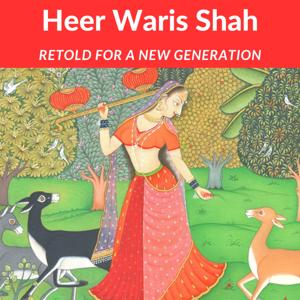


In a toweing rage Malki summons Mithi, the barber’s wife and commands her to bring Heer to her. Triggered by Kaido, she pours a stream of abuse upon her daughter using colorful language, which will sound familiar to Punjabis who have ever had the pleasure of being berated by their grandmothers, or have heard them taking someone to task. Under the invective lies love, concern for her daughter and fear that her reputation will be ruined.
Chagrined at being rebuffed by Chuchak, Kaido approaches Malki to vent his spleen. He warns her that her daughter’s brazen ways will bring her much trouble and he urges Malki to chastise her. Kaido, waxing hyperbolic in this verse, as he suggests improbably harsh punishments for Heer, almost appears comical, until one reflects on what is behind the words. Waris Shah is conveying the simmering menace of violence, which lurks under the surface in a society where notions of honor and shame predominate and can often result in unimaginable consequences for young women accused of sexual misconduct.
This verse provides social commentary on the patriarchy, honor and the control of ‘wayward daughters’. A society that elevates the collective at the expense of the individual cannot accept Heer’s haughtiness and pride; the women allege that she comports herself like a queen! Class distinctions also come to the fore; while it is inappropriate for the young, unmarried Heer to spend time with any man, her transgression is compounded by Ranjha’s being a ‘mere’ servant. The Qazi, emblematic of a highly judgemental and unforgiving society, of course provides a ready solution – marry her off and save the family’s honor, while reiterating that not doing so will invite divine judgement and retribution.
Kaido’s allegations elicit an angry and dismissive response from Chuchak, whose family honor has been impugned. He roars that his daughter has been at play with her friends and has been spending her time at women’s gatherings. He then launches into a personal attack on Kaido, calling him a slanderer, mocking his accoutrements that proclaim his status as a holy man and declaring that he consorts with those at the fringes of respectable society. As his tirade continues, he expresses the prejudices of his class and caste, emphasizing that the low born can never aspire to high status. The poet waxes ironical at the end of the verse, observing that despite his huffing and puffing, Chuchak is after all a Jatt and that like others of ‘low caste’ origin, such as cobblers and oil pressers, the sons of Jatts cannot aspire to be holy men. Here he also questions the sincerity Ranjha’s future journey as a mendicant, despite having earlier signaled that Ranjha is on a spiritual journey and not merely on a quest to be one with his love.
Kaido manages to salvage some of the churi and rushes to the village council. There he declares that he has evidence that Chuchak’s daughter is brazenly roaming the woods with the new herdsman.
Heer threatens Kaido with dire consequences and demands that he return the choori he took from Ranjha, fearful that it would be evidence of her doting on the cowherd.
Heer races to catch up with Kaido and descends upon him like one of the Furies, throwing him to the ground and thrashing him.
In dismay Heer tells Ranjha that he should have bene more careful, who responds that he did not know Kaido was spying on them; he had just seen a disabled beggar begging for food, not realizing that he had ill intentions. Interestingly, rather than chasing Kaido himself, Ranjha asks Heer to do so, suggesting that she first reason with him and then use force if necessary to keep him quiet. Once again the poet is emphasizing his heroine’s proud and forceful mein.
Heer, realizing that the person who approached Ranjha was Kaido is, distraught. She declares that Kaido is a trouble maker who will surely go to her parents and tell them about their daughter’s meeting the new herdsman in the woods.
Kaido approaches Ranjha and begs for food, claiming to be hungry and the lad gives him a fistful of the choori that Heer has brought him. When Heer returns from the river, where she had gone to fetch water, Ranjha tells her about the disabled man who approached him, wondering if he was a mendicant, unaware of the storm that is about to burst.
From the publisher's feed