
Sign up to save your podcasts
Or

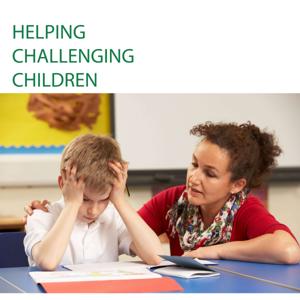


One child in 38 in the US ends up being involved with the juvenile justice system. How does this occur? What can be done to prevent this? Listen and learn what is needed.
According to the most recent CDC surveys, 6.1% of children have been diagnosed with ADHD at some point. Historically, physicians have told parents that their children would outgrow the disorder and would not do well with ADHD medications at that time. This is now no longer believed with the latest longitudinal study finding that only one child in ten will be in remission as adults. There are problems for adults with ADHD due to old information and biases. Learn about them and what is needed to help adults who still struggle with ADHD. If you want to go deeper on topics related to helping challenging children, check out my membership podcast, Digging Deeper to Help Challenging Children . Current topics relate to foster care and building resilience in children. On October 1st, 2021 I will be uploading my podcast entitled Understanding Oppositional Defiant Children.
I am sure that you have seen all of the out-of-control adults in the news and on social media. We shake our heads, trying to understand how so many people have gotten so angry and disruptive. So if we are confused, what do you think children are thinking? Many are likely scared to see so many angry adults doing things which they themselves would get in trouble if they did it. So, how do explain to children about these adults? How do you help them develop strategies to cope with the fear that these actions trigger in children? I will be touching on resilience in children during this podcast, but just a little. I have uploaded a longer podcast on my member site, Digging Deeper podcast if you are interested in joining and learning more. If you are interested just go to the Store link at the top of the page, or if you are listening through your favorite podcast app, go to www.helpingchalleningchildren.online/store.
Research over the last couple of decades has revealed that many of the children who are labeled behavioral disordered are victims of trauma and abuse. They don't respond well to school interventions that focus on making them accountable for their behaviors through punishments.
These students need to be recognized as struggling to keep it together and be provided with supports and skills training in social-emotional learning as well as self-regulation skills provided by compassionate adults.
Children trust that adults, be they parents, teachers, or others will have their backs. But what happens when the adult is toxic? And what can you do to help the child?
In Season 2, I will focus on the factors that can lead to children being more challenging. I will look at what we do now and the effect it has and challenge you to look for new answers. The first episode will focus on our foster care system.
We, as a society, are struggling. We have talked about civil rights since at least the Civil War. We quote the Declaration of Independence with Life, Liberty, and the Pursuit of Happiness, but we put limits on who should be recipients of these rights. We show our biases and bigotry toward others not "like us."
Where do biases and bigotry come from? We are not born with biases and bigotry which means that they are taught to us. Biases and bigotry develop in our limbic system where we have to decide to fight, flee, or freeze when we encounter something we don't know or understand. But, unlike animals, we have developed our brain further with the prefrontal lobe where reasoning and logic develop. But we have to take time to develop that part of our brain. We need others to teach us the path from the limbic system to the prefrontal lobe in order to increase our ability to tolerate and even come to embrace difference.
Unfortunately, many children are not provided with the skills to develop their logic and reasoning. They are taught, instead, to fight or flee from "others" who don't match up as the same. This has to change if we are going to see true reform in our society. We need to add Matthew(22:37-39) to what we talk about with the Declaration of Independence as we work for a better world.
This pandemic has shown that our country is greatly divided. What should be a situation where children see adults model care and compassion for their neighbors, has shown that there are a group of people who don't believe in that, but rather model how to push others around.
We need to see if we are being good models of showing love, acceptance and respect to others now and in the future.
We are not just struggling with an infectious disease right now. We also also struggling with women, who due to mental health disorders, could very well be drinking alcohol much more often and may also be pregnant. This means that we have a high risk of a surge in the number of babies born with a Fetal Alcohol Spectrum Disorder, which will impact their lives and all of society for decades to come.
And there are also the individuals who currently have FASD and are struggling due to the significant changes in their lives, the isolation, and the problems they have due to their FASD.
Listen and learn.
Approximately 10% of children will be diagnosed with a learning disability over their lifetime. Learning disorders are considered neurodevelopmental disorders, which means that they are part of the child's wiring at birth. But that doesn't mean that we can't help develop skills even before they show signs. The more we expose children from birth to 5 years of age to language, sounds, books, and hands' on activities, the more their brains learn to process what their senses are experiencing, which will then lay the foundation for academic learning.
From the publisher's feed