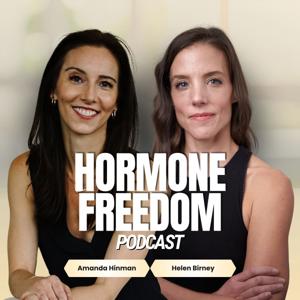
Hormone Freedom

Hormone Freedom

Download on the App Store

Hormone Freedom episodes

  • 18 Pounds, Brain Fog and 2 A.M. Wakeups—but Her Labs Were “Normal”

    Your lab results say everything is normal, but you still feel exhausted, struggle with brain fog, wake up at 2 AM, and keep gaining weight. So what's missing?

    In this episode of the Hormone Freedom Podcast, Amanda Hinman and Helen Birney share the story of a woman who gained 18 pounds in 12 months despite making no significant changes to her food or exercise routine. Although her initial lab results were within standard ranges and hormone replacement therapy helped her hot flashes, she was still experiencing weight gain, bloating, mood changes, disrupted sleep, and difficulty concentrating.

    Amanda explains why looking beyond basic lab results can sometimes reveal additional pieces of the health puzzle, including hormone metabolism, nutrient needs, thyroid markers, and cortisol patterns. Together, Amanda and Helen explore why symptom management alone may not address the bigger picture and why understanding your body's patterns, having the right support, and taking action in the right sequence can make a difference.

    If you've been told your labs are normal but you still don't feel like yourself, this conversation will help you approach your health with more curiosity and a deeper understanding of what questions to explore with your healthcare team.

    In This Episode
    • Understand why fatigue, weight gain, brain fog, bloating, and disrupted sleep deserve attention even when routine results look normal. (00:23–01:47)
    • Hear how one woman experienced brain fog, changing body composition, and frustration despite maintaining her usual habits. (01:47–03:19)
    • Explore the additional health information that may help provide context beyond basic hormone and thyroid markers. (03:19–04:49)
    • Discover why investigating underlying patterns can offer a more complete perspective than focusing on individual symptoms alone. (04:49–06:01)
    • Learn why understanding your body's physiology and gathering relevant information can help guide more personalized conversations about your health. (06:01–06:41)
    • Explore the case study's findings around estrogen processing, nutrient needs, and an inverted cortisol pattern. (06:41–08:15)
    • Discover why lab results alone don't automatically create change and why understanding the bigger picture matters. (08:15–09:08)
    • Learn why identifying patterns and prioritizing the right next steps can make a health plan more manageable. (09:08–09:45)
    • Explore the three levels of knowing and how health habits can become part of your identity over time. (09:45–11:23)
    • Understand how sharing experiences and receiving support can make midlife health changes feel less overwhelming. (11:23–12:05)

    💡 Action Plan
    1. Pay attention to what your body is telling you. Notice recurring symptoms such as afternoon energy crashes, disrupted sleep, brain fog, bloating, or unexplained weight changes.
    2. Look beyond a single number. Your health is more than your weight or one lab result. Consider the broader picture and discuss persistent symptoms with your healthcare provider.
    3. Ask better questions at your next appointment. If you're still experiencing symptoms, ask whether additional evaluation or testing may be appropriate based on your health history.
    4. Understand before adding more. Rather than trying multiple supplements or making several changes at once, work with qualified professionals to understand what your body may need and prioritize your next steps.
    5. Focus on one change at a time. Give yourself room to practice new habits and notice how your body responds.
    6. Find support along the way. Surround yourself with people who can help you understand your health journey and stay connected to the changes you're making.

    💛 Ready to Understand Your Hormone Health?

    Being told your labs are normal doesn't mean you have to ignore how you feel. Your symptoms are worth exploring, and understanding your body's patterns can help you identify meaningful next steps.

    Take the free Hormone Freedom Assessment to discover which patterns may be speaking the loudest in your body and receive practical action steps from Amanda and Helen.

    Take the assessment here:

    https://hormone-freedom-assessment.scoreapp.com/

    13 min
  • What Your Bank Account and the Scale Have in Common with Audrey Faust

    What do your bank account and the number on the scale have in common? More than you might think. Both can bring up fear, shame, judgment, and the urge to look away rather than face what’s really happening.

    In this episode of the Hormone Freedom Podcast, Amanda Hinman and Helen Birney welcome Audrey Faust, CFO strategist and founder of The Manifesting CFO, to explore why so many women avoid looking at their financial information. Audrey explains how past experiences, money beliefs, and self-judgment can create financial anxiety, even for successful business owners.

    Together, they uncover the surprising connection between financial clarity and your health journey. Whether you're looking at your profit and loss statement, your blood work, or the number on the scale, the first step is the same: approach the information with curiosity instead of criticism. With the right support, clarity can become the starting point for confidence, empowerment, and meaningful change.

    In This Episode
    • Discover why some women avoid their financial numbers and how a lack of education can contribute to that fear. (00:38–01:53)
    • Explore how past experiences, money beliefs, and self-judgment can affect the way women approach their finances. (01:53–03:33)
    • Understand how shame, fear, and diet culture can make you want to avoid looking at important information about your health. (03:33–04:56)
    • Learn why looking deeper at your nutrient status, hormone levels, and health markers can help you move beyond one number. (04:56–06:18)
    • Discover how approaching your finances and health with compassion can turn information into empowerment. (06:18–07:57)
    • Explore how having a mentor or supportive community can make difficult information easier to understand and act on. (07:57–08:58)
    • Find out where to follow Audrey and listen to her podcast about money, mindset, and identity shifts. (08:58–10:03)
    • Learn about Audrey's free monthly live event, where women business owners can ask questions and better understand their financial information. (10:03–11:41)

    💡 Action Plan
    1. Notice what you're avoiding. Is there a health number, lab result, or financial detail you've been hesitant to look at? Start by acknowledging it without judgment.
    2. Replace criticism with curiosity. Instead of asking, “What's wrong with me?” try asking, “I wonder what this information is telling me?”
    3. Look beyond one number. Your weight is only one piece of your health picture. Consider other factors such as energy, digestion, nutrient status, and hormone patterns.
    4. Release the pressure to know everything. You don't need to understand every detail immediately. Give yourself permission to learn one step at a time.
    5. Ask for support. Work with someone who can help you understand the information, identify next steps, and move forward with confidence.

    💛 Ready to Understand Your Hormone Health?

    Your body isn't a number on a scale, and your health journey doesn't need to be driven by shame or judgment. Start by getting curious about what your body is communicating.

    Take the free Hormone Freedom Assessment to discover which patterns may be speaking the loudest in your body and receive practical action steps from Amanda and Helen.

    Take the assessment here:

    https://hormone-freedom-assessment.scoreapp.com/

    Connect With Audrey Faust

    Listen to Audrey's podcast to learn more about how she helps women business owners understand their finances with confidence.

    • Podcast: Manifest, Manage + Multiply Money

    13 min
  • Why 70% Consistency Can Beat 100% Effort

    What if you didn’t have to be perfect to make meaningful progress with your health? So many women over 40 approach a new health plan with 100% effort, only to feel discouraged when life gets busy, routines get disrupted, or they miss a day. Then comes the familiar “I’ll start again Monday” mindset.

    In this episode of the Hormone Freedom Podcast, Amanda Hinman and Helen Birney explore why 70% consistency can create more lasting results than an all-or-nothing approach. They discuss how ongoing support, realistic habits, accountability, and community help you stay engaged even when life gets messy.

    They also explore how midlife can bring old stress patterns and unconscious beliefs to the surface, creating an opportunity for deeper healing. Because lasting health isn't about doing everything perfectly. It's about building a plan that works with your life and continuing to show up for yourself.

    In This Episode
    • Learn how letting go of the all-or-nothing mindset helps you stay consistent when life gets in the way. (00:00–01:55)
    • See how recognizing small wins can reveal how much your health has improved over time. (02:03–03:29)
    • Understand why staying connected to your goals and future self can influence everyday choices. (03:29–04:14)
    • Explore how weekly coaching, personalized guidance, and regular check-ins help you work through obstacles. (04:14–04:58)
    • Discover the value of combining personal practices, mentorship, and community support. (04:58–06:09)
    • Explore how hormonal changes can bring stress responses and old patterns into greater awareness. (06:09–07:47)
    • Learn why validation, boundaries, and emotional support matter in lasting transformation. (07:47–08:38)
    • Understand why supporting the body also means looking at the patterns behind repeated health challenges. (08:38–09:20)
    • Recognize how fear of failure and waiting for the perfect time can keep you from taking meaningful action. (09:20–10:33)

    💡 Action Plan
    1. Let go of the all-or-nothing mindset. Choose a realistic level of effort you can maintain, even during a busy week.
    2. Recognize your progress. Look back at the changes you've made over the past few months instead of focusing only on what's missing.
    3. Choose one small habit to keep practicing. Consistent movement, nourishing meals, or a daily moment of reflection can all add up.
    4. Stay connected to your goals. Ask yourself what your future self would prioritize and identify one way to practice that today.
    5. Build a support system. Find people who can offer guidance, accountability, and encouragement without judgment.
    6. Take action before you feel completely ready. You don't need a perfect plan or perfect confidence to begin making a meaningful change.

    💛 Ready to Understand Your Hormone Health?

    You don't need another plan that demands perfection. You need to understand what your body is communicating and identify the next steps that make sense for you.

    Take the free Hormone Freedom Assessment to discover which patterns may be speaking the loudest in your body and receive practical action steps from Amanda and Helen.

    Take the assessment here:

    https://hormone-freedom-assessment.scoreapp.com/

    11 min
  • Why Your Body Chooses Familiar Over Better with Carissa Brockman

    Have you ever wondered why you keep repeating patterns you know you no longer want, even when you're consciously ready for something better? The answer may be connected to how your nervous system has learned to recognize safety.

    In this episode of the Hormone Freedom Podcast, Amanda Hinman and Helen Birney welcome Carissa Brockman, a trauma-informed somatic coach specializing in narcissistic abuse recovery and complex PTSD. Carissa explains why the nervous system often gravitates toward familiar relationships, roles, and behaviors, even when those patterns no longer serve us. She shares how past experiences and deeply rooted beliefs can influence our identity, boundaries, and ability to make changes.

    You'll also learn why understanding where old patterns came from is only part of the healing process. Creating new, manageable experiences that help your body recognize safety is another important step. Whether you're working toward healthier relationships, stronger boundaries, or better health habits, this conversation offers a compassionate reminder that change doesn't require forcing yourself. It begins with awareness, self-compassion, and small steps toward a new experience.

    In This Episode
    • Meet Carissa Brockman and discover why your nervous system may favor what it recognizes over what you consciously want. (00:00–01:37)
    • Understand how familiar roles, relationships, and beliefs can influence the way you move through life. (01:37–03:03)
    • Explore how deeply held beliefs about love, worth, and being needed can keep certain dynamics in place. (03:03–04:35)
    • Learn the difference between expressing your natural compassion and feeling obligated to give at your own expense. (04:35–05:49)
    • Discover Carissa's approach to recognizing where patterns came from and responding with compassion rather than judgment. (05:49–07:45)
    • Learn why new experiences, such as expressing a boundary, can help your nervous system build a different sense of safety. (07:45–09:05)
    • Understand why taking manageable steps toward change can help you develop trust in yourself over time. (09:05–10:15)
    • Explore how fear, past experiences, and body image can influence your willingness to make changes for your health. (10:15–11:52)
    • Recap the importance of acknowledging past experiences with compassion and creating new experiences that support the future you want. (11:52–12:33)

    💡 Action Plan

    Try these reflection and awareness practices as you begin recognizing familiar patterns:

    1. Notice what keeps repeating. Identify a relationship, behavior, or situation you no longer want to experience.
    2. Get curious about the belief underneath it. Ask yourself what you may have learned to believe about love, worth, safety, or your role in relationships.
    3. Practice self-compassion. Instead of judging yourself for an old pattern, try Carissa's phrase: “Of course.” Acknowledge that the pattern may have developed for a reason.
    4. Reconnect with your needs. Ask yourself what you need to feel safe, respected, and supported.
    5. Take one small step toward change. Practice expressing a preference, setting a boundary, or saying no when something doesn't feel right and it is safe to do so.
    6. Give yourself time to build trust. You don't have to feel completely confident before taking a step. Allow yourself to build new experiences gradually.

    Remember, the goal isn't to become someone who never feels afraid. It's to understand your patterns, honor what you've experienced, and create new experiences that support the life you want to live.

    💛 Ready to Understand Your Hormone Health?

    Take the free Hormone Freedom Assessment to discover which patterns in your body may be speaking the loudest and receive actionable next steps from Amanda and Helen.

    Take the assessment here: https://hormone-freedom-assessment.scoreapp.com/

    Connect With Carissa Brockman

    Follow Carissa for more content and resources on somatic coaching, nervous system safety, and recovery.

    Instagram: @soulfully_embodied

    13 min
  • The Part of Your Health Plan You Can’t See—But May Be Running Everything

    Are you doing your best to eat well, exercise, and prioritize your health, but still struggling to see the results you want? The missing piece may be something you can't see: the unconscious thought patterns and beliefs influencing your daily choices.

    In this episode of the Hormone Freedom Podcast, Amanda Hinman and Helen Birney explore the connection between your physical health, hormone patterns, and the beliefs that shape how you care for yourself. They discuss how fatigue, brain fog, weight changes, and stress can affect your confidence, relationships, and ability to show up at work and home. They also break down the three common hormone response patterns: Energy & Output, Stress Response, and Fueling & Digestion.

    You'll discover why addressing physical symptoms is only part of the process and how deeply rooted beliefs about body image, food, exercise, and putting everyone else first can influence your habits. Amanda and Helen explain why changing your thoughts can be a powerful starting point for creating new patterns, supporting your nervous system, and building a healthier relationship with yourself.

    In This Episode
    • Explore the physiological and mindset factors that influence how you feel and function. (00:00–00:55)
    • Understand how changes in focus, memory, and mental clarity can affect your work, family, and sense of self. (00:55–02:13)
    • Discover how weight changes, stress, and losing time for yourself can influence the way you show up in life. (02:13–03:26)
    • Learn why understanding your body's signals is an important first step toward hormone freedom. (03:26–04:11)
    • Explore Energy & Output, Stress Response, and Fueling & Digestion, and how each may show up in your daily life.(04:11–05:37)
    • Understand how early experiences and cultural messages can shape your relationship with food, exercise, self-care, and your body. (05:37–07:46)
    • Learn how everyday thoughts influence the choices you make about movement, nourishment, and prioritizing yourself. (07:46–09:00)
    • Explore how learned beliefs about dieting, appearance, and self-worth can follow you into adulthood. (09:00–10:28)
    • Discover why supporting hormone health may also involve looking at the deeper patterns behind your behaviors and stress responses. (10:28–11:04)

    💡 Action Plan

    Start by looking beyond what you need to change physically. Pay attention to the thoughts and beliefs that may be influencing your choices.

    1. Notice your internal dialogue. Pay attention to what you tell yourself when you look in the mirror, get dressed, eat, or make time for exercise.
    2. Question old beliefs. Ask yourself whether your ideas about weight, food, exercise, and self-worth are truly serving you today.
    3. Recognize where you put yourself last. Notice when you automatically prioritize everyone else's needs while neglecting your own.
    4. Choose a new thought. Instead of viewing movement or self-care as another obligation, reframe it as something you get to do to support yourself.
    5. Listen to your body's signals. Look at patterns such as fatigue, brain fog, stress, and digestive challenges to identify where you may need more support.
    6. Address the whole picture. Remember that sustainable health involves both your physical physiology and the deeper beliefs and behaviors that influence your daily habits.

    You don't have to change everything overnight. Start by bringing awareness to the patterns that may be keeping you stuck.

    💛 Ready to Understand Your Hormone Health?

    Take the free Hormone Freedom Assessment to discover which of the three patterns in your body may be speaking the loudest and receive actionable next steps from Amanda and Helen.

    Take the assessment here: https://hormone-freedom-assessment.scoreapp.com/

    12 min
  • Why Fixing One Hormone at a Time May Be Keeping You Stuck with Melissa Lerner

    Are you focusing on one hormone at a time but still struggling to feel your best? Your hormones don't work in isolation. In this episode of the Hormone Freedom Podcast, Amanda Hinman and Helen Birney welcome Melissa Lerner, NASM-certified personal trainer, nutrition coach, and creator of the Micro Modify Method, to explore how hormones interact and how everyday behaviors can influence your overall well-being.

    Melissa explains why understanding the connections between hormones such as cortisol, insulin, leptin, and ghrelin can help you make more informed choices about eating, exercise, stress, and recovery. She also shares practical ways to become more aware of your body's needs, respond to emotional stress, and build healthier habits without getting overwhelmed by complicated science.

    You'll discover how small adjustments, from fueling after exercise to creating a relaxing evening ritual that doesn't rely on alcohol, can help you make more intentional choices. Because supporting your health isn't about controlling one hormone at a time. It's about understanding your body's signals and taking manageable steps toward feeling better.

    In This Episode
    • Meet Melissa Lerner and discover why understanding the connections between hormones matters for your overall health. (00:00–01:52)
    • Learn why eating, sleeping, and managing stress can influence interconnected processes in the body. (01:52–02:51)
    • Explore how exercise, meal timing, hunger, and emotional situations can shape your daily choices. (02:51–04:41)
    • Understand how symptoms and patterns can help you identify areas where your body may need more support. (04:41–05:56)
    • Discover how Melissa helps clients connect the science of hormones with simple, everyday behaviors. (05:56–07:40)
    • Learn how to identify the need behind a habit and create alternative rituals that support relaxation and recovery. (07:40–09:09)
    • Explore Melissa's approach to replacing an automatic evening drink with a different relaxing ritual. (08:18–09:09)
    • Find out where to learn more about Melissa and her Micro Modify Method. (09:09–09:43)

    💡 Action Plan

    Put these ideas into practice with a few manageable steps:

    1. Notice your patterns. Pay attention to how your eating, sleep, movement, and stress levels affect how you feel.
    2. Fuel your body intentionally. Consider your needs after exercise and avoid ignoring hunger or delaying meals when you need nourishment.
    3. Pause during stressful moments. Take a few slow breaths before reacting to an emotional situation, giving yourself time to respond more intentionally.
    4. Identify the need behind a habit. If you rely on a particular routine to unwind, ask yourself what you're really looking for: relaxation, comfort, or a transition out of work mode.
    5. Experiment with a small alternative. Try a calming evening drink, a few quiet minutes, or another relaxing ritual that fits your lifestyle.
    6. Focus on awareness, not perfection. You don't need to become a hormone expert. Start by understanding your patterns and making one thoughtful change at a time.

    💛 Ready to Understand Your Hormone Health?

    Take the free Hormone Freedom Assessment to discover which patterns in your body may be speaking the loudest and receive actionable next steps from Amanda and Helen.

    Take the assessment here: https://hormone-freedom-assessment.scoreapp.com/

    Connect With Melissa Lerner

    Learn more about Melissa and the Micro Modify Method:

    Website: https://micromodifymethod.com/

    Instagram: https://www.instagram.com/micromodifymethod/

    11 min
  • Why a 10-Minute Walk May Do More Than a 60-Minute Workout

    Think you need a full hour at the gym to support your health after 40? Think again. In this episode of the Hormone Freedom Podcast, Amanda Hinman and Helen Birney explore how short, consistent movement throughout the day can support metabolic health and why a 10-minute walk may be a more realistic and effective starting point than waiting for the perfect workout window.

    You'll also learn how everyday environmental exposures, including fragrances, household products, food storage containers, and cookware, may affect your efforts to support hormone health. Amanda and Helen share practical changes you can make at home, from taking short walks after meals to choosing cleaner household and personal care products.

    If you're dealing with fatigue, weight changes, disrupted sleep, or other midlife health challenges, this episode offers a reminder that you don't have to change everything at once. Small, consistent steps can help you build a more sustainable approach to your health.

    In This Episode
    • Discover why movement doesn't have to mean a long workout and how short walks can fit into a busy day. (00:00–01:39)
    • Learn why regular physical activity plays an important role in supporting your body's energy use. (01:39–02:27)
    • Understand the relationship between muscle movement, glucose uptake, and cellular energy. (02:27–03:57)
    • Explore the differences between moving throughout the day and completing all your activity in one session. (03:57–05:38)
    • Find out why a shorter walk is still worthwhile when you don't have time for your usual workout. (05:38–06:25)
    • Explore common environmental exposures, including fragrances and household products, that may be worth reviewing. (06:25–07:12)
    • Learn practical considerations for food choices, food storage, and cookware without feeling pressured to replace everything at once. (07:12–08:41)
    • Discover what to consider when choosing personal hygiene, beauty, and household cleaning products. (08:41–09:07)
    • Understand how stress, nutrient intake, digestion, thyroid function, movement, and environmental exposures can fit into a broader approach to health. (09:07–10:44)
    • Learn why manageable, sequenced changes may be easier to sustain than trying to overhaul your entire routine. (10:44–11:03)

    💡 Action Plan

    Choose one small action you can begin today:

    1. Take a 10-minute walk. Try walking after lunch or dinner instead of waiting for time to complete a full workout.
    2. Move more consistently. Break up long periods of sitting with brief movement breaks throughout your day.
    3. Review your home environment. Start by checking the fragrances, cleaning products, or personal care products you use most often.
    4. Make one practical swap. Consider a change that fits your needs and budget, such as using glass food storage containers more often.
    5. Focus on progress, not perfection. Choose one manageable habit and build from there rather than changing everything at once.

    Remember, supporting your health doesn't have to mean doing more for longer. Consistency and realistic steps can help you build habits that work with your life.

    💛 Ready to Understand Your Hormone Health?

    Take the free Hormone Freedom Assessment to discover which patterns in your body may be speaking the loudest and receive actionable next steps from Amanda and Helen.

    Take the assessment here: https://hormone-freedom-assessment.scoreapp.com/

    12 min
  • Why Your Healthy Habits Should Get Simpler When Life Gets Hard with Lindsay Piersol

    What happens when life throws you a curveball and your healthy routines suddenly feel impossible to maintain? Whether you're caring for family, managing a busy schedule, or navigating unexpected challenges, you don't have to do everything perfectly to keep moving forward.

    In this episode of Hormone Freedom, Amanda Hinman and Helen Birney welcome Lindsay Pearsall, a nurse practitioner who helps women understand and care for their health through faith-based wellness and evidence-informed strategies. Lindsay shares her personal journey navigating autoimmune diagnoses and medication challenges, which led her to explore nutrition, stress recovery, and lifestyle changes.

    Together, they discuss the difference between seasons of growth and seasons of maintenance, why introducing too many changes at once can lead to decision fatigue, and how small, consistent habits can add up over time. Learn how to simplify your routines, practice patience with yourself, and focus on building a lifestyle that supports your well-being for the long term.

    In This Episode
    • Meet Lindsay Pearsall and discover why healthy habits may need to become simpler during difficult seasons. (00:00–00:47)
    • Understanding seasons of growth versus maintenance when life throws you unexpected challenges. (00:47–01:33)
    • Using simple routines, enjoyable movement, and spiritual connection to stay grounded during busy times. (01:33–02:24)
    • Why small, consistent habits, like prioritizing protein at breakfast, can help you maintain momentum. (02:24–03:48)
    • Lindsay’s personal health journey, autoimmune diagnoses, and the lifestyle changes she explored. (03:48–05:10)
    • Practicing patience, celebrating manageable progress, and avoiding the all-or-nothing mindset. (05:10–06:27)
    • How to prioritize health goals and prevent decision fatigue by making one change at a time. (06:27–07:27)
    • Why overwhelm can get in the way of sustainable health habits and long-term well-being. (07:27–08:12)
    • Building a lasting lifestyle through gradual changes that fit your needs, budget, and circumstances. (08:12–09:22)
    • Where to connect with Lindsay for wellness resources, recipes, exercises, and coaching services. (09:22–10:02)

    Action Plan
    1. Identify your current season. Ask yourself whether this is a season for growth or maintenance. Give yourself permission to adjust your expectations accordingly.
    2. Choose one habit to maintain. It could be preparing a familiar meal, enjoying 20 minutes of movement, prioritizing protein at breakfast, or keeping a consistent morning routine.
    3. Make a short priority list. Identify the areas where you most want to improve, such as nutrition, movement, stress management, or sleep. Start with the one that matters most right now.
    4. Avoid changing everything at once. Build confidence with one manageable habit before adding another to reduce overwhelm and decision fatigue.
    5. Celebrate small wins. Recognize what you're already doing well instead of focusing only on what you haven't accomplished.
    6. Build for the long term. When life becomes less demanding, consider adding another supportive habit that fits your lifestyle and resources.

    Take Your Next Step Toward Hormone Freedom

    You don't have to figure out your health journey alone. Take the free Hormone Freedom Assessment to discover which patterns may be affecting your energy, stress response, and digestion, and receive personalized action steps to help you move forward.

    Take the free Hormone Freedom Assessment: https://hormone-freedom-assessment.scoreapp.com/

    Connect with Lindsay Pearsall: Visit Live Lovely Brand and follow her on Instagram @livelovelibrand to explore her wellness resources, newsletter, recipes, exercise guidance, and coaching services.

    11 min
  • The Health Rules You Learned at 7 May Be Running Your Life at 47

    What if the health habits you struggle with today are connected to beliefs you learned decades ago? From diet culture and body image to putting everyone else first and ignoring your emotions, the messages we absorb in childhood can shape how we approach food, rest, self-care, and our bodies well into midlife.

    In this episode of Hormone Freedom, Amanda Hinman and Helen Birney explore how early experiences and cultural expectations may influence the way women navigate health after 40. They discuss the outdated rules many women grew up with, including “eat less, move more,” the idea that the number on the scale defines health, and the expectation that women should push through exhaustion without asking for support.

    You'll also discover why knowing what to do isn't always enough to create lasting change. Amanda and Helen explain how familiar patterns can influence daily habits and why updating those patterns may be an important part of building a more supportive relationship with your body. If you're ready to move beyond old rules and create healthier routines with greater ease, this conversation offers a new perspective.

    In This Episode
    • How childhood messages about weight, dieting, and body image can influence your health beliefs in adulthood. (00:00–01:11)
    • How early experiences shape your relationship with food, rest, emotions, and asking for support. (01:11–02:20)
    • Why midlife can be an opportunity to question old habits, including people-pleasing, burnout, and using weight as the primary measure of health. (02:20–03:51)
    • How the low-fat movement and calorie-focused dieting influenced generations of women. (03:51–04:49)
    • The cultural messages that encouraged women to ignore body signals, suppress emotions, and put everyone else's needs first. (04:49–06:49)
    • How today's conversations about midlife health emphasize muscle, metabolic health, self-care, and adequate protein. (06:49–08:32)
    • Why changing your health routines can feel difficult even when you understand what you need to do. (08:32–09:45)
    • How unconscious patterns and familiar behaviors can influence your ability to make lasting changes. (09:45–10:30)
    • The computer software analogy: why new health goals may require updating old beliefs and habits. (10:30–11:21)
    • How familiar beliefs about food, rest, body size, and self-worth may affect your sense of safety around change. (11:21–12:13)
    • Why your relationship with your body, beliefs, and daily choices matters when building sustainable routines. (12:13–12:51)

    Action Plan
    1. Reflect on the health rules you learned growing up. Ask yourself what your family taught you about food, weight, exercise, rest, emotions, and self-care.
    2. Notice which beliefs still influence you. Pay attention to thoughts such as “I need to earn my rest,” “I should put everyone else first,” or “My weight determines my health.”
    3. Question outdated rules. Instead of automatically following familiar advice, consider what supports your current needs, energy, and overall well-being.
    4. Start with one manageable change. Choose a supportive habit and practice it consistently without expecting yourself to change everything at once.
    5. Make room for your own needs. Practice resting, asking for help, and acknowledging your emotions without treating them as signs of weakness.

    Take Your Next Step Toward Hormone Freedom

    Understanding your body's patterns is a meaningful first step toward making more informed choices about your health. Take the free Hormone Freedom Assessment to discover which patterns may be affecting your energy, stress response, and digestion, and receive personalized action steps to help you move forward.

    Take the free Hormone Freedom Assessment: https://hormone-freedom-assessment.scoreapp.com/

    14 min

About Hormone Freedom

From the publisher's feed

Hormone Freedom is the podcast for women over 40 who want freedom from the confusion of midlife health — not freedom from hormones.