
Sign up to save your podcasts
Or

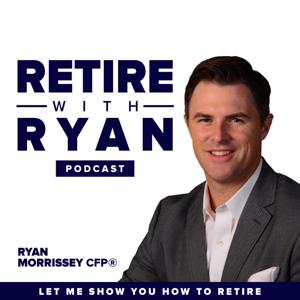

One of the ways that central banks around the world control economic activity is by raising interest rates. If an economy is doing well, banks will raise interest rates to curb inflation. Alternatively, banks will lower interest rates to help jumpstart a sluggish economy. In the United States, interest rates are controlled by the Federal Reserve Board, aka the Fed. Our Fed’s dual mandate also includes the responsibility to promote maximum employment and promote price stability.
Currently, the Fed is in the difficult situation of balancing low price stability and high-interest rates with the geopolitical climate. As of March 16th, the Fed raised interest rates a minimal 0.25 percent. This is definitely on the low end of what some economists were predicting, nevertheless, it’s still an increase with the expectation that there will be further increases later this year. Don’t get caught off guard! Read on to learn how these increases could impact your retirement.
Measuring the impact of higher interest ratesFor every loan you take, interest is typically paid to compensate the lender. Several factors go into determining your interest rate, such as your credit history, the amount of money that you’re borrowing, and the timeframe chosen to pay back the loan. The banks we borrow from have to keep a certain amount of capital on hand to meet minimum deposit requirements. When they run short, they borrow money from the Fed to keep the economy rolling.
However, when the Fed increases interest rates, they raise the cost for banks to borrow the money they are lending to you. Fed interest rate hikes force banks to increase their interest rates when you borrow money to purchase things like homes, cars, and other kinds of loans. The more you have to pay in interest, the less money you’ll have in your pocket to go towards the principal, thus diminishing the amount of money you can spend. That means a $500 per month payment buys less house and less car than it did before, potentially limiting your buying choices. It also further complicates an already complicated housing market, especially if more increases are on the way. For more ways interest rate increases impact you and your retirement, listen to this episode!
Connect With Morrissey Wealth Managementwww.MorrisseyWealthManagement.com/contact
 View all episodes
 By Ryan R Morrissey

4.9
3838 ratings
One of the ways that central banks around the world control economic activity is by raising interest rates. If an economy is doing well, banks will raise interest rates to curb inflation. Alternatively, banks will lower interest rates to help jumpstart a sluggish economy. In the United States, interest rates are controlled by the Federal Reserve Board, aka the Fed. Our Fed’s dual mandate also includes the responsibility to promote maximum employment and promote price stability.
Currently, the Fed is in the difficult situation of balancing low price stability and high-interest rates with the geopolitical climate. As of March 16th, the Fed raised interest rates a minimal 0.25 percent. This is definitely on the low end of what some economists were predicting, nevertheless, it’s still an increase with the expectation that there will be further increases later this year. Don’t get caught off guard! Read on to learn how these increases could impact your retirement.
Measuring the impact of higher interest ratesFor every loan you take, interest is typically paid to compensate the lender. Several factors go into determining your interest rate, such as your credit history, the amount of money that you’re borrowing, and the timeframe chosen to pay back the loan. The banks we borrow from have to keep a certain amount of capital on hand to meet minimum deposit requirements. When they run short, they borrow money from the Fed to keep the economy rolling.
However, when the Fed increases interest rates, they raise the cost for banks to borrow the money they are lending to you. Fed interest rate hikes force banks to increase their interest rates when you borrow money to purchase things like homes, cars, and other kinds of loans. The more you have to pay in interest, the less money you’ll have in your pocket to go towards the principal, thus diminishing the amount of money you can spend. That means a $500 per month payment buys less house and less car than it did before, potentially limiting your buying choices. It also further complicates an already complicated housing market, especially if more increases are on the way. For more ways interest rate increases impact you and your retirement, listen to this episode!
Connect With Morrissey Wealth Managementwww.MorrisseyWealthManagement.com/contact
802 Listeners
1,333 Listeners
534 Listeners
755 Listeners

546 Listeners
694 Listeners

580 Listeners
937 Listeners
826 Listeners
206 Listeners
144 Listeners
1,070 Listeners

185 Listeners
138 Listeners
101 Listeners