
Sign up to save your podcasts
Or

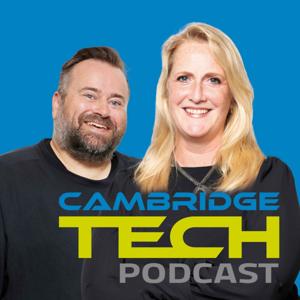

Episode 179 hosts Faye Holland and James Parton sit down with Irina Barbina (CEO) and Matthew Griffiths (CTO) to unpick how Concr is using predictive modelling and digital twins to transform cancer drug development.
Cancer data is fragmented. Clinical trials, pre-clinical research, and real-world patient data exist in silos. There's no unified way to predict how individual patients will respond to specific therapies, until now.
Concr's technology borrows from astrophysics, specifically, how scientists model dark matter using gravitational lensing. The parallel is striking: Astrophysicists can't directly observe dark matter, so they build complex simulations to infer its distribution. Concr can't directly know why a drug worked for a patient, so they build digital twin simulations to predict outcomes.
Key innovations:
· Bayesian inference at scale to handle messy, incomplete cancer data
· Hierarchical modelling that learns from shared biology across cancer types
· 94% prediction accuracy on retrospective clinical trial data
· Prospective validation underway with NHS partners and pharma companies
Concr dramatically reduces the cost and complexity of clinical trials. This episode brilliantly illustrates why Cambridge is a global innovation hub. It's not just about brilliant science, it's about brilliant people from different disciplines colliding, recognising patterns, and building companies that matter.
Hosted on Acast. See acast.com/privacy for more information.
 View all episodes
 By James Parton & Faye Holland
Episode 179 hosts Faye Holland and James Parton sit down with Irina Barbina (CEO) and Matthew Griffiths (CTO) to unpick how Concr is using predictive modelling and digital twins to transform cancer drug development.
Cancer data is fragmented. Clinical trials, pre-clinical research, and real-world patient data exist in silos. There's no unified way to predict how individual patients will respond to specific therapies, until now.
Concr's technology borrows from astrophysics, specifically, how scientists model dark matter using gravitational lensing. The parallel is striking: Astrophysicists can't directly observe dark matter, so they build complex simulations to infer its distribution. Concr can't directly know why a drug worked for a patient, so they build digital twin simulations to predict outcomes.
Key innovations:
· Bayesian inference at scale to handle messy, incomplete cancer data
· Hierarchical modelling that learns from shared biology across cancer types
· 94% prediction accuracy on retrospective clinical trial data
· Prospective validation underway with NHS partners and pharma companies
Concr dramatically reduces the cost and complexity of clinical trials. This episode brilliantly illustrates why Cambridge is a global innovation hub. It's not just about brilliant science, it's about brilliant people from different disciplines colliding, recognising patterns, and building companies that matter.
Hosted on Acast. See acast.com/privacy for more information.

873 Listeners

5,531 Listeners
163 Listeners

156 Listeners

12 Listeners

770 Listeners

15,681 Listeners

3,802 Listeners

189 Listeners
2,495 Listeners

1,251 Listeners

832 Listeners

202 Listeners

929 Listeners

2,489 Listeners