
Sign up to save your podcasts
Or

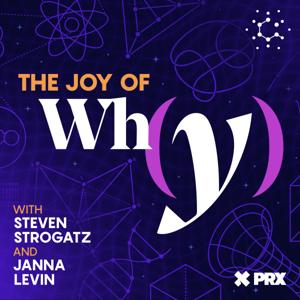

One of the biggest mysteries in cosmology seems to keep getting bigger. Astronomers have known since the 1930s that the universe is expanding, but in the 1990s, the discovery that this expansion is accelerating rather than slowing down came as a huge shock to the field. Something had to be driving that acceleration, and dark energy was proposed as the cause. What began as a seismic shock in cosmology eventually led to a Nobel prize.
But this story has a sequel, and it comes with another major plot twist. The two main methods for estimating the universe's present-day expansion rate are producing significantly different answers. As a result, how fast the universe is really expanding has become a matter of considerable debate — with no small amount of angst — and the discrepancy has become known as the Hubble tension. Perhaps most surprising of all is that one of the loudest voices raising concern is Adam Riess, the astrophysicist whose Nobel Prize-winning work helped ignite the acceleration debate in the first place.
Riess joined co-host Steven Strogatz on The Joy of Why to explain how we got to this point, what the Hubble tension might be telling us, and what may happen next.
 View all episodes
 By Steven Strogatz, Janna Levin and Quanta Magazine

4.9
495495 ratings
One of the biggest mysteries in cosmology seems to keep getting bigger. Astronomers have known since the 1930s that the universe is expanding, but in the 1990s, the discovery that this expansion is accelerating rather than slowing down came as a huge shock to the field. Something had to be driving that acceleration, and dark energy was proposed as the cause. What began as a seismic shock in cosmology eventually led to a Nobel prize.
But this story has a sequel, and it comes with another major plot twist. The two main methods for estimating the universe's present-day expansion rate are producing significantly different answers. As a result, how fast the universe is really expanding has become a matter of considerable debate — with no small amount of angst — and the discrepancy has become known as the Hubble tension. Perhaps most surprising of all is that one of the loudest voices raising concern is Adam Riess, the astrophysicist whose Nobel Prize-winning work helped ignite the acceleration debate in the first place.
Riess joined co-host Steven Strogatz on The Joy of Why to explain how we got to this point, what the Hubble tension might be telling us, and what may happen next.

766 Listeners

943 Listeners
321 Listeners

836 Listeners
569 Listeners
547 Listeners

234 Listeners

821 Listeners
1,070 Listeners

4,170 Listeners
2,359 Listeners
506 Listeners
252 Listeners
329 Listeners

21 Listeners
381 Listeners