
Sign up to save your podcasts
Or

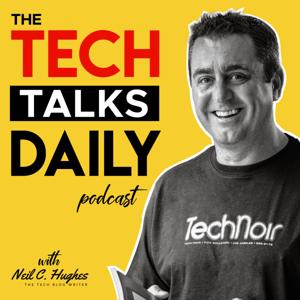

How do you prepare an entire generation for a world where AI is already shaping how we work, create, and solve problems?
In this episode of Tech Talks Daily, I'm joined by Dr. Tara Nattrass, Chief Innovation Strategist for Education at Lenovo, for a grounded and thoughtful conversation about what responsible AI integration really looks like in K–12 classrooms.
Tara brings more than 25 years of experience inside school districts, including serving as Assistant Superintendent for Teaching and Learning in Arlington Public Schools, so this isn't a theory-led discussion. It's informed by lived experience.
We explore how the conversation has shifted over the past 18 months. AI has been present in schools for years through adaptive software and analytics, but the arrival of generative and now agentic AI tools has accelerated everything. As Tara explains, the debate is no longer about whether AI should be in schools. It's about how to approach it responsibly, strategically, and in ways that genuinely improve learning outcomes.
A big theme in our conversation is AI literacy. Tara breaks this down in practical terms, moving beyond technical understanding to include critical thinking, creativity, collaboration, and the ability to evaluate risk and bias. She shares real examples of students designing AI tools to solve problems in their communities, shifting the focus from passive consumption to active creation.
We also talk about infrastructure readiness. Many school systems have bold ambitions around AI, but there is often a gap between vision and technical capability. AI-ready devices, intelligent infrastructure, cybersecurity, and data governance all play a role in making innovation sustainable rather than experimental.
Lenovo's approach, as Tara describes it, centers on building education ecosystems rather than simply refreshing hardware. There is also a careful balance to strike between innovation, privacy, and inclusion. From hybrid AI models to questions around where data is stored and who can access it, schools are navigating complex decisions. Tara shares how Lenovo partners with districts, policymakers, and organizations such as ISTE and ASCD to align infrastructure, professional learning, and governance frameworks.
Looking ahead, we discuss what will separate school systems that truly benefit from AI from those that simply layer new tools onto old teaching models. Vision, educator upskilling, cybersecurity, and rethinking assessment all feature prominently in her answer. If you are working in education, technology leadership, or policy, this conversation offers a practical view of how AI-ready classrooms are being built today and what still needs to happen next.
As always, I'd love to hear your thoughts. How is AI reshaping learning in your organization, and are you ready for what comes next?
 View all episodes
 By Neil C. Hughes
5
200200 ratings
How do you prepare an entire generation for a world where AI is already shaping how we work, create, and solve problems?
In this episode of Tech Talks Daily, I'm joined by Dr. Tara Nattrass, Chief Innovation Strategist for Education at Lenovo, for a grounded and thoughtful conversation about what responsible AI integration really looks like in K–12 classrooms.
Tara brings more than 25 years of experience inside school districts, including serving as Assistant Superintendent for Teaching and Learning in Arlington Public Schools, so this isn't a theory-led discussion. It's informed by lived experience.
We explore how the conversation has shifted over the past 18 months. AI has been present in schools for years through adaptive software and analytics, but the arrival of generative and now agentic AI tools has accelerated everything. As Tara explains, the debate is no longer about whether AI should be in schools. It's about how to approach it responsibly, strategically, and in ways that genuinely improve learning outcomes.
A big theme in our conversation is AI literacy. Tara breaks this down in practical terms, moving beyond technical understanding to include critical thinking, creativity, collaboration, and the ability to evaluate risk and bias. She shares real examples of students designing AI tools to solve problems in their communities, shifting the focus from passive consumption to active creation.
We also talk about infrastructure readiness. Many school systems have bold ambitions around AI, but there is often a gap between vision and technical capability. AI-ready devices, intelligent infrastructure, cybersecurity, and data governance all play a role in making innovation sustainable rather than experimental.
Lenovo's approach, as Tara describes it, centers on building education ecosystems rather than simply refreshing hardware. There is also a careful balance to strike between innovation, privacy, and inclusion. From hybrid AI models to questions around where data is stored and who can access it, schools are navigating complex decisions. Tara shares how Lenovo partners with districts, policymakers, and organizations such as ISTE and ASCD to align infrastructure, professional learning, and governance frameworks.
Looking ahead, we discuss what will separate school systems that truly benefit from AI from those that simply layer new tools onto old teaching models. Vision, educator upskilling, cybersecurity, and rethinking assessment all feature prominently in her answer. If you are working in education, technology leadership, or policy, this conversation offers a practical view of how AI-ready classrooms are being built today and what still needs to happen next.
As always, I'd love to hear your thoughts. How is AI reshaping learning in your organization, and are you ready for what comes next?

1,290 Listeners

543 Listeners
1,655 Listeners
1,096 Listeners
624 Listeners

1,026 Listeners

301 Listeners

344 Listeners

225 Listeners
213 Listeners
507 Listeners

136 Listeners

349 Listeners
66 Listeners
693 Listeners
0 Listeners
0 Listeners
1 Listeners
0 Listeners

0 Listeners
0 Listeners
0 Listeners