
Sign up to save your podcasts
Or

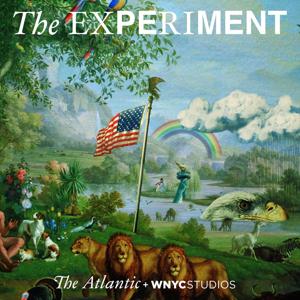

Lecrae Moore came up in a Christian culture deeply entwined with politics: Evangelicals were Republicans, and Republicans were evangelicals. As a Black college student, he found a sense of belonging in Bible study. His mentors and community were predominantly white and very conservative, but that didn’t really bother him. He found success as an artist and built a career in the white evangelical world.
Over time, though, he began to notice how much politics influenced his church culture. He was inspired by Barack Obama’s election, but felt unable to share that with his evangelical audiences. He was disturbed by the killing of 17-year-old Trayvon Martin, but faced backlash on social media for saying so. He started writing lyrics about race and the hypocrisy he saw among Christians, who he felt paid lip service to diversity but didn’t form substantive relationships with other communities. When he saw how strongly the evangelical world was going to champion Donald Trump, he decided to speak out. He lost money and fans, friends and mentors. And he almost lost his faith.
White evangelicals have arguably never been more powerful as a political force in America than they are now, but political victory has a human cost. People of all kinds of backgrounds have felt gutted by Christian support for Trump. Among Christians, the Trump era’s legacy might be fracture, not unity.
This week on The Experiment: the story of an evangelical artist who found his voice and lost his church.
Further reading: The Unofficial Racism Consultants to the White Evangelical World, How Trump Lost an Evangelical Stalwart, The Tiny Blond Bible Teacher Taking On the Evangelical Political Machine
Be part of The Experiment. Use the hashtag #TheExperimentPodcast, or write to us at [email protected].
This episode was produced by Katherine Wells and Alvin Melathe, with reporting by Emma Green. Editing by Julia Longoria, and Emily Botein. Fact-check by William Brennan. Sound design by David Herman. Transcription by Caleb Codding.
Music by Ob (“Mog” and “Wold”), water feature (“richard iii (duke of gloucester)”), Keyboard (“My Atelier”), Laundry (“Lawn Feeling”), Norvis Junior (“Overworld 7636” and (“Grim Reapers Groove 94”), and Nelson Bandela (“311 Howard Ave 25 5740” and “Auddi Sun 09 Lop Lop 722”), provided by Tasty Morsels and Nelson Nance. Additional music performed by Lecrae, courtesy of Reach Records, arranged by The Orchard (“Dirty Water” and “Take Me as I Am”). Additional audio from Real Life With Jack Hibbs, Matthew Phan, C-SPAN, ABC News, and Roland S. Martin.
Hosted by Simplecast, an AdsWizz company. See pcm.adswizz.com for information about our collection and use of personal data for advertising.
 View all episodes
 By The Atlantic and WNYC Studios

4.2
28192,819 ratings
Lecrae Moore came up in a Christian culture deeply entwined with politics: Evangelicals were Republicans, and Republicans were evangelicals. As a Black college student, he found a sense of belonging in Bible study. His mentors and community were predominantly white and very conservative, but that didn’t really bother him. He found success as an artist and built a career in the white evangelical world.
Over time, though, he began to notice how much politics influenced his church culture. He was inspired by Barack Obama’s election, but felt unable to share that with his evangelical audiences. He was disturbed by the killing of 17-year-old Trayvon Martin, but faced backlash on social media for saying so. He started writing lyrics about race and the hypocrisy he saw among Christians, who he felt paid lip service to diversity but didn’t form substantive relationships with other communities. When he saw how strongly the evangelical world was going to champion Donald Trump, he decided to speak out. He lost money and fans, friends and mentors. And he almost lost his faith.
White evangelicals have arguably never been more powerful as a political force in America than they are now, but political victory has a human cost. People of all kinds of backgrounds have felt gutted by Christian support for Trump. Among Christians, the Trump era’s legacy might be fracture, not unity.
This week on The Experiment: the story of an evangelical artist who found his voice and lost his church.
Further reading: The Unofficial Racism Consultants to the White Evangelical World, How Trump Lost an Evangelical Stalwart, The Tiny Blond Bible Teacher Taking On the Evangelical Political Machine
Be part of The Experiment. Use the hashtag #TheExperimentPodcast, or write to us at [email protected].
This episode was produced by Katherine Wells and Alvin Melathe, with reporting by Emma Green. Editing by Julia Longoria, and Emily Botein. Fact-check by William Brennan. Sound design by David Herman. Transcription by Caleb Codding.
Music by Ob (“Mog” and “Wold”), water feature (“richard iii (duke of gloucester)”), Keyboard (“My Atelier”), Laundry (“Lawn Feeling”), Norvis Junior (“Overworld 7636” and (“Grim Reapers Groove 94”), and Nelson Bandela (“311 Howard Ave 25 5740” and “Auddi Sun 09 Lop Lop 722”), provided by Tasty Morsels and Nelson Nance. Additional music performed by Lecrae, courtesy of Reach Records, arranged by The Orchard (“Dirty Water” and “Take Me as I Am”). Additional audio from Real Life With Jack Hibbs, Matthew Phan, C-SPAN, ABC News, and Roland S. Martin.
Hosted by Simplecast, an AdsWizz company. See pcm.adswizz.com for information about our collection and use of personal data for advertising.

90,994 Listeners

43,898 Listeners

38,062 Listeners

38,856 Listeners

21,593 Listeners
26,197 Listeners

9,237 Listeners

1,571 Listeners

8,454 Listeners

6,892 Listeners

473 Listeners

3,654 Listeners
12,704 Listeners

14,444 Listeners

6,435 Listeners
1,541 Listeners

3,505 Listeners

2,801 Listeners
4,001 Listeners
1,405 Listeners
1,196 Listeners
5,575 Listeners

5,767 Listeners
421 Listeners
16,399 Listeners

2,306 Listeners
1,736 Listeners

644 Listeners

1,973 Listeners

239 Listeners
20 Listeners
15 Listeners