
Sign up to save your podcasts
Or

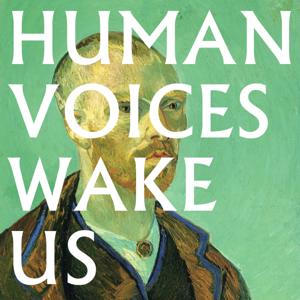


An episode from 10/12/26: Tonight, I read a letter than Vincent van Gogh wrote to his brother in the spring of 1883, when Van Gogh was in his early thirties. It can stand in for many of his letters in how it documents what he saw that day, the joy that it gave him, and his plans to transform the people and landscapes he observed into numerous studies and then a final, larger work.
After thinking aloud about this letter, though, I ask the broader question about creativity: why did Van Gogh choose to make this his life... and why do creative people anywhere do the things that they do... and why, for thousands of years, has it been essential to human life to seek out the experience of art and culture?
The best way to support the podcast is by leaving a review on Apple or Spotify, sharing it with others, or sending me a note on what you think. You can also order any of my books: Time and the River: From Columbine to the Invention of Fire, Notes from the Grid, To the House of the Sun, The Lonely Young & the Lonely Old, and Bone Antler Stone. I've also edited a handful of books in the S4N Pocket Poems series. I also have a YouTube channel where I share poems and excerpts from these books, mostly as YouTube shorts.
Email me at [email protected].
An episode from 1/31/24: Tonight, as a companion to last episode of poems on being a child, I read a handful of poems about being a parent:
The best way to support the podcast is by leaving a review on Apple or Spotify, sharing it with others, or sending me a note on what you think. You can also order any of my books: Time and the River: From Columbine to the Invention of Fire, Notes from the Grid, To the House of the Sun, The Lonely Young & the Lonely Old, and Bone Antler Stone. I've also edited a handful of books in the S4N Pocket Poems series. I also have a YouTube channel where I share poems and excerpts from these books, mostly as YouTube shorts.
Email me at [email protected].
An episode from 9/22/26: Tonight, I read three new poems that were just published over at The Brazen Head: “London, 1943,” “Shtetl, 1803,” and “Cleveland, 1988.” You can read the poems here.
Since I’ve spent so much time writing longer narrative poems, earlier this year I suddenly wanted to see what it would be like writing smaller narratives—anything from fifty to a few hundred lines. These three poems are each attempts, in their own way—stories about love, war, childhood, religion and loneliness—to discover how that might be done.
I end the episode reading the first part of a much longer poem (unpublished and unfinished) on the seventeenth-century English witch, Liz Mollard. Mollard lived in London during the plague and fire of 1665-1666. I hope through all four pieces listeners can hear a through-line to something new.
Many thanks to Liam Guilar, the poetry editor at The Brazen Head, for taking the three poems he did; he has written a trilogy of narrative poems himself, which you can find here.
The best way to support the podcast is by leaving a review on Apple or Spotify, sharing it with others, or sending me a note on what you think. You can also order any of my books: Time and the River: From Columbine to the Invention of Fire, Notes from the Grid, To the House of the Sun, The Lonely Young & the Lonely Old, and Bone Antler Stone. I've also edited a handful of books in the S4N Pocket Poems series. I also have a YouTube channel where I share poems and excerpts from these books, mostly as YouTube shorts.
Email me at [email protected].
An episode from 9/14/26: Tonight, I read my favorite passages from the Diaries of Franz Kafka. (The edition of his diaries that I read has since been replaced by this one). When you approach these passages, as I do here, with almost no comment or connecting links to his life or his work, let alone to the library of Kafka scholarship that has developed in the last century, he suddenly appears very familiar. He sounds like you, or somebody you know, struggling by themselves with whatever it is.
We all know somebody who, Ahab-like, has made remarks like these: “What will be my fate as a writer is very simple. My talent for portraying my dreamlike inner life has thrust all other matters into the background; my life has dwindled dreadfully, nor will it cease to dwindle. Nothing else will ever satisfy me.”
You can find the text for all the excerpts I read from here.
The best way to support the podcast is by leaving a review on Apple or Spotify, sharing it with others, or sending me a note on what you think. You can also order any of my books: Time and the River: From Columbine to the Invention of Fire, Notes from the Grid, To the House of the Sun, The Lonely Young & the Lonely Old, and Bone Antler Stone. I've also edited a handful of books in the S4N Pocket Poems series. I also have a YouTube channel where I share poems and excerpts from these books, mostly as YouTube shorts.
Email me at [email protected].
An episode from 9/7/26: Tonight, I talk about a recent trip to Amsterdam. At the great art museums there I suddenly found myself wondering if the overcrowding in them didn’t suggest what I’ve been saying for a long time on this podcast: that great meaning and intensity is usually found in private experiences. In this case, in the memory of having seen so many great works in person, or actually just in reproduction, even on postcards or t-shirts.
The paintings I mention are: Vermeer’s Milkmaid and Little Street, Rembrandt’s Jewish Bride and Old Woman Reading, Henrik Avercamp’s Winter Landscape with Ice Skaters, Van Gogh’s Yellow House and Wheatfield Under Thunderclouds, and Rembrandt’s Anatomy Lesson of Dr. Deijman. Finally, I mention visiting the Esnoga, or Portuguese Synagogue.
I close the episode reading part of a letter that the American poet, Hart Crane, wrote when he was twenty four years old. It was written in response to his father’s offer of a job in the family business, and you can read more of it here, or in O My Land, My Friends: The Selected Letters of Hart Crane.
The best way to support the podcast is by leaving a review on Apple or Spotify, sharing it with others, or sending me a note on what you think. You can also order any of my books: Time and the River: From Columbine to the Invention of Fire, Notes from the Grid, To the House of the Sun, The Lonely Young & the Lonely Old, and Bone Antler Stone. I've also edited a handful of books in the S4N Pocket Poems series. I also have a YouTube channel where I share poems and excerpts from these books, mostly as YouTube shorts.
Email me at [email protected].
An episode from 8/17/26: Tonight, we look at the years of intense simplicity that the American artist Georgia O'Keeffe (1887-1986) spent in New Mexico. Attached to the area from her first visit to Taos in 1929, over the next fifteen years she continued to travel and paint there. In 1949 she moved to New Mexico permanently and achieved the kind of bare-bones life, seclusion from the wider world, and level of intimacy with the natural world she had long sought.
The books I read from are Laurie Lisle's biography, Portrait of an Artist, and Georgia O'Keeffe, a large book of reproductions and commentary by O'Keeffe herself.
The paintings of hers that O'Keeffe mentions in the episode are: The Grey Hills (1942) (the painting called Grey Hills 2, which she describes as looking like miles of elephants, is not online); Black Place III (1944), Patio with Black Door (1955), Road Past the View I (1964), and Black Rock with Blue III (1970).
The best way to support the podcast is by leaving a review on Apple or Spotify, sharing it with others, or sending me a note on what you think. You can also order any of my books: Time and the River: From Columbine to the Invention of Fire, Notes from the Grid, To the House of the Sun, The Lonely Young & the Lonely Old, and Bone Antler Stone. I've also edited a handful of books in the S4N Pocket Poems series. I also have a YouTube channel where I share poems and excerpts from these books, mostly as YouTube shorts.
Email me at [email protected].
An episode from 8/10/26: Tonight, I read about the childhood and adolescence of the actor Al Pacino (born in 1940), as told in his wonderful memoir Sonny Boy. (I also recommend the audio version, read by Pacino himself). We also hear about Pacino now, and what looking back at his upbringing in the South Bronx means to him.
After a brief detour on Charlotte Brontë's 1847 novel, Jane Eyre (and recommending that audiobook, too), I read about the early years of Eleanor Roosevelt (1884-1962), as told in Geoffrey C. Ward and Ken Burns's documentary companion book, The Roosevelts: An Intimate History. Here, an orphan by the age of ten, a mostly unloved and unnoticed Eleanor is sent to a boarding school in London, where she finds love and belonging for the first time in her life.
The best way to support the podcast is by leaving a review on Apple or Spotify, sharing it with others, or sending me a note on what you think. You can also order any of my books: Time and the River: From Columbine to the Invention of Fire, Notes from the Grid, To the House of the Sun, The Lonely Young & the Lonely Old, and Bone Antler Stone. I've also edited a handful of books in the S4N Pocket Poems series. I also have a YouTube channel where I share poems and excerpts from these books, mostly as YouTube shorts.
Email me at [email protected].
An episode from 8/3/26: Tonight, we return to the life of the composer Johann Sebastian Bach (1685-1750) and look into two very different aspects of his creative life. The first is to ask the question how, and under what circumstances, did he write his great music? As it turns out, for the last almost-thirty years of his life, he wrote his music in a 125-square foot room, amid the inescapable the sounds of his family and students. The second question: what was Bach like as a public performer, and what was it like to perform with him—or, more likely, under his critical eye? The two books I read from are John Eliot Gardiner's Bach: Music in the Castle of Heaven and Chritoph Wolff's Johann Sebastian Bach: The Learned Musician. My other episodes on Bach is Bach and God.
Let me know what you think in the comment.
The best way to support the podcast is by leaving a review on Apple or Spotify, sharing it with others, or sending me a note on what you think. You can also order any of my books: Time and the River: From Columbine to the Invention of Fire, Notes from the Grid, To the House of the Sun, The Lonely Young & the Lonely Old, and Bone Antler Stone. I've also edited a handful of books in the S4N Pocket Poems series. I also have a YouTube channel where I share poems and excerpts from these books, mostly as YouTube shorts.
Email me at [email protected].
An episode from 7/27/26: Tonight, we visit London at two different times in history. First, I read passages from Craig Taylor’s 2011 book Londoners: The days and nights of London now—as told by those who love it, hate it, live it, left it, and long for it. Then we go back a few centuries in Liza Picard’s Restoration London: Everyday Life in London 1660-1670, and focus especially on the lives of women, children, and the poor.
I also talk about the value of accounts like these, which don’t pretend to be definitive or objective. But what else do we really hold onto, in the end, other than vivid and subjective stories told by the people we’re closest to, or gleaned from books that we love? Taylor and Picard’s books have both become those for me.
The best way to support the podcast is by leaving a review on Apple or Spotify, sharing it with others, or sending me a note on what you think. You can also order any of my books: Time and the River: From Columbine to the Invention of Fire, Notes from the Grid, To the House of the Sun, The Lonely Young & the Lonely Old, and Bone Antler Stone. I've also edited a handful of books in the S4N Pocket Poems series. I also have a YouTube channel where I share poems and excerpts from these books, mostly as YouTube shorts.
Email me at [email protected].
An episode from 7/20/26: I’ve realized that, even though I’ve become more social than ever before since becoming a father, the deepest meaning and intensity still come from more private experiences. By “private” I mean those experiences shared with one or two people, or our families and friends, just as much as those moments experienced in complete isolation.
I spend this episode giving examples of such private experiences from the lives of writers, artists, and religious figures that I keep coming back to. Then, I bring it around to everybody else and ask how much of our lives—all of our lives—are actually private, and part of our own idiosyncratic and personal worlds? And I wonder how much better off we might all be, being less “social” with our phones and the prevailing forms of media, and instead focusing, as one of Al Pacino’s great movie speeches puts it, on “the six inches in front of our face.”
I close with readings on privacy from my book Notes from the Grid.
The best way to support the podcast is by leaving a review on Apple or Spotify, sharing it with others, or sending me a note on what you think. You can also order any of my books: Time and the River: From Columbine to the Invention of Fire, Notes from the Grid, To the House of the Sun, The Lonely Young & the Lonely Old, and Bone Antler Stone. I've also edited a handful of books in the S4N Pocket Poems series. I also have a YouTube channel where I share poems and excerpts from these books, mostly as YouTube shorts.
Email me at [email protected].
From the publisher's feed