
Sign up to save your podcasts
Or

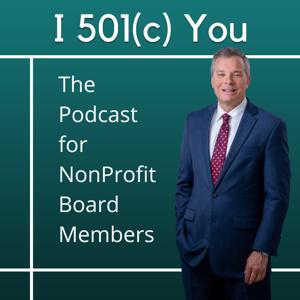


On episode 10 of I 501(c) You - The Podcast for NonProfit Board Members we are interviewing Chris Rich, co-founder of Executive Benefits Solutions, a firm that works with companies to improve the effectiveness and cost-efficiency of benefit programs to key employees and professionals.
Chris has over 25 years of experience in executive compensation and benefits consulting, so today we are speaking with him about deferred compensation in the nonprofit industry. We believe this is extremely topical, because as Chris says in this episode, "In the past 25-30 years of doing this, I don't think we have ever seen a time when the need to attract and retain key employees was greater, and this is particularly true in nonprofit organizations."
We hope this provides you with a little more information about deferred compensation so you can begin thinking about what it might take to retain your current talent and attract future talent in the nonprofit space.
Key Takeaways:
Timestamps:
00:20 - Introduction
01:10 - Interview starts
01:30 - Chris provides his background
03:20 - What is deferred compensation and why would an organization offer it?
05:10 - How can a Board of director begin to understand what the opportunities are for deferred compensation?
09:45 - What are different approaches to deferred compensation?
14:15 - There is rarely a perfect solution
15:30 - Life insurance based programs can offer significant incentives
18:20 - How do you determine key employees that should participate in deferred compensation?
23:00 - Is any organization too big or too small for deferred compensation?
25:00 - Any specific time in an organization’s trajectory they should implement deferred compensation?
28:10 - Anything else?
28:30 - Trends
32:47 - Recapping with Read
Join us every week as we release a new podcast with information about how you can be the best board member and provide great service to your organization.
Listen to the podcast on any of the following platforms:
Apple Podcasts
Spotify Podcasts
Amazon
iHeartRadio
Visit us at: www.thecorleycompany.com/podcast
Follow us on:
Linkedin and Twitter
In this episode of I 501(c) You - The Podcast for Nonprofit Board Members, we are debunking 4 common misconceptions about joining a nonprofit board of directors.
When you are so entrenched in a topic, it is easy to forget that there are people that believe the barrier to entry is higher than it really is. With this episode, we debunk some of the common misconceptions about joining a nonprofit board to help you realize joining a nonprofit board is more attainable than you think. We also address what we believe you need in order to serve a nonprofit organization by joining a nonprofit board of directors.
We want to help nonprofit board members be the best they can be so they can utilize their resources to assist their organizations to the fullest. We believe that one way we can assist in this endeavor is to encourage more people to get interested in serving an organization through joining their board of directors. Please share this episode with someone who you think should join a nonprofit board of directors, but is worried about one of these common misconceptions.
If there are other concerns about joining a nonprofit board that you want addressed, reach out to us via the contact form on our website and we would be happy to address your concern.
Timestamps:
00:00 - Introduction
00:45 - Misconceptions about being on a nonprofit board
01:15 - Misconception #1: You need to be rich and I need to fundraise
03:00 - Misconception #2: I need to be in the latter half of my career or older
04:11 - Misconception #3: I am not qualified to oversee the organization’s mission
05:05 - Misconception #4: I don't have many connections or I am not well known in the community
06:10 - What does someone need to be on a nonprofit board?
06:35 - #1: Passion for the mission
07:20 - #2: Connection to the organization
08:00 - Conclusion
Join us every week as we release a new podcast with information about how you can be the best board member and provide great service to your organization.
Listen to the podcast on any of the following platforms:
Apple Podcasts
Spotify Podcasts
Amazon
iHeartRadio
Visit us at: www.thecorleycompany.com/podcast
Follow us on:
Linkedin and Twitter
On episode 8 of I 501(c) You, we are speaking with Rob Lane, Managing Shareholder of Kerkering Barberio and board member of several organizations. Rob helps us clear up the mystery of nonprofit financials and the responsibility of the board. We have worked with Rob through several organizations. He is deeply entrenched in the community and provides assistance to so many organizations locally. His expertise and dedication to giving back has truly made a positive impact on our community.
Rob shares some great information about what a board member should understand about financials, which financial statements a nonprofit organization should be producing and sharing with its board, and the form 990.
We also dive into some financial best practices board members should be participating in, the differences between the audit, finance, and investment committees, and we touch on deferred compensation.
We had a great time speaking with Rob, and we love discussing nonprofit financials because we know how important it is and how misunderstood it can be.
Key Takeaways:
Timestamps:
00:45 - Interview starts
01:57 - Rob’s experience serving on Boards
03:17 - What should a board member understand about the finances of an organization?
05:00 - How those who are not finance professionals can still provide assistance to the organization in discussions about finance
06:40 - Which financial statement should a nonprofit organization produce?
09:55 - When should those financial statements be produced and shared with the board?
10:45 - Investment, finance, audit committees
11:58 - Does every nonprofit have to have an audit?
13:30 - Difference between an audit and review
16:20 - The auditors can help you improve your operations
18:12 - Should there be interaction throughout the year between the auditing firm and the organization?
19:15 - The Form 990
23:11 - Are there best practices you regularly see?
25:00 - Amount of reserves you encourage an organization to have?
26:35 - When would you start considering an endowment?
28:06 - Deferred compensation in nonprofit organizations
29:58 - Any last thoughts?
33:54 - Recapping with Read
Join us every week as we release a new podcast with information about how you can be the best board member and provide great service to your organization.
Listen to the podcast on any of the following platforms:
Apple Podcasts
Spotify Podcasts
Amazon
iHeartRadio
Visit us at: www.thecorleycompany.com/podcast
Follow us on:
Linkedin and Twitter
This week, we have something a little different for our listeners and a shorter episode than normal. As we get some great information from some amazing board members, we are not always able to touch on specific topics we think can provide value for our listeners. That brings us to this episode, which is not an interview format, but where we discuss an idea that is close to The Corley Company's heart. Here at The Corley Company, we truly believe that being on a nonprofit board is the best leadership development experience available for anyone. Michael takes some time this episode to give you 7 reasons why we believe being on a nonprofit board is the BEST leadership development experience for anyone.
If you know someone who is looking to advance their leadership skills, but just doesn't have the opportunities in their day job, please share this episode with them. We believe they can get a ton experience in leadership by being on a nonprofit board, while also making their community a better place.
Key Takeaways:
Timestamps:
00:00 - Intro
01:00 - Podcast starts
01:38 - Reason #1: It is a great opportunity
03:00 - Reason #2: Exposure to different operating models
03:45 - Reason #3: Practice your leadership skills in real time
05:20 - Reason #4: You can provide a altruistic contribution
06:00 - Reason #5: You get to build strategic relationships
06:50 - Reason #6: You get to observe other leaders at work
07:45 - Reason #7: You can make a difference in your community
Join us every week as we release a new podcast with information about how you can be the best board member and provide great service to your organization.
Listen to the podcast on any of the following platforms:
Apple Podcasts
Spotify Podcasts
Amazon
iHeartRadio
Visit us at: www.thecorleycompany.com/podcast
Follow us on:
Linkedin and Twitter
On this episode, we are speaking with Brian Deming, two time Board Chair for United Way Suncoast (separated by 10 years) and seasoned technology entrepreneur, executive and investor.
Brian provides us with some great information from his experience of being a board chair in both the for-profit and nonprofit industries, some of the differences in a for-profit merger and nonprofit merger, how he got involved in nonprofit boards, and much more.
If you want to learn about some differences between the for-profit industry and nonprofit, how to run a productive board meeting and how to be an effective board chair, this episode is for you.
Thank you Brian for joining us for this episode of I 501(c) You!
Key takeaways:
Timestamps:
01:45 - Why did you join a nonprofit board?
03:35 - How do you decide which nonprofit to be involved in?
06:10 - How did you evolve to become a board member of United Way Suncoast?
08:25 - Can you talk about the progression of growing from a volunteer to a board member?
10:50 - What is the biggest difference between a nonprofit and for-profit merger?
12:57 - How do you approach your role of board chair?
15:57 - How often do you interact with board members? and operational aspects of being a board chair
18:40 - How do you ensure a comfort level with the staff, knowing that you primarily work with the CEO?
21:03 - How do you run a productive board meeting?
23:15 - How do you prepare for the board meetings?
25:50 - Benefits of the consent agenda
29:00 - What makes an effective Board Chair?
30:20 - Nonprofit board vs for-profit board
34:08 - Leading a for-profit vs a nonprofit
37:30 - Advice for people interested in becoming a board chair
Join us every week as we release a new podcast with information about how you can be the best board member and provide great service to your organization.
Visit us at: www.thecorleycompany.com
This week on I 501(c) You, we are hearing from Steven Solomon, Managing Shareholder of GrayRobinson’s Miami office and Chair of the firm’s Bankruptcy Section. This is a unique episode because we get to learn all about nonprofit bankruptcy and how it can be used as a strategic vehicle. We hope this can provide your organization with a little information about another resource to potentially think about if your organization runs into some trouble. Bankruptcy is not for every organization, but as a board member, you have a fiduciary responsibility to explore all options if things are going awry.
Steven walks us through some of the reasons a nonprofit would file for bankruptcy, some of the factors they should consider when thinking about bankruptcy, and how a nonprofit organization can use bankruptcy as a strategic vehicle.
Some of the major takeaways from this episode are:
We hope this episode is as informative to you as it was to us. We learned so much about bankruptcy and how it can help or hurt a nonprofit organization.
Timestamps:
00:43 - Interview starts
01:38 - Reasons why a nonprofit would think about bankruptcy
03:55 - Does the size of the organization matter?
04:20 - Bankruptcy is not a destination, it is a means to an end
07:30 - Examples of strategic bankruptcies
12:40 - When would a nonprofit organization consult with a bankruptcy lawyer
16:30 - Types of bankruptcy
18:00 - Bankruptcy code of assets for nonprofit organization
19:50 - Chapter 11 bankruptcy for a nonprofit organization
21:45 - Who calls you, board chair/executive director?
23:20 - Bankruptcy as a strategic vehicle
27:00 - One of the first questions Steven asks nonprofit organizations considering bankruptcy
34:20 - Final thoughts
37:49 - Recapping with Read
Join us every week as we release a new podcast with information about how you can be the best board member and provide great service to your organization.
Visit us at: www.thecorleycompany.com
This week on I 501(c) You, we are speaking with Shawn Sackman, Urban League of Broward County Board Chair, Commercial Banking Leader at Regions Bank, a top 250 Power Leader by the South Florida Business Journal, and much much more.
Shawn is a servant leader to the fullest extent. He was once actively serving on 5 boards (being the board chair on one), coaching his children's sports teams, and working full time. He has always had a passion for giving back, finding the most joy when he sees the outcome of his volunteer work bring joy to other people.
Shawn provides some amazing advice for board leadership, career development, and finding the right board to serve on. We can't forget to mention, he lights a fire inside you to jump in and give back.
Some major takeaways from our conversation with Shawn are:
Timestamps:
00:00 - Introduction
01:09 - Interview starts
01:50 - Why do you choose to serve on nonprofit boards?
04:59 - First board you joined and how old were you?
09:00 - Why do you desire to be a board chair?
12:09 - How do you approach the role of board chair?
17:08 - How do you start to manage the board and the relationship with the CEO
23:15 - Alignment and communication with the CEO
28:00 - Highlights of your board chair career?
29:58 - What to do when a board member passes away?
32:59 - Advice for someone thinking about being a board chair?
38:38 - Recapping with Read
Join us every week as we release a new podcast with information about how you can be the best board member and provide great service to your organization.
Visit us at: www.thecorleycompany.com
This week on I 501(c) You - The Podcast for NonProfit Board Members, we are speaking with Johnette Gindling, President and CEO of the Space Coast Health Foundation.
Johnette brings a wealth of knowledge to the podcast as she has sat on a number of boards and been a board chair, on top of being the President and CEO of a foundation.
Some major takeaways from this episode are:
Hurricane Ian Relief:
Sarasota Memorial Healthcare Foundation Employee Relief Fund:
“To provide financial assistance to qualified SMH employees who are adversely affected by Hurricane Ian.”
Community Foundation of Sarasota County Suncoast Disaster Recovery Fund:
“To provide recovery support to the Suncoast Region in response to a natural disaster. The fund will allow investments in long-term, long-range programs to sustain our agencies after initial emergency relief is provided.”
Center for Disaster Philanthropy Atlantic Hurricane Season Recovery Fund:
“This Fund will focus on medium- and long-term recovery needs such as rebuilding homes and livelihoods, meeting the unique needs of vulnerable communities, and supporting mental health services.”
Gulf Coast Community Foundation Disaster Relief Fund:
“Gulf Coast Community Foundation’s Hurricane Ian Disaster Relief Fund will support those most devastated. We will prioritize health and human services needs primarily in southern Sarasota County including Venice, hard-hit North Port, Englewood, Charlotte County, Lee County, and DeSoto County.”
Timestamps:
00:00: Hurricane Ian Relief
00:17: Intro starts
00:55: Interview starts
01:27: How do you decide which organization you want to be on the board of and involved in?
03:35: Understanding Board finances without a finance background
06:15: A board members obligation to learn
09:34: Qualities of an effective board member from the CEO perspective
11:19: Read the organization’s by-laws before joining the board!
12:50: How do you identify future board members?
15:09: As a CEO, don't take for granted the importance of social time for your board
15:53: CEO and Board Chair role and relationship
18:50: As a CEO, keeping your board up to date
20:10: What are some characteristics of an effective and ineffective board member?
22:53: Boards are entitled to any information they want
24:00: As a board member, what makes for an effective board meeting?
27:24: As a CEO, getting calls after a board meeting?
28:23: The importance of communication between board meetings
30:25: What advice would you give to young people when joining a board?
32:04: What advice would you give to someone thinking about being Board Chair?
34:30: Recapping with Read
Join us every week as we release a new podcast with information about how you can be the best board member and provide great service to your organization.
Visit us at: www.thecorleycompany.com
In this episode we speak with Will Armstead, CEO and former Board Chair of Boys & Girls Clubs of St. Lucie County, the largest non-profit youth development organization on the Treasure Coast.
After serving 16 years in the Army and 20 years in the for-profit industry, Will became CEO of Boys & Girls Clubs of St. Lucie County, driven by his personal mission- to give every child opportunities for a great future.
For Hurricane Ian Relief and Timestamps for this episode, please see below:
Hurricane Ian Relief:
Sarasota Memorial Healthcare Foundation Employee Relief Fund:
"To provide financial assistance to qualified SMH employees who are adversely affected by Hurricane Ian."
Community Foundation of Sarasota County Suncoast Disaster Recovery Fund:
"To provide recovery support to the Suncoast Region in response to a natural disaster. The fund will allow investments in long-term, long-range programs to sustain our agencies after initial emergency relief is provided."
Center for Disaster Philanthropy Atlantic Hurricane Season Recovery Fund:
"This Fund will focus on medium- and long-term recovery needs such as rebuilding homes and livelihoods, meeting the unique needs of vulnerable communities, and supporting mental health services."
Gulf Coast Community Foundation Disaster Relief Fund:
"Gulf Coast Community Foundation's Hurricane Ian Disaster Relief Fund will support those most devastated. We will prioritize health and human services needs primarily in southern Sarasota County including Venice, hard-hit North Port, Englewood, Charlotte County, Lee County, and DeSoto County."
United Way Suncoast Disaster Recovery Fund:
"Support relief efforts in DeSoto, Sarasota, Manatee, Pinellas and Hillsborough"
Timestamps:
(02:40) - Interview starts
(03:19) - Will introduces himself
(03:52) - How and why Will became CEO
(04:30) - Biggest transition from the for-profit world to non-profit world
(05:19) - Share a little bit about your role as a board member and the differences between Board member and CEO
(06:50) - Composition of a board from a CEO’s perspective
(08:24) - How do you identify a potential board member?
(10:43) - Expectations of a board member?
(18:00) - Relationship between CEO and Board Chair
(20:10) - Advice for when a board member is too involved with staff or operations?
(22:12) - How often should a board chair communicate with the board and the importance of communication
(24:50) - Properly engaging with your board and board chair
(29:07) - Advice you have to CEO’s when working with the board
(30:29) - Advice you have to Board members when working with the CEO and the organization
(32:41) - Recapping with Read
Join us every week as we release a new podcast with information about how you can be the best board member and provide great service to your organization.
Visit us at: www.thecorleycompany.com
In the inaugural episode of I 501(c) You - The Podcast for NonProfit Board Members, we are joined by Susie Bowie, Executive Director of the Manatee Community Foundation to discuss everything you need to know about joining a nonprofit board.
Susie is a fountain of information and eloquently describes the role of a nonprofit board member. She has so much experience in this realm, being both a nonprofit Executive Director and board member of several organizations. Together, we discuss the attributes of a productive and unproductive board member, how young people can get involved in boards, thoughts on board members being required to financially contribute, how to get a better understanding of financials from a board's perspective and more!
We thank Susie so much for joining us today and sharing her wisdom. We both believe that board members are critical to the success of an organization and we want to make sure every board member can provide their best service to their organizations.
Key Takeaways:
Timestamps:
00:00 - Introduction
00:50 - Interview starts
1:30 - What makes a good board member?
03:15 - Any traits that make an individual NOT a good board member?
05:05 - Has it become more challenging to share ideas in a board meeting?
08:20 - Is it the board members job to defend the mission of the organization
09:58 - How do I go about getting on a nonprofit board?
14:06 - What are your thoughts on board members having to financially contribute to the organization?
17:00 - How should someone behave as a new board member?
20:00 - How do you recommend someone get comfortable with board financial statements?
24:00 - What is the difference between a board member and staff member's responsibilities?
27:10 - What is the role of a board member in fundraising?
29:40 - Connecting the organization to new people as a board member is critical
31:35 - What are some of the most misunderstood aspects of being a board member?
35:25 - Respecting the skills of nonprofit leaders and staff
40:45 - Anything else?
41:50 - Recapping with Read
Join us every week as we release a new podcast with information about how you can be the best board member and provide great service to your organization.
Listen to the podcast on any of the following platforms:
Apple Podcasts
Spotify Podcasts
Amazon
iHeartRadio
Visit us at: www.thecorleycompany.com/podcast
Follow us on:
Linkedin and Twitter
From the publisher's feed

43,859 Listeners

38,688 Listeners

4,347 Listeners

7,999 Listeners
108 Listeners

19,246 Listeners
18,069 Listeners
12,480 Listeners