
Sign up to save your podcasts
Or

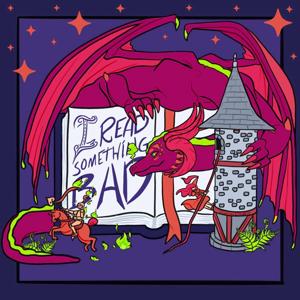


Today we’ve got Dr. Beth Felker Jones joining us to dig into R.F. Kuang’s Katabasis, a dark academia descent into literal hell that doubles as a devastating portrait of PhD formation, academic abuse, and what it costs to believe you’re only a mind.
Topics Covered:
* The academic nightmare that’s apparently happened in real life to one of us (and no, we’re not okay)
* How to survive an institution that wants to eat you alive—without becoming someone you don’t recognize
* Alice is proud she forgets to eat, and we need to talk about what that says about all of us
* Why the people who most want to escape their bodies are the ones whose bodies the world refuses to love
* Christianity is supposed to be the most body-affirming religion on earth, so what happened?
* John Piper will read your book but won’t let you teach him, and we finally figured out why
* What happens when shame curdles into revenge and ruins the good thing right in front of you
* You can be queen of hell and still be in hell—plus the ways we do this to ourselves every single day
* The line about context that made us all scream about preachers who skip the homework
* The most romantic thing Peter does isn’t romantic at all, and it wrecked us
📚🔥💀
Timestamps:02:00 Academic Abuse and the Nightmare of Recommendation Letters07:00 Impossible Standards and the Myth That Grinding Equals Worth09:00 Alice’s Gnostic Pride in Transcending Bodily Need12:00 Gnosticism in Evangelical Theology and Fear of Embodiment18:00 Harassment, Shame, and How It Twists Into Revenge25:00 Why Katabasis Lands Differently Than Dante’s Inferno27:00 Context Matters: Close Reading vs Making It Mean Whatever34:00 Peter Witnesses Instead of Fixing36:00 Takeaways: Loving Jesus More After Reading About Hell
Today your matron saints of spice are tackling the topic of escapism—because apparently reading our silly little books is unhealthy coping, but planning to literally escape all worldly suffering via the Rapture is fine and normal theology. We’re unpacking how escapism is actually a natural human response to systemic oppression (not just a character flaw) and why the most prevalent form of escapism is doomscrolling social media (not romance novels).
Topics Covered:
* Escapism as a natural survival strategy and self-regulation tool—not just an individual coping mechanism
* When escapism is restorative versus harmful
* The most prevalent form of escapism in our culture
* How we’re encouraged to escape into culturally appropriate things that get a check mark even though they’re equally or more harmful than books
* The wild irony of people upset at us escaping for an hour a day into books while they’re theologically planning to escape all horrors forever via dispensationalist Rapture theology
* Why 30-second rage-bait and Christian aesthetic scrolling are both escapism
* How the “in it not of it” mentality taken to extremes creates homeschool cult bubbles that escape the world by refusing to engage neighbors or integrate with the broader church
* Jeremiah 29 as the balance of hopeful future vision paired with embodied presence now
* Why institutions don’t want to give up spiritual authority and teach discernment
* The goal is creating church spaces safe enough that people don’t need to escape from them instead of creating harmful hierarchies that generate the escape loop then demonize the escaping
If escapism doesn’t lead to embodiment, it’s not doing you favors. 📚🌱
Timestamps:
02:00 Escapism as Natural Survival Strategy vs Character Flaw
05:00 Culturally Appropriate Escapism: Work, Family, Church Service
08:00 Social Media Scrolling Is the Most Prevalent Escapism
11:00 Passive Consumption and the Death of Engagement Online
14:00 How Platforms Keep Us Dysregulated and Triggered On Purpose
16:00 Chronically Online: Your Brain Wasn’t Designed for This Much
18:00 Christian Aesthetic Scrolling Is Still Escapism (Just Prettier)
21:00 Rapture Theology as Theological Escapism (The Irony!)
23:00 “In It Not Of It” Taken to Cult-Level Extremes
25:00 Dispensationalism Killed Our Motivation to Care for Neighbors
27:00 Jeremiah 29: Hopeful Vision Paired with Embodied Presence
29:00 Exodus and Exile: Two Sides of the Escapism Coin
31:00 Planting Gardens at Church Without Heavy-Handed Evangelism
33:00 We Got Rid of Third Spaces and Made the Internet the Only One
36:00 The Inconvenience of Community vs 100% Comfort at Home
38:00 Demonizing Escapism Instead of the Thing You’re Escaping From 40:00 Individual Blame vs Systemic Marketing and Exploitation
43:00 Checklists Over Tools: Why We Don’t Teach Discernment
46:00 Institutions Want to Keep Spiritual Authority Over You
49:00 Creating Safe Spaces People Don’t Need to Escape From
53:00 Severe Religious Psychosis from Scrolling (Clinical Reality)
55:00 Your Phone Is a Tool, Not Your Bedfellow
Today we’re diving into Callie Hart’s Quicksilver.
Topics Covered:
* Why Zilvaren’s city structure is secretly showing us exactly how power keeps us fighting each other instead of the real problem
* That Artemis astronaut said WHAT about Earth right before going dark for 40 minutes—and how it connects to fantasy城 cities
* The theological move fantasy authors can pull that nonfiction writers can’t touch (and why it matters for how we see power)
* Madra’s quicksilver addiction and why protecting yourself at everyone else’s expense always ends in catastrophic instability
* The billionaire problem isn’t what you think—and why your individual experience is lying to you about the actual issue
* Our FMC is just trying to get water and that’s exactly why we should be paying attention to her
* How to build power structures that don’t turn you into the villain (spoiler: “we’ve always done it this way” is a trap)
* Kingfisher’s quicksilver is destroying him from the inside and it’s the perfect metaphor for the hidden cost of power nobody talks about
* Why an alchemist FMC hits different than another battle warrior—plus the moment the quicksilver asked for a song and we all cried
Timestamps:
02:00 Zilvaren’s Wheel Structure: Separate Wards, Same Suffering
04:00 Astronaut’s Message: We’re All on One Planet
06:00 Fantasy World-Building as Theological Exercise
08:00 Othering and Physical Barriers Highlighting Emotional Ones
10:00 Madra’s Hoarded Quicksilver and Systemic Power Exploitation
12:00 Individualism vs Collectivism: Looking Beyond Our Experience
15:00 Paying Attention to the Margins: Who’s Struggling for Water?
16:00 The Desire to Live Forever and Power That Won’t Let Go
18:00 Building Structures That Pass Down vs Clinging to Control
20:00 Economic Instability When Power Gets Too Consolidated
22:00 What Happens in People’s Brains When They Get That Much Power
25:00 Kingfisher’s Quicksilver: The Physical Cost of Unwanted Power
27:00 Why the Hero Being an Alchemist (Not a Warrior) Matters
29:00 The Quicksilver Has Agency
30:00 When the Quicksilver Asks for a Song (Pastoral Intervention)
32:00 Labyrinth Appreciation Moment: Escaping the Horrors
33:00 Faithful Today: What Does It Look Like in This Moment?
Today we’re diving into Mary Magdalene—the biblical FMC who got completely wrecked by centuries of patriarchal mythmaking that turned her from “apostle to the apostles” into either a prostitute or Jesus’s secret lover.
Topics Covered:
* How we got the myth that Mary Magdalene was a prostitute or sexually sinful woman
* How conflating all the Marys (Mary of Bethany, Mary mother of Jesus, the sinner woman) into one person significantly reduces Jesus’s interactions with women in Scripture
* The discovery that might make Mary Magadalene a parallel to Peter the Rock
* Why Mary wasn’t Plan B when the boys were hiding scared—Jesus chose her specifically to be the first witness and first apostle, which matters theologically
* The problem with readily accepting Paul’s apostleship while dismissing Mary’s
* Why pastors skip over Mary entirely on Easter Sunday to get to the punchline about John being the fastest disciple
* Jesus and Mary’s sibling relationship as a model for devotion without sexualization, and how purity culture destroyed our ability to have close platonic friendships
* Why spiritual siblinghood (brothers and sisters) is the New Testament’s favorite term for disciples
Timestamps:
02:00 The Prostitute Myth: How Pope Gregory Wrecked Mary’s Story
05:00 Conflating All the Marys Reduces Jesus’s Interactions with Women
08:00 Jesus Christ Superstar and Pop Culture Mary Mythmaking
10:00 What We Should Actually Remember About Mary Magdalene
12:00 Mary Wasn’t Plan B—Jesus Chose Her Specifically
14:00 Mary Identifies Jesus as Gardener: Eden Parallels and Reversal
17:00 Mary the Tower, Not Mary from Magdala
19:00 What If the Church Had Embraced Both Tower and Rock?
21:00 Why We Accept Men’s Certainty but Question Women’s Authority
23:00 Pastors Skip Mary to Get to “John Is the Fastest” Punchline
26:00 Looking With Mary, Not At Mary—She Points to Jesus
27:00 The Women Stayed at the Cross When the Men Ran Away
29:00 Jesus and Mary’s Sibling Relationship: Devotion Without Sexualization
31:00 How Purity Culture Killed Platonic Friendship and Chosen Family
34:00 Jesus Isn’t Ashamed to Call Us Brothers and Sisters
36:00 Spiritual Siblinghood: The Model Without Hierarchy
38:00 In Resurrection Life We’re All Siblings Forever—Why Not Live Like It Now?
Today we’re wrapping up Melissa K. Roehrich’s Legacy series with Dawn of Chaos and Fury.
We’re unpacking how churches structure everything around nuclear families to everyone’s detriment, why Jesus had a cool aunt at the cross and you should aspire to be one too, and how Eviana’s arc is the most complex character development in the whole series even though we wanted to hate her. Oh AND we get to watch powerful people voluntarily give up their power for the greater good instead of hoarding it like real-world billionaires. The true fantasy!
Topics Covered:
* Why Tessa choosing childlessness to end the curse is a big deal in purity culture, and how evangelical spaces have no idea what to do with married couples who don’t have kids
* How expectations around motherhood hurt ALL women—not just the childless ones, but also mothers who are conditioned not to ask for help and end up isolated with their kids
* Eviana’s redemption arc as the best character development in the series—she didn’t get to raise her daughter but still did superior mothering by ensuring Priya would be free from abuse
* Why “she’s too much for one person” isn’t the feminist win it pretends to be when she never learns autonomy or how to harmonize her own chaos without men reigning her in
* The revolutionary moment when all the leaders voluntarily pool their power and give it away (because watching people share power for the greater good is the actual fantasy here)
* How quiet activism was happening all along in these kingdoms from the bottom up before they had the ability to go top-down, and why performing goodness isn’t the same as doing the work
Timestamps:
02:00 Tessa’s Childlessness Choice and Breaking Generational Curses
04:00 Being Child-Free by Choice in Evangelical Spaces
08:00 How Nuclear Family Structure Hurts All Women
11:00 Jesus Had a Cool Aunt and So Should You
13:00 There Are No Levels in Womanhood (The Lie We Fight)
16:00 Chosen Family and Mary’s New Support System
18:00 Eviana’s Complex Arc: The Depth We Didn’t Expect
22:00 Strategic Head-Centered Women vs Gut-Level Characters
23:00 Throuple Codependency vs Axel and Kat’s Healthy Dynamic
27:00 Why “She’s Too Much” Isn’t Feminist When She Lacks Autonomy
30:00 Autistic-Coded Luca and His Trinket Cave (Valid)
33:00 Reintegrating Chaos Instead of Just Controlling It
35:00 The Revolutionary Power-Sharing Moment (Actual Fantasy)
38:00 Quiet Activism That Wasn’t Seen: Welcome to the Revolution
40:00 Hoping to See Goodness in the Land of the Living
Today your Matron Saints of Spice are tackling the ever-controversial question of why so much Christian art feels thin, didactic, and aesthetically weak—and just plain BAD.
We’re getting real about how flattening the Bible into surface-level application points has destroyed our capacity to engage layers in any medium, why making Ruth and Boaz into a love story completely misses the point about welcoming the stranger, and how capitalism turned humans into resources to be used up—which means our entire identity got wrapped up in usefulness instead of Imago Dei.
Topics Covered:
* The definition of good art as opening perception and making room for the reader versus bad art that reduces experience to propaganda with predetermined conclusions
* Why Christian art often fails the hospitality test—inviting someone over just to lecture them about what to believe instead of offering actual coffee and conversation
* Post-Reformation history of shifting from visual imagery (icons, stained glass) to language-only emphasis, and how the printing press made accessibility a priority that accidentally flattened everything
* The Enlightenment’s need for certainty, empirical knowledge, and being on the same page—which bled into making messages crystal clear at the expense of mystery and layers
* How “Facing the Giants” versus “Remember the Titans” shows the difference between heavy-handed Christian messaging and wrestling with justice/humanity through storytelling
* Why Ruth and Boaz isn’t a romance about finding your person—it’s about Boaz depicting how Jesus welcomes strangers and provides for the vulnerable (Ruth said “where you go I will go” to NAOMI, people)
* The collapse of context and layers in Bible reading, and how treating Scripture as flat application points instead of artistic literature kills our ability to engage depth anywhere else
* How usefulness became our framework for existence instead of beauty, and why that’s devastating when your productivity disappears but you’re still made in the image of a creative God
Good art invites wonder and makes space for mystery. Bad art tells you exactly what to think and then wonders why you’re not engaged. 🎨✝️📖
Timestamps:
02:00 Defining Good Art: Hospitality vs Heavy-Handed Messaging
06:00 Intimacy and Openness as Framework for Beauty
09:00 Why People Want to Be Told What to Think vs Asking Questions
11:00 Facing the Giants vs Remember the Titans: What We’re Wrestling With
14:00 Stained Glass Windows vs Sharpie Statements: Losing the Layers
16:00 Post-Reformation Shift from Visual to Language-Only Emphasis
20:00 Teen Talent Competitions and Performing for God’s Glory
23:00 When Church Art Became Branded Word Art from Hobby Lobby
25:00 Iconoclasm and What We Lost by Rejecting Visual Beauty
28:00 Ruth and Boaz Isn’t a Love Story About Finding Your Person 3
1:00 Reading the Bible with Layers: Literature, Language, Lifetime, Lenses
34:00 Why Translation Is Always Interpretation
37:00 Ruth After Proverbs 31: She’s the Woman of Valor, Actually
39:00 When Usefulness Disappears and You Lose Your Framework for Beauty
41:00 Imago Dei Isn’t Broken or a Mission to Accomplish—It Just Is
43:00 Capitalism Turned Humans Into Resources to Be Used Up
45:00 Creating Without Goals: The Church Art Studio Experiment
47:00 Redeeming Love Scammed Us (The Bible Story Is Different, Y’all)
50:00 Mount Pilgrim’s Stained Glass: Good Christian Art That Inspires Justice
Power Corrupts, Patriarchy Polices, and Why We’re All Rooting for the Dragons
Today Kate, Liz, and Sarah are diving into their first dark romantasy series on the pod—Melissa K. Roehrich’s Legacy Series, books 1-3.
We’re talking about source bonds as weaponized intimacy, how power systems crush imagination for anything better, and why literally every character is morally gray (so we’re all just rooting for the dogs and dragons instead). We’re unpacking Kate Mann’s framework for how patriarchy polices “good women” versus “bad women,” why Theon thinking he’s better than his dad while still locking Tessa in cellars is peak missing-the-point energy, and how the perversion of sacred bonds mirrors the way Christianity gets co-opted for power.
Plus, we’re getting real about female rage, the cost of surviving versus thriving in broken systems, and why even the characters with the best intentions can’t dream past vengeance when the whole structure is designed to destroy agency.
Topics Covered:
* Why dark romantasy is different from romantasy—morally complex characters, darker themes, trigger warnings, and stories that wrestle with power and agency rather than giving you escapist happy endings
* Kate Mann’s patriarchy framework: how misogyny polices women as “givers” (who support men) versus “takers” (who claim masculine perks), and how this entire dynamic plays out in the source bond system
* Why you shouldn’t take something meant to be mutual intimate connection and weaponize it into forced servitude, proximity requirements, and power extraction without consent
* Why benevolent hierarchy is still just hierarchy—you don’t get cookies for being less terrible
* The grooming and policing that happens peer-to-peer because patriarchy’s biggest prop is women policing other women
* Why we need people with perspective to interrupt normalized harm
* How the system crushes imagination: even the “good guys” can only envision vengeance or incremental power shifts rather than structural transformation
* Prophecy as intellectual cop-out and spiritual bypassing
* The tension between incremental coalition-building change versus burn-it-all-down rage, and why neither extreme works without the other
Looking at yourself in this series means recognizing that power corrupts empathy over time, that we’re all simultaneously participating in and harmed by systems, and that withholding chocolate cake from your source is unforgivable. Also, if you loved Nesta, you’ll love Tessa. 🐉🔥📚
Timestamps:
01:00 What Is Dark Romantasy and Why Trigger Warnings Matter
03:00 Kate Mann’s Patriarchy Framework: Givers vs Takers
08:00 Power Corrupts Empathy: Tyler Staton Quote and Agency
12:00 Source Bonds as Perverted Twin Flame Marks
15:00 Theon’s “I’m Better Than My Dad” Delusion
18:00 Eviana’s Reveal: They’re All Faking the Infatuation
20:00 Dex and Peer-to-Peer Grooming Within the System
22:00 Scarlet’s Role as Outside Perspective Friend
25:00 How Systems Crush Imagination for Better Futures
28:00 Prophecy as Spiritual Bypassing and Intellectual Cop-Out
32:00 Incremental Change vs Revolutionary Rage
35:00 Tessa’s “I’m the Villain Now” Realization
38:00 Breaking Cycles vs Perpetuating Harm
42:00 Plot Twists, Dragons, and Female Rage
44:00 Character Rankings: We’re All Rooting for Animals Only
47:00 Anticipating Book 4 and Hoping for Resolution
Welcome back!
Today we have a special guest—Brooklyn Stephens from We Choose Welcome—to talk about Wicked and why the people who refuse to watch it because “witches = evil” are exactly the ones who need its lessons on propaganda, authoritarianism, and othering the most.
We’re unpacking how Elphaba’s intimate knowing of the marginalized gave her empathy while Glinda’s proximity to power kept her climbing ladders, why social capital maximization is antithetical to the gospel, and how we’re all simultaneously Glinda in some rooms and Elphaba in others depending on who’s watching.
About We Choose Welcome
We Choose Welcome is a grassroots community seeking to mobilize and equip women of faith to build and cultivate a welcome movement from their tables at home to the halls of Congress. We hope to empower our community to take action for the vulnerable in both our personal lives and through advocating for just immigration policies.
We are here to provide educational resources, action tools, and a supportive community for those seeking to take the next step in their advocacy for immigrants and refugees.
Follow them on Instagram and Facebook to stay connected, or reach out to our team to learn more.
Topics Covered:
* Why people who reject Wicked for having magic are missing crucial lessons about propaganda and authoritarianism that feel startlingly relevant to current immigration enforcement tactics
* How Elphaba’s position on the margins gave her intimate knowing and empathy for the othered, while Glinda’s proximity to power kept her focused on climbing toward Madame Morrible
* The tension between optimism bias that blinds us to realistic steps versus compassion fatigue that burns us out—and how to sustain advocacy work for the long haul without stealing from yourself twice
* Why we’re all both Glinda and Elphaba depending on which room we’re in, and how recognizing this complexity helps us hold compassion for ourselves and others on the journey
* The cost of staying in our individual bubbles (literal floating bubbles for Glinda) versus stepping outside—because “all that’s required to live in a dream is endlessly closing your eyes”
* How evangelical social capital maximization and ladder-climbing is the opposite of empathy as a space-making practice that opens you up to connection
* The diplomatic versus complicit internal battle, and whether working from inside institutions or building outside alternatives is the “right” way (spoiler: we need both)
* Why Christian media’s heavy-handed messaging has maybe made audiences lose the skillset to engage deeply with complexity and moral ambiguity
* How the church is missing opportunities to be a safe place for people’s valid concerns about ICE raids, layoffs, and systemic harm because it wants to protect reputation over choosing justice
* The glimmers of hope happening quietly—200-300 person congregations getting trained, mothers walking immigrant children to school, Durham showing up with signs—even when we can’t post the photos for safety reasons
Looking at yourself in the mirror means locating where you are in the system, and sometimes you’re the one in the bubble floating over problems.
So what do we do about it? Here are some resources from We Choose Welcome:
* Allyship Guide
* Creative Resistance
* Letter Writing to Kristi Noem
* Wicked: On Oz and Othering
Timestamps:
02:00 Why People Who Reject Magic Miss the Propaganda Lessons
06:00 Elphaba’s Intimate Knowing vs Glinda’s Proximity to Power
10:00 Empathy as Space-Making vs Social Capital Ladder-Climbing
13:00 Optimism Bias and Sustaining Advocacy Without Burnout
17:00 Starting Where You Are: Allyship Guide and Local Action
21:00 We’re All Both Glinda and Elphaba Depending on the Room
24:00 Diplomatic vs Complicit: The Daily Internal Battle
27:00 The Cost of Staying in Your Bubble vs Stepping Outside
30:00 Being Where Your Feet Are as Countercultural Practice
33:00 When People Reject Accessible Metaphors: Information Isn’t Enough
37:00 Why Christian Media’s Heavy-Handedness Killed Deep Engagement
40:00 Cinematography and Using Your Senses to Notice Truth
42:00 When Church Protects Institution Over Real Human Concerns
45:00 Finding Glimmers: Churches Showing Up Quietly Across the Country
48:00 The Tension of Personal Disappointment and Collective Hope
Today your Matron Saints of Spice are wrapping up Stacia Stark’s Kingdom of Lies series with book four, where Prisca finally gets her crown and we’re learning that pre-disappointment is just stealing from yourself twice—a phrase that will now live rent-free in our heads forever.
We’re unpacking how defiant joy is fuel for sustainable resistance (not escapist toxic positivity), why social media has become a machine of pre-disappointment, and how building actual alliances for mutual flourishing is way harder than fantasy books make it look.
Plus, we’re getting real about complex family dynamics when your relatives choose racism over relationship, and why understanding someone’s trauma doesn’t mean you have to excuse their harm or sacrifice your safety.
Topics Covered:
* How pre-disappointment means you’re just disappointed twice when the bad thing happens anyway
* The difference between defiant joy as sustainable fuel versus weaponized joy as disconnection and distraction—because hospital chaplains need bread-baking Mondays to keep showing up for dying patients
* How evangelical teenagers were taught that if you weren’t miserable enough you weren’t taking faith seriously, and why permission to feel joy is actually radical healing
* Social media as a pre-disappointment machine where everyone races to ruin movies and break bad news first instead of spurring each other toward goodness
* Stoking the fires of courage daily instead of waiting until you need bravery, because you can’t protect reserves forever—sometimes you have to exercise the muscles
* The problem with political alliances that sacrificed nuance for oversimplified platforms
* How sharing a vision for mutual flourishing matters more than agreeing on tactics, and why we’re bad at painting specific positive pictures because individualism makes fear easier to weaponize
* Complex family dynamics when relatives choose harm over healing, and how understanding generational trauma doesn’t mean excusing current damage or sacrificing your safety
* The difference between biblical sibling language as security versus weapon—belonging in God’s family shouldn’t be contingent or used to manipulate your behavior
Bravery is a choice you build daily, joy is defiance against despair, and you deserve relationships where safety is prioritized over control. And God’s family isn’t supposed to hold your belonging hostage. 👑⚔️✨
Timestamps:
02:00 Pre-Disappointment and Stealing From Yourself Twice
06:00 Defiant Joy as Fuel vs Weaponized Joy as Distraction 10:00 Social Media as a Pre-Disappointment Machine
13:00 Permission to Feel Joy After Evangelical Misery Culture
17:00 Stoking Courage Daily vs Protecting Reserves Forever
22:00 Building Alliances: Why We Can’t Find Modern Examples
26:00 Pro-Life Coalition and Women Who Don’t See What’s Coming
30:00 Shared Vision for Flourishing vs Tactical Disagreements
33:00 Beloved Community and the Kingdom of God on Earth
37:00 Why We’re Bad at Painting Specific Positive Futures
40:00 Complex Family Dynamics and Navigating Harm
45:00 Understanding Trauma Without Excusing Current Damage
48:00 Sibling Language as Security vs Manipulation Tool
52:00 Fiction Shows Us Truth When Reality Is Too Close
Today your matron saints of spice are diving into book three of Stacia Stark’s Kingdom of Lies series, where Prisca is processing trauma while everyone tells her she needs to grieve right now, and we’re realizing the pendulum on grief has swung from “suffer in silence” to “perform your sadness publicly or you’re doing it wrong.”
We’re unpacking how Regner’s sleeper cell spiders mirror church manipulation tactics, why spiritual gift assessments are basically just helping churches find free labor, and how the terror of “missing God’s will” kept us from making literally any decision in high school.
Plus, we’re getting real about how trying to resurrect your dead boyfriend is the same kind of control as exploiting people through intimacy—even when your intentions are really good.
Topics Covered:
* Why delayed grief is valid and sometimes you literally cannot stop to process because you know it’ll take two weeks of couch-rotting and you don’t have two weeks right now
* How Regner weaponizing intimacy through his spider network is exactly what happens in church spaces with “sweet girl coffee dates” and psychological warfare disguised as community
* The uncomfortable parallel between exploiting people for evil ends versus trying to resurrect your mate for love—because control is control even when we think we’re justified
* The wild difference between shoulder-tapping manipulation (”I need you to do this”) versus developmental invitation (”I see this gift in you, would you like to grow it?”)
* How the hourglass amplifies Prisca’s gifts for good or bad, just like our own gifts can build up or tear down depending on how we wield them—and why fundamentalism demonizes tools instead of cultivating discernment
* The pressure to choose your “one calling” and how God’s will actually has more to do with daily choices and character formation than finding the single perfect college/job/spouse
* God as a God of restoration means you get to start over—resurrection life isn’t about getting it perfect the first time, and sometimes Abraham maybe shouldn’t have tried to sacrifice Isaac at all
The river of grief flows where it needs to flow, spiritual gifts without character development just create narcissistic leaders, and God’s will is big enough to handle all your decisions—not just the one narrow path you’re terrified of missing.
Timestamps:
02:00 Policing Grief: From Silent Suffering to Mandatory Processing
06:00 Why Delayed Grief Is Valid and Sometimes Necessary
10:00 Lorian’s Grief vs Prisca’s Grief: Different Rivers, Different Timelines
13:00 Regner’s Spiders and Church Manipulation Through Intimacy
16:00 Control for Good Ends Is Still Control: The Resurrection Problem
20:00 How Gifts Become Weapons Depending on Who Wields Them
23:00 Spiritual Gift Assessments as Free Labor Recruitment Tools
28:00 Shoulder Tapping: Manipulation vs Developmental Invitation
32:00 Why Churches Need Developmental Pipelines, Not Crisis Recruiting
36:00 Prisca Stepping Into Destiny: Fate vs Free Will vs Choice
40:00 The Anxiety of “Missing God’s Will” in High School
44:00 God’s Will Isn’t One Narrow Path You Can Accidentally Miss
46:00 Permission to Start Over: Resurrection Life and Restoration
From the publisher's feed