
Sign up to save your podcasts
Or

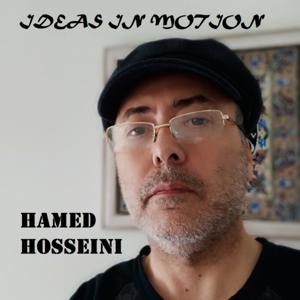


Why do political movements that promise to restore a purified "people" against corrupt elites and internal enemies recur with such relentless regularity in modern history? In this episode, we trace the deep historical and structural roots of today's global far-right wave. Our guide is the comprehensive interdisciplinary review paper, "From Bonapartism to Trumpism: A Critical Interdisciplinary Review of the Root Causes of the Far Right, Fascism, and Right-Wing Populism, and the Case for Context-Sensitive Integrative Theory", authored by sociologist and political theorist S A Hamed Hosseini. We journey from Karl Marx’s classic 1852 analysis of Louis Napoleon’s coup in France to modern-day "Trumpism" and its global analogues in Europe, India, Brazil, Turkey, and the Philippines. Along the way, we demystify the massive body of academic literature on this phenomenon by breaking down its core intellectual lineages and the newest research frontiers. In this episode, we explore:
Whether you are trying to make sense of polarized elections, studying political sociology, or seeking to understand the structural shadows of neoliberal capitalism, this episode offers an essential roadmap to one of the defining political crises of our time.
#FromBonapartismToTrumpism #HamedHosseini #PoliticalSociology #FarRight #RightWingPopulism #FascismStudies #Bonapartism #Trumpism #PoliticalEconomy #IntegrativeTheory #GlobalPolitics #CriticalTheory
In this episode, we explore a powerful, eye-opening paper that pulls back the curtain on the modern corporate university: "Working Twice as Hard for Half the Recognition: The Marginalization of Culturally and Racially Minoritized Academic Labor in Australian and Aotearoa New Zealand Universities under Neoliberal and Post-Neoliberal Reform" by S A Hamed Hosseini. This comprehensive integrative review exposes how higher education institutions across Australia and Aotearoa New Zealand systematically rely on, yet exploit and marginalize, the work of Aboriginal, Torres Strait Islander, Māori, Pasifika, and migrant academics of color. While universities frequently project public images of diversity, treaty partnership, and equity, Hosseini argues that the rise of "academic capitalism" and corporate management structures has actively reorganized and intensified racialized inequality. In this episode, we discuss the core concepts and systemic mechanisms unpacked in the paper:
This episode is a vital listen for academics, students, and anyone interested in the intersection of critical race theory, settler colonialism, and the fight for true epistemic justice in higher education.
#AcademicLabour #MinoritisedAcademics #AcademicCapitalism #InclusionTax #CulturalLoad #EverybodysAudit #CriticalRaceTheory #DecolonisingTheAcademy #HigherEducation #Australia #AotearoaNewZealand #HamedHosseini
Are you ready to tackle your next big milestone in SOCA2400? In this episode, we break down "Mastering the Annotated Bibliography: A SOCA2400 Guide", authored by your Course Coordinator, Dr S. A. Hamed Hosseini. This practical guide is your ultimate roadmap to choosing, evaluating, and comparing three academic sources on a post-capitalist alternative.Whether you are feeling overwhelmed or just want to make sure you are on track for a High Distinction, this episode demystifies the assignment requirements—which is worth 25% of your grade and has a target length of 1,200 words. We explain why this task is not just "three separate book reports" but a vital, strategic preparation stage for your final Research Essay.What we cover in this episode:
Get ready to transform your research from a routine task into a powerful intellectual toolkit!Hashtagged Keywords: #SOCA2400 #AnnotatedBibliography #AcademicWriting #PostCapitalistAlternatives #UniversityOfNewcastle #StudentSuccess #CriticalThinking #ResearchSkills #ActiveLearning
In this episode, we sit down with Dr. S.A. Hamed Hosseini to discuss his work, "The Quranic Blueprint for a Global Commons." We explore how ancient theological principles offer a radical alternative to the enclosures of late-stage capitalism, reimagining everything from digital platforms to ecological governance as a shared sacred trust. Episode Highlights:
This episode is a call to restructure our global systems into humble guardians of a world where all creation—human and non-human—has a right to flourish.----------------------------------------------------------------Keywords #DrSAHamedHosseini #GlobalCommons #QuranicEconomics #AlMulk #Amanah #Shura #EcoJustice #PostCapitalism #DigitalCommons #Stewardship #SocialJustice
In this episode, we dive into "The Ruins of Hubris," by Dr. S.A. Hamed Hosseini, a profound exploration of what the source calls a "Quranic archaeology of power." Rather than viewing the stories of lost empires like ‘Ad, Thamud, and the Pharaonic state as mere historical footnotes, we unearth them as diagnostic tools for our modern global crises—from ecological collapse to the rise of "techno-feudalism." Key Discussion Points:
This archaeology reminds us that injustice is inherently unsustainable, and the ruins of the past are mirrors reflecting the choices we must make today to ensure a shared future. Keywords#QuranicArchaeology #EcoJustice #TechnoFeudalism #Istikbar #Degrowth #SocialJustice #SystemicCollapse #Amanah #EconomicJustice #RightsOfNature
Episode Description: In this episode, we explore the striking paradox of the modern food system: why are emissions, hunger, and land concentration intensifying even as multi-billion-dollar "sustainability" programs from global giants like Nestlé and PepsiCo expand at record rates?. We take a deep dive into the groundbreaking paper by S. A. Hamed Hosseini, titled "Sustaining What? From Corporate Sustainability to Agri-Food Transformation Through Commonist Value Theory."
Using the lens of Commonist Value Theory (CVT), we uncover how corporate sustainability functions not as a solution, but as a "civilizing meta-mechanism"—a structural feedback loop designed to stabilize the current system by absorbing critique and neutralizing radical alternatives.
Hosseini argues that these programs engage in "decommonization," the systematic enclosure and perversion of the shared life-supporting relations that sustain our planet.
We break down the four pillars of the "commons" being targeted:
Join us as we discuss why "green capitalism" may be an oxymoron and how we can reclaim "True Value" through authentic, commons-based alternatives from the ground up.
Keywords: #CommonistValueTheory #SustainingTheUnsustainable #HamedHosseini #CorporateSustainability #AgriFoodTransformation #Decommonization #TrueValue #FoodSovereignty #RegenerativeAgriculture #DigitalFarming #MetaMechanisms #Greenwashing #AgTech
Episode Description: In this episode, we investigate a fundamental shift in how we work and how we are managed. We take a deep dive into the insightful article "The dual economics in the labor process: managerial contradictions and indirect control" by researchers Wolfgang Menz and Sarah Nies.
The authors challenge the popular idea of "Digital Taylorism"—the belief that technology is simply being used to turn us back into mindless cogs in a machine.
Instead, they reveal a more complex "reconciliation problem" that modern managers face: trying to balance the stable, efficient "economics of production" with the volatile, unpredictable "economics of the market."
We discuss how this has led to the "inner marketization" of companies, where internal departments are turned into profit centres forced to compete with each other. Under this new regime of "indirect control," management no longer just tells you exactly what to do; instead, they give you impossible market targets and make it your responsibility to figure out how to meet them.
We explore how digital tools are used to create "activating transparency," utilizing your own flexibility and self-organization to solve the company's market problems while simultaneously restricting your freedom.
Join us as we unpack why modern workplace pressure feels so different today—and why your boss might be using software to make their own market headaches your personal problem.
Keywords: #IndirectControl #DigitalCapitalism #WolfgangMenz #SarahNies #LabourProcessTheory #InnerMarketization #TheReconciliationProblem #ManagementContradictions #FutureOfWork #EmployeeResponsibilisation #DualEconomics #WorkplaceControl #DigitalSociology
Episode Description: In this episode, we explore the subtle and pervasive ways digital tools have shifted from being mere instruments to becoming independent forces of control. We take a deep dive into the provocative article "Governed by digital technology? Self-perpetuation and social domination in digital capitalism" by researchers Konstantin Klur and Sarah Nies.
Moving beyond the common fear of "Digital Taylorism"—the idea that technology is simply used to deskill and automate tasks—Klur and Nies reveal a more complex reality: digital technology often "activates" human flexibility rather than suppressing it. We discuss how modern companies use real-time transparency and digital dashboards to confront workers directly with volatile market targets. This creates a paradox where workers feel they have more "autonomy" and "self-organisation," yet they are actually being squeezed by the "mute compulsion" of algorithmic targets that appear as neutral, objective, and inescapable technical necessities.
Join us as we unpack the concept of "self-perpetuation" (Verselbständigung) and examine the dual process of activation and containment. We ask the hard questions: When the dashboard turns red, is the pressure coming from your boss, the market, or the software itself? And in this new age of digital capitalism, is your flexibility actually your own, or is it just another gear in a machine-driven system of domination?
Keywords: #DigitalCapitalism #RealSubsumption #WorkplaceControl #AlgorithmicManagement #KonstantinKlur #SarahNies #SelfPerpetuation #LabourProcess #DigitalTaylorism #WorkerAutonomy #RealTimeTransparency #SocialDomination #IndustrialSociology
What is meta-modernism, its key ideas, and their applications and practical implications for today's world? a conversation based on the following resources:
Andersen, L. R. (2019). Metamodernity: Meaning and hope in a complex world. Nordic Bildung.
Dempsey, B. G. (2022). Emergentism: A religion of complexity for the metamodern world. Palimpsest Press.
Dempsey, B. G. (2023). Metamodernism: Or, the cultural logic of cultural logics. ARC.
Freinacht, H. (2017). The listening society: A metamodern guide to politics (Book One). Metamoderna ApS.
Pipere, A., & Mārtinsone, K. (2022). Metamodernism and social sciences: Scoping the future. Social Sciences, 11(10), 457. https://doi.org/10.3390/socsci11100457.
Rowson, J., & Pascal, L. (Eds.). (2021). Dispatches from a time between worlds: Crisis and emergence in metamodernity. Perspectiva Press.
Storm, J. Ā. J. (2021). Metamodernism: The future of theory. University of Chicago Press.
van den Akker, R., Gibbons, A., & Vermeulen, T. (Eds.). (2017). Metamodernism: Historicity, affect, and depth after postmodernism. Rowman & Littlefield International.
The University as Assemblage
Is the "ivory tower" truly crumbling, or is it just being rearranged? In this episode, we dive into Jana Bacevic’s insightful paper, "With or without U? Assemblage theory and (de)territorializing the university," to challenge everything you thought you knew about higher education. We move beyond the headlines of "dying" universities to explore the institution as a complex assemblage—a living network where digital platforms, global capital, and human actors collide. We’ll break down the technical concepts of territorialization and unbundling to see how modern campuses are stretching their borders across the globe through franchise sites and digital MOOCs. But what happens when those borders get blurry?
We’ll discuss the "boundary disputes" that happen when an academic’s tweet goes viral, using the controversial cases of Steven Salaita and George Ciccariello-Maher to illustrate how universities "reterritorialize" to protect their brand. Join us as we ask: what is a university in the 21st century, and where does the institution end and the rest of the world begin
#AssemblageTheory #HigherEducation #Territorialisation #Unbundling #SocialMedia #AcademicFreedom #JanaBacevic
From the publisher's feed

2,880 Listeners