
Sign up to save your podcasts
Or

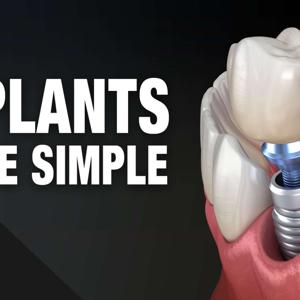


Dental implants are a daunting proposition for new dentists. But they don't have to be! While you probably aren't ready to start placing implants right out of dental school, the skills you need to be an expert implantologist can be acquired quickly and efficiently with the right mentors and the right courses.
In this video, Dr. Robert Stanley shares the exact steps you need to take to go from fresh graduate to implant master in as little time as possible.
For more information, check out https://stanleyinstitute.com/
At Stanley Institute for Comprehensive Dentistry, we offer expert-led courses designed to train the whole doctor—covering everything from diagnosis to advanced treatment planning, efficient practice management and more. Learn cutting-edge, fully digital solutions and workflows that will transform your practice and patient care. With both online and in-person options, our comprehensive programs provide the skills and confidence you need to excel. Don’t miss out—join us today at https://stanleyinstitute.com/courses!
Online Courses: https://stanleyinstitute.com/virtual-courses/
In-Person Courses: https://stanleyinstitute.com/courses/
Are you a patient looking for our dental practice? Learn more about us at www.stanleysmiles.com.
Questions, Comments or Insights? Email us at:
[email protected]
Stanley Institute Socials
► Subscribe: https://youtube.com/@Stanleyinstitute
► Facebook: https://facebook.com/stanleyinstitute/
► Instagram: https://instagram.com/stanleyinstitute
► LinkedIn: https://linkedin.com/school/stanleyinstitute/
Dr. Robert Stanley, Smile Engineer Socials
► Facebook: https://facebook.com/p/Smile-Engineer-100054446351425/
► Instagram: https://instagram.com/smileengineer/
Many of you have asked whether I use zirconia implants. I use zirconia for restorations, so this question makes sense. However, the answer is a hard no. And the reason? Because of this coffee cup. You see, this coffee cup is my FAVORITE coffee cup. That is, it WAS my favorite cup until it broke. Why did it break? That's the question.
Just like my coffee cup, zirconia implants are made from a very strong (stronger than steel!) substance. So how come I'm worried about breakage?? Well, that's not my only concern with zirconia implants. Check out the video to see exactly why I don't use zirconia implants.
Check out https://stanleyinstitute.com/ for more information.
At Stanley Institute for Comprehensive Dentistry, we offer expert-led courses designed to train the whole doctor—covering everything from diagnosis to advanced treatment planning, efficient practice management and more. Learn cutting-edge, fully digital solutions and workflows that will transform your practice and patient care. With both online and in-person options, our comprehensive programs provide the skills and confidence you need to excel. Don’t miss out—join us today at https://stanleyinstitute.com/courses!
Online Courses: https://stanleyinstitute.com/virtual-courses/
In-Person Courses: https://stanleyinstitute.com/courses/
Are you a patient looking for our dental practice? Learn more about us at www.stanleysmiles.com.
Questions, Comments or Insights? Email us at:
[email protected]
Stanley Institute Socials
► Subscribe: https://youtube.com/@Stanleyinstitute
► Facebook: https://facebook.com/stanleyinstitute/
► Instagram: https://instagram.com/stanleyinstitute
► LinkedIn: https://linkedin.com/school/stanleyinstitute/
Dr. Robert Stanley, Smile Engineer Socials
► Facebook: https://facebook.com/p/Smile-Engineer-100054446351425/
► Instagram: https://instagram.com/smileengineer/
We've talked about bone loss, but specifically–what about cupping around an implant? Bad news, right? Well, it's not that simple (is it ever?). Back when we used parallel-walled implants, this was a greater concern. But times and technologies have changed.
Check out the video to learn why cupping isn't the big issue people make it out to be.
Check us out at https://stanleyinstitute.com/ for more information.
At Stanley Institute for Comprehensive Dentistry, we offer expert-led courses designed to train the whole doctor—covering everything from diagnosis to advanced treatment planning, efficient practice management and more. Learn cutting-edge, fully digital solutions and workflows that will transform your practice and patient care. With both online and in-person options, our comprehensive programs provide the skills and confidence you need to excel. Don’t miss out—join us today at https://stanleyinstitute.com/courses!
Online Courses: https://stanleyinstitute.com/virtual-courses/
In-Person Courses: https://stanleyinstitute.com/courses/
Are you a patient looking for our dental practice? Learn more about us at www.stanleysmiles.com.
Questions, Comments or Insights? Email us at:
[email protected]
Stanley Institute Socials
► Subscribe: https://youtube.com/@Stanleyinstitute
► Facebook: https://facebook.com/stanleyinstitute/
► Instagram: https://instagram.com/stanleyinstitute
► LinkedIn: https://linkedin.com/school/stanleyinstitute/
Dr. Robert Stanley, Smile Engineer Socials
► Facebook: https://facebook.com/p/Smile-Engineer-100054446351425/
► Instagram: https://instagram.com/smileengineer/
Guys, I'll say it again. This 👏 isn't 👏 bone 👏 loss 👏. I know, I know, it's a hard pill to swallow. It goes against industry dogma. It's not what we were taught. How about this? We can all agree that if a cup started out with water in it, then we poured some water out, that's water loss, right? But what if the cup started empty? Is that water loss? You can't lose something you never had.
Yet we make this EXACT claim when we say there's bone loss around an implant after we placed and grafted it! How can we lose bone if there was never bone to begin with? Check out this video and you'll see what I mean.
Bone loss is a big topic in dental implantology, but it's one I feel is quite misunderstood. Let's set the record straight together.
Check us out at https://stanleyinstitute.com/ for more information.
At Stanley Institute for Comprehensive Dentistry, we offer expert-led courses designed to train the whole doctor—covering everything from diagnosis to advanced treatment planning, efficient practice management and more. Learn cutting-edge, fully digital solutions and workflows that will transform your practice and patient care. With both online and in-person options, our comprehensive programs provide the skills and confidence you need to excel. Don’t miss out—join us today at https://stanleyinstitute.com/courses!
Online Courses: https://stanleyinstitute.com/virtual-courses/
In-Person Courses: https://stanleyinstitute.com/courses/
Are you a patient looking for our dental practice? Learn more about us at www.stanleysmiles.com.
Questions, Comments or Insights? Email us at:
[email protected]
Stanley Institute Socials
► Subscribe: https://youtube.com/@Stanleyinstitute
► Facebook: https://facebook.com/stanleyinstitute/
► Instagram: https://instagram.com/stanleyinstitute
► LinkedIn: https://linkedin.com/school/stanleyinstitute/
Dr. Robert Stanley, Smile Engineer Socials
► Facebook: https://facebook.com/p/Smile-Engineer-100054446351425/
► Instagram: https://instagram.com/smileengineer/
What if I told you... I'm not a dentist? At least not entirely. Most dentists follow a typical medical career path–biology, pre-med, dental school. My career path wasn't exactly typical.
You see, I started out as an engineer. An aerospace engineer. And through engineering, I learned a LOT about screws. When I met my wife, Bobbi, I found a new link to the dental field. I also discovered that dentists used screws, too–they just weren't taught anything about the engineering behind them!
For me, this was a natural opportunity to marry my passions and help the dental world learn what it was missing: the physics behind dental implants and how to make them far more successful.
Check out the video to learn more, or get even more free info at https://stanleyinstitute.com/
At Stanley Institute for Comprehensive Dentistry, we offer expert-led courses designed to train the whole doctor—covering everything from diagnosis to advanced treatment planning, efficient practice management and more. Learn cutting-edge, fully digital solutions and workflows that will transform your practice and patient care. With both online and in-person options, our comprehensive programs provide the skills and confidence you need to excel. Don’t miss out—join us today at https://stanleyinstitute.com/courses!
Online Courses: https://stanleyinstitute.com/virtual-courses/
In-Person Courses: https://stanleyinstitute.com/courses/
Are you a patient looking for our dental practice? Learn more about us at www.stanleysmiles.com.
Questions, Comments or Insights? Email us at:
[email protected]
Stanley Institute Socials
► Subscribe: https://youtube.com/@Stanleyinstitute
► Facebook: https://facebook.com/stanleyinstitute/
► Instagram: https://instagram.com/stanleyinstitute
► LinkedIn: https://linkedin.com/school/stanleyinstitute/
Dr. Robert Stanley, Smile Engineer Socials
► Facebook: https://facebook.com/p/Smile-Engineer-100054446351425/
► Instagram: https://instagram.com/smileengineer/
If you use implants with a Morse Taper, there's no need to freak out. If you use implants with a DEEP Morse Taper, there's also no need to freak out. Maybe just a little. The point is, the Morse Taper isn't the issue here. Morse Tapers are indispensable parts of our implant system that form a tight seal and keep out bad bacteria.
However, the trouble begins when you start to imagine the engineering necessary for a deep Morse Taper within a dental implant. If the taper pushes close to the implant edge, you can't have threads in that area–the thread valleys would cut in too far and leave the implant paper-thin in those sections.
Check out the video for my further thoughts on why you don't really NEED a deep Morse Taper.
For more information, visit stanleyinstitute.com.
At Stanley Institute for Comprehensive Dentistry, we offer expert-led courses designed to train the whole doctor—covering everything from diagnosis to advanced treatment planning, efficient practice management and more. Learn cutting-edge, fully digital solutions and workflows that will transform your practice and patient care. With both online and in-person options, our comprehensive programs provide the skills and confidence you need to excel. Don’t miss out—join us today at https://stanleyinstitute.com/courses!
Online Courses: https://stanleyinstitute.com/virtual-courses/
In-Person Courses: https://stanleyinstitute.com/courses/
Are you a patient looking for our dental practice? Learn more about us at www.stanleysmiles.com.
Questions, Comments or Insights? Email us at:
[email protected]
Stanley Institute Socials
► Subscribe: https://youtube.com/@Stanleyinstitute
► Facebook: https://facebook.com/stanleyinstitute/
► Instagram: https://instagram.com/stanleyinstitute
► LinkedIn: https://linkedin.com/school/stanleyinstitute/
Dr. Robert Stanley, Smile Engineer Socials
► Facebook: https://facebook.com/p/Smile-Engineer-100054446351425/
► Instagram: https://instagram.com/smileengineer/
Do you need a different implant for every scenario? Well, kinda! You do need implants of different sizes based on where you're placing them in the mouth. But how MUCH variation in dental implant size is really necessary? How precise do you need to be? And at what point does perfect customization actually become an issue that can be detrimental to patient outcomes?
For me, it's the point where I don't know, within a second, what size implant I'm holding or looking at. My kit is optimized to provide the patient with the best, most scientifically-sound implant solutions, delivered with perfect accuracy in a timely manner. Check out the video to find out what I mean and the logic behind this approach.
To learn more about implant dentistry, check us out at https://stanleyinstitute.com/
At Stanley Institute for Comprehensive Dentistry, we offer expert-led courses designed to train the whole doctor—covering everything from diagnosis to advanced treatment planning, efficient practice management and more. Learn cutting-edge, fully digital solutions and workflows that will transform your practice and patient care. With both online and in-person options, our comprehensive programs provide the skills and confidence you need to excel. Don’t miss out—join us today at https://stanleyinstitute.com/courses!
Online Courses: https://stanleyinstitute.com/virtual-courses/
In-Person Courses: https://stanleyinstitute.com/courses/
Are you a patient looking for our dental practice? Learn more about us at www.stanleysmiles.com.
Questions, Comments or Insights? Email us at:
[email protected]
Stanley Institute Socials
► Subscribe: https://youtube.com/@Stanleyinstitute
► Facebook: https://facebook.com/stanleyinstitute/
► Instagram: https://instagram.com/stanleyinstitute
► LinkedIn: https://linkedin.com/school/stanleyinstitute/
Dr. Robert Stanley, Smile Engineer Socials
► Facebook: https://facebook.com/p/Smile-Engineer-100054446351425/
► Instagram: https://instagram.com/smileengineer/
Insertion torque tells us whether an implant has primary stability not... right? RIGHT?? Actually, nope! Insertion torque only gives us a measurement of resistance to one type of movement. In this video, I'll break down the engineering behind insertion torque and show you why we're all getting it wrong when we use it to judge primary stability of our implant placements.
If you're like to learn more about insertion torque, primary stability, or implant placement in general, check us out at https://stanleyinstitute.com/
At Stanley Institute for Comprehensive Dentistry, we offer expert-led courses designed to train the whole doctor—covering everything from diagnosis to advanced treatment planning, efficient practice management and more. Learn cutting-edge, fully digital solutions and workflows that will transform your practice and patient care. With both online and in-person options, our comprehensive programs provide the skills and confidence you need to excel. Don’t miss out—join us today at https://stanleyinstitute.com/courses!
Online Courses: https://stanleyinstitute.com/virtual-courses/
In-Person Courses: https://stanleyinstitute.com/courses/
Are you a patient looking for our dental practice? Learn more about us at www.stanleysmiles.com.
Questions, Comments or Insights? Email us at:
[email protected]
Stanley Institute Socials
► Subscribe: https://youtube.com/@Stanleyinstitute
► Facebook: https://facebook.com/stanleyinstitute/
► Instagram: https://instagram.com/stanleyinstitute
► LinkedIn: https://linkedin.com/school/stanleyinstitute/
Dr. Robert Stanley, Smile Engineer Socials
► Facebook: https://facebook.com/p/Smile-Engineer-100054446351425/
► Instagram: https://instagram.com/smileengineer/
It's crestal bone loss! Your patient is losing bone after you placed the implant! ...Or are they? The evidence doesn't seem to support this scary claim. In this video, we'll look at what we'd expect to see if our patients were truly losing bone vs. what we actually see when we place implants as they go through the healing process.
Bone loss is a big topic in dental implantology, but it's one I feel is quite misunderstood. A ton of claims and schools of thought exist on the matter, but I'll let you in on a little secret: It's not something I ever have to mitigate. Watch the video to see why!
At Stanley Institute for Comprehensive Dentistry, we offer expert-led courses designed to train the whole doctor—covering everything from diagnosis to advanced treatment planning, efficient practice management and more. Learn cutting-edge, fully digital solutions and workflows that will transform your practice and patient care. With both online and in-person options, our comprehensive programs provide the skills and confidence you need to excel. Don’t miss out—join us today at https://stanleyinstitute.com/courses!
Online Courses: https://stanleyinstitute.com/virtual-courses/
In-Person Courses: https://stanleyinstitute.com/courses/
Are you a patient looking for our dental practice? Learn more about us at www.stanleysmiles.com.
Questions, Comments or Insights? Email us at:
[email protected]
Stanley Institute Socials
► Subscribe: https://youtube.com/@Stanleyinstitute
► Facebook: https://facebook.com/stanleyinstitute/
► Instagram: https://instagram.com/stanleyinstitute
► LinkedIn: https://linkedin.com/school/stanleyinstitute/
Dr. Robert Stanley, Smile Engineer Socials
► Facebook: https://facebook.com/p/Smile-Engineer-100054446351425/
► Instagram: https://instagram.com/smileengineer/
Do you use 2D radiographs when placing dental implants? Hopefully you do! But do you JUST use 2D radiographs when placing dental implants? If so, you're operating with one hand tied behind your back! 2D radiographs are a great tool, but they leave out an entire dimension–and all the detail and information that comes with it. We need to be using 3D scans of our patients during both the planning phase and beyond.
Think about it. What would more accurately print a 3D model of an X-wing, a 2D drawing or a CAD mockup? Obviously, the mockup! So why do we think our results will be any different when it comes to implants? It just doesn't make sense. Check out the rest of the video as I make my case for why using ONLY 2D radiographs just doesn't cut it for modern implant work.
Check out the full SI continuum at https://stanleyinstitute.com/
At Stanley Institute for Comprehensive Dentistry, we offer expert-led courses designed to train the whole doctor—covering everything from diagnosis to advanced treatment planning, efficient practice management and more. Learn cutting-edge, fully digital solutions and workflows that will transform your practice and patient care. With both online and in-person options, our comprehensive programs provide the skills and confidence you need to excel. Don’t miss out—join us today at https://stanleyinstitute.com/courses!
Online Courses: https://stanleyinstitute.com/virtual-courses/
In-Person Courses: https://stanleyinstitute.com/courses/
Are you a patient looking for our dental practice? Learn more about us at www.stanleysmiles.com.
Questions, Comments or Insights? Email us at:
[email protected]
Stanley Institute Socials
► Subscribe: https://youtube.com/@Stanleyinstitute
► Facebook: https://facebook.com/stanleyinstitute/
► Instagram: https://instagram.com/stanleyinstitute
► LinkedIn: https://linkedin.com/school/stanleyinstitute/
Dr. Robert Stanley, Smile Engineer Socials
► Facebook: https://facebook.com/p/Smile-Engineer-100054446351425/
► Instagram: https://instagram.com/smileengineer/