If you want to increase your savings, don’t start with your budget—start with your lifestyle.Your lifestyle isn’t about how much you spend.It’s about what you prioritize.It’s the visible result of invisible decisions—what you say yes to, what you say no to, and what you're building quietly behind the scenes.
https://www.youtube.com/live/wZIJnteQW-g
Too many people let lifestyle be the engine of their money—chasing comfort, appearances, or upgrades without ever asking:
Does this reflect the values I want to pass on?Does this build up my family or just maintain an image?
You don’t need a bigger house or fancier car.You need a bigger vision.You need a coordinated plan that reflects your values in how you live today—and what you leave behind tomorrow.
The quiet thief of financial progress: lifestyle creep.
We don’t see it coming. It’s the subtle shift that happens every time our income rises. We eat out a little more, upgrade our phone, take an extra trip, and before we know it, our expenses grow in lockstep with our income.
We think we’ve moved forward—but our savings tell a different story.
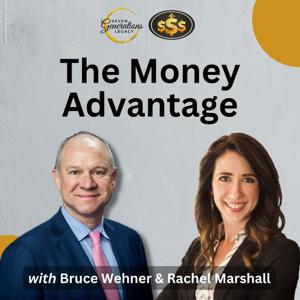
And that’s why Bruce and I recorded an entire podcast about this topic: how to increase your savings without reducing your lifestyle. Because true wealth isn’t about deprivation—it’s about design.
Why You Can’t Save Your Way to Wealth—Without a PlanWhat Is Lifestyle Creep—And Why Is It So Dangerous?Why We Overspend—And How the Mind Tricks UsThe Savings Crisis—And What It Means for YouThe Secret Weapon—Your Wealth Coordination AccountHow to Increase Your Savings Without Reducing Your LifestyleThe Compounding Effect of Intentional SavingWhy Simplicity Beats ComplexityMargin Is the Measure of StewardshipBook A Strategy CallFAQWhat is lifestyle creep?How can I increase my savings without reducing my lifestyle?What is a Wealth Coordination Account?Why is lifestyle creep harmful?What savings rate should I aim for?
Why You Can’t Save Your Way to Wealth—Without a Plan
Most people try to willpower their way to saving more money. They cut lattes, cancel subscriptions, and create color-coded budgets that last about two weeks.
But here’s the truth: you can’t build lasting wealth on discipline alone.
You need a system—one that helps you automatically grow your savings while maintaining the lifestyle you love.
In this article, Bruce and I will show you:
What lifestyle creep really is and why it sabotages your wealth
How Parkinson’s Law explains your struggle to save
The practical tool we use with clients called a Wealth Coordination Account
How to rewire your habits to save more—without cutting joy out of your life
When you finish this article, you’ll see that increasing your savings doesn’t mean living smaller. It means living smarter.
What Is Lifestyle Creep—And Why Is It So Dangerous?
We live in a consumption-driven world. Everywhere we look, there’s an ad convincing us we need something new.
Apple doesn’t ask what we want—they tell us what we didn’t know we needed. The next iPhone, the next upgrade, the next experience.
That’s lifestyle creep. It’s the pattern of spending more simply because we earn more.
Bruce calls it “the hidden drain on your future.” Because when every new dollar gets consumed by an upgraded lifestyle, none of it turns into wealth.
And here’s the sneaky part: it doesn’t feel reckless. It feels normal. Everyone around us does the same thing. We raise our standard of living instead of our standard of saving—and we end up with more stuff but no margin.
Lifestyle creep makes you rich on the outside but broke on the inside.
Why We Overspend—And How the Mind Tricks Us
Our culture makes spending effortless. Credit cards, one-click shopping, social media retargeting—these are all designed to bypass logic and hit emotion.
As I said on the show, “It’s the sea we swim in.”
Most people don’t realize how much marketing is shaping their sense of “need.” A simple scroll through Instagram can make you feel behind—like you’re missing something everyone else has.
That emotional gap drives impulsive spending. But here’s the truth: spending more rarely fills what’s missing.
Bruce said it best: “Stores are designed to make your brain react. That’s why milk and eggs are at the back of the store—you walk past temptation twice.”
To overcome this, you need something external to your willpower—a structure that makes intentional spending the easy choice.
The Savings Crisis—And What It Means for You
Let’s look at the numbers. The U.S. personal savings rate has hovered between 4–5% for years. During COVID, it spiked, but as soon as the economy reopened, savings plummeted again.
The average American spends nearly everything they earn.
That means if you save 5% of your income, you’re already ahead of the national average. But if you want to build real wealth, 5% won’t cut it.
In our experience, families who save 25–30% of their cash flow are the ones who move from financial stress to financial freedom.
And the good news? You don’t have to cut your lifestyle to get there. You just need a plan that directs your dollars intentionally.
The Secret Weapon—Your Wealth Coordination Account
Here’s the system we use and teach: The Wealth Coordination Account (WCA).
Think of it as a savings autopilot—a separate account designed to catch your money before you can spend it.
When your income hits your main account, a set percentage automatically flows into your WCA. You don’t see it, you don’t touch it, and you don’t rely on willpower.
This isn’t about deprivation—it’s about direction.
Bruce shared his personal setup: he uses a separate bank for this account, no debit card, no online transfer, and he even keeps the checks locked away. That friction creates intention.
In our household, Lucas and I treat our life insurance cash value the same way—it’s our long-term wealth coordination system. Money flows there automatically, ready to fund investments, opportunities, and family goals.
The point isn’t where you store it. The point is that it’s untouchable for spending. This is not your “rainy day fund.” This is your future wealth account.
How to Increase Your Savings Without Reducing Your Lifestyle
Here’s the part most people get wrong: they think saving more means cutting back. But that’s a scarcity mindset.
Instead, focus on widening the gap between what you earn and what you spend—intentionally.
Here’s how to do it:
Track where your money is flowing.Awareness is the first step. Use a simple spreadsheet or even a notebook to see where every dollar goes.
Decide your “enough.”Be honest about what truly adds value to your life—and what’s just noise.
Automate your savings.Set up a recurring transfer into your Wealth Coordination Account right after every paycheck.
Increase your savings rate gradually.Every time your income rises, increase your savings by at least 1% more than your spending.
Protect your progress.Avoid raiding your savings for convenience or impulse. Money in your WCA should serve one purpose: to grow your family’s wealth and stability.
You’ll be amazed at how much freedom comes from structure.
The Compounding Effect of Intentional Saving
Bruce said something in the episode that stuck with me:
“Every dollar you spend is a dollar that will never earn another dollar for you.”
Think about that. When you spend $500 on a television, you don’t just lose the $500—you lose what that $500 could have earned over time.
If you had saved that same amount monthly and earned even 3% annually, you could have built over $1.6 million in 20 years.
That’s the cost of lifestyle creep. It’s not just today’s purchase—it’s tomorrow’s potential.
Saving isn’t about restriction. It’s about redemption—redeeming the future you’re called to build.
Why Simplicity Beats Complexity
You don’t need fancy software or complex budgets.
Simple works.
Your Wealth Coordination Account can be:
A savings account at a separate bank
A money market account at a brokerage
The cash value of a whole life insurance policy
The form doesn’t matter. What matters is the discipline of separation—keeping your wealth creation money apart from your spending money.
When you make saving invisible and automatic, you build wealth without effort.
That’s how you increase your savings without reducing your lifestyle.
Margin Is the Measure of Stewardship
You don’t have to cut joy to build wealth.You don’t have to live smaller to create more impact.
By designing a system that honors your values and automates your savings, you’ll create margin—and margin is the measure of true financial stewardship.
Because lifestyle is not about what you own.It’s about what you prioritize.
And when you prioritize increasing your savings first, you don’t just build wealth. You build freedom—for yourself, your family, and generations to come.
Book A Strategy Call
This article has given you a framework for how to choose the right life insurance agent—one who will guide you, educate you, and help you build a financial legacy. If you’re ready to explore working with an advisor who understands Infinite Banking and multigenerational planning, I invite you to book a call with our team at The Money Advantage.
We offer two powerful ways to help you create lasting impact:
Legacy Strategy Call – If you want to uncover your family values, mission, and vision, and create a legacy that’s about more than just money, we can guide you through the process of financial stewardship and family leadership. Save time coordinating your family’s finances while building a legacy that lasts for generations. Book a Legacy Strategy Call to learn more about how we can help.
Financial Strategy Call – Discover how Privatized Banking, alternative investments, tax-mitigation,



 View all episodes