
Sign up to save your podcasts
Or

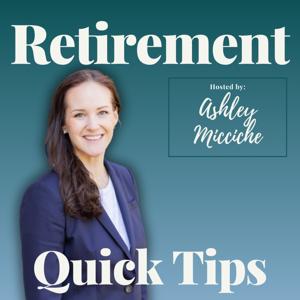

This week, I’m talking about index card personal finance. If I could sum up the best advice on personal finance onto an 3x5 index card, what would be on there?
That’s what we’re covering this week. I would change a few of these have different pieces of advice for people in their 20s or 30s, but since most of you are in your 50s and 60s, this week’s tips focus on the best advice I can give you at your stage in life.
Today’s rule is max out all the retirement savings accounts available to you. There’s a hierarchy to this too, so if you have a health savings account you’ll want to start there. If you’ve been a listener of the One Minute Retirement tip for a while, then you’ve heard me beat you over the head with this one. Why a Health savings account? Tax deductible contributions, tax-free growth, and tax-free withdrawals when used for health care expenses that qualify. Health savings accounts are the best retirement savings vehicle from a tax-advantaged standpoint, so if you qualify for one, use it and also be sure to take the long-term view with it and invest at least a portion of the account for long-term growth.
Next you’ll want to max out your 401k or your Roth 401k if you have one available through your work. This year and next year, you can put up to $19,500 into a 401(k) plan at work, plus another $6,500 if you’re aged 50 and over.
If you’ve maxed out those accounts, and you still can afford to save more, look into Roth and Traditional IRA investments. Depending on your marital status, your income, and your access to a 401k plan at work, you may be able to contribute to your IRAs as well.
I didn’t mention saving inside of a traditional investment account like a trust or a joint account. The advantages here are that you can save any dollar amount inside of these accounts each year, but the tax treatment varies and you’ll be taxed on income and capital gains every year, so I typically don’t advise clients to add to these accounts until after maxing out the HSA, 401k, and/or IRA accounts.
That’s it for today. Thanks for listening. My name is Ashley Micciche and this is the One Minute Retirement Tip.
----------
>>> Subscribe on iTunes: https://apple.co/2DI2LSP
>>> Subscribe on Amazon Alexa: https://amzn.to/2xRKrCs
>>> Check out our blog: https://truenorthretirementadvisors.com/blog/
----------
Tags: retirement, investing, money, finance, finances, financial planning, retirement planning, saving money, personal finance, wealth management, money tips, fee only financial advisor, financial planner, financial podcast, retirement podcast, financial independence podcast
 View all episodes
 By Ashley Micciche

4.9
5252 ratings
This week, I’m talking about index card personal finance. If I could sum up the best advice on personal finance onto an 3x5 index card, what would be on there?
That’s what we’re covering this week. I would change a few of these have different pieces of advice for people in their 20s or 30s, but since most of you are in your 50s and 60s, this week’s tips focus on the best advice I can give you at your stage in life.
Today’s rule is max out all the retirement savings accounts available to you. There’s a hierarchy to this too, so if you have a health savings account you’ll want to start there. If you’ve been a listener of the One Minute Retirement tip for a while, then you’ve heard me beat you over the head with this one. Why a Health savings account? Tax deductible contributions, tax-free growth, and tax-free withdrawals when used for health care expenses that qualify. Health savings accounts are the best retirement savings vehicle from a tax-advantaged standpoint, so if you qualify for one, use it and also be sure to take the long-term view with it and invest at least a portion of the account for long-term growth.
Next you’ll want to max out your 401k or your Roth 401k if you have one available through your work. This year and next year, you can put up to $19,500 into a 401(k) plan at work, plus another $6,500 if you’re aged 50 and over.
If you’ve maxed out those accounts, and you still can afford to save more, look into Roth and Traditional IRA investments. Depending on your marital status, your income, and your access to a 401k plan at work, you may be able to contribute to your IRAs as well.
I didn’t mention saving inside of a traditional investment account like a trust or a joint account. The advantages here are that you can save any dollar amount inside of these accounts each year, but the tax treatment varies and you’ll be taxed on income and capital gains every year, so I typically don’t advise clients to add to these accounts until after maxing out the HSA, 401k, and/or IRA accounts.
That’s it for today. Thanks for listening. My name is Ashley Micciche and this is the One Minute Retirement Tip.
----------
>>> Subscribe on iTunes: https://apple.co/2DI2LSP
>>> Subscribe on Amazon Alexa: https://amzn.to/2xRKrCs
>>> Check out our blog: https://truenorthretirementadvisors.com/blog/
----------
Tags: retirement, investing, money, finance, finances, financial planning, retirement planning, saving money, personal finance, wealth management, money tips, fee only financial advisor, financial planner, financial podcast, retirement podcast, financial independence podcast

1,954 Listeners

443 Listeners

810 Listeners
1,334 Listeners
537 Listeners
750 Listeners
547 Listeners

698 Listeners

620 Listeners

932 Listeners

834 Listeners

204 Listeners

583 Listeners

434 Listeners

1,070 Listeners