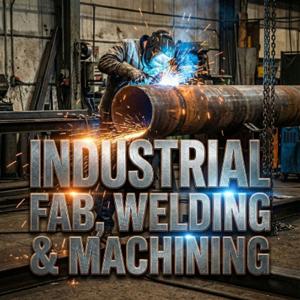
The U.S. fabricated metals industry stands as a massive economic engine, driving billions in domestic impact across thousands of regional production plants. However, in 2026, the sector is experiencing sharp shifts due to volatile raw material pricing, rising safety standards, and a severe shortage of skilled personnel. On this episode of
Industrial Fab, Welding & Machining, the industrial operations team at LTJ Industrial Services provides a guide to navigating this changing landscape. We analyze workflow optimization, review strategies to shield margins from changing material costs, and break down why merging in-shop fabrication with on-site field services is crucial to keeping heavy industrial operations profitable.
Chapter Sections- 00:00 – The 2026 Industrial Transformation: Navigating supply chain shifts and rising customer demands in the U.S. metal fabrication sector.
- 01:45 – Market Diversification vs. Price Pressures: Spreading market risks across oil, gas, recycling, and construction to stabilize cash flow.
- 03:30 – Balancing Automation and Skilled Craftsmanship: Integrating CNC machining, robotic welding, and high-definition plasma tables with experienced field crews.
- 05:15 – Workforce Survival Playbooks: Overcoming the skilled labor shortage through tech-school partnerships and clear employee retention pathways.
- 07:00 – Streamlining the Quote-to-Delivery Lifecycle: Connecting sales, engineering, and shop production using digital workflow tracking.
- 08:45 – The Value of ASME & AWS Certifications: Differentiating your business and justifying premium billing rates through verified compliance.
- 10:30 – Financial Risk Management: Using progress billing, accurate job estimation, and strategic material procurement to insulate profit margins.
- 12:00 – Closing: Securing heavy equipment assets and eliminating field downtime with LTJ Industrial Services.
Key Episode Highlights- Diversification Shields Against Market Swings: Fabricators that rely entirely on a single industrial sector leave themselves exposed to unexpected industry downturns. Leading facilities maintain financial resilience by building diverse capabilities that serve extraction, environmental recycling, and commercial infrastructure projects simultaneously, ensuring steady production volumes throughout the year.
- Technology Alone Cannot Replace Lived Trench Knowledge: While robotic welding arms and automated CAD processes are great for high-volume, repetitive tasks, they fall short when dealing with custom, one-off builds. High-value fabrication demands a calculated mix of advanced shop floor automation and experienced machinists who can handle complex, variable field installations.
- Vetting Actual Costs Halts Margin Drift: Price competition alone can quickly drain a business's cash reserves. Protecting your bottom line requires advanced estimating platforms that track actual material usage, active machine toolpaths, and shop labor hours in real time, giving your management team the precise data needed to negotiate profitable contracts.
The Turnkey Sourcing Strategy: Comprehensive Fabrications- Precision Shop Sourcing & Milling
- Core Deliverables: Multi-axis CNC milling, high-pressure waterjet profiling, structural assembly, and specialized wear-liner hardfacing.
- Operational Target: Fabricating complex replacement parts and heavy industrial components to exact specifications under controlled shop conditions.
- Emergency Field Diagnostics & Repairs
- Core Deliverables: Mobile structural code welding, on-site heavy equipment modifications, and portable field line-boring operations.
- Operational Target: Deploying certified service trucks and field crews directly to remote industrial sites to resolve mechanical issues immediately.
Protect Your Capital Assets with LTJ Industrial ServicesRelying on generic, unvetted replacement parts or uncertified maintenance crews when managing expensive industrial machinery exposes your business to sudden equipment failure and expensive operational delays. Headquartered at
22505 US-6, Rifle, Colorado,
LTJ Industrial Services delivers the heavy-duty metallurgy expertise, certified precision welding, and complete structural fabrication required to support your most demanding projects.
Our modern production facility manages your entire project lifecycle completely in-house. We run multi-axis CNC machining centers, high-definition plasma cutting equipment, and comprehensive wear-resistant hardfacing loops alongside our certified mobile field welding crews to build and rebuild machinery that can withstand the harshest field conditions.
Stop risking your facility's output on unvetted work. Contact our Rifle office today at
(970) 625-9353 or visit
LTJIndustrial.com to upload your project blueprints and review your operational specs with our engineering team.
Click here to read more
Learn more about LTJ Industrial Services at www.ltjindustrial.com/