
Sign up to save your podcasts
Or

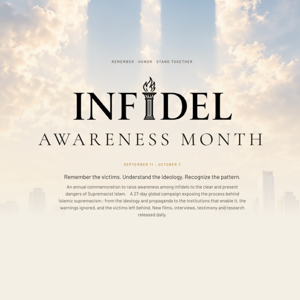


In this conversation, Danny Burmawi shares his experiences and insights on the ideological landscape surrounding Islam and the West, particularly in light of recent events. He discusses his journey from the Middle East to the United States, the implications of October 7th, and the need for a shift in how Western societies understand and engage with Islamic ideologies. The conversation delves into the complex relationship between Western ideologies and Islam, exploring themes of political alignment, societal fears, and the role of 'useful idiots' in perpetuating certain narratives. It emphasizes the need for open critique of Islam to foster understanding and progress.
Takeaways
Chapters
In this podcast episode, Juliana Taimoorazy interviews Uzay Bulut, a journalist and political analyst, discussing her journey from being a secular Muslim in Turkey to leaving Islam and advocating for the rights of religious minorities. The conversation explores themes of cultural identity, the impact of Islam on Western civilization, and the persecution of Christians in the Middle East.
Takeaways
Chapters
The conversation explores the complexities surrounding the Oslo peace process, highlighting the differing perspectives of Israelis and Palestinians, the failures of the peace camp, and the ideological underpinnings of Palestinianism. It emphasizes the need for a new political discourse that acknowledges Palestinian agency and the realities of the conflict.
Takeaways
Chapters
The conversation with Itamar Marcus of Palestine Media Watch explores the Oslo peace process, highlighting its misinterpretation and the dual messaging of the Palestinian Authority. Itamar Markus discusses the historical precedents of deception in negotiations and the ongoing challenges faced by Israel in understanding Palestinian intentions. The conversation delves into the complexities of the Israeli-Palestinian conflict, emphasizing the misconceptions surrounding peace processes and the psychological dynamics at play in Europe. Itamar and Richard discuss the need for awareness and leadership to address these issues effectively.
Takeaways
Chapters
The conversation features Coptic Kapara (Michael Gamal) discussing his journey from extremism and anti-Semitism to Israel advocacy, highlighting key moments that shifted his perspective. He reflects on the complexities of identity, the impact of political narratives, and the challenges of discussing Islam and its implications in the West. The conversation delves into the complexities of criticism towards Islam, the dynamics of Western perceptions of Muslims, and the implications of political Islam. It explores the challenges of free speech, the role of media, and the societal consequences of radicalization.
Takeaways
Chapters
The conversation explores the radicalization of Muslim communities in Europe, focusing on the influence of the Palestinian issue and the rise of political Islam. Kobi Michael discusses his research findings on the demographic changes, manifestations of Islam in daily life, and the responses of European politicians to radicalization.
Takeaways
Chapters
The conversation features Phyllis Chesler discussing the evolution of feminism, the Palestinianization of feminist discourse, and the challenges faced by women under oppressive regimes. It highlights the disconnect between mainstream feminism and the realities of women's rights in various cultures, particularly in relation to Islam and the political landscape surrounding Israel. The conversation delves into the complexities of feminist movements, media representation, and the challenges faced by women in various cultural contexts, particularly in relation to Israel and the broader implications for Western civilization. Phyllis Chesler and Richard Landes discuss the failures of feminist organizations to address issues of anti-Semitism and the plight of women in Muslim-majority countries, while also highlighting emerging voices in feminism that challenge the status quo.
Takeaways
Chapters
The conversation with Charles Asher Small delves into the intricate web of foreign funding in Western academia, particularly focusing on the influence of the Muslim Brotherhood and Qatari investments. It highlights the alarming rise of antisemitism and the ideological shifts in education stemming from these financial ties. The conversation delves into the complex interplay of antisemitism, education, and foreign influence in American universities, highlighting the historical roots of antisemitism, the role of the Muslim Brotherhood, and the impact of foreign funding on academic integrity. It emphasizes the need for awareness and action to combat these issues and support Israel as a frontline in a global struggle against extremism.
Takeaways
Chapters
The conversation explores the evolution and current state of the feminist movement, particularly its handling of women's rights in the Muslim world and the intersection with issues of race and representation. Corinne Blackmer discusses the historical context of the feminist movement, critiques of its current trajectory, and the implications for marginalized voices within and outside the movement.
Takeaways
Chapters
The conversation between Elaine Ellinger and Richard Landes explores the fundamental misunderstanding of Islam in the West, emphasizing that it is not merely a religion but a comprehensive system known as 'Deen'. Elaine Ellinger discusses the implications of this misunderstanding, particularly in educational contexts, and highlights the need for a clearer understanding of Islamic teachings and their impact on society. The conversation delves into the complexities of Islamic teachings, the dualistic nature of its laws, and the implications of Islamic jurisprudence on society. It also discusses the phases of Islamic expansion, the situation in Nigeria, and the challenges faced in addressing Islamophobia and promoting awareness of these issues.
Takeaways
Chapters