Intentional Growth

Intentional Growth

By Arkona - Intentional GrowthBusinessEntrepreneurshipInvestingManagement
Download on the App Store

Intentional Growth episodes

  • #303: The 10 Disciplines for Managing and Maximizing Your Energy with Rob Dube
    EP. #3 [THEME ONE]
     
    On today’s show we have someone who lives and breathes living life with intention. Rob Dube is the co-founder of imageOne, one of Forbes Top 25 Small Businesses in America, and on the list of the Inc. 5000. 
     
    Rob recently partnered with his friend and mentor Gino Wickman to create “The 10 Disciplines - manage and maximize your energy”. The 10 Disciplines helps entrepreneurs get unstuck so they can accomplish their long-term goals while avoiding burnout. Over the years, Rob has learned from top performers like Gino and Jack Stack on how to find your energy and focus on the things that matter, all based on “10-Year Thinking.”  If you are a business owner that feels stuck or is near burnout, get clear on what you want from your business and why by listening to Rob Dube give an overview on “The 10 Disciplines” on how to manage and maximize your energy.
     
    // WATCH THE INTERVIEW ON YOUTUBE: Intentional Growth™ Podcast
     
    What You Will Learn
    What “The 10 Disciplines” are and how they help you manage and maximize your energy.
    The difference between 10-year thinking and goals.
    What led Rob to understanding what he wanted from his business and why.
    Why mindfulness and meditation is a huge core value in Rob’s life.
    What optimal life means and how it translates to what you want from your business and why.
    The definition of energy and how it’s used in the context of high performing.
    The outcome of envisioning your life 10 years in the future.
    Why Rob Dube encourages business owners to take 130 days off a year.
    Why knowing thyself is such a huge principle to understanding what you want from your business and why.
    The importance of saying “no” and why it’s hard for many people to do that.
    The importance of putting everything (action items, to-do’s, goals) in ONE place.
    Why Rob believes in preparing a plan for the next day–the night before.
    The $25/hour rule.
     
    // USE YOUR FINANCIALS TO CLARIFY A PATH TOWARDS A MORE VALUABLE BUSINESS: https://arkona.io/intentional-growth-financial-assessment
     
    Bio:
    From Blow Pops to Forbes Best Small Companies! Rob started his first business in high school selling Blow Pops out of his locker. In 1991, he founded imageOne with his best fri
    1 hr 11 min
  • #302: Becoming Self Aware and Understanding Your Stakeholder Ecosystem with Dr. Stacy Feiner
    EP. #2 [THEME ONE]
     
    On today’s show with Dr. Stacy Feiner, she returns for her second time to go in-depth on why self-awareness affects your ability to enjoy work, create wealth, and make an impact and ultimately affect the long-term value of your business. Dr. Feiner is an innovative psychologist who helps elite performers identify and overcome mental barriers to achieve more, all with intention. Having worked with hundreds of business owners by now, she understands how emotionally-charged situations can derail even the best-intentioned leaders. 
     
    Dr. Feiner discusses the three things EVERY business owner wants and what happens when those three things don’t align. She then covers the five mental barriers every business owner experiences plus the cause and effect of those barriers. Finally, she shares what emotional maturity is in business and how to develop a high-performing ecosystem around that. Sometimes problems with an entrepreneur's vision aren’t an external problem–they’re from within. Learn some high-performing self-development concepts from this elite coach by listening to this amazing episode.
     
    // WATCH THE INTERVIEW ON YOUTUBE: Intentional Growth™ Podcast
     
    What You Will Learn
    How the health of the business owner affects the health of the entire ecosystem.
    The difference between self-awareness and emotional awareness.
    The five mental blockers every business owner experiences.
    The difference between coaching and therapy.
    The common problems business owners experience when their actions and goals aren’t aligned with their values.
    How the three things all business owners want are impacted by one’s self-awareness.
    Why it’s so hard for business owners to get help and support from someone they trust.
    What defines a professional ecosystem and how to handle the different emotions from the major contributors.
    Why developing emotional maturity is so important for business owners.
    What the experience looks like when a high performer works with a coach.
     
    // USE YOUR FINANCIALS TO CLARIFY A PATH TOWARDS A MORE VALUABLE BUSINESS: https://arkona.io/intentional-growth-financial-assessment
     
    Bio:
    Dr. Stacy Feiner is a nationally recognized innovative psychologist known for leveling up the output of elite performers and the complex systems they lead. Using the lens of psychology, Dr. Feiner taps the invisible dynamics that make people and groups click. In your ear and at your side, Dr. Feiner coaches you to achieve the results you want in all areas of your life.
     
    Interview Quot
    1 hr 21 min
  • #301: Why Is It Important To Get Clear On What You Want From Your Business and Why With Bo Burlingham
    EP. #1 [THEME ONE]
     
    My guest today is Bo Burlingham. I read Bo’s book (Finish Big: How Great Entrepreneurs Exit Their Companies on Top) back in 2015 and it was the reason I started this podcast and eventually lead to the creation of the Intentional Growth™ 5 Principles. I had the chance to interview Bo when this podcast was first starting and today, we have the chance to catch up and talk about the changes myself and my business have undergone over the past four years.
     
    In today’s episode, Bo explains to us the wide range of “good” and “bad” exits from businesses built by owner-founder entrepreneurs and why over 75% regret the sale 12 months later. He shares what the entrepreneurs did who were proud and happy with their exit. Bo and I reconcile his research with my 4 years of work and over 200 interviews.
     
    // WATCH THE INTERVIEW ON YOUTUBE: Intentional Growth™ Podcast
     
    What You Will Learn
    Why the word “exit” is a curse word for most business owners
    Why the word “exit” can mean different things to your role vs your ownership
    How to avoid regretting the eventual sale of your company
    How to get clarity on what you want from your business
    The 7 components of a sale that help an owner achieve the 25% who are happy
    The importance of understanding how the company value impacts your exit options and your personal drivers
    Bo’s 4 (sometimes 5) characteristics of a “good exit”
    Why missing just one principle leads to a “bad exit” and can put you in the 75%
    What to think about in order to prepare you to mentally for a sale
    How Bo’s work intersects with the 5 Intentional Growth™ Principles
    The Seven P’s of Evergreen companies according to Bo and the Tugboat Institute
    How companies that plan to last over 100 years think about their businesses
     
    // USE YOUR FINANCIALS TO CLARIFY A PATH TOWARDS A MORE VALUABLE BUSINESS: Intentional Growth Financial Assessment
     
    Bio
    Bo Burlingham is currently a contributor to Forbes where he produces the magazine's annual Small Giants section. Previously, he worked for 33 years at Inc. magazine, as senior editor, executive editor, and editor at large.
    He is the coauthor, with Jack Stack, of The Great Game of Business and A Stake in the Outcome and, with Norm Brodsky, of The Knack (renamed Street Smarts in paperback). He is also the author of Small Giants and Finish Big. The popularity of Small Giants led to the creation of the Small Giants Community where business leaders learn and share practices and systems they can use to make their companies great, whether or not the businesses are big.
     
    Interview Quotes
    14:32 – “One thing that struck me was how many people I talked to were unhappy and wished they hadn’t sold their businesses and were full of regrets and that there were parts of the whole experience that they didn’t like.” – Bo Burlingham
    21:42 – “People who have a clear idea in their own mind about who they are or what they want and why are able to make decisions that are going to make them happy. Whereas otherwise  you end up making decisions based on other people and what they think you should do.” – Bo Burlingham
    22:00 – “It’s important to

    1 hr 4 min
  • #300: What Does Intentional Growth Mean? An Update After 300 Interviews
    [START OF NEW CONTENT FORMAT]
     
    You’ve risked and sacrificed a lot to build your business, and we believe you should get rewarded for your hard work. 
     
    In this special 300th episode, Arkona partners Matt and Pat join Ryan to discuss the takeaways after 300 interviews with some of the top minds in business. Their conversation is full of stories that tie their personal experiences of running, growing, buying, and selling businesses to their mission of helping business owners clarify a path to a more valuable business so they can turn their vision into reality.
     
    Ryan, Pat, and Matt talk about how to use your business–and the Intentional Growth™ Mindset–to enjoy work, create wealth, and make an impact. They use examples to explain why this mindset helps business owners clarify what they want and why, how to view their company as a financial asset, and what it takes to track–and make progress toward–the long-term vision you have.
     
    // WATCH THE INTERVIEW ON YOUTUBE: Intentional Growth™ Podcast
     
    What You Will Learn
    Why it’s so important to enjoy work, create wealth, and make an impact.
    The three levers every business owner must be in control of.
    Why a lack of education is often the root cause of anxiety, frustration, and a lack of progress
    Why viewing your business from a buyer’s eyes can help you focus on creating a valuable business.
    How business owners should track their progress toward their vision.
    Why the CFO is uniquely qualified to be a trusted guide for business owners.
    What the qualities of a good CFO are and how they are different from other financial roles a business owner might be used to (controller, CPA, etc.).
    How a business owner should organize their financials so they can see the story of their business and view it as an asset.
    The one line on the cash flow statement that tells the story of the whole business. 
    The one question to ask employees who have ideas on how to improve the value of their company.
    An introduction to the newest partner at Arkona and a recap on how Arkona came to be, as well as an update on the Intentional Growth™ Training and Fractional CFO services.
    The mission behind Arkona and how that ties to Matt, Pat, and Ryan’s WHY.
     
    // USE YOUR FINANCIALS TO CLARIFY A PATH TOWARDS A MORE VALUABLE BUSINESS: Intentional Growth Financ
    1 hr 25 min
  • #299: From Accidental Entrepreneur to an Intentional Exit with Sandy Hansen-Wolf
    After her husband passed away in his early 30s, Sandy Hansen-Wolff had two choices: close down shop or take over and run the one-million-dollar-in-revenue business. Sandy, a former insurance agent, chose to take over the business with her A+ team and continue her husband's legacy.
    In this episode, Sandy talks about how she took over the business with little operations knowledge to scale it to eight million dollars in yearly revenue. She shares how it was a “we,” not “I,” effort because of the great employees she had who knew the business inside and out, how partnerships were her secret to scale when she couldn’t hire salespeople, and what personal drivers were at the helm when she sold. This is a great entrepreneurial story about starting with uncertainty and ending in success when tragedy hits.
     
    // WATCH THE INTERVIEW ON YOUTUBE: Intentional Growth™ Podcast
     
    What You Will Learn
    How Sandy transitioned into leading the business after her husband passed away
    What Sandy’s first step was when taking over the business
    How the broken business helped Sandy develop and scale the company
    How partnerships helped Sandy scale the business when they couldn’t hire salespeople
    Why company culture was such a huge driver to Sandy
    Why Sandy describes the feeling you get after selling as a “hangover”
    What led Sandy to sell versus just shut down, and why she considered just shutting down
    What led Sandy to choose the eCommerce route to be the next stage of her business and what disruptive product she chose to sell
    Why the buyer didn’t want Sandy’s other eCommerce company (New Heritage)
    How Sandy felt after selling the company and how she describes it as “ripping the band-aid off”
     
    // USE YOUR FINANCIALS TO CLARIFY A PATH TOWARDS A MORE VALUABLE BUSINESS: Intentional Growth Financial Assessment
     
    Bio:
    Sandy began her speaking and consulting career after she was thrust into entrepreneurship in 2003 when her young husband of one year died of leukemia. She was determined to keep the business going despite industry pressures as well as challenges with the near-bankrupt business.
    Sandy turned around that multi-million dollar company from near bankruptcy to a successful sale and exit. 
    Now Sandy uses these key insights as the platform for her work with high-level business leaders and entrepreneurs so that they too are empowered to move from struggling to successful and profitable
    1 hr 24 min
  • #298: Bootstrapping RecruiterBox to Successful All Cash Exit with Girish Redekar
    Girish Redekar is the founder of RecruiterBox, an IT pro and SaaS business expert. In this entrepreneur story, Girish talks about how he started his SaaS company and stood out among the thick competition to then sell internationally for an all-cash offer.
    In this episode, Girish discusses how he bootstrapped RecruiterBox and prioritized customer feedback for product development. He then talks about how he never made more features at one time than the company could afford, because many SaaS businesses go bankrupt when they invest too much into making new features without first acquiring new customers. From there, Girish talks about how he created an automated sales system with a very small sales team. This allowed him to scale RecruiterBox to 2,500 customers internationally, which he then sold to an American private equity firm for an all-cash offer. If you want to discover secrets to scaling a company using repeatable systems, this episode is for you!
     // WATCH THE INTERVIEW ON YOUTUBE: Intentional Growth™ Podcast
     
     What You Will Learn
    What kept Girish on the entrepreneurial path after going two years without anything to show for it.
    How Girish realized that he was undervaluing what he was building (RecruiterBox).
    How Girish approached building a new software and why it needed to be better and easier than a simple spreadsheet.
    How Girish came up with his main KPIs while growing RecruiterBox.
    How Girish prioritized product development and feature requests based on mass customer feedback.
    Why Girish never spent more than the company made on marketing, product development, etc.
    How Girish sold RecruiterBox with automated systems and very few salespeople.
    How Girish and his leadership team confronted their out-of-the-blue offer with RecruiterBox.
    How Girish sold RecruiterBox internationally without an investment banker.
    How Girish was able to walk away with an all-cash deal.
     
    // USE YOUR FINANCIALS TO CLARIFY A PATH TOWARDS A MORE VALUABLE BUSINESS: Intentional Growth Financial Assessment
     
    Bio:
    Girish Redekar is CEO and co-founder of Sprinto.com., a company that helps SaaS brands become SOC-2 compliant, close enterprise deals faster, and pass vendor security assessments easily.
    Previously, he built and bootstrapped RecruiterBox to over 2,500 customers and over 50 employees in the U.S. and India. The company was acquired by San Francisco-based private equity firm Turn/River Capital in an undisclosed all-cash deal (no stock or earn-outs). RecruiterBox was profitable throughout its journey.
    Girish is a passionate programmer and entrepreneur, keen on helping other SaaS businesses demon
    1 hr 10 min
  • #297: Pepperdine University Capital Markets Study on Private Company Valuations with Dr. Craig Everett
    Dr. Craig Everett is on the show today to dive deep (in a way that a normal business owner can understand) into the world of valuations, where they come from, and how the research he leads at Pepperdine University is helping shed light on the middle and lower private markets.
     
    Dr. Craig Everett is a finance professor at Pepperdine University and contributor to the Pepperdine Private Market Capital Projects and Executive Director for the Pepperdine Most Fundable Companies. In this episode, Dr. Everett explains why it's important for every business owner to understand their cost of capital, why weighted average cost of capital (WACC) matters, and why multiples are so high right now in the M&A space. Expand your financial literacy and learn more about how to view your business as a financial asset in this episode with Dr. Craig Everett.
    // WATCH THE INTERVIEW ON YOUTUBE: Intentional Growth™ Podcast
    What You Will Learn
    Why it’s important, as a business owner, to understand how to value a business while you own it
    What drove Dr. Everett to teach finance after years of consultant work
    What cost of capital truly means and how to use it as a rule of thumb to determine whether you are growing the value of your business or if it is in decline
    How your weighted average cost of capital (WACC) fits into clearly understanding your multiple
    Dr. Everett’s definition of Company Specific Risk and all the factors that go into it
    Why venture capitalists are moving back to early stage companies
    Why multiples are so high right now
    Why your valuation varies depending on the exit you are taking
    Why people are choosing an exit to a private equity deal versus IPO
     
    // USE YOUR FINANCIALS TO CLARIFY A PATH TOWARDS A MORE VALUABLE BUSINESS: Intentional Growth Financial Assessment
     
    Bio:
    In addition to being an assistant professor of finance, Craig Everett is also the director of the Pepperdine Most Fundable Companies Initiative, which is a prestigious national startup competition. He is the primary researcher and manager for the Private Capital Markets Project, which publishes a quarterly Private Capital Demand Index and Private Capital Access Index, leading economic indicators. Craig is one of the leading authorities in finance, specializing in private capital markets, entrepreneurial finance, venture capital, business valuation, and financial literacy.
     
    Interview Quotes:
    11:44  - “I want [my kids] to be able to sit in a meeting, discussing finance, and know what the heck is being talked about. You can’t just Google stuff in the middle of a meeting; that’ll make you look like an idiot.” - Craig Everett
    1 hr 9 min
  • #296: From 15-Year-Old Mom to Successful CEO & Entrepreneur with Mari Tautimes
    Being a business owner and entrepreneur takes more than just a crazy work ethic. On today’s show, we have Mari Tautimes, who has confronted a lot of challenges that required a lot of grit and intensity. She became a mom at 15 and had to raise her child by herself. Then, in her early twenties, she was brought into her dad’s insurance brokerage that she helped grow and sell for $16M in 2020.
     
    In this episode, Mari explains that she adopted the “work harder and you’ll become successful” mentality from a really young age. She talks about how she gave her life to her family business and how she learned that the importance of slowing down and being self-aware can actually reap really good results for your company and your employees. She also explains about the importance of leading by example and what humans really need in business and life (psychologically). This is an awesome entrepreneurial story about someone who really narrowed in on what they want out of their business and why.
     
    WATCH THE INTERVIEW ON YOUTUBE: Intentional Growth™ Podcast
     
    What You Will Learn
    How Mari faced the challenge of being a young parent and how it transferred to her drive in business
    How Mari confronted objections from her dad and brother within her family business
    How a business run by family members transcends into the company culture and employees
    Why Mari wishes she took more breaks and time off from her business for the company culture
    How Mari realized that she needed to “step off the gas” because of all the burnout she was experiencing
    What the six human needs are and how they translate into satisfaction with your business
    Why understanding psychology is so important when running a business
    Why self-awareness is so valuable to your team
    Why core focus is so important in the growth of your business
    Why Mari stepped back from her family business before it was acquired
     
    // USE YOUR FINANCIALS TO CLARIFY A PATH TOWARDS A MORE VALUABLE BUSINESS: Intentional Growth Financial Assessment
     
    Bio:
    Mari Tautimes is an entrepreneur with over twenty years of experience. She has served as a Co-CEO of her family business with her twin brother. Together, they took the revenue from $350,000 to $10M in only 7 years. She is also a speaker, a coach, an author, and an EOS Implementer, with over 400 hours of leadership training and development under her belt. Her passion is inspiring and motivating others so they can reach their full potential. She is also a devoted wife and mother to four kids.
     
    Interview Quotes:
    09:36  - “I got a job a month after I had the baby because I wasn’t going to use cloth diapers.” - Mari Tautimes  
    09:53  - “The moment I found out that I was pregnant– there’s this really great story I heard from somebody once, which is the story about the bison. So a bison, when it’s facing a storm, will turn toward the storm and instinctively walk through it, knowing that if you do that, you’ll get to the other side faster.” - Mari Tautimes
    10:19  - “Ever since I found out I was pregnant… Everything has just been like, ‘Just face it. Whatever it is, just turn around and face it. Because it’s just going to take too long t
    1 hr 12 min
  • #295: Creating a Holding Company that Buys Companies & Plays the Long Game with Trish Higgins
    Private equity gets a bad rap when it comes to owners thinking about their legacy. Thankfully there is a new wave of players coming in who are focused on the long game and what it takes to see a company through multiple decades, not just years. Enter Trish Higgins. Trish, her husband James, and his brother Palmer started Chenmark with the mission to buy small businesses in order to hold on to them and preserve their legacies long-term.
     
    Today Trish opens up about choosing the C-corp route and how that influences her acquisition choices. She also talks about why she looks at the owner's personal drivers as well as the cash flow statements of the company to determine fit. One thing you’ll notice is that Trish tends to buy up those “boring” companies because they have sustainable and predictable cash flow, plus those types of companies don’t require a lot of hyper-skilled managing partners to run them. Her unique strategy is proving quite successful—to the tune of 31 acquisitions since 2015.
     
    WATCH THE INTERVIEW ON YOUTUBE: Intentional Growth™ Podcast
     
    What You Will Learn
    Why Trish made the shift from finance to starting her own private equity holding company 
    What types of businesses Trish focused on out of the gate and why
    Why Trish never wrote up a “grand plan” for her investments like most business owners
    How Trish finds business owners that are ready to step back and sell
    Why Chenmark Capital is structured as a C-corp
    What drove Trish to allow her employees to use their holiday bonuses to buy equity in their company
    How Trish structured Chemark’s first deal
    Why Trish goes after “boring” and “uninteresting” businesses
    What factors into making a deal that preserves the legacy of a company and how that goes beyond numbers
    Why small business owners need to understand how to deploy their capital, even if it’s not directly into business operations
    Why Trish looks into a company's cash flow statements rather than EBITDA to evaluate the deal
     
    // USE YOUR FINANCIALS TO CLARIFY A PATH TOWARDS A MORE VALUABLE BUSINESS: Intentional Growth Financial Assessment
     
    Bio:
    Trish Higgins is a founding partner at Chenmark, a firm based out of Portland, Maine, focused on the acquisition and long-term ownership of small businesses throughout North America. She is currently acting CEO of Cap'n Fish's Cruises, a Boothbay Harbor-based
    1 hr 9 min
  • #294: Turning a Lifestyle Content Business into a Sellable Asset with Alexis Grant
    Have you ever wondered why certain brands have started investing in content marketing? This episode will shine some light on that question. Alexis Grant shares why her first and second exit were so successful because of her great content marketing and how she believes other business owners can increase the value of their business by focusing on more than the multiple—by focusing on the "story" of the brand and how it really reaches its market.
     
    This entrepreneurial story is about growing true value in your business using high quality content, without sacrificing good business sense. Alexis found the entrepreneurial bug after starting her career off in journalism and realizing how important a personal brand was when she struck out on her own as a freelancer. Growing and selling her first business, a content media company dedicated to growing businesses with blogs, showed her that brand matters just as much to companies as individuals. Maybe more so.
     
    Tune in today to learn what you might be missing on the brand side of content marketing.
     
    What You Will Learn
    Why companies buy teams rather than other assets (called 'acquihire')
    What led Alexis to choose the acquihire route
    The benefits of running a company with a small team and why Alexis likes that approach so much
    Why Alexis chose to pivot from the content space to the M&A space
    How content marketing helps companies gain the trust of their customers
    Why increasing your multiple is not the right metric to solely focus on when selling
    What impact branding had on Alex selling her second business
    Why certain aspects of your digital marketing strategy can be worth more to a buyer than others
    When content should be your biggest expense as a business owner
     
    // USE YOUR FINANCIALS TO CLARIFY A PATH TOWARDS A MORE VALUABLE BUSINESS: Intentional Growth Financial Assessment
     
    Bio:
    Alexis Grant is a media innovator who specializes in building content teams and growth marketing. From 2015-2019, Alexis led the content division at The Penny Hoarder as Executive Vice President of Content. After joining the company as the third employee, she worked alongside the founder to scale, growing their audience to tens of millions of readers, developing their brand reputation as a leader in media, and building infrastructure to support 100+ employees. After selling her company, The Write Life, in early 2021, she began building They Got Acquired, a media brand that focuses on acquisitions of online businesses and is her current venture.
     
     
    Interview Quotes:
    07:07  - “I was only at that day job for a year before I started to realize, ‘You know, that side thing has a lot more potential and I’m really starting to get into
    56 min

About Intentional Growth

From the publisher's feed

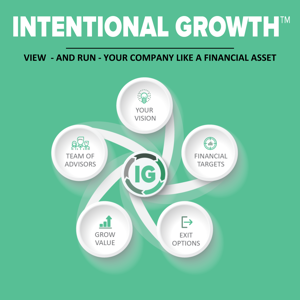
Intentional Growth™ is a podcast is a podcast for entrepreneurs and business owners wanting to view - and run - their company like a financial asset so they can have fun, create wealth, and make an impact. Truly make the entire journey of owning and running a company "worth it".