Intentional Growth

Intentional Growth

By Arkona - Intentional GrowthBusinessEntrepreneurshipInvestingManagement
Download on the App Store

Intentional Growth episodes

  • #283: The Lucky Formula: How to Stack the Odds in Your Favor to Cash in on Your Success with Mark Lachance
    Ever feel like some business owners “just get lucky?” Somehow they’re in the right position to receive a windfall or somehow get ahead of the next big thing, though their operations don’t seem to differ much from your own. Why don’t you see any lucky breaks? This amazing episode with Mister Lucky himself, Mark Lachance, will show you exactly how to get lucky—on purpose—using the methods he developed through bringing multiple platforms into billion-dollar earners. Mark was one of the founding members of both VersaPay Inc and Pivotal Payments, helping set the course for these financial heavy-hitters.
     
    In 2016, Mark successfully sold his last endeavor, EVO Payments International Canada—an end-to-end payment solutions provider and merchant acquirer which he founded in 2009 with only one employee. Currently, he is CEO of Maxy Media, a marketing agency that specializes in paid media on social platforms like Tik Tok, Instagram and Facebook. His ability to calculate and analyze risk, see the market for what it truly is and develop multiple platforms to capitalize on multiple markets makes him an excellent source of knowledge about marketing, blitzscaling and “getting lucky” in business. This episode is a story about how one entrepreneur kept taking strategic risks and the advice he has for other entrepreneurs ready to do the same.
     
    What You Will Learn
    Why Mark chose the Blitzscaling model in his marketing agency and how it paid off
    What the “Entrepreneur's Dilemma” is and how to overcome it
    Why it’s important to drop the entrepreneur ego
    Some breakthrough questions to ask yourself when it comes to dropping your ego and growing the business
    What it means to stack the odds in your favor
    Why just meeting people at conferences can open so many opportunities
    How Mark took one guy highly skilled in paid ads and created a marketing agency with over 300 employees
    Why Mark pivoted his marketing agency from a service business to a performance business
    Some strategies a service-based business can use to create a partial recurring revenue model
    Why Mark believed he should go from 30 employees to 100 in less than three months
     
    // USE YOUR FINANCIALS TO CLARIFY A PATH TOWARDS A MORE VALUABLE BUSINESS: Intentional Growth Financial Assessment
     
    Bio:
    Mark Lachance (Mister Lucky) is the CEO and Lead Investor of Maxy Media Inc., one of the largest TikTok, Facebook, Snapchat, and Google Display Network performance marketing agencies in the world. Mark is also the author of The Lucky Formula, a book that talks about what it means to stack the odds in your favor and reap the rewards from the success. Growing up in a hockey family, Mark started his career as a Hockey Sports Agent and quickly learned he needed a business that was simple to scale and had recurring revenue. Now Mark lives in Florida and has a goal to own the Florida Panthers Hockey Team.
     
    Quotes:
    05:02  - “We spoke about having a ‘why.’ My ‘why’ is to never have to work in construction, ever again.” - Mark Lachance
    09:40  - “Never literally go all in.” - Mark Lachance
    15:40  - “The first thing you learn when you walk in here (if you haven’t gone to one of these events, I highly recommend it) you learn that you’re the problem. You get hit in the face with a shovel, pretty much. The first thing Tony says is, ‘If your business is stuck, you’re the problem.’”
    52 min
  • #282: Leveling Up Your Business by Identifying Mental Blind Spots with Dr. Stacy Feiner
    If you have ever experienced the feeling of being overworked, miscommunicated with and unmotivated towards the greater vision, then this episode is for you.Dr. Stacy Feiner—a nationally-recognized innovative and business psychologist, leadership coach, and mentor—has helped hundreds of business owners identify their mental barriers and develop a plan to become a top performer. Today’s episode is a ruthlessly honest look at when business owners need business coaching and why putting it off will cost you.
    Dr. Feiner shares with us the inherent limitations that come with our own life experiences and how they impact the way we process what we’re experiencing now, from the deal table to a hard talk with our partner. We have mental blind spots where we can’t perceive a different perspective or experience properly, causing miscommunications and mismanagement of our lives and our businesses. This problem is more pervasive than we realize, but Dr. Feiner offers a solution in this episode. Are you ready to level-up your business?
     
    What You Will Learn
    How to identify and solve the 7 invisible mental blockers that could be holding you back
    Why it’s important to organize all your priorities into one “ecosystem” of 7 stakeholder groups
    The four components to strengthen your mindset to achieve the growth you want; psychology, talent, environment, and brain science
    The difference between therapy and coaching; are you striving to achieve more or stop the fall?
    Why self-awareness is a crucial attribute of top performers
    Why Psychology is the most sophisticated science for channeling human drive, talent and potential
    The four phases to optimize your own psychology to improve performance and achieve your goals faster
    How to execute a single strategy to align all aspects of your ecosystem
    Why Dr. Stacy compares business owners to triathletes and how an athletic coach mirrors a business coach
    The importance of understanding what you want from your business and why when it comes to hiring a coach
    How Dr. Feiner uses the lens of psychology to tap into the invisible dynamics that make people tick and groups click - and how you can too
     
    // USE YOUR FINANCIALS TO CLARIFY A PATH TOWARDS A MORE VALUABLE BUSINESS: Intentional Growth Financial Assessment
     
    Bio:
    Dr. Stacy Feiner is a nationally-recognized innovative psychologist known for leveling-up the output of elite performers and the complex systems they lead. Using the lens of psychology, Dr. Feiner taps the invisible dynamics that make people tick and groups click. In your ear and at your side, Dr. Feiner coaches you to achieve the results you want in all areas of your life.
     
    Quotes:
    06:39  - “[The private sector] is fragmented but we are the sixth largest economy in the world…We are a huge part of the economy.” - Dr. Stacy Feiner
    08:35  - “What’s really important is the notion of psychology seems to be still underrepresented in the conversation about human health.” - Dr. Stacy Feiner
    09:43  - “We have a need for belonging and we have a need for self-expression.” - Dr. Stacy Feiner
    10:50  - “I think of the idea of performance coaching and mentorship and therapy all about learning about oneself. I think the difference between therapy and coaching, for example, is that therapy is about protecting you from the fall and coaching is about the climb.” - Dr. Stacy Feiner
    22:40 - “You don’t have to relive painful exper
    1 hr 15 min
  • #281: David Lekach Sells Dream Water for $34.5 Million (Part 2: the Exit Story)
    In part two of this two part series, David Lekach dives deep into the details on why and how he sold Dream Water in 2018. The strategic buyer was a public cannabis company based in Canada, as well as one of Dream Water’s distributors. The unique relationship David had with the buyer was only one colorful part of the story… The buyer paid to do due diligence on David’s company! The deal process took months to complete and David even almost lost the entire deal the night before the wire transfer was supposed to be made. If you want a deep dive of the entire exit process, you do not want to miss this episode.
     
    What You Will Learn
    Why the sale of Dream Water was so emotional for David
    The negotiation strategies David used that resulted in the buyer paying for due diligence
    Why creating and writing up a Plan B in the Letter of Intent can align everyone and create a commitment to get a deal done
    Why David's intention when selling was never centered on money. It was all about making sure the deal was fair for everyone involved - including his employee’s
    How understanding the deal structure of an exit will get you what you want and help you better understand the emotions of selling your business
    David and Ryan’s thoughts on the value of technical knowledge vs. common sense when selling a company
    Why learning financial literacy will set you apart from all other entrepreneurs
    How David used psychology during the negotiation with the buyers
    Why David set money aside after the sale to say thank you to everyone who helped him—and why that was written into the deal structure
    What makes mentorship and coaching so important
    The ways transparency and clarity can alleviate stress from the exit process
     
    // USE YOUR FINANCIALS TO CLARIFY A PATH TOWARDS A MORE VALUABLE BUSINESS: Intentional Growth Financial Assessment
     
    Bio:
    David Lekach is an entrepreneur from Miami, Florida. In the early 2000s, David started Dream Water and managed to get his products into big box stores like Walmart, CVS, Publix and Safeway. After eight years of being the owner and operator of Dream Water, David sold his company to One Harvest, a Canadian cannabis company, for 34.5 million USD in 2018. Before launching Dream Products, David worked briefly as an investment banker. Prior to that, David served as the managing partner in a small Miami-based law firm, handling a variety of legal and business development consulting projects, including the structuring and general oversight of international real estate ventures worth more than $50 million and numerous consumer goods projects, ranging from licensing to product development engagements.
    Sin
    1 hr 21 min
  • #280: David Lekach Sells Dream Water for $34.5 Million (Part 1: the Growth Story)
    David Lekach is an entrepreneur from Miami, Florida and he got the entrepreneurial itch in the early 2000s when he was working as an investment banker in NYC and couldn’t fall asleep. To solve his own problem, David founded Dream Water - water-shot that is best described as the opposite of a five hour energy - and managed to get his products into big box stores like Duane Reed, Walmart, CVS, Publix and Safeway. After 8 years of being the owner and operator of DreamWater, David sold the company to One Harvest, a Canadian cannabis company for $34.5 Million in 2018.
    In this part one of our two part series, David talks about how he grew the company and his mindset along the way. In part two, we talk about what triggered him to sell the business. We dive into the nitty gritty of all the details of the process and how he structured the sale.
     
    What You Will Learn
    David’s thoughts on whether you are born an entrepreneur or whether you choose to be one
    Why David founded Dream Water and what it meant to him personally
    How understanding what “business you are really in” is crucial to scaling a company
    Why David did not invest heavily into manufacturing - even though his business was a product - and how that impacted his grow strategy
    How the impact on the world you are having with the business can be the thing that keeps you going even when things are hard
    How David got into some of the biggest box retail shops like WalMart, CVS and Duane Reed
    David’s thoughts on the importance of stopping to celebrate the wins
    Why David prioritized data management from day one and how he leveraged it to help him scale the company
    How David was able to keep the company lean while scaling the business
     
    // USE YOUR FINANCIALS TO CLARIFY A PATH TOWARDS A MORE VALUABLE BUSINESS: Intentional Growth Financial Assessment
     
    Bio:
    David Lekach is an entrepreneur from Miami, Florida. Once working as an investment banker, David had the entrepreneurial itch. In the early 2000’s David started DreamWater and managed to get his products into big box stores like Walmart, CVS, Publix and Safeway. After 8 years of being the owner and operator of DreamWater, David sold his company to One Harvest, a Canadian cannabis company for $34.5 Million in 2018.
    Since the sale of Dream Water in May 2018, he has helped several organizations across the CPG, cannabis, direct to consumer and Amazon platforms, and travel retail spaces with innovation, executive team building, legal and deal structuring, usually while taking on a variety of strategic development initiatives.
    Before its sale, David, founded and served as the Chief Executive Officer of Dream Products, LLC, which manufactures and markets Dream Water, a natural, 0-calorie 2.5oz liquid sleep shot that is also available in a powder format that you can take with or without water. As the architect of the company’s growth strategy, David was responsible for managing all aspects of the business including sales, marketing, manufacturing, and finance.
     
    Quotes:
    03:56 - “I don’t like to publicize the JD part because I like to say that, ‘If you think I’m an ***hole, I should earn it. Not just because I told you I’m an attorney.” - David Lekach
    08:21 - “[Entrepreneurs] don’t really know what we signed up for. And even if you’re a serial entrepreneur, every experience is different.” - David Lekach
    09:48 - “I think, for everyone’s own individual entrepreneurial journey, there’s external factors that impact that, sort of, three-pronged analysis. Because, to me

    1 hr 14 min
  • #279: How To Find, Hire and Retain a Rockstar Salesperson
    Does the thought of hiring a sales rockstar give you a stomachache? If so, you’re not alone. The anxiety can be a result of a huge variety of reasons; brand and reputation risk, paying people what you think is “too much”, designing the right compensation plans, company cash flow issues, and we can’t forget - the thought of dealing with the difficult personalities of the stereotypical “salesperson”. These are all valid reasons to have anxiety, but it doesn’t have to be this way and is not a good excuse to figure out what to do about it.
    On today’s show, we have Doug C. Brown on the show who talks about how to find, properly hire and engage top performing sales people. He draws on an extensive background and experience as the CEO of Business Success Factors where he has coached, consulted and advised thousands of people in business, as well as companies like Enterprise-Rent Car, Nationwide, Intuit, Proctor and Gamble, CBS television, and others. He has also served as an independent President of Sales and Training for companies run by Tony Robbins, Chet Holmes, and Russ Whitney. 
     
    What You Will Learn
    Doug’s view on how sales and marketing work together
    Why it’s GOOD if your top sales performer makes more money than anyone else in the company - even you, the owner!
    What to do with the salesperson’s resume during the interview process
    Why a top performing salesperson wouldn’t be happy with 20 hour weeks and $175,000
    How listening to your top sales performers can help you identify your next product or service
    The key features a top performing salesperson has and how to identify them in the hiring process
    What can make a top performing salesperson frustrated and how to deal with it
    Why it’s important to make room for the “mavericks” in your company processes and procedures
    Why you shouldn’t have to motivate a salesperson to get up and grind 
    Why it’s so important to keep consistency in your process of hiring salespeople
    What “Will to Sell” is and why it’s such an important characteristic to understand when hiring
    How to identify emotional resiliency with a sales person
    The measurable characteristics of a great salesperson who is able to close a deal
    Why it’s important to NOT hire your top producer as a manager
    Doug's strategic angle to find good, confident salespeople
     
    Bio:
    Doug C. Brown is a high
    59 min
  • #278: What is Strategic Planning & How is it Different from an Operating System Like EOS©? with Greg Meredith
    Do you have a strategic plan or a bunch of goals?
    Every business owner wants to grow their business, but very few have a written strategy on how they are going to use their company assets (both financial and nonfinancial) to create a high impact winning position. A clear and written strategic plan is completely different than a goal of growing from $5 million in revenue to $10 million in revenue.
     
    On today’s show, we have Greg Meredith - Founder of Simply Strategic™ - is on the show again to dive deeper into the essential components of an effective - and actionable - strategic plan and how it is different from goals or an operating system (e.g., EOS©). Greg breaks down the 9 Keystones of the Simple Strategic™ process and how it helps you identify your company’s strategy to beat your competitors and win market share — no matter how big your business is.
     
    What You Will Learn
    The definition of strategic planning and what is included in a strategic plan that is actionable
    The difference between strategic planning and an operating system like EOS© or Scaling Up
    How strategic planning and operating systems compliment each other if done right
    Why you need just one strategy that incorporates every aspect of your business
    The 9 Keystones of the Simply Strategic™ approach 
    What the difference between a guide and a facilitator is and why it’s crucial to know which one you are working with
    Different exercises that are in a strategic plan (e.g., the Ansoff Matrix) and how they help compare the tradeoffs between different ideas and strategies 
    Why strategic planning is an underutilized - yet extremely crucial - exercise every visionary needs to go through
    What the ‘opposite strategy’ exercise is and why it’s a great way to vet out ideas
    How to think about the process of incorporating your strategic plan into your company’s financials
    Bio:
    Greg Meredith is the Chief Strategy Guide at Simply Strategic in Dayton, Ohio. Simply Strategic is a network of strategy guides that bring knowledge and deep business insight to the table when business owners are looking to scale. Greg believes it’s important to be a guide and not a facilitator when working with high level executive clients. He also holds a Masters of Business Administration from The Ohio State University and a BSBA in Finance and Economics from Miami University.
     
    Quotes:
    07:49  - “What we say when we’re talking about strategic planning is, what we’re trying to do is create a compelling strategy. There’s a lot of activity that’s
    1 hr 13 min
  • #277: Lead from the Core: The 4 Principles for Profit and Prosperity with Jay Steinfeld, Founder of Blinds.com
    Blinds.com founder, Jay Steinfeld, bootstrapped his company — with only $3,000 in 1996 — to a sizable competitor of the big box shops like Home Depot, who acquired the company in 2014.
    Jay was an early adopter of this thing called “the internet” and transformed his small retail business into the world’s #1 online blinds retailer as well as the leading e-tailer of hard-to-buy custom categories of home goods. Jay intentionally designed a successful exit to Home Depot that included him staying on to run Blinds.com for an additional six years after acquisition.
    Jay is a passionate advocate and frequent speaker on how company culture and authentic core values drive profitable growth. Throughout his journey, Jay identified four principles that guided his decision making in every aspect of business and life which lead to his continuous happiness and success. He calls them the 4Es: evolve continuously; experiment without fear of failure; express yourself; and enjoy the ride. Jay just packaged up his experience and the 4Es into his new book, Lead from the Core: The 4 Principles for Profit and Prosperity which was just released.
    He thinks business owners need to stop asking themselves how little they can do for their employees before they quit and start wondering how much more they can do, and why this is a smarter strategy. This is an amazing episode that shows how caring for the people in your company will scale your business to heights you never thought possible.
     
    What You Will Learn
    How Jay shifted his mindset in his business after a personal tragedy
    Why it’s super important to understand what your employees want (including their personal goals)
    The four Es that that turned Jay’s business into a multi-million dollar company and competitor to Home Depot
    How to stay true to your purpose and the true north of your business, while still balancing the mechanics of your finances and shareholders
    Jay’s strategy behind going with private equity shortly before selling to Home Depot
    How he maintained an 8% turnover rate in his company
    Why Jay stayed on with his company for six years after he sold
    The importance of trying new things, in general, and how that transfers to your business life
    How intention led Jay to create his legacy
    Why Jay is so passionate about humanity in business
    The surprising motivation behind Jay today as he moves forward on five boards, some on the NYSE
     
    Bio:
    JAY STEINFELD founded and was the CEO of Global Custom Commerce, which operates the world’s number one online window covering retailer Blinds.com. Bootstrapped in 1996 for just $3000 from his Bellaire, Texas garage, Global Custom Commerce was acquired by The Home Depot in 2014. Jay remained as its CEO and later joined The Home Depot Online Leadership Team. After stepping away from these roles in early 2020, he has increased his involvement on numerous private company boards and serves as a director of the public company Masonite (NYSE: DOOR).
    He also teaches entrepreneurship at Rice University’s Jones Graduate School of Business and supports numerous charities. Jay is an Ernst and Young Entrepreneur of the Year and has earned a Lifetime Achievement Award from the Houston Technology Center. Active as an industry speaker on topics including corporate culture, core values, how to scale a start-up, and disruption, he has more than 100 published articles. Jay is passionate about adhering to his core values, which he calls the 4Es: evolve continuously; experiment without fear of failure; express yourself; and enjoy the ride. They have helped him make every business decision that led to his success and have turned into his new book, Lead from the Core: The 4 Principles for Profit and Prosperity
    1 hr 13 min
  • #276: Branding for Buyout with Ted Schlueter
    This week’s guest is the award-winning, brand-building entrepreneur, Ted Schlueter. Ted is the Founder and CEO of The Grist, a Boston-based brand and marketing agency, and is a pioneer in the world of pre-exit branding. Ted created, developed and refined the Branding For Buyout method over two decades and used it successfully on high-profile exits including Pop-Corners to PepsiCo and Embotics to swedish software enterprise, Snow. He just launched his book Branding for Buyout (which i loved and used the word intentional 3 times in the first 20 minutes)
    This episode is about a blind spot in the M&A market: branding. Ted Schlueter is an award winning, brand building entrepreneur. In this episode he talks about how increasing your EBITDA and multiple  is how your company is valued when valuing it through the lens of a financial valuation, but branding for buyout is how you are perceived to the market if you’re selling to a 3rd party, and increasing the perceived value your brand plays in the market can alone can raise your sale price when talking to third party buyers.
    Ted's work is all about branding for the future, looking at micro trends and positioning his clients as the authority in the space for the purpose of a buyout. Some companies will acquire others for their cash flow but some companies will purchase a company purely for their position and message in the marketplace. Ted thinks this is the future of M&A… listen to this interview and get exclusive insight on how to raise the value of your company through branding.
     
    What You Will Learn
    Branding for buyout versus marketing business as usual
    What aspect of business Ted thinks is missing from the M&A process
    What branding for the future means
    How branding and positioning can increase a company's baseline price - no matter the intrinsic value
    The importance of forecasts, thinking about the future critically and how you should plan
    Why you should predict the market based of customer needs versus what competitors are doing
    How long it can typically take to brand for a buyout
    The importance of creating hypothetical scenarios when planning an exit
    Why the M&A structure is due for a remodel
    Why Ted thinks branding will change the climate of M&A
     
    Bio:
    Ted Schlueter is an award winning, brand building entrepreneur. He’s the Founder and CEO of The Grist, a Boston-based brand and marketing agency, and is a pioneer in the world of pre-exit branding. Ted created, developed and refined the Branding For Buyout method over two decades and used it successfully on high-profile exits including Pop-Corners to PepsiCo and Embotics to swedish software enterprise, Snow. He just launched his book Branding for Buyout (which i loved and used the word intentional 3 times in the first 20 minutes)
     
    Quotes:
    08:17 - “I think marketing exists predominantly to see more of your product or service or technology to a customer.” - Ted Schlueter
    09:42 - “The last thing the buyer wants is to buy who and what you are today. They want to know what you’re going to be three, five, seven years and how it’s going to affect their business.” - Ted Schlueter
    32:15 - “Workforce by design wasn’t really a category; it was an integration solutions cell when everyone was selling the pieces.” - Ted Schlueter 
    36:50 - “Skate to where the puck will be, not to where the puck is.” - Ted Schlueter
    41:42 - “Naming and branding the technology and then sharing the experience of them using the product in real world environments. That definitely allotted eight or nine figures to the exit pric
    1 hr 10 min
  • #275: Peter Lehrman - Founder of Axial: The M&A and Capital Raising Platform for the Middle Market
    My guest today is Peter Lehrman the Founder and CEO of Axial, and we’re going to be talking about the market of buying and selling privately held companies, the inefficiencies as well as the progress.
    Peter is CEO and founder of Axial, responsible for delivering the company’s vision to become the trusted platform where private companies and their trusted advisors connect with capital. Prior to Axial, Peter worked in private equity at SFW Capital Partners and was part of the founding team at Gerson Lehrman Group, where he helped to build the company’s global technology platform for on-demand business expertise. He earned his undergraduate degree from the University of Virginia and received his MBA from Stanford Business School. He lives in New York with his wife Eve and their four children.
    If you’re a business owner thinking about selling for the first time, and you have no idea where to start, this episode is for you. There’s a ton of information out there about how and when to sell your company, but not all advice is weighted equal. Bad advice goes a long way to souring your view on selling your company. Let’s turn to a market expert who will share how to find and assess M&A advisors that align with your goals. Peter Lehrman is the Founder and CEO of Axial — a marketplace where small businesses can find their next M&A advisor, investor or buyer — and he’ll help clarify what areas you need to educate yourself in and how best to achieve that education in time to make a positive difference in the sales process. On today’s show, we talk about inefficiencies between the buyer and seller, the state of the marketplace and the trends with entrepreneurs through acquisition (ETAs) in the lower middle market space. This is an awesome episode full of smart insights into the booming market of mergers and acquisitions.
     
    What You Will Learn
    The inefficiencies in small business M&A and Peters solution
    The valuation process Peter takes when working with a small business
    The process of the buyers and sellers engagement within Axial
    Why it’s important to know what the buyer and sellers want and why right from the start of the deal
    How you can make more money as an M&A advisor in middle market organizations
    Why selling a bigger business can be easier than a smaller one
    The structural challenge with small businesses that Peter is striving to solve
    Why Peter sees ETA (entrepreneur through acquisition) as a growing category in the M&A industry and what that means for the M&A market
    The trends on the buyer’s side of an acquisition - and what a lot of acquisition entrepreneurs want and why
    How sellers have so many options in today's market dynamic do to the amount of investment capital right now
     
    Bio:
    Peter is CEO of Axial and responsible for driving the company’s vision to be the trusted platform where private companies connect with capital. Prior to Axial, Peter worked in private equity at SFW Capital Partners and was part of the founding team at Gerson Lehrman Group, where he helped build the company’s dominant global technology platform for on-demand business expertise. He earned his undergraduate degree from the University of Virginia and received his MBA from Stanford Business School.
     
    Quotes:
    12:01 - “The number one goal for Axial is to create a set of introductions for buyer and seller, at the right points in time, on the right opportunities, with the right types of buyers and the right types of sellers.” - Peter Lehrman
    16:38 - “I think we’ve made a huge leap forward in terms of the amount of people making content in the form of podcasts and books.”
    59 min
  • #274: From 0 to 13 Ace Hardware Stores and an ESOP: How Gina Schaefer has been Enjoying Work, Making an Impact and Creating Wealth by Being Intentional
    Gina Schaefer is a passionate entrepreneur, co-founder and CEO of 14 Co-op Ace Hardware stores located in Washington DC and the Baltimore area. Gina founded her business after noticing that there was a shortage of hardware stores in the lower income, urban neighborhoods of DC.
    After 18 years of growing her business to 13 stores and employing over 250 people she decided to sell her ownership to her employees via an ESOP. Gina was a brand new entrepreneur when she opened her first store- formerly in SaaS - when she started in her early 30s. This is a great story of someone who saw opportunity in a low income place and created a mission to change the lives of people through “a few cool hardware stores.”
     
    What You Will Learn
    Why Gina went left tech for Ace Hardware retail stores
    How Gina found a need in her community and leveraged it to create her hardware empire
    The difference between a co-op and a franchise
    How and why Gina made a mental shift from working in the business to working on the business - and what that means to her
    How Gina realized her core values - and specifically trust - were crucial when expanding and hiring
    Why hiring recovering addicts became part of Gina’s hiring and growth strategy
    How Gina’s hiring model can increase retention within a company
    Why trust is so important when scaling and what you can do to get past those barriers
    How realized she needed to start thinking about exiting her business and why the thought was surprising
    The power Gina gained when she started to understand valuations and more specifically the value of her business
    The reason Gina chose an ESOP compared to Private Equity or another Strategic Buyer
    How an ESOP helped Gina keep her company’s values and vision in place
    Why transitioning your role and exiting your ownership are two totally different things
     
    Bio:
    Gina is a retailer, entrepreneur, public speaker and employee advocate based out of Washington D.C. In just 18 years she has started, grew and partially sold her 14 Ace Hardware stores to an ESOP where her employees can create wealth and enjoy work. Gina is three months away from completing her book, “Recovery Hardware” When Gina has time to relax she writes greeting cards because she believes in the power of a hand written note.
     
    Quotes:
    07:33 - “We hear this in various parts of our lives, right? ‘I wish somebody would do this,’ and ‘I wish somebody would do that.’ And one day I just said, ‘Why can’t that somebody be me?’” - Gina Schaefer
    10:11 - “At its foundation, a purchasing co-op is a collective purchasing tool for independent retailers. It gives Ace the opportunity to go to… Milwaukee, for example, or Black and Decker or DAP and negotiates on behalf of all the Ace retailers.” - Gina Schaefer
    35:21 - “We had the ability to take that money, use it to open a new store, and pay ourselves back in future stock money.” - Gina Schaefer  
    39:11 - “People are afraid to talk about [how much their businesses are worth].” - Gina Schaefer
    41:31 - “She was bouncing off the walls! She was so excited to give us a tour. Partially because she was so excited to tell us that she was an owner of that damn brewery and they were an ESOP.” - Gina Schaefer
    43:48 - “No one opens an independent business with enough phone lines to handle a pandemic.” - Gina Schaefer
    47:04 - “That made us even more aligned with the idea of an ESOP because we felt like, if anything was going to help make a
    1 hr 3 min

About Intentional Growth

From the publisher's feed

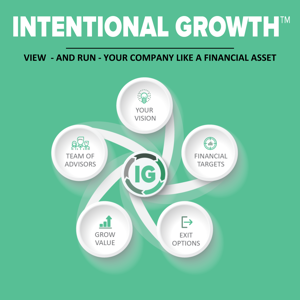
Intentional Growth™ is a podcast is a podcast for entrepreneurs and business owners wanting to view - and run - their company like a financial asset so they can have fun, create wealth, and make an impact. Truly make the entire journey of owning and running a company "worth it".