Intentional Growth

Intentional Growth

By Arkona - Intentional GrowthBusinessEntrepreneurshipInvestingManagement
Download on the App Store

Intentional Growth episodes

  • #182: The 8 Pillars of Trust that Will Accelerate or Destroy a Company with David Horsager
    David Horsager is on the show today because he is an expert on trust and how to build trust. He has more research than almost anyone out there on how trust impacts our economy and businesses. Today he shares his 8 pillars of trust and shows us examples of how we can incorporate them into our daily professional (and personal) lives.
    ​​Trust, not money is the currency of life. Businesses are built on people and relationships. Therefore, one could argue that building a reputation and culture of trust is the most important thing an entrepreneur could invest in.
     As a culture, we haven’t paid much attention to how important trust is in our lives (until lately where so many things are now transparent). Even as a company, trust can save us money, strengthen relationships, and create bonds with investors and clients. 
     Every value exchange is either made or broken based on each side's level of trust in each other. We have endless contracts, legal teams, software, due diligence, reviews, etc all in an effort to make sure we can validate what someone else promised. 
     Can you imagine how much more efficient our world would be if we knew we could trust the word of the person across from us!?
    What you will learn:
    The reason trust has become such a crucial part of our world
    The 8 pillars of trust
    The research that lead David to becoming the Trust expert
    How the presence of trust is a crucial and valuable asset to your business
     How to use the different areas of trust in your business, leadership role and life
     How the different pillars interact and what you can do to improve them
    How trust is incorporated into important decisions in your business
    Ways to take your ideas of trust and turn them into action
    The importance of being the same “on-stage” as you are “off-stage”
    How to rebuild trust if you lost it
    How to be a leader someone can trust
    Quotes
    02:50 - “It’s all about trust and your ability to follow through in your word.” - Ryan
    11:28 - “That’s when you know it’s your life’s passion too; when you can do it every day and not get sick of it.” - Ryan
    12:50 - “What’s the cost of having a lock on something? That’s the cost of trust.” - David
    14:00 - “A lack of trust really is the biggest cost, the biggest expense of a leader, an organization, a global government, etc.” - David
    Takeaway:
    It’s all about trust and your ability to follow through in your word. Everything is based on trust so the best thing you can do is understand these 8 pillars of trust. Incorporating trust in your culture and with your investors, will help create strong relationships.
    Links and Resources:
    David Horsager, website
    David Horsager, Twitter
    David Horsager, LinkedIn
    The Daily Edge: Simple Strategies to Increase Efficiency and Make an Impact Every Day by David Horsager, Amazon

    1 hr
  • #182: The 8 Pillars of Trust that Will Accelerate or Destroy a Company with David Horsager
    David Horsager is on the show today because he is an expert on trust and how to build trust. He has more research than almost anyone out there on how trust impacts our economy and businesses. Today he shares his 8 pillars of trust and shows us examples of how we can incorporate them into our daily professional (and personal) lives.
    ​​Trust, not money is the currency of life. Businesses are built on people and relationships. Therefore, one could argue that building a reputation and culture of trust is the most important thing an entrepreneur could invest in.
     As a culture, we haven’t paid much attention to how important trust is in our lives (until lately where so many things are now transparent). Even as a company, trust can save us money, strengthen relationships, and create bonds with investors and clients. 
     Every value exchange is either made or broken based on each side's level of trust in each other. We have endless contracts, legal teams, software, due diligence, reviews, etc all in an effort to make sure we can validate what someone else promised. 
     Can you imagine how much more efficient our world would be if we knew we could trust the word of the person across from us!?
    What you will learn:
    The reason trust has become such a crucial part of our world
    The 8 pillars of trust
    The research that lead David to becoming the Trust expert
    How the presence of trust is a crucial and valuable asset to your business
     How to use the different areas of trust in your business, leadership role and life
     How the different pillars interact and what you can do to improve them
    How trust is incorporated into important decisions in your business
    Ways to take your ideas of trust and turn them into action
    The importance of being the same “on-stage” as you are “off-stage”
    How to rebuild trust if you lost it
    How to be a leader someone can trust
    Quotes
    02:50 - “It’s all about trust and your ability to follow through in your word.” - Ryan
    11:28 - “That’s when you know it’s your life’s passion too; when you can do it every day and not get sick of it.” - Ryan
    12:50 - “What’s the cost of having a lock on something? That’s the cost of trust.” - David
    14:00 - “A lack of trust really is the biggest cost, the biggest expense of a leader, an organization, a global government, etc.” - David
    Takeaway:
    It’s all about trust and your ability to follow through in your word. Everything is based on trust so the best thing you can do is understand these 8 pillars of trust. Incorporating trust in your culture and with your investors, will help create strong relationships.
    Links and Resources:
    David Horsager, website
    David Horsager, Twitter
    David Horsager, LinkedIn
    The Daily Edge: Simple Strategies to Increase Efficiency and Make an Impact Every Day by David Horsager, Amazon
    59 min
  • #181: Selling a Company Twice: Once to a Strategic Buyer & Again 10 Years Later to a PE Firm
    80% of deals that go to market don't close. Gayle McCann defies all odds by selling their firm two times and to completely different buyers... and neither of the exits were planned. 
    Out of the blue offers happen all the time and the chances it works out as planned are very slim. This episode is a story about two out of the blue offers and how all the stars align more than once.
     Gayle shares what she and her husband, Pat, learned through each of the exits and what the process was like. In addition to that, Gayle and I talk about the different kinds of people it takes to run, sell, and buy back a business, and the different strategies Gayle and Pat used when they were running their business together.
     Tune into Gayle's journey on what it's like selling the same company to two different types of buyers. The more stories you hear of how people have grown and exited, the more you'll be able to intentionally grow your company with the end in mind.
    What you will learn:
    Gayle’s history and background
    How Gayle and her husband started and sold their business the first time to a strategic buyer
    What their attorney included in their sale agreement that allowed them to buy back the company four years after they sold it
    How Gayle's professional advisors structured the deals
    Stories on what it was like merging three agencies that were bought by the Private Equity fir
    What it's like working with three other companies and CEOs post-closing
    How Gayle and Pat were able to maintain a health marriage while staying business partners
    The differences between a Strategic Buyer and a Private Equity Firm exit
    Gayle’s experience, transitioning out of the business and handing off her role and clients
    Quotes
    “The more you learn about the different things available, the more you’re going to figure out what you want.” - Ryan
    “We did something very innovative, that no one else had ever done; we actually hired an underwriter from an insurance company because we wanted to focus on having a set-up of support people that were the top in their industry, that were going to give our clients A+, level 10 care.” - 
    “You don’t need--to live the life you want to, doesn’t take as much as people think.” - Ryan
    Takeaway:
    Learning from other people’s journeys can help you refine what you want. This will help you be able to approach the out-of-the-blue offers and your eventual growth plan with the knowledge to be able to create the options you want.
    Links and Resources:
    Gayle McCann, LinkedIn 
    ARKONA Boot Camp
    Reach out to me if you have questions about the boot camp! 
    You can also reach out to me via email at [email protected] or on my LinkedIn
    About Gayle:
    Gayle an experienced executive and entrepreneur with a demonstrated history of working in the employee benefits industry.
    57 min
  • #181: Selling a Company Twice: Once to a Strategic Buyer & Again 10 Years Later to a PE Firm
    80% of deals that go to market don't close. Gayle McCann defies all odds by selling their firm two times and to completely different buyers... and neither of the exits were planned. 
    Out of the blue offers happen all the time and the chances it works out as planned are very slim. This episode is a story about two out of the blue offers and how all the stars align more than once.
     Gayle shares what she and her husband, Pat, learned through each of the exits and what the process was like. In addition to that, Gayle and I talk about the different kinds of people it takes to run, sell, and buy back a business, and the different strategies Gayle and Pat used when they were running their business together.
     Tune into Gayle's journey on what it's like selling the same company to two different types of buyers. The more stories you hear of how people have grown and exited, the more you'll be able to intentionally grow your company with the end in mind.
    What you will learn:
    Gayle’s history and background
    How Gayle and her husband started and sold their business the first time to a strategic buyer
    What their attorney included in their sale agreement that allowed them to buy back the company four years after they sold it
    How Gayle's professional advisors structured the deals
    Stories on what it was like merging three agencies that were bought by the Private Equity fir
    What it's like working with three other companies and CEOs post-closing
    How Gayle and Pat were able to maintain a health marriage while staying business partners
    The differences between a Strategic Buyer and a Private Equity Firm exit
    Gayle’s experience, transitioning out of the business and handing off her role and clients
    Quotes
    “The more you learn about the different things available, the more you’re going to figure out what you want.” - Ryan
    “We did something very innovative, that no one else had ever done; we actually hired an underwriter from an insurance company because we wanted to focus on having a set-up of support people that were the top in their industry, that were going to give our clients A+, level 10 care.” - 
    “You don’t need--to live the life you want to, doesn’t take as much as people think.” - Ryan
    Takeaway:
    Learning from other people’s journeys can help you refine what you want. This will help you be able to approach the out-of-the-blue offers and your eventual growth plan with the knowledge to be able to create the options you want.
    Links and Resources:
    Gayle McCann, LinkedIn 
    ARKONA Boot Camp
    Reach out to me if you have questions about the boot camp! 
    You can also reach out to me via email at [email protected] or on my LinkedIn
    About Gayle:
    Gayle an experienced executive and entrepreneur with a demonstrated history of working in the employee benefits industry.
    56 min
  • #180: 6 Components to Creating a High Performing Sales Team (Ep.4 of Value Growth Series)
    We are on episode 4 of the Value Growth Series.
    Does the thought of hiring or managing a sales executive give you a stomachache? Then you have to listen in on today's episode.
    I’m chatting with Gary Braun about his experience scaling a business from $1MM to $400MM and how they did that through systematizing their sales force. Since then Gary and his bother started Pivotal Advisors, a sales management consulting firm, helping organizations assess and execute on their sales strategies. Today Gary explains the 6 components of a health sales organization and what you can do to systematize your sales... which help grow your company and make it more valuable!
    Growth Strategy
    People
    Process
    Measurement
    Rewards & Recognition
    Execution
    One of the biggest weaknesses that Gary sees in his decades of experience is the lack of training for sales leaders. Too often companies promote their "rain maker" to management and expect them to succeed without any training. We’re going to be debunking and demystifying what people often think are the common sales problems (performance, compensation plans, managing the "rain maker", hiring, etc.) and what you can do about it using the 6 components. 
    What you will learn:
    The 6 components that make up a high performing and sustainable sales organization
    How to systematize your sales organization just like any other department
    How to hire, retain and train a top sales executive
    How to eliminate your intimidation behind and building running a sales department 
    How to tie your sales forecast to your financial budget and strategic plan
    How to approach sales compensation plans (the dos and don'ts)
    How to identify and hire hunters vs farmers
    1 hr 4 min
  • #180: 6 Components to Creating a High Performing Sales Team (Ep.4 of Value Growth Series)
    We are on episode 4 of the Value Growth Series.
    Does the thought of hiring or managing a sales executive give you a stomachache? Then you have to listen in on today's episode.
    I’m chatting with Gary Braun about his experience scaling a business from $1MM to $400MM and how they did that through systematizing their sales force. Since then Gary and his bother started Pivotal Advisors, a sales management consulting firm, helping organizations assess and execute on their sales strategies. Today Gary explains the 6 components of a health sales organization and what you can do to systematize your sales... which help grow your company and make it more valuable!
    Growth Strategy
    People
    Process
    Measurement
    Rewards & Recognition
    Execution
    One of the biggest weaknesses that Gary sees in his decades of experience is the lack of training for sales leaders. Too often companies promote their "rain maker" to management and expect them to succeed without any training. We’re going to be debunking and demystifying what people often think are the common sales problems (performance, compensation plans, managing the "rain maker", hiring, etc.) and what you can do about it using the 6 components. 
    What you will learn:
    The 6 components that make up a high performing and sustainable sales organization
    How to systematize your sales organization just like any other department
    How to hire, retain and train a top sales executive
    How to eliminate your intimidation behind and building running a sales department 
    How to tie your sales forecast to your financial budget and strategic plan
    How to approach sales compensation plans (the dos and don'ts)
    How to identify and hire hunters vs farmers
    1 hr 3 min
  • #179: The Role of a CFO: See Into the Future With Your Business Financials (Ep.3 of Value Growth Series)
    Today we’re talking about the role of a CFO and how timely, accurate and useful financials can help you see into the future of your business and make your company more valuable
    I have with me, the co-founder and my business partner at Arkona, Pat Hobby. During his 25+ year career as an outsourced CFO, Pat has been a part of over a dozen acquisitions and is one of the most brilliant people I know.
    Don’t worry… if you think this episode sounds boring, think again. Pat breaks down what it takes to turn your company into a cash generating machine by putting together world class financials (in a way any Visionary can understand) and how they can take your company to the next level AND a higher valuation.
    Pat will be talking about how to take your income statements, tie them to your balance sheets, and then understand how your budgets and your cash flow statements should all tie together to reflect your strategic plan. We’re also talking about how to take the information, KPIs, and data you need in order to know if you and your business are moving in the right direction.
    Tune in. It’s worth it. ;-)
    What you will learn
    The difference between a true CFO and a Controller
    The 3 financial statements that should tie together to help you see the future
    How your strategic plan should be integrated into your financials
    What goes into a good company budget and how to start (even if that word gives you a stomach ache ;-)
    How to tie your sales forecast to your financial budget and strategic plan
    Some of the top KPIs to measure and monitor to ensure your company is moving in the right direction
    How to consistently measure EBITA, normalized EBITDA and cash flow
    What it can be like to manage your bank versus your bank managing you
    Quotes
    “Your financials should reflect how well you are doing in your strategic plan.” - Ryan
    “If you’re tracking the cash generated, based on sales, it should be around 20%. But if you see a trend where it’s gone from 20 to 10%, there’s something wrong.” - Pat
    Takeaway:
    Attend our ARKONA bootcamp. If you own a company, if you’re an entrepreneur, or if you run a company, you will be able to take the steps in this episode and apply it to so many different aspects and portions of your professional life. 
    Links and Resources:
    Pat Hobby, LinkedIn
    ARKONA Boot Camp
    Reach out to me if you have questions about the boot camp! 
    You can also reach out to me via email at [email protected] or on my LinkedIn
    About Pat:
    Before Pat Hobby became the co-founder of Arkona, LLC, he started with a background in accounting and numbers, as well as being the CFO of quite a few successful companies. Now both Pat and Ryan run ARKONA as well as the ARKONA bootcamp.
    We started Arkona with a mission to help entrepreneurs and business owners get clarity and control on how
    1 hr 9 min
  • #179: The Role of a CFO: See Into the Future With Your Business Financials (Ep.3 of Value Growth Series)
    Today we’re talking about the role of a CFO and how timely, accurate and useful financials can help you see into the future of your business and make your company more valuable
    I have with me, the co-founder and my business partner at Arkona, Pat Hobby. During his 25+ year career as an outsourced CFO, Pat has been a part of over a dozen acquisitions and is one of the most brilliant people I know.
    Don’t worry… if you think this episode sounds boring, think again. Pat breaks down what it takes to turn your company into a cash generating machine by putting together world class financials (in a way any Visionary can understand) and how they can take your company to the next level AND a higher valuation.
    Pat will be talking about how to take your income statements, tie them to your balance sheets, and then understand how your budgets and your cash flow statements should all tie together to reflect your strategic plan. We’re also talking about how to take the information, KPIs, and data you need in order to know if you and your business are moving in the right direction.
    Tune in. It’s worth it. ;-)
    What you will learn
    The difference between a true CFO and a Controller
    The 3 financial statements that should tie together to help you see the future
    How your strategic plan should be integrated into your financials
    What goes into a good company budget and how to start (even if that word gives you a stomach ache ;-)
    How to tie your sales forecast to your financial budget and strategic plan
    Some of the top KPIs to measure and monitor to ensure your company is moving in the right direction
    How to consistently measure EBITA, normalized EBITDA and cash flow
    What it can be like to manage your bank versus your bank managing you
    Quotes
    “Your financials should reflect how well you are doing in your strategic plan.” - Ryan
    “If you’re tracking the cash generated, based on sales, it should be around 20%. But if you see a trend where it’s gone from 20 to 10%, there’s something wrong.” - Pat
    Takeaway:
    Attend our ARKONA bootcamp. If you own a company, if you’re an entrepreneur, or if you run a company, you will be able to take the steps in this episode and apply it to so many different aspects and portions of your professional life. 
    Links and Resources:
    Pat Hobby, LinkedIn
    ARKONA Boot Camp
    Reach out to me if you have questions about the boot camp! 
    You can also reach out to me via email at [email protected] or on my LinkedIn
    About Pat:
    Before Pat Hobby became the co-founder of Arkona, LLC, he started with a background in accounting and numbers, as well as being the CFO of quite a few successful companies. Now both Pat and Ryan run ARKONA as well as the ARKONA bootcamp.
    We started Arkona with a mission to help entrepreneurs and business owners get clarity and control on how
    1 hr 8 min
  • #178: 10 Steps to Create a Strategic Plan and Increase the Value of Your Business (Ep.2 of Value Growth Series)
    Today’s episode is all about how to build a strategic plan which is value-growth-centric. There are 8 areas of your business that need to be both balanced and nurtured: planning, leadership, sales, marketing, people, operations, finance, and legal. You need to pay attention to each of these functional areas. The areas which are normally weakest or often neglected in businesses are the planning, finance, sales, and marketing areas. I’m talking with Greg Meredith today, to help by talking about strategic planning. We’ll be talking about the importance of having one, debunking some myths around it, and how you can develop one to help you and your business thrive.
    Greg has devised a plan which takes 10 steps, which will help you build the plan which will help your business grow and become more valuable. Even if you’re already trying to implement EOS or Rockafeller plan, these steps will help you develop a strategy you need before you can effectively use an EOS plan in order to implement your strategic plan.
    What you will learn:
    What is Greg’s background and experience?
    What is strategic planning?
    Why is strategic planning important?
    What are Greg’s 10 steps to devising a strategic plan?
    How can you implement these steps?
    What is the difference between goals and strategies?
    Quotes
    “Strategic planning is the process by which you come up with compelling strategies.” - Greg
    “Too many times, I’ve seen it where it’s a passion or an interest of the owner so they just keep doing it, but it’s the Sunk-Cost Fallacy.”  - Ryan 
    Takeaway:
    There are 8 areas of your business that need to be both balanced and nurtured: planning, leadership, sales, marketing, people, operations, finance, and legal. You need to pay attention to each of these functional areas. The areas which are normally weakest or often neglected in businesses are the planning, finance, sales, and marketing areas. 
    Look at your strategies and apply the Opposite Rule: if the opposite of your strategy is absurd, you need to keep working. For example, if your strategy is to “hire great people”, the opposite is to “hire terrible people”. That’s not a strategy, that is absurd. No one would ever do that.
    Links and Resources:
    Greg Meredith, LinkedIn
    Greg Meredith, email: [email protected]
    ARKONA Boot Camp
    Reach out to me if you have questions about the boot camp! 
    You can also reach out to me via email at [email protected] or on my
    1 hr 7 min
  • #178: 10 Steps to Create a Strategic Plan and Increase the Value of Your Business (Ep.2 of Value Growth Series)
    Today’s episode is all about how to build a strategic plan which is value-growth-centric. There are 8 areas of your business that need to be both balanced and nurtured: planning, leadership, sales, marketing, people, operations, finance, and legal. You need to pay attention to each of these functional areas. The areas which are normally weakest or often neglected in businesses are the planning, finance, sales, and marketing areas. I’m talking with Greg Meredith today, to help by talking about strategic planning. We’ll be talking about the importance of having one, debunking some myths around it, and how you can develop one to help you and your business thrive.
    Greg has devised a plan which takes 10 steps, which will help you build the plan which will help your business grow and become more valuable. Even if you’re already trying to implement EOS or Rockafeller plan, these steps will help you develop a strategy you need before you can effectively use an EOS plan in order to implement your strategic plan.
    What you will learn:
    What is Greg’s background and experience?
    What is strategic planning?
    Why is strategic planning important?
    What are Greg’s 10 steps to devising a strategic plan?
    How can you implement these steps?
    What is the difference between goals and strategies?
    Quotes
    “Strategic planning is the process by which you come up with compelling strategies.” - Greg
    “Too many times, I’ve seen it where it’s a passion or an interest of the owner so they just keep doing it, but it’s the Sunk-Cost Fallacy.”  - Ryan 
    Takeaway:
    There are 8 areas of your business that need to be both balanced and nurtured: planning, leadership, sales, marketing, people, operations, finance, and legal. You need to pay attention to each of these functional areas. The areas which are normally weakest or often neglected in businesses are the planning, finance, sales, and marketing areas. 
    Look at your strategies and apply the Opposite Rule: if the opposite of your strategy is absurd, you need to keep working. For example, if your strategy is to “hire great people”, the opposite is to “hire terrible people”. That’s not a strategy, that is absurd. No one would ever do that.
    Links and Resources:
    Greg Meredith, LinkedIn
    Greg Meredith, email: [email protected]
    ARKONA Boot Camp
    Reach out to me if you have questions about the boot camp! 
    You can also reach out to me via email at [email protected] or on my
    1 hr 6 min

About Intentional Growth

From the publisher's feed

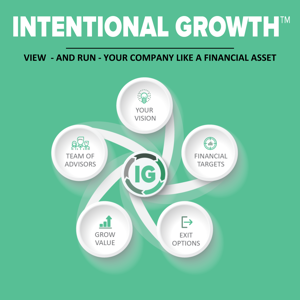
Intentional Growth™ is a podcast is a podcast for entrepreneurs and business owners wanting to view - and run - their company like a financial asset so they can have fun, create wealth, and make an impact. Truly make the entire journey of owning and running a company "worth it".