Intentional Growth

Intentional Growth

By Arkona - Intentional GrowthBusinessEntrepreneurshipInvestingManagement
Download on the App Store

Intentional Growth episodes

  • #187: Buyer's Buy for Their Own Reasons - Why You Should Be Happy With the 1st Bite of the Apple
    Understanding the real reason WHY a buyer is willing to sit across the table from you and write you a big check is THE most important thing you can do.
     
    Today Todd Eberhardt is on the podcast sharing with us how he boot strapped a company with his partner into a multimillion dollar company (named Comm-Works) that maintained double-digit growth for years and why/how they eventually sold to a Private Equity Firm.Todd shares his challenges with rapid growth, buying out a partner, a few failed attempts to sell the business and then how they finally chose their private equity buyer. Post closing, the story unfolded differently than Todd intended (both financially and ultimately with his role) and he is on the show to share with us everything he learned so you can better understand how to:
    do as much reverse due diligence on the potential buyer as you possible can to figure out WHY they want the business and what they plan on doing with it,
    align what they buyer what's with your business with what is important do you (personally and financially)
    get as much money up front as you can and make sure you are comfortable with that number in case things don't go as planned post closing. 
    Great quote from Todd in the interview:“People buy for their own reasons and, you know, you need to figure that out when you’re making a sale because, in my experience, as an owner and working with dozens and dozens and dozens of other owners that go through it, when you strip everything else away, there are two things that become important. Once is certainly the size of the check. The other is the legacy that you’re leaving behind.” - Todd Eberhardt
    What you will learn:
    Lesson’s learned from double digit growth and a sale to a private equity firm
    What could happen after the sale even if you roll equity
    Why companies buy for their own reasons
    How to be mindful of what creates long term value
    Why a growing company is a hungry animal for cash
    Where to invest your cash to create a higher valuation
    Why “letting go” and delegating to management fuels growth
    Why thinking about taking the chips off the table in the middle of double-digit growth is a good idea
    Why doing your due diligence on investment bankers is important
    Why you should be happy with “the first bite at th
    1 hr 18 min
  • #187: Buyer's Buy for Their Own Reasons - Why You Should Be Happy With the 1st Bite of the Apple
    Understanding the real reason WHY a buyer is willing to sit across the table from you and write you a big check is THE most important thing you can do.
     
    Today Todd Eberhardt is on the podcast sharing with us how he boot strapped a company with his partner into a multimillion dollar company (named Comm-Works) that maintained double-digit growth for years and why/how they eventually sold to a Private Equity Firm.Todd shares his challenges with rapid growth, buying out a partner, a few failed attempts to sell the business and then how they finally chose their private equity buyer. Post closing, the story unfolded differently than Todd intended (both financially and ultimately with his role) and he is on the show to share with us everything he learned so you can better understand how to:
    do as much reverse due diligence on the potential buyer as you possible can to figure out WHY they want the business and what they plan on doing with it,
    align what they buyer what's with your business with what is important do you (personally and financially)
    get as much money up front as you can and make sure you are comfortable with that number in case things don't go as planned post closing. 
    Great quote from Todd in the interview:“People buy for their own reasons and, you know, you need to figure that out when you’re making a sale because, in my experience, as an owner and working with dozens and dozens and dozens of other owners that go through it, when you strip everything else away, there are two things that become important. Once is certainly the size of the check. The other is the legacy that you’re leaving behind.” - Todd Eberhardt
    What you will learn:
    Lesson’s learned from double digit growth and a sale to a private equity firm
    What could happen after the sale even if you roll equity
    Why companies buy for their own reasons
    How to be mindful of what creates long term value
    Why a growing company is a hungry animal for cash
    Where to invest your cash to create a higher valuation
    Why “letting go” and delegating to management fuels growth
    Why thinking about taking the chips off the table in the middle of double-digit growth is a good idea
    Why doing your due diligence on investment bankers is important
    Why you should be happy with “the first bite at th
    1 hr 16 min
  • #186: 3 ways to Tap into Local City Incentive Packages to Fuel Your Growth (Labor, Capital & Tax Credits)
    If you want to learn how to monetize your growth instead of giving your soul (and company) to an investor or bank, then this episode is a must listen to. 
    Justin Erickson from EsseX Capital explains how local cities outside of major metropolitan areas are looking to attract smaller privately held companies into their communities… and they’re willing to put their money where their mouth is.  
    Why? 
    Smaller cities are looking for ways to stimulate their local economy through job growth and new developments. They are attracting businesses by helping find labor, giving very attractive real estate incentives (tax credits, renovation funding, capital, etc.) and even forgivable business loans.
    You might be thinking that you need to pick up and move yourself, however that is not the case. There are very logical ways to tap into these hidden markets and funds in a way that makes sense for you and your business. Justin explains how these strategies apply to a business with a few remote workers at a service company up to a manufacturer looking to expand their footprint. 
     I am a huge fan of creativity and learning unconventional ways to tap into savings and capital sources… and this interview sheds some light on strategies I think very few entrepreneurs know of.
    I’ve realized that--more than “life after business”--this podcast is about being intentional and growing your business so you can have more options and more freedom in your journey. So my question is, if the name of the podcast changes from “Life After Business” to “Intentional Growth: How to Grow the Value of Your Business with an End in Mind”, would that throw you for a loop? The topics and content would still be the same, the only difference would be the title.
    Your opinion is so important to me. Please reach out to me if you have any questions or comments.  You can contact me via email at [email protected], on my LinkedIn, or you can call me at 612-720-6530.
    What you will learn:
    The 3 ways you can tap into local governments to fuel your company’s growth
    Why smaller cities are coming to the table with great incentives for smaller private companies
    How to monetize your growth instead of giving up equity or personally guaranteeing your live away
    Why you should look at a smaller community for your next location / relocation
    How to find an untapped labor pool that is ready to work hard
    How smaller communities are using small private companies to fuel their economies
    Why you should look at a local city for capital
    How cities are using tax incentives to entice companies to build in their community
    How local communities are using forgivable loans to attract companies into their city
    How to use a company like EsseX to do all the research and analysis for you for free
    Where the incentives coming from and how they work
    Quotes:
    “I tell the company, ‘You don’t have to. I can do the legwork. I can find the options for you. And I can bring the communities to you, physically or otherwise.’” – Justin Erickson
    “It is fun to see the impact beyond, just engaging with companies, and clien
    1 hr 15 min
  • #185: 5 Buyers, the Ability to Walk Away at Any Moment, and a Final $12.5M all Cash Deal
    This week’s guest was a lively, truthful, and colorful entrepreneur, Steve Prefontaine. Steve partnered with his dad 25 years ago and bought Skaff Cryogenics, where they purchased, rehabbed and sold large cryogenic tanks (essentially HUGE yeti’s as Steve put it).
    The business was only doing $500,000 at the time they took over in the 90s and recently sold it for $12,500,000 in an all cash deal to a public company.
    Steve shares with us how they grew the company and his approach to busienss… keep a “real real tight and simple business and pay down debt”.
    Around 10 years before they sold, they asked themselves “what do we want from this business”. Their question helped shape their move to go national, build out a trailer leasing business, pick up an international partner and more.
    Along their journey they got random offers, took the company to market (then took it off), doubled down on their growth strategy, paid down an insane about of debt and finally pinned 5 competitors against each other to ultimately sell to Chart.
    Steve had the ability to walk away from all the offers and continue making money for another 15 years but because of his leverage he was able to pick the exact buyer that he wanted with an all cash deal… while being himself every step of the way (and even to this day while he works at Chart).  
    Listen in to hear how your ability to walk away can be your biggest asset.
    What you will learn:
    Why a “real tight and simple” business sold for $12,500,000 all cash up front
    How Steve partnered with Dad for 25 years in 3 companies and never fought
    Why complete devotion to customer service made Skaff appealing and valuable to the competition
    Why building out the leasing business from the repair business helped with cash flow and viability of the repair business
    How loyalty to employees paid off right before they sold the company
    Why Steve decided to take the company off the market to double down on growth
    How paying down debt played into their business strategy
    Why 5 competitive buyers came to the table to bid on Skaff
    Why having the ability to “walk away” was Steve’s biggest asset
    How Steve negotiated directly with the CEO of a public company to close the deal
    The Takeaway:
    If you want to do what you want, when you want and how you want, you have to grow a valuable business that others envy, kicks out cash and also gives you the flexibility to do what you want.
    Resources:
    Steven Prefontaine, LinkedIn
    Skaff Cryogenics, website
    Chart, website
    ARKONA Boot Camp
    Reach out to me if you have questions about the boot camp! 
    You can also reach out to me via email at [email protected], on my LinkedIn, or you can call me at 612-720-6530.
    Quotes:
    72:34 – “A lot of my stress, and a lot of entrepreneurs are probably

    1 hr 25 min
  • #185: 5 Buyers, the Ability to Walk Away at Any Moment, and a Final $12.5M all Cash Deal
    This week’s guest was a lively, truthful, and colorful entrepreneur, Steve Prefontaine. Steve partnered with his dad 25 years ago and bought Skaff Cryogenics, where they purchased, rehabbed and sold large cryogenic tanks (essentially HUGE yeti’s as Steve put it).
    The business was only doing $500,000 at the time they took over in the 90s and recently sold it for $12,500,000 in an all cash deal to a public company.
    Steve shares with us how they grew the company and his approach to busienss… keep a “real real tight and simple business and pay down debt”.
    Around 10 years before they sold, they asked themselves “what do we want from this business”. Their question helped shape their move to go national, build out a trailer leasing business, pick up an international partner and more.
    Along their journey they got random offers, took the company to market (then took it off), doubled down on their growth strategy, paid down an insane about of debt and finally pinned 5 competitors against each other to ultimately sell to Chart.
    Steve had the ability to walk away from all the offers and continue making money for another 15 years but because of his leverage he was able to pick the exact buyer that he wanted with an all cash deal… while being himself every step of the way (and even to this day while he works at Chart).  
    Listen in to hear how your ability to walk away can be your biggest asset.
    What you will learn:
    Why a “real tight and simple” business sold for $12,500,000 all cash up front
    How Steve partnered with Dad for 25 years in 3 companies and never fought
    Why complete devotion to customer service made Skaff appealing and valuable to the competition
    Why building out the leasing business from the repair business helped with cash flow and viability of the repair business
    How loyalty to employees paid off right before they sold the company
    Why Steve decided to take the company off the market to double down on growth
    How paying down debt played into their business strategy
    Why 5 competitive buyers came to the table to bid on Skaff
    Why having the ability to “walk away” was Steve’s biggest asset
    How Steve negotiated directly with the CEO of a public company to close the deal
    The Takeaway:
    If you want to do what you want, when you want and how you want, you have to grow a valuable business that others envy, kicks out cash and also gives you the flexibility to do what you want.
    Resources:
    Steven Prefontaine, LinkedIn
    Skaff Cryogenics, website
    Chart, website
    ARKONA Boot Camp
    Reach out to me if you have questions about the boot camp! 
    You can also reach out to me via email at [email protected], on my LinkedIn, or you can call me at 612-720-6530.
    Quotes:
    72:34 – “A lot of my stress, and a lot of entrepreneurs are probably
    1 hr 24 min
  • #184: Agile M&A: Master the Process of Buying or Selling a Company to Close Faster and Maximize Value
    If the "project" of acquiring a company is managed correctly, due diligence will be easier, closing the transaction will be faster and integration will be more fruitful for both the buyer and the seller. Kison Patel is on the show today to share stories about billion dollar acquisitions being done on spreadsheets and why the Merger and Acquisition industry needs to catch up to the 21st century. Kison is the founder of DealRoom (an M&A project management software) and has been through countless transactions himself that add up top hundreds of millions of dollars over his tenure, and it showed him how inefficient the actual process of acquiring and integrating a company is. He explains how AGILE (a project management methodology that originated from the software industry) can help close deals faster and maximize the value post closing by getting all the stakeholders on both sides (executives teams, advisors, etc.) on the same page.An AGILE approach can help keep the deal on track as things change, more people get involved and information flows (and tee up post closing integration to hit the ground running).
    What you will learn:
      Why the M&A industry is falling behind and how technology and innovation can help
     Why the traditional selling/acquisition process isn’t always a smooth process
    The evolution of managing the project of acquiring / selling a business 
    How to get all the stakeholders involved in selling/buying a business on the same page
    Why the post-closing integration team should be involved in due diligence
    How the software industry and the AGILE method of project management can be applied to M&A
     How to close deals faster and maximize the value post-closing for both the buyer and seller
     
    Resources/Links:
    Agile M&A, website
    DealRoom, website
    The Agile M&A Practitioner’s Guide, Kison Patel, website
    Kison Patel, email: [email protected]
    ARKONA Boot Camp
    Reach out to me if you have questions about the boot camp! 
    You can also reach out
    1 hr 1 min
  • #184: Agile M&A: Master the Process of Buying or Selling a Company to Close Faster and Maximize Value
    If the "project" of acquiring a company is managed correctly, due diligence will be easier, closing the transaction will be faster and integration will be more fruitful for both the buyer and the seller. Kison Patel is on the show today to share stories about billion dollar acquisitions being done on spreadsheets and why the Merger and Acquisition industry needs to catch up to the 21st century. Kison is the founder of DealRoom (an M&A project management software) and has been through countless transactions himself that add up top hundreds of millions of dollars over his tenure, and it showed him how inefficient the actual process of acquiring and integrating a company is. He explains how AGILE (a project management methodology that originated from the software industry) can help close deals faster and maximize the value post closing by getting all the stakeholders on both sides (executives teams, advisors, etc.) on the same page.An AGILE approach can help keep the deal on track as things change, more people get involved and information flows (and tee up post closing integration to hit the ground running).
    What you will learn:
      Why the M&A industry is falling behind and how technology and innovation can help
     Why the traditional selling/acquisition process isn’t always a smooth process
    The evolution of managing the project of acquiring / selling a business 
    How to get all the stakeholders involved in selling/buying a business on the same page
    Why the post-closing integration team should be involved in due diligence
    How the software industry and the AGILE method of project management can be applied to M&A
     How to close deals faster and maximize the value post-closing for both the buyer and seller
     
    Resources/Links:
    Agile M&A, website
    DealRoom, website
    The Agile M&A Practitioner’s Guide, Kison Patel, website
    Kison Patel, email: [email protected]
    ARKONA Boot Camp
    Reach out to me if you have questions about the boot camp! 
    You can also reach out
    59 min
  • #183: Growth Consumes Capital: How David Grew from $0 to $50M then Acquired 14 Companies and Sold to a Strategic Buyer
    David Tramontana started a healthcare business (Home Care by Black Stone) back in the ’90s. It grew from 2 employees to nearly 2000 employees and from $0 in revenue to over $50 million in revenue.Today we’re talking about his challenges in growing and how growth consumes capital, his experiences with bringing on investors, and the dynamics of planning for distributions for the investors while you’re growing.
    The big question is: do you reinvest your EBITA to grow a valuable business (long term) or do you create your company to create distributions for yourself so you can live your best life (however, at some point, you will be sacrificing value creation for annual distribution)?
    Don’t just go grab an investor or a private equity firm because you can’t afford to grow. Instead, sit down and make a plan for your finances and understand your value. Everyone has different motives and you want to make sure that you intentionally get what you want.
    What you will learn:
    How David started the company from 2 employees to $50 Million and 2,000
    What it was like going through two rounds of capital raises in order to fuel growth
    The trials and tribulations involved in growing so quickly and so much
    How 14 acquisitions helped David the business from $20M to $50M
    How strategic planning helped navigate the changing industry and Obamacare 
    David’s experiences working with investors
    What it was like shifting focus from an income business to a growth business
    Managing expectations of distributions versus long term value creation
    What it was like trying to sell the business over 12 months and why they took it off the market
    Why David choose to sell for over $40 Million to a strategic buyer (public company)
    What is it like being on the selling side after acquiring so many different businesses How David is able to reconcile the financial from the emotional aspects of business
    Quotes:
    “Should you reinvest your EBITA to grow a value long term, or do you want to create a business that has good cash flow where you can take the distributions (but at some point, you’re going to be sacrificing value creation for annual distribution)? It’s always give or take because growth consumes capital.” - Ryan Tansom
    “Everybody was either going for the private pay (in the personal care side cause it had higher margins) or they had a sales team going after the skilled cause they had good margins. And we took the low margin but steady cash flow, Medicaid business, and then coordinated their care with the skilled care and it was an area where we didn’t have a lot of competition so we were very successful in the [...] market and so we took it to Cincinnati and we just kept going with it.” - David Tramontana 
    Takeaway:
    The big question is, do you reinvest your EBITA to grow a valuable business (long term) or do you create your company to create distributions for yourself so you can live your best life (however, at some point, you will be sacrificing value creation for annual
    1 hr 4 min
  • #183: Growth Consumes Capital: How David Grew from $0 to $50M then Acquired 14 Companies and Sold to a Strategic Buyer
    David Tramontana started a healthcare business (Home Care by Black Stone) back in the ’90s. It grew from 2 employees to nearly 2000 employees and from $0 in revenue to over $50 million in revenue.Today we’re talking about his challenges in growing and how growth consumes capital, his experiences with bringing on investors, and the dynamics of planning for distributions for the investors while you’re growing.
    The big question is: do you reinvest your EBITA to grow a valuable business (long term) or do you create your company to create distributions for yourself so you can live your best life (however, at some point, you will be sacrificing value creation for annual distribution)?
    Don’t just go grab an investor or a private equity firm because you can’t afford to grow. Instead, sit down and make a plan for your finances and understand your value. Everyone has different motives and you want to make sure that you intentionally get what you want.
    What you will learn:
    How David started the company from 2 employees to $50 Million and 2,000
    What it was like going through two rounds of capital raises in order to fuel growth
    The trials and tribulations involved in growing so quickly and so much
    How 14 acquisitions helped David the business from $20M to $50M
    How strategic planning helped navigate the changing industry and Obamacare 
    David’s experiences working with investors
    What it was like shifting focus from an income business to a growth business
    Managing expectations of distributions versus long term value creation
    What it was like trying to sell the business over 12 months and why they took it off the market
    Why David choose to sell for over $40 Million to a strategic buyer (public company)
    What is it like being on the selling side after acquiring so many different businesses How David is able to reconcile the financial from the emotional aspects of business
    Quotes:
    “Should you reinvest your EBITA to grow a value long term, or do you want to create a business that has good cash flow where you can take the distributions (but at some point, you’re going to be sacrificing value creation for annual distribution)? It’s always give or take because growth consumes capital.” - Ryan Tansom
    “Everybody was either going for the private pay (in the personal care side cause it had higher margins) or they had a sales team going after the skilled cause they had good margins. And we took the low margin but steady cash flow, Medicaid business, and then coordinated their care with the skilled care and it was an area where we didn’t have a lot of competition so we were very successful in the [...] market and so we took it to Cincinnati and we just kept going with it.” - David Tramontana 
    Takeaway:
    The big question is, do you reinvest your EBITA to grow a valuable business (long term) or do you create your company to create distributions for yourself so you can live your best life (however, at some point, you will be sacrificing value creation for annual
    1 hr 3 min

About Intentional Growth

From the publisher's feed

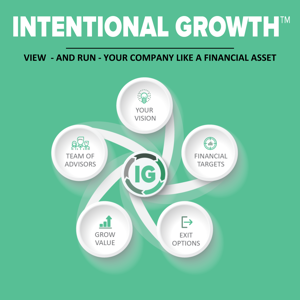
Intentional Growth™ is a podcast is a podcast for entrepreneurs and business owners wanting to view - and run - their company like a financial asset so they can have fun, create wealth, and make an impact. Truly make the entire journey of owning and running a company "worth it".