Intentional Growth

Intentional Growth

By Arkona - Intentional GrowthBusinessEntrepreneurshipInvestingManagement
Download on the App Store

Intentional Growth episodes

  • #373: The Power of Entanglement: How Companies Can Surpass Employee Engagement and Outperform the Competition with Tom Walter
    Launching and sustaining a successful business transcends merely mastering the financial and operational dimensions. It's an expedition into understanding the heartbeats of both customers and employees, as people form the cornerstone of any enterprise.
    My enlightening conversation with Tom Walter illuminates this journey, showcasing his extensive business wisdom accrued over time.
    In this episode, I delve into Tom's compelling narratives about the intrinsic tether between a robust company culture and the thriving pulse of business success.
     
    INTERVIEW QUOTES:
    07:48 - “I had a passionate hatred for bosses.” - Tom Walter
    21:15 - “He pulled a card out of his pocket and handed it to me. It was the core values of the company. He said, ‘This is what makes us different and unique.’ And he said, ‘This is why I want to work here.’” - Tom Walter
    36:15 - “Employee engagement is the emotional commitment an employee has to its organization's values, vision, and mission.” - Tom Walter
    37:47 - “The biggest enemy for discretionary thoughts (from an employee and employee engagement) is disruptors.” - Tom Walter
    39:05 - “I never [heard you] talk about the rules you set up, just the outcomes.” - Tom Walter
    45:05 - “I don’t think most employees want an ESOP. I think what most employees want is the privilege of being an owner. And that means money.” - Tom Walter
     
    INTENTIONAL GROWTH™ RESOURCES:
    Intentional Growth™ Podcast Archives: Archive of 356+ episodes and counting. Get access to the entire library HERE. We'll be adding a searchable tagging feature later on this year.
    IG Financial Scorecard: Get your Intentional Growth™ Score that grades you on how well you are viewing - and running your business like a financial asset. Get your results and 5 case study videos HERE.
    Intentional Growth™ Academy: 71 Videos, 9.5 hours of content, 20+ exercises. $995 for subscribers [normally $1,495] HERE
    Q4 Nov. 2024 Intentional Growth™ Boot Camp: Two-day workshop with 25 other owners on November 8th and 9th in Minnesota at Bethel University. Learn more HERE.
    Minnesota CEO Exchange: Content + Panel, Networking, and Happy Hour with 100 Entrepreneurs. Mark your calendar, it's September 20th. Topic and location TBD. We'll keep you posted and let you know mid July.
    Q3 2023 Economic and M&A Update: with ITR Economics, ButcherJoseph, and the National Center for the Middle Market HERE
    1 hr 16 min
  • #372 - Buying Companies, Growing Value, & Achieving a High Value Exit with Walker Diebel and Nick Bradley
    In this interview with Walker Deibel and Nick Bradley we break down complex topics like business valuations, private equity, and exit strategies into digestible segments, providing valuable insights and practical advice for aspiring entrepreneurs and investors in navigating the intricate landscape of M&A. Through shared experiences and thoughtful analysis, this podcast conversation aims to demystify the realm of M&A and highlight the potential opportunities for owners to create wealth, enjoy work, and make an impact, to truly make owning a company worth it.
    Key Takeaways
     
    1. Valuation and Viewing Companies as Assets: The episode emphasizes the importance of accurately valuing companies and viewing them as leverageable assets for wealth and fulfillment. Entrepreneurs are provided with insights to understand intrinsic financial value and avoid common valuation pitfalls.
     
    2. Acquisition Entrepreneurship and Private Equity Dynamics: Walker Deibel highlights acquisition entrepreneurship as a rewarding strategy, and the dynamics of private equity are explored, revealing strategies for negotiations with sophisticated buyers. The discussions shed light on the pressures and incentives for PE firms and their focus on higher success rates.
     
    3. Exit Strategies and True Value of Exits: The podcast offers a comparison between IPOs and private equity exits, exploring the constraints and appeals of each. It elucidates that the real value of exits may not always be wealth accumulation but the strategic advantages brought by the new proprietor.
     
    // Sign up for the Intentional Growth™ Starter Kit: the kit has intro videos on each of the 5 Intentional Growth™ Principles, the Intentional Growth™ Financial Scorecard along with videos reviewing a case study on how to project out the value of your company, and the entire Intentional Growth™ Podcast Library.
    //WATCH THE INTERVIEW ON YOUTUBE: Intentional Growth™ Podcast
     
    Interview Quotes:
    23:04 - “There’s a figure that your business is worth now, and a figure that your business could be worth.” - Nick Bradley
    23:31 - “If your objective is to build a unicorn, you know, a business that's valued over a billion dollars, that's a pretty stupid objective.” - Nick Bradley
    34:29 - “Like there's this little lie that's going on out there, which is like, hey, I know you've never bought a business before. However, everything that you've done in your life up until right now has prepared you to buy a business right now.” - Walker Deibel
    59:39 - “It's not uncommon for a firm partner to be close to taking home a million bucks a year.” - Nick Bradley
    1:01:00 - “We lost out to a private equity firm in Germany was a 36 times on EBITDA.” - Nick Bradley
     
    RESOURCES:
    AcquisitionLab
    BuyThenBuild
    ScaleUp with Nick Bradley
    1 hr 34 min
  • #371: The Chief Executive Operating System - Rethinking The Role of The CEO with Joel Trammell
    In today's fast-paced business world, successful partnerships are not merely a meeting of skills but a collaboration and alignment of visions among visionaries, investors, and operators. Whether it's between two entrepreneurial spirits, the intricate relationship between founder and investor, or ownership and leadership, ensuring alignment in both short and long-term goals can determine the success of the venture. It is also necessary to understand the constraints of our short-term decisions and how they impact our long-term goals.
     
    While written agreements lay a foundation, it's the essence of these alliances, the unwritten spirit of cooperation, that truly steers the ship. Often, major challenges arise out of situations that change the original spirit of the venture, and there is no written document on how to handle the new situation and its impact on the business and everyone's goals. It becomes even more emotionally charged when the different parties have varying degrees of education on topics like investing, capital, operations, taxes, valuations, etc. This podcast interview and accompanying show notes dive into the weeds of achieving alignment in business partnerships, emphasizing the importance of separating roles, upholding fairness, and intentionally preparing for both anticipated and unexpected challenges.
     
    // Sign up for the Intentional Growth™ Starter Kit: the kit has intro videos on each of the 5 Intentional Growth™ Principles, the Intentional Growth™ Financial Scorecard along with videos reviewing a case study on how to project out the value of your company, and the entire Intentional Growth™ Podcast Library.
     
    //WATCH THE INTERVIEW ON YOUTUBE: Intentional Growth™ Podcast
     
    Key Takeaways:
     
    1. The "People" Pillar underscores the CEO's essential role in leadership, emphasizing that success is achieved not just through tasks but through effectively managing and engaging individuals. CEOs must balance the interests of diverse stakeholders, from employees to shareholders, ensuring alignment toward the company's overarching goals. By understanding individual behavioral tendencies and fostering effective communication, CEOs can harmonize team dynamics, leading to organizational success and growth. In essence, effective people management is the linchpin of sustainable business growth and value creation.
     
    2. The “Execution” Pillar is crucial for a CEO because it involves turning the company's vision into tangible results. Joel emphasizes that it's not enough to merely set goals or outline visions; a CEO must ensure that organizational strategies, resources, and actions align perfectly with these desired outcomes. Furthermore, the CEO role involves understanding and balancing internal organizational tensions to optimize performance. In essence, execution ensures that the day-to-day operations and long-term strategies of the business are in harmony, which is key to achieving organizational success and growth.
    3. The “You” (self-management) Pillar is pivotal for a CEO because it addresses the often solitary nature of the role, emphasizing the importance of personal well-being and ego check. Recognizing the need for constant learning and seeking external support ensures
    1 hr 14 min
  • #370: Q3 2023 Economic & M&A Market Update with Brian Beaulieu, Jeff Buettner, Doug Farren and Jeff Campbell
    (8:57) ITR Economics: Contrasting Economic Landscapes of China, India, and the U.S. Amid Global Monetary Shifts with Brian Beaulieu: Brian highlighted China's demographic and economic challenges, contrasted by India's promising rise in manufacturing, while also shedding light on evolving monetary dynamics within the BRICS nations. As we dive into the U.S. economic landscape, discussions ranged from the resurgence in housing to concerns surrounding rapid interest rate adjustments and potential debt crises. Brian's analyses underscore the complexities of today's global economic environment, emphasizing the need for well-informed data, planning, and objective perspectives.
     
    (37:20) National Center for the Middle Market: Exploring the Resilient Growth of 1,000 Executives with Doug Farren: Doug Farren, an expert on the U.S. middle market, dives into the 2023 Middle Market Indicator report's insights. Highlighting the middle market's pivotal role in the U.S. economy, the report showed a promising 12% revenue growth and 10% employment growth, though concerns about inflation's impact and talent acquisition remain. The discussion also touched on pressing issues like Intellectual Property in Chat GPT environments, global events' influence, and the importance of strategic advisory in navigating challenges. Farren's insights emphasize the sector's resilience and growth, even amidst challenges.
     
    (1:04:30) ButcherJoseph: The Impact of Rising Interest Rates and Economic Uncertainties on 2023-2024 Valuations, Transaction Volumes, Lending, Deal-Making and More with Jeff Buettner: The world of M&A is being reshaped by shifting interest rates, cautious lending, and economic conditions. Despite a tightening landscape, founder-led businesses have a unique opportunity to capitalize on this shift, if they're equipped with the right knowledge and strategic flexibility.
     
    (1:27:49) AiCommerce on eMarketer’s US Ecommerce Forecast 2023: I talk to Jeff Campbell, about the ever-evolving world of retail and e-commerce. Drawing from his 20 years of experience and insights from eMarketer's 2023 U.S. e-commerce forecast, Campbell underscored the continued dominance of physical stores, the rising influence of Gen Z, and the imperative for brands to diversify their online presence. Tune in for a comprehensive exploration of current trends and strategies for staying ahead in this dynamic market.
    // Sign up for the Intentional Growth™ Starter Kit: the kit has intro videos on each of the 5 Intentional Growth™ Principles, the Intentional Growth™ Financial Scorecard along with videos reviewing a case study on how to project out the value of your company, and the entire Intentional Growth™ Podcast Library.
    //WATCH THE INTERVIEW ON YOUTUBE: Intentional Growth™ Podcast
     
    PODCAST INTERVIEW QUOTES:
    18:18 - “We think of the economy as a train.” - Brian Beaulieu
    19:27 - “There's light at the end of the tunnel and it's not another train coming at us. It’s the sunrise that we’ve all been anticipating.” - Brian Beaulieu
    41:07 - “Performance continues to chug along.” - Doug Farren
    42:13 - “We also see that there are some significant expansionary activity going on as well, in terms of producing new products and services, entering new markets, building new facilities, so those activities indicate there is an appetite for gr
    1 hr 55 min
  • #369: Reinventing Capitalism: Founder of the National Center of Employee Ownership (NCEO) Corey Rosen
    In today's new episode of the podcast, Corey Rosen, the founder of the National Center for Employee Ownership and author of "Reinventing Capitalism," unpacks the current opacity of business ownership in America where equity is largely held by big corporations and large institutional investors. Corey explains the transformative power of Employee Stock Ownership Plans (ESOPs) and how they can be used as an antidote to some of the issues we face today. We have covered ESOPs extensively over the years. This episode is special because I was honored to have one of the founding pioneers of employee ownership share his journey and perspective.
     
    // Sign up for the Intentional Growth™ Starter Kit: the kit has intro videos on each of the 5 Intentional Growth™ Principles, the Intentional Growth™ Financial Scorecard along with videos reviewing a case study on how to project out the value of your company, and the entire Intentional Growth™ Podcast Library.\
     
    //WATCH THE INTERVIEW ON YOUTUBE: Intentional Growth™ Podcast
     
    Key Takeaways:
     
    1.Employee Ownership is Bipartisan: Believe it or not, employee ownership is a rare bipartisan issue that offers incredible tax advantages for both business owners and employees. With benefits like deferred taxes for sellers and equity for employees funded by the company's cash flow, it's a win-win situation that's not just smart business, but also smart policy.
    2.Employee Ownership Benefits all Stakeholders: Employee ownership isn't just an ethical move; it's a financial game-changer that creates a win-win for everyone from employees to sellers. By giving workers a stake in the company, we're not only addressing societal issues like wealth inequality but also empowering business owners to cash in on their life's work without dismantling their legacy.
    3.Employee Ownership Fosters Personal Growth: Employee ownership fosters productive, self-confident, curious learners, and entrepreneurs—qualities crucial for maintaining the entrepreneurial and innovative spirit of our country. 
    Bio:
    Corey Rosen is the founder of the National Center for Employee Ownership, a private, nonprofit membership, information, and research organization. He cofounded the NCEO in 1981 after working five years as a professional staff member in the U.S. Senate, where he helped draft legislation on employee ownership plans. Prior to that, he taught political science at Ripon College. He is the author or co-author of over 100 articles and numerous books on employee ownership, including (with John Case), Ownership: Reinventing Companies, Capitalism, and Who Owns What (Berrett-Kohler, 2022). He has a Ph.D. in Political Science from Cornell University.
     
    Interview Quotes:
    12:37  - “One way we could change is by making the corporation itself a more democratic organization. I don't mean that the employees are electing the board and running the company, but that they have voice and that somebody will listen to them about their ideas.” - Corey Rosen
    20:21 - "So you have a system, highly concentrated wealth and very short-term focus." - Corey Rosen
    23:00 - “Well, it's bad for their health to feel that economically insecure." - Corey Rosen
    30:50 - "It's about creating opportunities for the ownership of future wealth. It's not taking anybody's wealth away." - Corey Rose
    1 hr 31 min
  • #368: How Does Intellectual Property (IP) Impact Valuations, Funding, and Exits? with Robert Cote
    I loved my conversation today because it highlights the interconnected nature of Intellectual Property (IP), entrepreneurial vision, and the evolving dynamics of business valuations. 
     
    Today, I sat down with Robert Cote, founder and CEO of Cote Capital, who is an expert in the value of intellectual property (IP). Robert, with his vast experience, highlighted how IP protection is crucial for businesses and introduced the concept of 'IP capital'. We delved into the challenges businesses face, particularly in hardware, and discussed new investment models that prioritize IP. Robert also emphasized the importance of a clear vision in business and the potential of sustainable technologies. Our conversation spanned various topics, but the core takeaway was the transformative role of IP in today's business landscape.
     
    // Sign up for the Intentional Growth™ Starter Kit: the kit has intro videos on each of the 5 Intentional Growth™ Principles, the Intentional Growth™ Financial Scorecard along with videos reviewing a case study on how to project out the value of your company, and the entire Intentional Growth™ Podcast Library.
     
    //WATCH THE INTERVIEW ON YOUTUBE: Intentional Growth™ Podcast
     
    Key Takeaways:
     
     
    1. The Significance of Intellectual Property (IP):
    IP as a Core Asset: the importance of intellectual property (IP) in driving business value. IP protection has been crucial for companies to prosper and introduces the notion of 'IP capital' which allows businesses to leverage their intellectual assets multiple times.
    IP Valuation and Protection: beyond legal tools such as patents, the real essence of IP lies in the technology it embodies. Companies should adopt global protection strategies and focus on sustainable future cash flows from IP. Robert also discusses challenges in the IP space, such as “efficient infringement” where smaller innovators are at a disadvantage against larger corporations.


    2. The Shift in Venture Capital and Business Valuation:
    Transition from Hardware to Software: the shift in venture capital from hardware-oriented investments to software, and the distinct capital requirements of each. This discussion introduces the concept of 'IP capital' as a growth model.
    Novel Investment and Valuation Models: Robert shares his novel investment model, emphasizing the importance of valuing IP, sharing revenues, and avoiding the dilution of entrepreneurs' stakes. Robert discusses the essence of IP in business valuations, drawing comparisons to real estate and emphasizing the creation of diverse revenue streams.


    3. Entrepreneurship, Innovation, and Growth:
    Visionary Leadership: the power of creative vision in guiding business trajectories is highlighted with figures like Andrew Carnegie and Napoleon Hill, 
     
    Embracing Challenges and Growth: Robert sees it as a divine pursuit requiring faith, courage, and understanding life in hindsight. They also delve into the potent
    1 hr 38 min
  • #367: Further Faster with Bill Flynn: Bridging Team Dynamics, Strategy/Execution, and Cash
    In today's podcast interview, I sat down with serial entrepreneur and author of "Further Faster," Bill Flynn. Bill took us on a journey, diving deep into various aspects of business growth, moving beyond just numbers. We discussed the importance of how effective teams work together, the balance between strategic planning and execution, and what cash flow really tells us about a business. He introduced the "jobs to be done" theory, underscoring the importance of understanding customer needs at a functional, emotional, and social level. Bill stresses that seeing things from a new angle is essential for driving growth and innovation, with true leadership rooted in a clear vision and strategic alignment.
    Bill reminds us that it's more than just about numbers; it's about striking a balance between team dynamics, strategy/execution, and cash.
    // Sign up for the Intentional Growth™ Starter Kit: the kit has intro videos on each of the 5 Intentional Growth™ Principles, the Intentional Growth™ Financial Scorecard along with videos reviewing a case study on how to project out the value of your company, and the entire Intentional Growth™ Podcast Library.
     
    //WATCH THE INTERVIEW ON YOUTUBE: Intentional Growth™ Podcast 
    Key Takeaways:
    The Interdependence of Team Dynamics, Strategy, and Execution: Bill Flynn emphasizes the importance of aligning every team member with the company's broader strategy. Understanding and harnessing team dynamics ensures that the right players are positioned correctly, allowing for effective execution. It's not just about hiring but about aligning everyone to a cohesive growth strategy.
     
    The Power of Perspective and Visionary Leadership: Perspective plays a crucial role in how business strategies are framed and executed. By shifting narratives and viewpoints, businesses can drive impressive growth and innovation. Both Bill and Ryan agree that true leadership revolves around having a clear vision, ensuring alignment with strategy, and empowering teams.
     
    Understanding and Meeting Customer Needs: The discussion underscores the value of truly understanding customers. Bill introduces the "jobs to be done" theory, explaining that customers choose products or services based on specific tasks, underpinned by functional, emotional, and social needs. Recognizing these needs is paramount for a business's success.
     
    Bio:
    Bill embodies his core purpose - simplified servanthood - by spending each working moment to help create a compassionately productive society by enabling enlightened leaders to focus on the few things that truly matter to their teams and key stakeholders.
    He has worked for and advised hundreds of companies, including startups, where he has a long track record of success spanning multiple industries. Bill has been a VP of Sales eight times, twice a CMO and once a GM of a division of a $100MM IT services company before he pivoted to becoming a business growth coach in 2015. Prior to, he had five successful outcomes, two IPOs, and seven acquisitions, including a turnaround during the 2008 financial crisis.
    As a coach, in addition to being connected with MG 100, Women’s Business Collaborative, MassMEP, Small Giants, and EforAll, B

    1 hr 16 min
  • #366: Numbers & People: How Brian & Kent Roers Built a Multi-Billion Dollar Real Estate Empire
    Brian Roers of Roers Companies shares his inspiring entrepreneurial journey in a recent podcast. Born into a family of entrepreneurs and with a foundation in accounting, Brian and his brother Kent transitioned into real estate, amassing a $2.2 billion portfolio. They raised—and continue to raise—funds by prioritizing personal relationships and catering to the “everyday investor” over traditional institutional funding. However, it hasn't all been smooth sailing. Through challenges like the 2009 financial crisis and the COVID-19 pandemic, Brian shares compelling stories of resilience, emphasizing the importance of trust, transparency, and a robust corporate culture that prioritizes family orientation, competition, and clear goal-setting. As Brian aptly puts it: "You can never imagine what you're gonna accomplish unless you push on it."
     
    // Sign up for the Intentional Growth™ Starter Kit: the kit has intro videos on each of the 5 Intentional Growth™ Principles, the Intentional Growth™ Financial Scorecard along with videos reviewing a case study on how to project out the value of your company, and the entire Intentional Growth™ Podcast Library.
     
    //WATCH THE INTERVIEW ON YOUTUBE: Intentional Growth™ Podcast
     
    Main Takeaways:
    1. Be Flexible & Open to Change: Brian Roers went through an evolution in his professional life, starting with an early immersion in business due to his parents, to majoring in accounting and management, and eventually owning a CPA firm. His journey then took another significant pivot when he chose to move into real estate, partnering with his brother, Kent, where they have now invested Billions of dollars for their investors. Brian’s story emphasizes the importance of being adaptable and open to new opportunities that align with one's skills, interests, and values.
    2. Relationships and Investment Philosophy: Brian and his partner Kent's approach to raising funds was notable. Instead of traditional institutional funding, they relied on personal relationships, raising significant amounts from friends and family. This speaks to the power of personal connections in the business realm and the importance of seeing investors as partners. By offering direct real estate investment opportunities and being transparent about numbers, they've successfully developed over $2.2 billion, aiming for even loftier goals in the future
    3. Trust, Transparency, and Corporate Culture: A significant portion of the conversation revolved around trust. Brian placed considerable trust in his team, exemplified by his story about Shane LaFave. He believes that the success of their real estate venture is rooted in the trust their investors place in them. Furthermore, their transparent approach to dealing with investors, even in unfavorable situations, has strengthened the bond with their investor base. Lastly, the emphasis on defining and upholding a corporate culture that is family-oriented, competitive, and goal-driven is pivotal in fostering a conducive work environment and setting clear expectations for new hires.
     
    Bio:
    Brian is a co-founder and owner of Roers Companies. He started his career in real estate more than 15 years ago, purchasing single-family homes, duplexes, and student housing around the University of Minnesota. After gaining his CPA license in 20
    1 hr 10 min
  • #365: How to Disrupt an Industry by Creating Rock Star Sales Teams, Repeatable Processes, & Delivering Amazing Service with Jon LaCasse
    Have you ever wondered how successful companies manage to scale their businesses by creating and leveraging high-performing sales teams? Today's interview is with Jon Lacasse, an entrepreneur who is an expert in scaling companies by building such teams.
    Jon shares his unique career path, which took him from concrete work to building a team of over 100 people within a division of Citigroup. He also discusses his decision to break free from the Citigroup umbrella to launch a healthcare brokerage firm. While helping owners with their health insurance, Jon and his team had an eye opening experience  to the lack of proactive advanced tax planning for business owners. This realization led to the inception of his company, Lifetime Advisors.
    Jon emphasizes his success is rooted in understanding - and aligning - the motivations of each stakeholder—client, sales rep, and the company delivering the services. He explains the importance of education, and the role of delivering repeatable solutions using scalable systems and processes, and highlights the need for an insane discipline of tracking results.
    We wrap up with a discussion on the changing landscape of the business advisory sector and how Lifetime Advisors offers a unique business model that's designed to take advantage of emerging opportunities, disrupt an old industry, and enhance the advice and service business owners receive.
     
    // Sign up for the Intentional Growth™ Starter Kit: the kit has intro videos on each of the 5 Intentional Growth™ Principles, the Intentional Growth™ Financial Scorecard along with videos reviewing a case study on how to project out the value of your company, and the entire Intentional Growth™ Podcast Library.
     
    //WATCH THE INTERVIEW ON YOUTUBE: Intentional Growth™ Podcast
     Three Big Takeaways:
    Building and Managing Effective Teams: A major theme is Jon Lacasse's philosophy of creating sales teams that are effective and efficient. He believes that leaders should understand and help clarify each team member's motivations, assist in building plans to achieve their financial goals, and educate them on complex subjects such as insurance, mutual funds, and mortgages, so they can make it simple for the client. He stresses the importance of accountability and meticulous tracking to refine the sales process. 
     
    The Opportunity in Proactive Tax Planning: Jon's discovery of the potential of offering proactive tax planning, which started with Research and Development (R&D) tax credits. He found that many businesses were eligible but unaware of these credits due to a lack of specialized knowledge among, or too busy, CPAs. This led him to creating Lifetime Advisors with a few other partners, dedicated to helping business owners save money via proactive tax planning, going beyond immediate planning to cover a comprehensive set of products and services, including R&D tax credits, capital gains strategies, advanced estate planning, and exit strategies. Jon views this unique business model as a response to industry changes and a means to capitalize on the emerging opportunities.
     
    The Business Model of Lifetime Advisors: Jon's current business, Lifetime Advisors, uses a unique business model in which they take over operational tasks and allow their Field Consultants (the sales people) to focus on building relationships and setting up appointments. Th
    1 hr 26 min
  • #364: From Poker Table to Boardroom Table: Casey Cavell on Lessons Learned After Leaving Poker & Turning a $9,000 Investment into a Business Portfolio of Over $40,000,000
    In my interview today with Casey Cavell, we explore his journey transitioning from a professional poker player into a successful entrepreneur, real estate investor, and podcast host of the Dugout CEO podcast. He took a $9,000 investment and effectively used his poker skills to enter the real estate market, later launching baseball and softball academies and expanding them to five locations in Atlanta, and grossing over $40M between all his ventures. Casey faced significant challenges when he started to get burnt out. He was not living in his unique ability and was struggling with managing all the operations. Casey shares key lessons he learned on delegation, personal clarity, and aligning business goals with personal life. After reaching his personal and financial goals, he navigated the complex process of selling his stake in the ownership, transitioning from his W2 job, and most importantly, detaching his identity from the business. His story provides crucial insights into balancing perfection with acknowledging limitations, redefining self-worth, and drawing parallels between poker and business.
     
    // Sign up for the Intentional Growth™ Starter Kit: the kit has intro videos on each of the 5 Intentional Growth™ Principles, the Intentional Growth™ Financial Scorecard along with videos reviewing a case study on how to project out the value of your company, and the entire Intentional Growth™ Podcast Library.
     
    //WATCH THE INTERVIEW ON YOUTUBE: Intentional Growth™ Podcast
     
    Three Big Ideas From the Interview:
    1. The Parallels Between Poker and Entrepreneurship: Casey's journey into entrepreneurship started at the poker table. The skills and strategies he honed in poker, such as understanding rules, money management, and self-assessment, were directly applicable to running a business. His initial investment of $9,000 into a six-unit apartment complex, made with poker earnings, demonstrated this overlap. It's a powerful reminder that often unconventional beginnings can provide unique, transferable skills that can be leveraged in entrepreneurship.
    2. The Importance of Delegation and Focusing on Strengths: Despite his initial success, Casey learned the hard way that running a business was far more complex than he anticipated, leading to burnout. However, an investor's decision to help with managerial responsibilities allowed Casey to focus on his strengths, namely, creating efficient systems and scaling the business. This highlights the crucial nature of delegation, understanding personal strengths, and the need for effective partnerships in entrepreneurship.
    3. Redefining Success Beyond Financial Prosperity: The story of Casey is also a tale of personal transformation. After battling feelings of inadequacy and a need to constantly prove his worth, he found contentment through his Christian faith. He then redefined his measure of success to include being a good father and husband, not just a successful businessman. This personal transformation underscores the importance of defining success beyond financial prosperity and the role of personal growth in entrepreneurship. His advocacy for clear goal setting, the use of an accountability coach, and living intentionally echo this sentiment, reiterating that business success involves having a clear vision for one's life and business.
     
    Interview
    1 hr 6 min

About Intentional Growth

From the publisher's feed

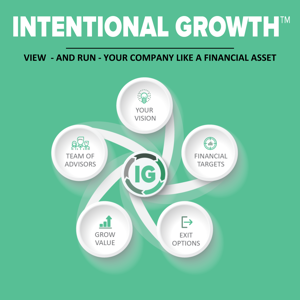
Intentional Growth™ is a podcast is a podcast for entrepreneurs and business owners wanting to view - and run - their company like a financial asset so they can have fun, create wealth, and make an impact. Truly make the entire journey of owning and running a company "worth it".