Intentional Growth

Intentional Growth

By Arkona - Intentional GrowthBusinessEntrepreneurshipInvestingManagement
Download on the App Store

Intentional Growth episodes

  • #353: How Strategic Planning Done Right Can Align Ownership & Leadership with Anthony Taylor of SME Consulting
    Ep.#5 [THEME NINE]
     
    In this podcast episode, I interview Anthony Taylor, an entrepreneur and founder of SME Strategy Consulting, who shares his expertise on the critical importance of strategic planning in achieving alignment between ownership and leadership. Drawing from his experience in entrepreneurship and insights from his book "I Wish I Knew," Anthony discusses how a well-designed, realistic strategic plan can serve as the foundation for aligning ownership and leadership objectives, ultimately leading to team alignment and business growth.
     
    I love this conversation because we dive into setting ambitious goals while taking into account ownership requirements, funding distribution, and available resources to achieve target equity valuations. The discussion aims to assist businesses in comprehending the costs and timelines linked to their investment strategies, as well as the effect of these factors on their progress towards meeting equity targets. Emphasizing the need for a clear and achievable strategic plan, the episode offers valuable insights to help entrepreneurs and business leaders create a roadmap that caters to both ownership and leadership goals.
     
    This conversation with Anthony underscores the significance of fostering alignment between ownership and leadership to drive business growth and achieve long-term success. Through the exploration of strategic planning and goal setting, listeners are encouraged to develop a comprehensive understanding of the necessary steps to effectively bridge the gap between ownership's needs and leadership's aspirations.
     
    WATCH THE INTERVIEW ON YOUTUBE: Intentional Growth™ Podcast
     
    What You Will Learn
    The importance of ownership and leadership alignment in a business venture, drawing from Anthony's personal experiences.
    How anticipating obstacles can support business growth and strategic planning.
    Anthony's perspective on strategic planning, offering a raw and comprehensive definition of the term.
    The importance of setting a long-term vision, with a particular focus on the value of a 3-year goal in strategic planning.
    How goals and strategic planning differ and why understanding this distinction is crucial.
    The importance of understanding the types of people you work with as a business owner.
    The balance between staying focused on present tasks and planning for the future.
    Anthony's views on the AI boom and why it doesn't concern him.
    Insights from Anthony's quotes, including the importance of effective risk management, implementation, and resource allocation in achieving business success.
    A glimpse into Anthony's entrepreneurial journey, his contributions to Global Entrepreneurship Week, and the success of SME Strategy.
    &nb
    1 hr 2 min
  • #352: [SUCCESS STORY] How Servant Leadership Helped Charlie Merrill Take Kontek from Near Bankruptcy to a Valuable Company with $20 Million in Revenue and 40% Margins
    Ep. #4 [THEME NINE]
     
    Someone once told me that you could identify a true leader when their team would do anything to avoid disappointing them. There was no need for a heavy hand because there was a huge amount of respect and trust in the shared vision and team.
     
    I believe that statement to be true, and today I could see that quality in my guest.
     
    Today, I have Charlie Merrill and Billy Amberg joining me. Charlie is the CEO of Kontek, who turned a near-bankrupt company into a thriving $20 million business with 40% gross margins through the power of servant leadership. Charlie's people-centric approach and dramatic pivots across industries enabled Kontek to rise from the ashes, transforming from a supplier of concrete foundations for cell towers to a provider of innovative security solutions that protect organizations from terrorist attacks.
     
    In this awesome conversation with Charlie and his friend and client, Billy Amberg from Bloomberg Capital, you'll hear about the real impact of servant leadership in creating a fun and trust-filled work environment, all while driving virtually zero turnover and impressive financial returns. Charlie's wisdom, backed by his mentor and grandfather's teachings, demonstrates the incredible potential of what real servant leadership can do.
     
    // WATCH THE INTERVIEW ON YOUTUBE: Intentional Growth™ Podcast
     
    10 Key Takeaways:
    Learn how servant leadership transformed a near-bankrupt company into a thriving business with $20 million in revenue and 40% gross margins.
    Discover how Charlie Merrill's people-centric approach and dramatic pivots across industries enabled Kontek to rise from the brink of bankruptcy.
    Understand the importance of asking for opinions and ideas rather than pushing your own when managing people.
    Explore the benefits of offering high wages and big performance bonuses to create a team atmosphere and encourage self-management.
    Learn about Kontek's journey from supplying concrete foundations for cell towers to protecting organizations from terrorist attacks.
    Hear inspiring stories about Charlie's mentor and grandfather, who instilled in him the values of servant leadership.
    Realize the true impact of servant leadership on fostering a positive work environment with virtually zero turnover and impressive financial returns.
    Find out how Charlie's approach to leadership led him to consider selling his company to an ESOP.
    Discover the Intentional Growth Financial Scorecard, a valuable tool that helps you evaluate how well you're running your company as a financial asset.
    Understand the transformative potential of servant leadership in the world of business and its
    1 hr 29 min
  • #351: [SUCCESS STORY] Keeping Ownership, Leadership, and Cultural Alignment Through 3 Rounds of Private Equity with Drew and Warner from BluSky
    Ep.#3 [THEME NINE]
     
    Would you marry someone after only going on a couple of dates with them? Of course not, you would spend plenty of time ensuring you are in alignment (hopefully) for a successful long-term relationship.
     
    So far, in this mini-series, we've been discussing how to achieve ownership and leadership alignment. In this episode, we're taking it a step further and breaking down how to achieve that alignment in the rarest of cases—through three rounds of Private Equity.
     
    In this episode, we're excited to have Drew Bisbing (CEO) and Warner Cruz (VP of Corporate Development) from BluSky, a fast-growing property restoration business with an impressive M&A track record, and an even more impressive ability to maintain an employee-centric culture along the way.
     
    Drew started at BluSky when it was founder-owned and had fewer than 100 employees. In our conversation, he shares how they scaled the company through three private equity firm buyouts and expanded to over 1,300 employees, all while preserving their people-centric culture and vision.
     
    Warner Cruz, who sold his business to BluSky in 2021, bought out his parents' restoration business and grew it to over 100 employees and $30 million in revenue. Warner shares his growth story, his decision-making process during his exit, and how BluSky's hyper-focus on cultural integration during and after the acquisition process won him over.
     
    Drew and Warner explain how BluSky maintains alignment between private equity firms, leadership, and employees, even through complex structures and multiple acquisitions. This inspiring conversation demonstrates that it's possible to achieve alignment, change people's lives, and make a significant profit.
     
    Enjoy!
     
    // WATCH THE INTERVIEW ON YOUTUBE: Intentional Growth™ Podcast
     
    What You Will Learn
    What led Drew and Warner to join the private equity space
    What led Warren to sell his restoration company.
    Why Drew believes a company's attributes and story is so important when trying to partner with other business owners.
    How leadership style influences a deal flow
    Drew and Warners definition of culture
    Why BlueSky encourages owners to think about their people in an exit
    Final thoughts: why Drew and Warner recommend not rushing the deal process
     
    // Sign up for the Intentional Growth™ Starter Kit: the kit has intro videos on each of the 5 Intentional Growth™ Principles, the Intentional Growth™ Financial Scorecard along with videos reviewing a case study on how to project out the value of your company, and the entire Intentional Growth™ Podcast Library.
     
    Bio:
    Warner Cruz:
    Warner became a proud member of the BluSky family in December 2021 and is currently senior vice president of corporate development and a member of the executive leadership team. His passion is working with restoration owners interested in merging their organizations with BluSky and cultivating an atmosphere of valuable benefits, increased opportunities, winning spirit and culture.
    As the former president & CEO of J.C. Restoration in Rolling Meadows,
    1 hr 19 min
  • #350: What it Means to “Think Like an Owner”: Inside the Boardroom of a Privately Held Business with Brandon Henry
    Ep.#2 [THEME NINE] 
    Are you thinking like an owner or an operator? 
     
    Many entrepreneurs—even billionaires—can find it difficult to wear the "ownership" hat due to their involvement in operations, lack of knowledge about valuations, or because the boardroom doubles as the family kitchen table.
     
    In this episode, join us as we explore the art of thinking like an owner with our special guest, and dear friend of mine, Brandon Henry, Founder of Mosaic Advisors. With extensive experience in managing over $3.5 billion in wealth for 25 families, Brandon has unique insights into the challenges and opportunities that come with wearing the "ownership" hat.
     
    Discover how thinking like an owner can help you set clear goals, determine target equity valuations, and decide on income distributions. Learn how to align with partners, investors, and leadership teams to create a unified vision and work together effectively to achieve your business objectives.
     
    Our conversation reveals that private businesses, regardless of size or resources, face similar challenges, and emphasizes the importance of clarity and goal-setting for successful alignment.
     
    By adopting an owner's mindset, you can gain a deeper understanding of how your present decisions influence alignment with partners, contribute to long-term goals, and ensure that ownership objectives are effectively aligned with the leadership team's resources and capabilities. This is the essence of true alignment in a business.
     
    // WATCH THE INTERVIEW ON YOUTUBE: Intentional Growth™ Podcast
     
    What You Will Learn
    What it means to “think like an owner”.
    Why so many business owners - even the ultra wealthy - feel like they are not wealthy.
    How a good Board should work and why you should have one.
    Why so many entrepreneurs are “allergic” to a liquidity event (cash).
    The difference between an estate plan and a long-term wealth plan.
    Achieving ownership and leadership alignment is crucial for business success, and this can be done by setting a target equity valuation and determining income distributions.
    As an owner, you need to align with yourself, your partners, and investors, and ensure this alignment is communicated effectively to the leadership team.
    Clarity of goals and effective communication can help prevent conflicts and tensions arising from misalignment.
    Family-owned businesses face similar challenges to other businesses, but often have more dynamics and tension, which can make it a deterrent for A-Player executives if there is not a clear ownership strategy.
     
    // Sign up for
    1 hr 17 min
  • #349: Achieving Ownership & Leadership Alignment [Part 1]: Operating Agreements, Partnerships, Long-Term Equity and Cash Flow Goals, Exit Strategies, Shotgun Clauses, and More.
    Ep. #1 [THEME NINE]
     
    It's super easy to get on the same page with your partner(s) and leadership team, right!?
    I don't think anyone argues how important it is to get ownership and leadership alignment. This topic is discussed a ton in entrepreneurial circles. EOS© / Traction even has their "same page meeting" baked into the system. However, if it is so important, and there are systems devoted to helping people achieve this alignment, why is it SO difficult to actually accomplish?
    In this mini-series, I propose that one of the biggest reasons there is still so much conflict between partners, ownership groups, and leadership is a lack of clarity on the long-term equity valuation goal, the desired cash flow owners want along the way, and how to handle leadership roles and responsibilities.
    Kicking off the mini-series today is Dan Grimsrud, a seasoned M&A Attorney with a background in accounting and finance. Dan does dozens of M&A transactions a year - and sees behind the curtain of all the conflict that we all know exists - and is willing to share what he sees works and doesn't work. 
    In our conversation, we cover the importance of operating agreements in creating ownership alignment and providing a roadmap for a company's governance, economics, exit strategies, and crisis response plans.
     
    //WATCH THE INTERVIEW ON YOUTUBE: Intentional Growth™ Podcast
     
    What You Will Learn
    Operating agreements are crucial for establishing ownership alignment between parties and provide a roadmap for governance, economics, exit strategies, and crisis response plans.
    The four key elements to address in an operating agreement are governance, economics, exit, and crisis response plan.
    Involving tax advisors is essential to ensure proper handling of tax implications and make the agreement fair and legally sound.
    Focus on the core elements of an operating agreement and have open conversations about priorities and concerns.
    Regularly revisit and update operating agreements to ensure they remain relevant and useful.
    Clearly define expectations, roles, and compensation structures in business partnerships, especially when one partner contributes capital and the other contributes expertise or labor.
    Have separate agreements for ownership and management roles in a partnership.
    Consider different tranches of compensation to balance the needs of both partners as the business evolves.
    Establish voting rights, employment agreements, and bonus structures to create alignment between owners and key executives.
    Different businesses require different approaches for buyouts and valuations, depending on their stage in the life cycle.
    Plan for various exit scenarios, including external sales, the death of an owner, and voluntary departures.
    Set parameters for determining valuation and be prepared to revisit and revise agreements as needed.
    Insurance, specifically life insurance, can provide a funding mechanism for buyouts in the event of an owner's death.
    Hire an attorney who listens to your concerns, asks the right questions, and helps you think through potential scenarios.
    Regularly review and update operating agreements to ensure they remain relevant and effective.
     
    // Sign up for the Intentional Growth

    1 hr 27 min
  • #348: Breaking Through Limitations and Maximizing Business Value: Lessons from Linda Rose's Entrepreneurial Journey Starting and Selling Three Companies
    Have you ever wondered how a business model impacts the scalability and valuation of a company?
     
    Throughout my personal entrepreneurial journey, I have run businesses in distribution, traditional professional services, technology-enabled services, and software. Each business model requires different operational models that impact every aspect of the business.
     
    How does a business model impact scalability and valuation?
     
    Today, I interviewed Linda Rose, an entrepreneur who had three businesses, each with a different business model. Linda tells us her story of starting, growing, and selling each business and how they were each different. The revenue per employee in one of her businesses was over double that of the other successful business, and it achieved a massive valuation at the exit.
     
    Linda is currently an M&A advisor in the technology sector and the author of Exit Your Company. She is going to walk us through how she grew and sold her companies and how she shifted her mindset to view the company through the eyes of a buyer.
     
    Linda shares the importance of focusing on the right aspects of business, sustainable cash flow, realistic projections, and valuing businesses. Linda also shares her transformative experiences from a challenging hike that led to personal and professional growth and her current work as an M&A advisor and author.
     
    Enjoy!
     
    // WATCH THE INTERVIEW ON YOUTUBE: Intentional Growth™ Podcast
     
    What You Will Learn
    Linda's career journey included public accounting, technology, and starting three businesses.
    After facing challenges during the 2008-2009 recession, Linda focused on her hosting company and the importance of building recurring revenue streams.
    A backpacking trip inspired Linda to write a book and become a sell-side M&A advisor.
    Concentrating on recurring revenue streams and efficiency can lead to greater financial rewards.
    Sustainable, predictable cash flow is critical for a business's value.
    Entrepreneurs should think as buyers, focusing on the sustainability and future growth of their company.
    CPAs tend to focus on past numbers rather than forward thinking; entrepreneurs should seek forward-thinking strategies and plans.
    Linda sold her three businesses with varying valuations and deal structures, emphasizing the importance of having multiple offers to compare.
    When selling a business, consider priorities such as company culture and employee well-being.
    Building rela
    1 hr 11 min
  • #347: Intentionally Living at the Intersection of Having Fun, Creating Wealth, and Making an Impact with Matt Paulson from MarketBeat
    How do you find purpose and ignite your curiosity after your financial needs are met?
     
    On today's show, I welcome Matt Paulson, founder of MarketBeat, small business investor, and passionate philanthropist in Sioux Falls, South Dakota. You might be wondering, "How can he be active in so many areas?"
     
    I am thrilled to share this interview with you because Matt has an inspiring message about fulfilling your purpose beyond your core business. He firmly believes in doing things for the right reasons and making a positive impact on the community around you.
     
    In this engaging conversation, Matt discusses how he continues to immerse himself in the game of business out of pure interest, even though MarketBeat has already satisfied his financial needs. He shares his journey into real estate, his outlook on the future of the market, and why he is so committed to supporting the small business startup industry. Matt also reveals his ambitious plans for the future of Sioux Falls, including an exciting aquarium project.
     
    Many business owners struggle to separate themselves from their core business because it's their pride and joy. But what if that core business is all you know? What if there's a whole world of opportunities outside of your business where you can leverage your skillset and elevate your purpose to new heights?
     
    Tune in to Episode #348 and discover how Matt Paulson has found the perfect balance between having fun, creating wealth, and making an impact while enjoying the journey. Don't miss out on this captivating conversation that could change the way you view your own purpose and potential!
     
    // WATCH THE INTERVIEW ON YOUTUBE: Intentional Growth™ Podcast
     
    What You Will Learn
    Matt's secret to building an online community without algorithm dependence.
    The art of separating oneself from the business: Matt's perspective.
    Matt's rationale for pursuing passion projects beyond MarketBeat.
    The hidden rewards of venturing outside your core business.
    The driving force behind Matt's "it's worth it" mentality.
    Staying grounded as an entrepreneur: Matt's non-business activities for balance.
    Forecasting the future: Matt's investment predictions based on economic trends.
     
    // USE YOUR FINANCIALS TO CLARIFY A PATH TOWARDS A MORE VALUABLE BUSINESS: Intentional Growth Financial Assessment
     
    Bio:
    Matt Paulson is the founder of MarketBeat, an active angel investor, and a champion for startup businesses. As CEO of MarketBeat, Matt makes sure the train runs on time. He leads the team, monitors major initiatives, and is responsible for the company’s overall growth and progress. He takes pride in having built a unique company culture that allows th
    1 hr 3 min
  • #346: The Power of Pricing with Casey Brown from Boost Pricing
    Pricing on your mind? It sure seems like it's all anyone can talk about, from the local server to the CEO. Everyone is trying to figure out how inflation, supply chain issues, labor increases, and interest rates impact pricing today and where things are going to be in the future so they can plan their next move.
     
    Today I dive deep into the world of pricing strategies, value-based pricing, and price optimization with my guest, Casey Brown. Casey is the founder of Boost Pricing and has been a pricing geek for decades. Her past experience in engineering, Six Sigma, and working on pricing strategy for multiple Fortune 500 companies prior to Boost Pricing has equipped her with unique insights into pricing and its impact on businesses. 
     
    Casey and I covered a ton of ground–we explored the importance of confidence, transparency, and strategic decision-making in pricing, price optimization, and dynamic pricing. This conversation will leave you with some very important concepts that can help you not only navigate the next few years, but allow you to pull ahead of your industry. 
     
    What I love about this interview is that we explore the super interesting intersection of art and science, people and process, and data and psychology in the realm of pricing and price psychology. 
     
    I learned A TON and I am sure you will too. 
     
    // WATCH THE INTERVIEW ON YOUTUBE: https://www.youtube.com/playlist?list=PL5-NSSElJYC8ZSLljxhixU8NFNjFglugR
     
    What You Will Learn
    Avoid underpricing and use promotional pricing cautiously to protect your brand's perceived value.
    Focus on delivering value and transparency to build trust with customers.
    Exercise pricing power before selling a business to maximize its value.
    Utilize data in a strategic and thoughtful way to inform pricing decisions and better understand your market.
    Address the mindset, emotions, and self-limiting beliefs of sellers to directly impact profit margins.
    Recognize the importance of investing in improvements and asking for more to avoid getting trapped in a downward spiral by focusing on the top line.
    Develop a clear understanding of your costs, market trends, and competitors to better position your products or services in the market.
    Overcome fear by using exposure therapy and analyzing specific outcomes and risks associated with raising prices or losing volume.
      
    // USE YOUR FINANCIALS TO CLARIFY A PATH TOWARDS A MORE VALUABLE BUSINESS: Intentional Growth Financial Assessment
     
    Bio:
     Casey is on a mission to help organizations be paid well for their excellence.  She leads a tea
    1 hr 7 min
  • #345: One Wild Ride: Lessons Learned from Buying 48 Businesses During the Pandemic with Jonathan Jay
    Go big or go home, right!? That’s exactly what my guest today thought when the pandemic started and traditional business buyers disappeared from the scene of his industry and he had an opportunity to become the market maker.
     
    Today my guest is Jonathan Jay. Jonathan has been an entrepreneur since dropping out of university at age 19. Now 50 years old, he has built businesses in publishing, digital marketing, adult education and coaching, as well as preschool education and has sold each of them. During the pandemic, he made 48 business acquisitions to create the fourth largest group in his sector in under three years.
     
    Some of Jonathan’s deals were wildly successful, like the $4 million in revenue digital marketing company he bought for $1 and sold for $2 million six months later or the publishing company that changed his financial life forever. Other deals were not so easy, like the first company he bought (the publishing business) or the last roll up of 48 preschool daycares he bought during the pandemic.
     
    What I love about my conversation with Jonathan is how genuine he is about telling his story and the real ups and downs he experienced along the way. Anyone who is responsible for payroll knows it’s not all rainbows and unicorns–cash flow matters. 
     
    It’s becoming more common for thought leaders these days to preach how “easy it is to buy a company with no money down” or “roll up an industry because of how huge the opportunity is.” 
    Talking vs. doing are two very different things. 
     
    Jonathan shares with me the major ups and downs throughout his journey with no filter. I loved it, and I hope you do too!
     
    // WATCH THE INTERVIEW ON YOUTUBE: Intentional Growth™ Podcast
     
    What You Will Learn
    How–and when–during his journey Jonathan came to the realization that a business is a financial asset and not just a job.
    Why Jonathan bought a digital marketing firm for $1 and was able to sell it for millions within a year.
    How Jonathan turned the failing digital marketing firm into a highly profitable company in a very short period of time.
    What happened that allowed Jonathan to buy so many companies so fast.
    How Jonathan financed the acquisitions of 48 companies. 
    Why Jonathan ended up in the hospital during the roll up.
    How Jonathan took inventory about what mattered most to him in his life and how he recalibrated in order to get it. 
    Why Jonathan thinks it’s crucial to know exactly what you are good
    1 hr 14 min
  • #344: What are Corporate Divestitures, How Do They Work, and Why Do They Happen? with John Waller
    If you have been listening to the show for a while now, you know we are constantly talking about how to view–and run–a business like a financial asset. 
     
    Bigger corporations typically have this mentality baked into their day-to-day lives and are laser focused on growing their share prices, and the executives' goals are to drive that share price up. Sometimes the best way to drive up the long-term share price is to divest of a weak product line, floundering business unit, or underperforming location in order to make room for profitable long-term growth.
     
    Today, I have John Walker from Prairie Capital Advisors on the show to share with us how the world of corporate divestitures works. John has been in the industry helping bigger companies sell off (divest) business units for decades. 
     
    John walks us through how bigger corporations view value, why they would want to sell a division/unit/product line, and how they view the valuation during the sale. John does a great job explaining what drives the sale (“the purpose of the deal” as you hear me say a lot) and how that impacts the price that is paid. 
     
    Understanding the M&A activity, especially within your industry, is a hugely important topic for a few reasons. First off, many of us middle-market entrepreneurs work with bigger companies (suppliers, manufacturers, distributors, customers, vendors, etc.), and it is important to understand what is going on behind the scenes and how a corporate divestiture could impact your relationship and the business you do with that company. 
     
    Secondly, there could be an opportunity to capitalize on a corporate divestiture in your industry–or an adjacent one–that could take your company and valuation to a level that would not have been possible otherwise. And you never know…the seller just might not care about the price ;-) You will have to tune in to the episode to hear that part of the story!
     
    I hope you enjoy this interview with John. It’s a great view into a world most of us don’t often get exposed to!
     
    What You Will Learn
    How bigger companies manage their products and divisions like a mutual fund.
    Why a bigger company would sell a part of their business and not care what price they sell it for.
    What corporate divestitures are and why they are a normal business practice.
    Why a business owner would consider doing a corporate divestiture. 
    The different reasons a company would sell off a product line, division, or location.
    Why it’s important to understand the intentions of a buyer. 
    Who the different types of buyers are when a company divests of one of their companies.
    What corporate divestitures mean for the middle-market entrepreneur.
    John'
    55 min

About Intentional Growth

From the publisher's feed

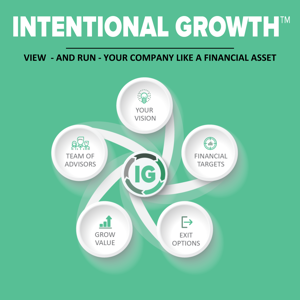
Intentional Growth™ is a podcast is a podcast for entrepreneurs and business owners wanting to view - and run - their company like a financial asset so they can have fun, create wealth, and make an impact. Truly make the entire journey of owning and running a company "worth it".