Intentional Growth

Intentional Growth

By Arkona - Intentional GrowthBusinessEntrepreneurshipInvestingManagement
Download on the App Store

Intentional Growth episodes

  • #333: Grow Faster with an Engineering Approach to Marketing with Chris Sanchez from Mint CRO
    Ep.#5 [THEME SIX]
     
    I have personally wasted hundreds of thousands of dollars on failed marketing strategies…and I know I’m not the only one who feels like I’m throwing spaghetti against a wall while money flies out the window. 
     
    In last week’s episode, we framed up what marketing KPIs matter and how to connect those metrics to the financials. Today we’re going to talk about why it’s NOT NECESSARY to guess anymore by implementing an engineering approach toward marketing.
     
    In today’s interview, I’m talking to Chris Sanchez, who is the lead advisor at Mint CRO (co-founded by one of the top marketing leaders at Microsoft). Mint CRO has provided CRO training and expert coaching to hundreds of entrepreneurs and marketers to accelerate growth, improve lead quality and sales conversions, and reduce ad spend. Clients have achieved 2X to 10X repeatable growth using Mint CRO’s systematic testing methodology, radically transforming their marketing results.
     
    Chris shares with us Mint CRO’s eight-step process on how to take the guessing away from marketing so you can understand what your customers want–all for under $1,500! Yes, it really is that inexpensive to understand which pain point you solve for your customers, what free offer they want from your brand, and if they are even looking at the offer page that you spent tens of hours building.
     
    The takeaway–There is a simple way to test your marketing to ensure your offer is something people actually want via an engineering approach toward marketing. 
     
    This methodology applies to every business–even Arkona (listen in to hear how we’ve used this strategy)!
     
    // WATCH THE INTERVIEW ON YOUTUBE: Intentional Growth™ Podcast
     
    What You Will Learn:
    What Mint CRO is and why it allows companies to predict their growth.
    Why the engineering approach to marketing allows business owners to invest strategically into their marketing so they get the return on marketing they desire.
    The first thing you must have dialed in before you build a marketing funnel.
    How to test messaging with a simple “thumb stopper” approach.
    The three KPIs that define a winning message or tagline. 
    Why you should test an offer before the offer is even made.
    Tools to use to clearly see if people are even engaging with your marketing efforts.
    How an engineering approach to marketing can predict your customer acquisition cost.
    Where this advertising approach can fit into a company's marketing strategy.
    1 hr 19 min
  • #332: Tying Your Marketing KPIs and Spend to the Equity Growth of Your Company with Jeff Campbell
    Ep.#4 [THEME SIX]
     
    Do you know what your return on marketing spend is and if it is growing the equity value of your company? 
     
    A lot of business owners see marketing as an expense because they cannot clearly connect the marketing spend to a return on investment (also known as return on ad spend or ROAS). 
     
    Today we have Jeff Campbell, co-founder of aiCommerce, on the show to walk us through what it takes to turn marketing into an investment. Jeff is the perfect person to speak on this topic because he has been an agency owner, sold his business, and now invests in–and manages–companies and brands.
     
    Jeff is one of the only people I have been able to have a dynamic conversation with about marketing strategies AND financials all at the same time ;-) He truly “gets it” and breaks it down in a way that should give anyone hope that marketing doesn’t have to be a money pit and can, in fact, be an engine for equity growth, if done properly.
     
    The three main takeaways of today’s interview are: 1) identifying the right KPIs, 2) how to calculate your contribution margin so you know how much it costs you to deliver your product or service, and 3) how to test different advertising channels while maintaining your desired ROAS. In addition, Jeff breaks down the very few levers he pays attention to when market testing a new product or service.
     
    Marketing shouldn’t be a guessing game. If you can understand how much it costs you to deliver your product and the lifetime value of a customer, you can market with a clear outline of what works and what doesn’t.
     
    If you want to answer the question: “How much money should I spend on advertising, with which products, while maintaining x margins, while maintaining and growing cash flow?” then you will want to tune in to this episode as well as the next one ;-)
     
    // WATCH THE INTERVIEW ON YOUTUBE: Intentional Growth™ Podcast
     
    What You Will Learn
    How to think about marketing as an investment and not an expense.
    What costs go into marketing and why the ROAS calculation is flawed with many brands.
    The different types of marketing that brands (companies) should be doing and why revenue should not be top priority.
    Jeff’s metrics (KPIs) that matter when scaling a company’s valuation.
    What contribution margin is, how to calculate it, why it matters, and how to use it.
    How to intentionally invest in marketing when you know the lifetime value of your customer.
    When and why breaking even on marketing can be a good strategy.
    How to integrat
    59 min
  • #331: See Clearly into the Future: Forecasting Cash Flow and Value Driver Scenario Planning with Joel Beyer
    Ep.#3 [THEME SIX]
     
    Do you know if owning and running a business is worth it for you? I have been hearing that question a lot lately. Today’s episode is all about figuring out the best way to answer that question.
     
    I have never met an entrepreneur or business owner that doesn’t know how to tell one hell of a story about where they have been, where they are, and where they want to go…however, I find most entrepreneurs don’t have the confidence to hit the throttle because they are afraid of the plan not working, running out of cash, and don’t have a clear sight into whether that plan will help them hit the future equity valuation they want in the future.
     
    On today’s episode we have my new partner at Arkona, Joel Beyer, on the show. Joel owned a multigenerational company that sold to the private equity firm my other partner, Matt Buskirk, sold to (and ran). Joel truly understands what it takes to build a plan, execute like hell, and course correct as things change. 
     
    Today Joel and I talk about why the current method of planning, budgeting, and forecasting is broken, what it can (should) look like, and what to do about it. 
     
    Joel breaks down why it’s important to normalize all of your company data under one dashboard; how to get started collecting your data, tying the short-term plan to the long-term equity target, and how to create a rolling forecast that updates your plan each month based on what was actually accomplished; and then updates your plan and progress toward your long-term goal.
     
    This was a super fun conversation that was heavily rooted in planning and finance…all without a bunch of financial jargon. I hope this helps you answer the most important question we all need to answer….“Is this worth it?”
     
    WATCH THE INTERVIEW ON YOUTUBE: Intentional Growth™ Podcast
     
    What You Will Learn
    Why the current method of planning, budgeting, and forecasting is broken.
    What bad financial planning looks like and what needs to be done to fix it.
    How to tie your operational data, workforce data, and financial data together into a holistic plan that actually makes sense to the brain of an entrepreneur.
    How to create value drivers into your plan so you can clearly see where you need to invest and why.
    How to spot future bottlenecks or tight cash positions.
    How to get visibility into the tradeoffs between distributions, funding growth, and taxes.
    How to answer the question, “If I hit the gas on our plan, what is the future impact on cash flow and valuation of the company?”
    How to eliminate “spreadsheet hell” because you are creating spreadsheets that are in isolation and not tied to the fin

    1 hr 19 min
  • #330: How to Achieve a Breakout Valuation with Patrick Donohue
    Ep.#2 [THEME SIX]
     
    Today we are launching episode two in our mini-series “How to Grow The Equity Value of Your Company.” Patrick Donohue from Hill Capital joins us to talk about his newly released book, Breakout Valuation: How To Finance Your Future Today.
     
    During the interview, Patrick shares the nine components of a breakout valuation and how to use the financials as a road map to get you where you want to go. Patrick and Ryan discuss what it means to view and run a company like a financial asset and why there is a ‘capital gap’ in the middle market. Patrick then explains the different sources of capital, why they are different, and how to match the right type of capital with the long-term equity valuation goal of the owner.
    Even if finance isn’t your thing, this episode is for you. Patrick does a great job of explaining why it’s worth understanding the financials and how they give the necessary clarity on how to create a valuable asset.
     
    // WATCH THE INTERVIEW ON YOUTUBE: Intentional Growth™ Podcast
     
    What You Will Learn
    What a breakout valuation is and how to achieve one.
    Why the financials are the key to achieving a breakout valuation.
    What the capital gap is and why it impacts so many privately held businesses.
    What capital matching is and why it’s so important to get it right.
    The nine components of a breakout valuation.
    Why the founder and/or CEO’s magnetic vision is so important.
    What trust and emotion have to do with a breakout valuation.
    How the foundation of a vision is essential to a breakout valuation.
    The trifecta of cash management.
    The five big cash traps.
    What the ‘capital ecosystem’ is and why it matters.
    Why debt over equity can be beneficial for an entrepreneur in the long term.
     
    // USE YOUR FINANCIALS TO CLARIFY A PATH TOWARDS A MORE VALUABLE BUSINESS: Intentional Growth Financial Assessment
     
    Bio:
    Patrick Donohue is an Innovator, investor, financial analyst, investment banker, and entrepreneur. He specializes in finance strategy and executing corporate development initiatives for growth companies. He has helped author and execute numerous capital formation pl
    1 hr 6 min
  • #329: Rethink Annual Planning: Identify the Right Goals to Grow the Equity Value of Your Business with Ryan Tansom
    Ep.#1 [THEME SIX]
     
    Today we are kicking off theme six, How to Grow The Equity Value of Your Business.
     
    In this episode, Ryan Tansom is going solo to explain what's to come in the next couple of weeks within this theme. He explains the importance of setting a proper (and achievable) financial goal based on what you, as the business owner, want to take home in distributions each quarter. 
     
    Ryan explains how setting a proper financial goal will help you become strategic with your budgeting and reinvest into the company with a desired ROI each quarter. 
     
    This episode is a high-level overview of this theme. Throughout this series, we dive deep into financial planning, tying marketing into your financials, and discovering an easier way to map out your processes and procedures.
     
    //WATCH THE INTERVIEW ON YOUTUBE: Intentional Growth™ Podcast
     
    What You Will Learn
    How to set a proper goal (financial roadmap).
    Why just a revenue goal is not good enough.
    The correlation between setting a good financial goal and having the day-to-day constraints be worth it.
    How EOS and financial planning go hand in hand during annual planning.
    How the three financial statements will give you a clear lens on how to reinvest into the company every year.
    How proper budgeting can predict what you will make within the next year.
    The 50/50 budgeting rule and why it’s important.
     
    // USE YOUR FINANCIALS TO CLARIFY A PATH TOWARDS A MORE VALUABLE BUSINESS: Intentional Growth Financial Assessment
     
    Bio:
    Ryan Tansom started his entrepreneurial career at his family business where he was the Executive VP and responsible for the strategic, operational, and financial strategy of the $21 Million company. Ryan helped turn the company around and bring intentional focus to the right strategies which enabled it to be sold for 8 figures to a local competitor in 2014. Ryan took his experience and founded Arkona, with his partner Pat, to create theIntentional Growth™ Framework which helps owners grow the value of their company with an end in mind through educational training, fractional CFO services and strategic planning. Ryan also hosts the popular Intentional GrowthTM podcast that has 310+ episodes, 420k+ downloads and guests like Gino Wickman, John Warrillow, and the editors of HBR and Inc. Magazine. Ryan also has a passion for speaking and delivers frequent keynotes. After thousands of meetings and hundreds of podcast interviews, he has his finger on the pulse of the market like few others.
     
    Interview Quotes:
    09:39  - “Only acquire a company that’s going to increase the value of your company and your chances of getting to that $12 million equity
    45 min
  • #328: Insights from Surveying 1,000 Middle-Market Companies in 2022 with Doug Farren from the National Center for The Middle Market
    We all know how well the stock market is doing on any given day. All we have to do is pull out our phone or turn on the TV. What happens if you want to know how well the middle market of private businesses are doing? Where would you find the data? It’s not as easy as pulling out your phone, which is exactly why we did today’s interview. 
     
    The middle market (businesses from $5 million to $1 billion) make up one-third of the US GDP. If this segment of companies was its own country, it would be the fifth largest GDP in the world. Even with the sheer size of the market, these companies don’t get a lot of attention; therefore, there is limited data, insights, and leading indicators on the overall health of over one-third of the US GDP. 
     
    Today, Doug Farren, Director of The Center for the Middle Markets, is on the show to share the results of their semi-annual Middle Market Indicator (MMI) where they surveyed 1,000 middle-market companies. 
     
    Doug reviewed the results of the MMI, discussed the five focus areas of the report (listed below), and how well the middle market is doing compared to over ten-plus years of the survey. Along with diving into the MMI, Doug also shares the findings of a new report they just wrapped up called “Owner Transitions in the Middle Market.”
     
    Because of how big the middle market is, if something big were to happen in that part of the economy, it affects all of us. That’s why these reports and what the National Center of the Middle Market is doing are so important.
     
    WATCH THE INTERVIEW ON YOUTUBE: Intentional Growth™ Podcast
     
    What You Will Learn
    The mission, and the reason for the existence of, the National Center for the Middle Market.
    How the National Center for the Middle Market captures their information from 1,000 middle-market companies two times per year.
    The 2022 findings behind the five main focus areas of the MMI survey:
    The three big issues middle-market companies are worried about when looking into the future.
    How the COVID disruption is still impacting supply chains and middle-market companies.
    An overview of the hiring and recruiting issues in middle-market companies.
    How the middle market is dealing with returning to the office and/or hybrid work.
    What most business owners are doing with their proceeds after they sell.
    The three challenges that business owners are having when preparing to sell.
    How large Fortune 500 companies are getting help from the National Center for the Middle Market.
    Why everyone shou
    59 min
  • #327: [Owner Success Story] Starting, “Betting The Farm” on a Pivot, and Selling Mindware with Jeanne Voigt
    Today we have Jeanne Voigt on the show to talk about her experience starting, growing, and selling MindWare, a catalog and online retailer of educational toys.
     
    Jeanne started MindWare after leaving the corporate world when she was 39. Today she dives into detail about her initial go-to market strategy, why she realized her business model needed to be restructured, and how she “bet the farm” to grow a company that she would eventually sell after getting an out-of-the-blue offer she couldn’t refuse. 
     
    Even though the offer was one she couldn't refuse at the time, Jeanne reflects during the interview about what worked and what did not and the things she may have done differently.
     
    WATCH THE INTERVIEW ON YOUTUBE: Intentional Growth™ Podcast
     
    What You Will Learn
    Why Jeanne decided to become an entrepreneur after talking with a mentor.
    How Jeanne built and scaled her business by simply observing what people wanted.
    How Jeanne realized she needed to rethink her business model and what she did about it.
    Jeanne’s story on “betting the farm” with her business while having no cash.
    How an out-of-the-blue offer shifted her mindset on the long-term vision of the company.
    Why Jeanne decided what she wanted and why out of her exit.
    How Jeanne compared the different offers and different buyers and why she made the choice she did. 
    Why Jeanne brought her staff in on the meeting with potential buyers (even though that can be risky).
    The most important thing to MindWare’s employees when it came to what they wanted with a buyer.
    Some of the challenges of operating the company post-transaction–and why everyone was not aligned–even though the buyer was the top choice.
    Why the emotional side is something to keep in the forefront of your mind while going through the exit process.
    Jeanne’s reflections on what worked and what she may have done differently–based on what she knows now–during her journey growing and selling MindWare.
     
    // USE YOUR FINANCIALS TO CLARIFY A PATH TOWARDS A MORE VALUABLE BUSINESS: Intentional Growth Financial Assessment
     
    Bio:
    Jeanne M. Voigt is the founder of MindWare, a catalog and online retailer. She sold the company in 2003 but continued as president until 2007. She currently serves as a consultant and board member for the company and is
    1 hr 22 min
  • #326: How ESOPs Work: The Life Cycle, ESOP Acquisitions, and Owner Success Stories with Jim Steiker and Ken Baker
    Ep.#12 [THEME FIVE]
     
    As we wrap up our four-part mini-series on ESOPs, we’re getting out of the weeds and coming back up for air. 
     
    Today we’re going to be talking about ESOPs acquiring other companies and ESOPs selling to a third party (yes, both are possible!). In the second part of this episode, we finish with an owner's success story about why he turned his company into an ESOP and the amazing things that have happened since.
     
    In part one of this interview, Jim Steiker from SES ESOP shares his story about how hitchhiking led to a multi-decade career promoting ESOPs. He then dives into the full life cycle of an ESOP. He starts the segment with an awesome twist (a strategy that a seller can follow who DOESN’T want to take the time to convert to an ESOP but would like most of the legacy benefits): how a company can sell TO an already-formed ESOP. Jim explains the three reasons why most business owners don’t want to convert to an ESOP and how these reasons can be overcome by selling to one that is already formed. Jim then goes into detail on a few different strategies about how ESOPs can acquire companies and why. Jim finishes the segment by explaining how ESOPs can be sold to third-party buyers, how it works, and what it means to the employees. 
     
    In part two of this interview, Ken Baker, CEO of New Age Industries, shares his owner's success story on how and why he turned his company into an ESOP. He explains–via his own experiences–how to maximize the benefits of the ESOP by ingraining it into your culture through education, strategy, and execution. To date, New Age Industries has created 54 millionaire employees. Ken explains why he believes an ESOP is one of the purest forms of capitalism and business models he has come across. 
     
    Thank you for coming on this ESOP journey with us. We hope this series demystified ESOPs for you and got you up to speed on what they are, how they work, and why an ESOP might be the best fit for your company.
     
    // WATCH THE INTERVIEW ON YOUTUBE: Intentional Growth™ Podcast
     
    What You Will Learn
     
    Part 1:
    How Jim hitchhiked and became passionate about ESOPs.
    ​​The differences between selling to an already-formed ESOP and the normal M&A process of selling to a third party.
    The three main reasons people don’t sell to an ESOP.
    How–and why–selling to an already-formed ESOP can overcome many of the typical reasons sellers don’t pursue an ESOP.
    The full life cycle of an ESOP company.
    Why an ESOP company is a good exit alternative for a company who is not big enough to become an ESOP themselves. 
    How–and why–ESOPs acquire other companies.
    1 hr 35 min
  • #325: How ESOPs Work: Myth Busting, 1042 Tax Deferrals, Warrants, Executive Comp Plans and More with Keith Apton and Miguel Paredes
    Ep.#11 [THEME FIVE]
     
    As we continue down this ESOP mini-series, we want to do some serious myth-busting by diving even deeper into the technical details on how ESOPs work. 
     
    This two-part episode is all about deal structures, 1042 tax deferrals (similar to 1031 exchanges), seller’s potential to capture future equity growth via the form of warrants (similar to rolled equity), how to handle key executive compensation plans, and the shareholder benefits of transforming a company into an ESOP.
     
    In this episode, you will learn how an ESOP offers great tax benefits and how you can prepare to maximize your tax deductions before switching to an ESOP. Also in this episode, you will learn about the interview process from a trustee’s standpoint and about warrant options to ensure that the best interest of the employees are at the forefront of the deal without screwing over the primary seller.
     
    In part one of this episode, Keith Apton, the managing director of UBS’s ESOP Capital Group, talks about some false narratives with ESOPs, such as, “If I sell to an ESOP, I won’t get as much cash for my business.” He then talks about the 1042 tax code and discusses how converting the business from an S Corp to a C Corp could defer the gains at the time of the transaction and potentially indefinitely through estate planning. Keith tees up the topic of warrants and how they act as a form of rolled equity that can be as lucrative as the rolled equity in a private equity sale–except in an ESOP sale, the owner still has control over the direction of the company. Keith finishes this segment of the episode by sharing a story of what he thinks would change if S Corps had the same tax benefits as C Corps.
     
    In part two of this episode, Miguel Paredes, president of Prudent Fiduciary Services, is a trustee and shares stories about how a trustee keeps the employees’ best interests in mind without screwing over the seller, and even more so, being a partner that can help everyone get what they want out of the business during the transaction, and most importantly, in the future.
     
    Miguel goes deep into the mechanics of how warrants and SARs (stock appreciation rights) plans can be used to reward key executives with additional future equity based on the value they help create. He explains how exponential growth can happen when warrants for the seller are combined with SAR plans of the key executives and aligned with all the employees' incentives to grow the equity value of the company for their ESOP account. 
     
    // WATCH THE INTERVIEW ON YOUTUBE: Intentional Growth™ Podcast
     
    What You Will Learn
     
    Part 1:
     
    How ESOP valuations compare to a strategic buyer.
    Various deal structures where an ESOP could potentially put more net proceeds into your bank account over the buyout period compared to a strategic buyer.
    How the 1042 tax code works, why it is similar to a 1031 exchange, and when it can be used.
    Why changing from an S Corp to a C Corp could potentially def
    1 hr 25 min
  • #324: How ESOPs Work: Trustees, Governance, Legal Structure, Employee Vesting, and More with Neil Brozen and David Solomon
    Ep.10 [THEME FIVE]
     
    In part two of our four-part ESOP series, we dive deep into the mechanical and legal relationship between you (the owner), the ESOP trust, the trustee, and the employees.
     
    We cover the role of a trustee in depth as well as more technical nuances about the legal structure of the trust, how the trust is managed, and when and how employees get their shares.
     
    In part one of this episode, Neil Brozen, a trustee who has been responsible for more than 300 ESOP transactions since 2005, talks about the role a trustee plays in an ESOP during the transaction as well as the ongoing management after the deal is done. Neil explains how the business owner gets to interview and select the trustee (the buyer) and what it’s like to negotiate the purchase of the business from the perspective of the trustee. Neil then shares the trustee’s involvement–and control–on an ongoing basis (which is much less involved than most people think), what rights the employees have, and why the company doesn’t turn into a “consensus-based” business after becoming an ESOP.
     
    In part two, we have David Solomon, a corporate M&A and ESOP attorney, who has been working in the ESOP space for many years. David walks us through the technical and legal journey a business owner goes through in order to set up an ESOP, such as what goes into the legal document of the trust, how company stock is allocated to employees, the ongoing involvement of advisors to manage the ESOP trust, and the one very important differentiator between an ESOP sale and an M&A sale. 
    This episode is a deeper technical dive into ESOPs and answers questions many business owners have like, “who am I selling my company to and what will they do with my company?”; “what are the real benefits to my employees if I sell to an ESOP?”; and “what is it like to lead and what control do I have as a CEO after the transaction?”
     
    // WATCH THE INTERVIEW ON YOUTUBE: Intentional Growth™ Podcast
     
    What You Will Learn
    Part 1
     
    The role of a trustee during the transaction in an ESOP.
    Why the trustee is the buyer that represents the ESOP and future employee shareholders.
    The engagement between a trustee and seller (business owner).
    What the process is like to pick a trustee. 
    Who makes up the board of advisors in an ESOP and how they are chosen.
    The ongoing involvement of the trustee after the transaction.
    How decisions get made on the board.
    What happens if management and the board and the trustee don't agree.
    1 hr 39 min

About Intentional Growth

From the publisher's feed

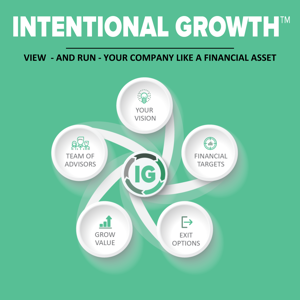
Intentional Growth™ is a podcast is a podcast for entrepreneurs and business owners wanting to view - and run - their company like a financial asset so they can have fun, create wealth, and make an impact. Truly make the entire journey of owning and running a company "worth it".