Intentional Growth

Intentional Growth

By Arkona - Intentional GrowthBusinessEntrepreneurshipInvestingManagement
Download on the App Store

Intentional Growth episodes

  • Serial Entrepreneur Exits Multiple Industries
    My guest today is Jeff Smith. Jeff is a serial entrepreneur who has owned a variety of businesses ranging from a literal brick and mortar business to his current endeavor Jet Dental. He has gained a lot of experience from each of his companies. However, the one constant he has built his business model on is bringing value to the customers and the industry as a whole.
    We discuss what Jeff considers valuable in a business and how he keeps the balance between planning for a sale and passionately growing his business. Business should be fun and Jeff has some practical tips on how to keep it fun and still make smart business decisions.
    You will learn about:
    Jeff’s entrepreneurial beginnings in the high tech industry.
    The goals he had for his first business.
    His time in the internet filtering industry.
    Why he invested in his company and why it was a good decision.
    The value of strategic planning.
    Why you need to stick to what you know.
    How Jeff tries to disrupt any industry he enters.
    Jeff’s goals for Jet Dental.
    What Jeff means when he says, “filling a hole in the market.”
    How Jet Dental has disrupted the industry.
    When to know to leave the company.
    The importance of keeping your emotions in check.
    Why you should try to keep the same advisors from deal to deal.
    Why you need to know your priorities and stick to them.
    Takeaways:
    If you take anything away from this episode, it should be to plan for your exit. If you do all the work of structuring an exit plan beforehand, it is done and you don’t have to worry about anymore. Knowing your business is always ready for sale takes a lot of pressure off you and allows you to enjoy the present day-to-day fun of running a business. Also, set your priorities early on so that exit planning is easier for everyone.
    Links and Resources
    Jet Dental
    GEXP Collaborative
    Jeff’s email
    About Jeff:
    As CEO of Jet Dental, Smith leads a growing company dedicated to improved Oral Health for employees in business’ and organizations nationwide. We take a World Class Dental Team to the workplace making dental care more convenient and accessible to everyone in the workplace.
    As CEO of Alliance Health, Jeff Smith led a growing company dedicated to helping people with chronic conditions better manage their health through VIP customer care and technology-driven solutions. Under his direction, Alliance Health has:
    Smith started his career working for industry giants including Proctor and Gamble, and Toshiba. Since striking out on his own, he’s spent more than two decades starting or acquiring six companies, including Cerberian, ClearPlex and Beehive Brick and Stone, bringing them to successful exits.
    Other professional highlights include several award recognitions including:
    2013 Ernst & Young Entrepreneur of the Year (West Region)
    2013 Ernst & Young Entrepreneur of the Year National Finalist
    2014 Utah Business Magazine’s CEO of the Year
    Alliance Health has a
    59 min
  • Serial Entrepreneur Exits Multiple Industries

    My guest today is Jeff Smith. Jeff is a serial entrepreneur who has owned a variety of businesses ranging from a literal brick and mortar business to his current endeavor Jet Dental. He has gained a lot of experience from each of his companies. However, the one constant he has built his business model on is bringing value to the customers and the industry as a whole.

    We discuss what Jeff considers valuable in a business and how he keeps the balance between planning for a sale and passionately growing his business. Business should be fun and Jeff has some practical tips on how to keep it fun and still make smart business decisions.

    You will learn about:
    • Jeff’s entrepreneurial beginnings in the high tech industry.
    • The goals he had for his first business.
    • His time in the internet filtering industry.
    • Why he invested in his company and why it was a good decision.
    • The value of strategic planning.
    • Why you need to stick to what you know.
    • How Jeff tries to disrupt any industry he enters.
    • Jeff’s goals for Jet Dental.
    • What Jeff means when he says, “filling a hole in the market.”
    • How Jet Dental has disrupted the industry.
    • When to know to leave the company.
    • The importance of keeping your emotions in check.
    • Why you should try to keep the same advisors from deal to deal.
    • Why you need to know your priorities and stick to them.
    • Takeaways:

      If you take anything away from this episode, it should be to plan for your exit. If you do all the work of structuring an exit plan beforehand, it is done and you don’t have to worry about anymore. Knowing your business is always ready for sale takes a lot of pressure off you and allows you to enjoy the present day-to-day fun of running a business. Also, set your priorities early on so that exit planning is easier for everyone.

      Links and Resources

      Jet Dental

      GEXP Collaborative
      Jeff’s email

      About Jeff:

      As CEO of Jet Dental, Smith leads a growing company dedicated to improved Oral Health for employees in business’ and organizations nationwide. We take a World Class Dental Team to the workplace making dental care more convenient and accessible to everyone in the workplace.

      As CEO of Alliance Health, Jeff Smith led a growing company dedicated to helping people with chronic conditions better manage their health through VIP customer care and technology-driven solutions. Under his direction, Alliance Health has:

      Smith started his career working for industry giants including Proctor and Gamble, and Toshiba. Since striking out on his own, he’s spent more than two decades starting or acquiring six companies, including Cerberian, ClearPlex and Beehive Brick and Stone, bringing them to successful exits.

      Other professional highlights include several award recognitions including:

      • 2013 Ernst & Young Entrepreneur of the Year (West Region)
      • 2013 Ernst & Young Entrepreneur of the Year National Finalist
      • 2014 Utah Business Magazine’s CEO of the Year
      • Alliance Health has a

        59 min
      • 3 IPOs – How to Look at Your Company Through Wall Street’s Eyes
        Roger Sippl is the founder and former CEO of Informix Software. Roger began his career in computer science during the early days of the computer age. He was diagnosed with Hodgkin’s Lymphoma during college, Roger explains how this life and death situation changed how he approaches business.
        After the health scare, Roger switched his major to computer science and found a need for cleaner and more efficient database management software. We discuss what the software business was like in the early days and how it has changed over time. Roger has a lot of experience with running public companies and building companies to sell. He shares what he liked about his time in the software business and why he decided to focus more on investing and business mentoring. Roger also has some useful advice for new entrepreneurs who want to build a lasting company.
        You will learn about:
        Roger’s business background.
        The cancer diagnosis and how it changed his life.
        Why Roger switched to the software business.
        His goals for the company in the early days.
        Why Informix became a public company.
        What it was like running a public company.
        Why Roger left Informix.
        How the software industry has changed over the years.
        What Roger considers when looking to invest in a company.
        The common red flags Roger sees when he evaluates a business.
        Roger’s parting advice for the audience.
        Takeaways:
        Today’s biggest takeaway is to be aware that every business has a relevance window. Your company’s value will change with the market. Make sure you are prepared to sell your company when it is the most valuable.
        Links and Resources
        Roger Sippl Creative Writing
        About Roger Sippl
        Roger Sippl is a Silicon Valley software pioneer, entrepreneur, and innovator. His 30 years of contributions have helped shape the enterprise software technology landscape of today. In 1980 he founded Informix Software, and was CEO for 10 years, taking it public in 1986. Under his leadership, Informix pioneered SQL relational databases, report generators, screen data entry packages, 4GL application development tools, and scalable OLTP database technology. It is now a part of IBM, after peaking at a $4B market cap as a public company.
        Sippl was also co-founder and Chairman of The Vantive Corporation. Vantive became a leader in CRM, became a public company, peaked at a $1B market cap, and is now a part of PeopleSoft/Oracle. In 1993, he founded and was CEO of Visigenic Software, helping pioneer distributed object computing and the concept of the application server (based on CORBA, prior to the J2EE standard) in enterprises. Visigenic was acquired by Borland, after becoming a public company. After the Visigenic IPO Mr. Sippl earned the “Golden Hat Trick Award” from Cristina Morgan at JP Morgan/Hambrecht and Quist for three Silicon Valley IPOs.
        In the mid-nineties, Sippl became a founding partner of Sippl Macdonald Ventures. He invested in several successful software companies, including Illustra (acquired by Informix), Broadvision (IPO), SupportSoft (IPO) and Red Pepper (acquired by PeopleSoft). In 2002, Sippl founded Above All Software, a composite application platform that used web services and service-oriented architecture (SOA).
        1 hr 1 min
      • 3 IPOs – How to Look at Your Company Through Wall Street’s Eyes

        Roger Sippl is the founder and former CEO of Informix Software. Roger began his career in computer science during the early days of the computer age. He was diagnosed with Hodgkin’s Lymphoma during college, Roger explains how this life and death situation changed how he approaches business.

        After the health scare, Roger switched his major to computer science and found a need for cleaner and more efficient database management software. We discuss what the software business was like in the early days and how it has changed over time. Roger has a lot of experience with running public companies and building companies to sell. He shares what he liked about his time in the software business and why he decided to focus more on investing and business mentoring. Roger also has some useful advice for new entrepreneurs who want to build a lasting company.

        You will learn about:
        • Roger’s business background.
        • The cancer diagnosis and how it changed his life.
        • Why Roger switched to the software business.
        • His goals for the company in the early days.
        • Why Informix became a public company.
        • What it was like running a public company.
        • Why Roger left Informix.
        • How the software industry has changed over the years.
        • What Roger considers when looking to invest in a company.
        • The common red flags Roger sees when he evaluates a business.
        • Roger’s parting advice for the audience.
        • Takeaways:

          Today’s biggest takeaway is to be aware that every business has a relevance window. Your company’s value will change with the market. Make sure you are prepared to sell your company when it is the most valuable.

          Links and Resources

          Roger Sippl Creative Writing

          About Roger Sippl

          Roger Sippl is a Silicon Valley software pioneer, entrepreneur, and innovator. His 30 years of contributions have helped shape the enterprise software technology landscape of today. In 1980 he founded Informix Software, and was CEO for 10 years, taking it public in 1986. Under his leadership, Informix pioneered SQL relational databases, report generators, screen data entry packages, 4GL application development tools, and scalable OLTP database technology. It is now a part of IBM, after peaking at a $4B market cap as a public company.

          Sippl was also co-founder and Chairman of The Vantive Corporation. Vantive became a leader in CRM, became a public company, peaked at a $1B market cap, and is now a part of PeopleSoft/Oracle. In 1993, he founded and was CEO of Visigenic Software, helping pioneer distributed object computing and the concept of the application server (based on CORBA, prior to the J2EE standard) in enterprises. Visigenic was acquired by Borland, after becoming a public company. After the Visigenic IPO Mr. Sippl earned the “Golden Hat Trick Award” from Cristina Morgan at JP Morgan/Hambrecht and Quist for three Silicon Valley IPOs.

          In the mid-nineties, Sippl became a founding partner of Sippl Macdonald Ventures. He invested in several successful software companies, including Illustra (acquired by Informix), Broadvision (IPO), SupportSoft (IPO) and Red Pepper (acquired by PeopleSoft). In 2002, Sippl founded Above All Software, a composite application platform that used web services and service-oriented architecture (SOA).

          0 min
        • How to Hire an Investment Banker to Sell Your Company
          Mark Jordan is an investment banker who joins me for today’s episode. Unfortunately, many business owners don’t know why it is crucial to hire an advisor before and during a sale process. Mark gives the audience an overview of the investment banking sphere and the scope of the services offered by most firms. He works with a “middle market” firm and explains what the middle market is and what the other tiers are for context. We discuss Mark’s company’s process during a sale and you get a real appreciation for the legal side of a company sale.
          So, if you’ve ever wondered why you need an advisor to help with your company’s merger or sale, today’s episode will answer all those questions.
          You will learn about:
          Mark’s decision to work in the “middle market.”
          The broad scope of investment banking services.
          The 3 tiers of the investment banking market.
          A breakdown of Mark’s team’s process during a sale.
          Why value drivers are important to the process.
          When to hire an investment banker to sell your business.
          The standard costs you can expect from the banking tiers.
          How Mark manages seller expectations.
          The bait and switch problem in the market.
          Why hire an investment banker.
          The importance of shopping around.
          More about Mark’s sale process.
          The biggest mistakes business owners do during their sales process.
          Why LOIs (Letters of Intent) mean nothing.
          The importance of being prepared for due diligence.
          Why M&A attorneys are essential to the process.
          Takeaway:
          This episode takeaway is simple, be prepared for a sale, know what you want from a sale, run the business like you always plan to sell it, and understand the role of an investment banker in the process. That way you know why you need to hire one and avoid unnecessary headaches.
          Links and Resources
          Vercor M&A Advisory Mark’s email 770-851-9952 (Mark’s direct line.) GEXP Collaborative
          About Mark:
          Mark Jordan, VERCOR Managing Principal, brings a unique, multi-disciplined approach to VERCOR by drawing on his advanced tax strategies, estate and financial markets knowledge. He holds an MBA from Baylor University and BS in Business Administration from the University of Arkansas as well as numerous designations.
          Mark began his career providing business succession and estate planning. Through this experience, he observed a void in services available to middle market business owners who wanted to exit their businesses. Mark created unique processes and systems to enhance the probability of a profitable sale for these owners. The company grew into VERCOR, a middle market mergers and acquisitions firm with 5 offices in the US. Mark has also started, acquired and sold a number of businesses including a real estate acquisition and management company focused on office buildings in Atlanta and investment properties in Florida.
          Mark is the author of Selling your Business the Easy Way, Driving Business Value in an Uncertain Economy and co-author of Selling Your Business: A Pra
          1 hr 5 min
        • Build a Platform and Run the Business like You Are Selling Tomorrow
          Arlin Sorensen is the founder and CEO of HTG Peer Groups, a consulting, coaching, and legacy planning company. Arlin began his life on his family farm in rural Iowa. After learning how to maintain computers and accounting software, in the early days of the technology, Arlin founded Sorensen’s Computer Connection in 1985.
          After a rocky early 2000s, Arlin pivoted the company through M&A creating Heartland Technology Solutions. HTG or Heartland Tech Groups began around the same time. In December 2012, Arlin sold his IT company to West Iowa Telephone and in January 2018 sold  HTG Peer Groups to ConnectWise. Arlin’s journey to a sale was a long and complicated one.
          Arlin tells me how he filled talent gaps in his team on the road to company growth. He explains how his mindset changed as the team changed. HTG has completed ten successful mergers and acquisitions over the years. He walks me through the process of an acquisition and shares why planning is a key part of any successful business.
          You will learn about:
          Arlin’s background in farming and IT management.
          How Y2K changed Arlin’s business.
          The mindset change that caused Arlin to try M&A.
          The first company acquisition and the awesome team that developed after it.
          The second company acquisition and the shift into peer group consulting.
          How the new team helped get Arlin and his business become more financially disciplined.
          What is a platform and how to use it effectively?
          The factors Arlin and his team consider during an acquisition.
          The changes Arlin made to the company with every acquisition.
          Why HTS was sold.
          Arlin’s non-negotiable conditions to a sale and why they were important.
          Arlin’s advice to the listeners.
          Planning is key.
          Takeaways:
          It takes a lot of hard work to plan a company exit. Know what you want from a business sale before you even start looking for a buyer. Have some non-negotiables to vet the right candidate. Have a legacy goal, a life after business plan, leadership plan, and business plan, when you plan the path is straight and decision making is a lot easier.
          Links and Resources:
          Arlin Sorensen LinkedIn
          Arlin on Twitter
          Arlin’s email
          GEXP Collaborative
          About Arlin:
          Arlin Sorensen serves as the CEO and Founder of the Heartland Companies which includes HTG Peer Groups. When he is not traveling to speak and consult, Arlin is home on his farm in Iowa with his wife Nancy. He is a proud “Pop” to four precocious grandchildren who serve as daily reminders of why he is intentionally living to leave a strong legacy of faith and integrity. He loves making a difference in the lives and companies of small to mid-market business owners.
          59 min
        • Build a Platform and Run the Business like You Are Selling Tomorrow

          Arlin Sorensen is the founder and CEO of HTG Peer Groups, a consulting, coaching, and legacy planning company. Arlin began his life on his family farm in rural Iowa. After learning how to maintain computers and accounting software, in the early days of the technology, Arlin founded Sorensen’s Computer Connection in 1985.

          After a rocky early 2000s, Arlin pivoted the company through M&A creating Heartland Technology Solutions. HTG or Heartland Tech Groups began around the same time. In December 2012, Arlin sold his IT company to West Iowa Telephone and in January 2018 sold  HTG Peer Groups to ConnectWise. Arlin’s journey to a sale was a long and complicated one.

          Arlin tells me how he filled talent gaps in his team on the road to company growth. He explains how his mindset changed as the team changed. HTG has completed ten successful mergers and acquisitions over the years. He walks me through the process of an acquisition and shares why planning is a key part of any successful business.

          You will learn about:
          • Arlin’s background in farming and IT management.
          • How Y2K changed Arlin’s business.
          • The mindset change that caused Arlin to try M&A.
          • The first company acquisition and the awesome team that developed after it.
          • The second company acquisition and the shift into peer group consulting.
          • How the new team helped get Arlin and his business become more financially disciplined.
          • What is a platform and how to use it effectively?
          • The factors Arlin and his team consider during an acquisition.
          • The changes Arlin made to the company with every acquisition.
          • Why HTS was sold.
          • Arlin’s non-negotiable conditions to a sale and why they were important.
          • Arlin’s advice to the listeners.
          • Planning is key.
          • Takeaways:

            It takes a lot of hard work to plan a company exit. Know what you want from a business sale before you even start looking for a buyer. Have some non-negotiables to vet the right candidate. Have a legacy goal, a life after business plan, leadership plan, and business plan, when you plan the path is straight and decision making is a lot easier.

            Links and Resources:

            Arlin Sorensen LinkedIn

            Arlin on Twitter
            Arlin’s email
            GEXP Collaborative

            About Arlin:

            Arlin Sorensen serves as the CEO and Founder of the Heartland Companies which includes HTG Peer Groups. When he is not traveling to speak and consult, Arlin is home on his farm in Iowa with his wife Nancy. He is a proud “Pop” to four precocious grandchildren who serve as daily reminders of why he is intentionally living to leave a strong legacy of faith and integrity. He loves making a difference in the lives and companies of small to mid-market business owners.

            59 min
          • 8-Figure Payday, Freedom Fast Lane Host Ryan Moran Talks About His Exit
            Ryan Moran is the founder of Capitalism.com and the host of the Freedom Fast Lane podcast. Ryan is a natural born entrepreneur who has recently made an eight-figure business sale! He tells me how he was able to achieve such a massive payday and what he has learned from the long road to it.
            We explore what it means to be an entrepreneur. We also tackle the pitfalls of not doing due diligence during a sales negotiation and the pros and cons of working with a private equity firm.
            You will learn about:
            Ryan’s background in business.
            What working for Dunkin’ Donuts taught him.
            The skills he picked up along the way.
            How to create value for your customers.
            The importance of optimizing your channels for your business.
            The businesses before the big sale.
            How the sale of Shear Strength began.
            Understanding your leverage in a business negotiation.
            What Ryan would have done differently in hindsight.
            Why entrepreneurs are attracted to e-commerce.
            How Ryan built a relationship with his private equity firm.
            The benefits the PE firm brought to the business.
            How they structured their deal.
            Life after the sale.
            The lessons Ryan learned from the process.
            The “who” is more impactful than the “how” in business.
            Successful entrepreneurs play the long game.
            Takeaways:
            You hold the prize. You are the one they want. If you built your company properly, your cash flow is valuable to everyone involved. Don’t give away your company for a check.
            Set your own terms! Know what you want from a sale and a potential buyer.
            Links and Resources
            Ryan’s Instagram Freedom Fast Lane Capitalism.com
            About Ryan Moran:
            Ryan Daniel Moran is one of the most sought after and well-respected leaders on Entrepreneurship in today’s market. As a serial entrepreneur, author, and investor, Ryan’s main focus is on creating lifestyle freedom — helping people create lasting businesses and investing the profits wisely while enjoying a higher quality of life, and working less.
            55 min
          • 8-Figure Payday, Freedom Fast Lane Host Ryan Moran Talks About His Exit

            Ryan Moran is the founder of Capitalism.com and the host of the Freedom Fast Lane podcast. Ryan is a natural born entrepreneur who has recently made an eight-figure business sale! He tells me how he was able to achieve such a massive payday and what he has learned from the long road to it.

            We explore what it means to be an entrepreneur. We also tackle the pitfalls of not doing due diligence during a sales negotiation and the pros and cons of working with a private equity firm.

            You will learn about:
            • Ryan’s background in business.
            • What working for Dunkin’ Donuts taught him.
            • The skills he picked up along the way.
            • How to create value for your customers.
            • The importance of optimizing your channels for your business.
            • The businesses before the big sale.
            • How the sale of Shear Strength began.
            • Understanding your leverage in a business negotiation.
            • What Ryan would have done differently in hindsight.
            • Why entrepreneurs are attracted to e-commerce.
            • How Ryan built a relationship with his private equity firm.
            • The benefits the PE firm brought to the business.
            • How they structured their deal.
            • Life after the sale.
            • The lessons Ryan learned from the process.
            • The “who” is more impactful than the “how” in business.
            • Successful entrepreneurs play the long game.
            • Takeaways:
              1. You hold the prize. You are the one they want. If you built your company properly, your cash flow is valuable to everyone involved. Don’t give away your company for a check.
              2. Set your own terms! Know what you want from a sale and a potential buyer.
              3. Links and Resources

                Ryan’s Instagram

                Freedom Fast Lane
                Capitalism.com

                About Ryan Moran:

                Ryan Daniel Moran is one of the most sought after and well-respected leaders on Entrepreneurship in today’s market. As a serial entrepreneur, author, and investor, Ryan’s main focus is on creating lifestyle freedom — helping people create lasting businesses and investing the profits wisely while enjoying a higher quality of life, and working less.

                55 min
              4. On the Other Side of a Company Sale: An Owner’s Look Back
                Linda Nottingham joins me today to talk about her experience selling her healthcare insurance agency. SIN began as a joint venture with a like-minded business partner. After a successful growth in their business, and personal events, Linda’s partner left the company. She recounts what it was like to make that transition.
                Eventually, Linda decided to sell her company to a larger insurance company. She had high hopes for the merger in the beginning, but she soon learned what is said around the negotiation table isn’t always honored after the fact. Linda tells me how she bounced back from her disappointing experience and found a new path as a business mentor.
                You will learn about:
                Linda’s background in education.
                How she stumbled into healthcare.
                The small insurance agency Linda founded with her business partner.
                How they build the largest private company in Chicago for the time.
                Why Linda and her partner decided to go into insurance.
                How their partnership was structured.
                Why Linda’s partner left the company and how they handled her departure.
                How Linda found the best people in her industry.
                The process of the company’s sale.
                The issues that surfaced after the fact.
                The importance of finding a capable attorney.
                Why Linda sued her buyer.
                How she coped with the aftermath.
                Linda’s time in retail.
                What is SCORE?
                The power of admitting mistakes.
                How to be a good CEO.
                Of all the things you wished you’d known to do, today’s guest has covered a couple of the super important ones in business. Linda Nottingham had the spectacular experience of being on bad terms with her acquirer — both in the sense of poorly worded terms in her sale agreement and being on bad terms with the individuals themselves (and going as far as lawsuits on both sides).
                If that doesn’t catch your interest as an entrepreneur, I don’t know what will. Linda’s situation is all-too-common and can happen to anybody, but here are some key points to take away from her experiences.
                Document, Document, Document
                Everything you do with your partners or potential buyers that pertains to the sale of the business should be documented. Despite wanting to see the best in everybody, you really have to protect yourself. And, honestly, if your buyer is upfront and honest with you, what issue could he or she have with committing verbally agreed-upon terms to paper? So you want to ensure those clauses and stipulations get in there in ink, not just a handshake or verbal agreement.
                The one huge boon Linda had working for her was having a buy-sell agreement in place from day one. Before her company earned any revenue or had to make any big decisions, she and her partner sought a professional to write up a buy-sell agreement for them which covered what would happen should one of them need to leave the company. This saved them so much hassle when Joan’s husband got sick and she had to leave the company sooner than anticipated. By following the document they created before a time of stress and need was upon them, Linda and her partner were able to complete their buy-out discussions in 30-40 minutes.
                Can you think of how many man hours they saved by doing this early? How much money? And also, how many personal relationships stayed intact by having this document agreed upon in times of cooler heads?
                Co
                53 min

              About Intentional Growth

              From the publisher's feed

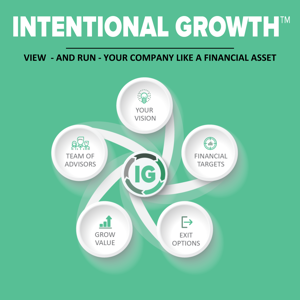
              Intentional Growth™ is a podcast is a podcast for entrepreneurs and business owners wanting to view - and run - their company like a financial asset so they can have fun, create wealth, and make an impact. Truly make the entire journey of owning and running a company "worth it".