Intentional Growth

Intentional Growth

By Arkona - Intentional GrowthBusinessEntrepreneurshipInvestingManagement
Download on the App Store

Intentional Growth episodes

  • M&A is Messy: The Impact of Company Culture Pre and Post Sale

    Jennifer Fondrevay is the founder of Day One Ready, a consulting firm for business owners going through mergers and acquisitions. Jennifer specializes in keeping the human element of selling businesses in the forefront.

    Today, she tells me about her experiences with M&A and how she has met a need that many businesses don’t think about until after the fact. That need, of course, is keeping your employees and more importantly middle managers in the loop about their future with your company once it is sold.

    Jennifer is in the process of writing a book for these middle managers and other team leaders who may find themselves working for a merged company. It’s called Now What? A Survival Guide for Navigating and Thriving Through Acquisition.

    You will learn about:
    • Jennifer’s background in advertising and marketing.
    • How she got into M&A.
    • Who her book is for and why she launched Day One Ready.
    • Why M&A is important to a business.
    • Why incorrect valuation is the main reason businesses fail the first year after a merger.
    • The culture clashes that happen after a sale.
    • Painting a clear picture of a company’s future is critical.
    • How Jennifer provides transparency to the M&A process.
    • The types of leaders you need to include in this process.
    • Emphasizing how the employee fits into the new system.
    • The stats of failure for an M&A business during the first year.
    • The steps to considering people first.
    • The importance of respect.
    • Jennifer’s parting advice.
    • Takeaways:

      The fact is your company will change after a merger. You need to ask the right questions and include the right people in your company to create a uniform and clear representation of how the business will change for the employees just looking for marching orders. If you show respect to your employees it will go a long way.

      Links and Resources:

      GEXP Collaborative

      Jennifer’s website
      Now What? A Survival Guide for Navigating and Thriving Through Acquisition

      About Jennifer:

      From working with a wide variety of Fortune 500 companies, start-ups, and small businesses, Jennifer has seen countless growth strategies fall short because a workforce cannot pivot to adapt to change as effectively as leadership anticipated. In hindsight, it’s easy to see why people strategies broke down, but by then it’s too late to intervene.

      Jennifer Fondrevay is the organizational transformation guru companies need to keep their growth strategies on track. While data is increasingly used to guide business decisions, Jennifer helps ensure the human component of a company’s plan, such as culture, productivity, and retention remains a cornerstone of success during times of change rather than an inhibitor. Serving as an advisor to senior leadership and a liaison to middle managers, she is a much-needed resource who guides companies safely through unfamiliar waters.

      56 min
    • M&A is Messy: The Impact of Company Culture Pre and Post Sale
      Jennifer Fondrevay is the founder of Day One Ready, a consulting firm for business owners going through mergers and acquisitions. Jennifer specializes in keeping the human element of selling businesses in the forefront.
      Today, she tells me about her experiences with M&A and how she has met a need that many businesses don’t think about until after the fact. That need, of course, is keeping your employees and more importantly middle managers in the loop about their future with your company once it is sold.
      Jennifer is in the process of writing a book for these middle managers and other team leaders who may find themselves working for a merged company. It’s called Now What? A Survival Guide for Navigating and Thriving Through Acquisition.
      You will learn about:
      Jennifer’s background in advertising and marketing.
      How she got into M&A.
      Who her book is for and why she launched Day One Ready.
      Why M&A is important to a business.
      Why incorrect valuation is the main reason businesses fail the first year after a merger.
      The culture clashes that happen after a sale.
      Painting a clear picture of a company’s future is critical.
      How Jennifer provides transparency to the M&A process.
      The types of leaders you need to include in this process.
      Emphasizing how the employee fits into the new system.
      The stats of failure for an M&A business during the first year.
      The steps to considering people first.
      The importance of respect.
      Jennifer’s parting advice.
      Takeaways:
      The fact is your company will change after a merger. You need to ask the right questions and include the right people in your company to create a uniform and clear representation of how the business will change for the employees just looking for marching orders. If you show respect to your employees it will go a long way.
      Links and Resources:
      GEXP Collaborative
      Jennifer’s website
      Now What? A Survival Guide for Navigating and Thriving Through Acquisition
      About Jennifer:
      From working with a wide variety of Fortune 500 companies, start-ups, and small businesses, Jennifer has seen countless growth strategies fall short because a workforce cannot pivot to adapt to change as effectively as leadership anticipated. In hindsight, it’s easy to see why people strategies broke down, but by then it’s too late to intervene.
      Jennifer Fondrevay is the organizational transformation guru companies need to keep their growth strategies on track. While data is increasingly used to guide business decisions, Jennifer helps ensure the human component of a company’s plan, such as culture, productivity, and retention remains a cornerstone of success during times of change rather than an inhibitor. Serving as an advisor to senior leadership and a liaison to middle managers, she is a much-needed resource who guides companies safely through unfamiliar waters.
      56 min
    • How Much Do You Need to Sell Your Company for? The Goal: Lifetime Cash Flow

      Brandon Wood is one of my partners in GEXP Collaborative. He has decades of financial experience and is a partner with Solidity Financial. Today’s topic is how to use your numbers to get the best possible exit option for your situation.

      Many business owners tend to forget that their business fuels their lifestyle. Brandon shares how doing the research and due diligence for your business will show you if your post-sale income will maintain your current lifestyle. He discusses how to calculate the value gap for your business and how to shrink it. We also discuss outsized returns and how they affect value gaps.

      Rushing to a sale is always a bad decision and Brandon helps us slow down and take the time to really be prepared for the negotiation phase.

      What you will learn:
      • Brandon’s early career in finances.
      • How risk drives the need for understanding your numbers.
      • Observations Brandon has made about risk.
      • What is value gap?
      • How to cope with a large value gap.
      • The factors you need to consider when calculating your business’s value.
      • The process Brandon and his team take clients through for value calculation.
      • The variables that will affect a business’s value.
      • What are outsized returns?
      • What outsized returns mean for a value gap.
      • The problems that come up with a surprise offer.
      • How to optimize your exit options.
      • Takeaway:

        Understanding your numbers is one of the most important things you can do. To get what you want out of the exit, knowing your numbers will make your options clearer.

        Links and Resources:

        GEXP Collaborative

        About Brandon:

        Brandon leads the operations and project management teams for GEXP Collaborative. His management experience spans two decades, where he has directed multidisciplinary teams in treasury operations, risk management, compliance oversight and financial modeling. He helps bridge the elite strategies of our GEXP design team with the personal financial dynamics of each client. Brandon is also a partner at the family office firm Solidity Financial.

        50 min
      • How Much Do You Need to Sell Your Company for? The Goal: Lifetime Cash Flow
        Brandon Wood is one of my partners in GEXP Collaborative. He has decades of financial experience and is a partner with Solidity Financial. Today’s topic is how to use your numbers to get the best possible exit option for your situation.
        Many business owners tend to forget that their business fuels their lifestyle. Brandon shares how doing the research and due diligence for your business will show you if your post-sale income will maintain your current lifestyle. He discusses how to calculate the value gap for your business and how to shrink it. We also discuss outsized returns and how they affect value gaps.
        Rushing to a sale is always a bad decision and Brandon helps us slow down and take the time to really be prepared for the negotiation phase.
        What you will learn:
        Brandon’s early career in finances.
        How risk drives the need for understanding your numbers.
        Observations Brandon has made about risk.
        What is value gap?
        How to cope with a large value gap.
        The factors you need to consider when calculating your business’s value.
        The process Brandon and his team take clients through for value calculation.
        The variables that will affect a business’s value.
        What are outsized returns?
        What outsized returns mean for a value gap.
        The problems that come up with a surprise offer.
        How to optimize your exit options.
        Takeaway:
        Understanding your numbers is one of the most important things you can do. To get what you want out of the exit, knowing your numbers will make your options clearer.
        Links and Resources:
        GEXP Collaborative
        About Brandon:
        Brandon leads the operations and project management teams for GEXP Collaborative™. His management experience spans two decades, where he has directed multidisciplinary teams in treasury operations, risk management, compliance oversight and financial modeling. He helps bridge the elite strategies of our GEXP design team with the personal financial dynamics of each client. Brandon is also a partner at the family office firm Solidity Financial.
        50 min
      • Protect the Value of Your Business: How to Use Insurance In Your Exit Plan

        Chris Steffl is the owner of MVP Service Solutions, an insurance wholesaler that offers 1000s of products from over 100 carriers. Chris’s background in insurance and finances gives him a unique perspective on the relationship between insurance and business. We discuss the common mistakes and problems business owners have when setting up their insurance needs.

        Insurance is a complex part of exit planning. Chris explains how insurance can make or break a deal structure. We explore the ways insurance can be used to build cash flow, reduce financial risk, and help your employees prepare for the next stage of the business. Insurance is a highly customizable aspect of a business. Chris shares how he helps business owners prepare for the worst and make the best decisions for their company.

        What you will learn:
        • Chris’s background in insurance.
        • The benefits of working with Chris and MVP.
        • The most common problem Chris sees with clients.
        • How to decide the value of your business.
        • Why you should review your policy every two years.
        • What is a key man policy?
        • How disability insurance works.
        • How to plan for being removed from a business.
        • The benefits of term policies.
        • How permanent policies work.
        • What is a variable policy?
        • What is guaranteed universal life insurance?
        • Chris’s observations from the business.
        • How insurance can be a retention tool for your employees.
        • When can you deduct insurance from your taxes?
        • Common insurance issues that come up during estate planning.
        • Chris’s advice to the audience.
        • Takeaway:

          Do you have a plan B? And if you don’t you should. Do you know what you want from your business? Does your insurance allow stability and lock in your key employees? These are all questions you need to ask yourself. Insurance is a customizable thing, but how can you customize it, when you don’t know what you want to achieve? Plan ahead and make sure to include everybody in the process.

          Links and Resources

          GEXP Collaborative

          MVP Service Solutions

          About Chris:

          Chris is Executive the Owner at MVP Service Solutions, an insurance wholesaler with deep experience and resources. He provides highly specialized insurance solutions to business owners such as employee benefits, property and casualty, personal, life insurance and much more. For over 17 years Chris has been heavily involved in industry circles and is highly involved in the Insurance Industry Associations.

          0 min
        • #108 - How to Use Insurance In Your Exit Plan
          Chris Steffl is the owner of MVP Service Solutions, an insurance wholesaler that offers 1000s of products from over 100 carriers. Chris’s background in insurance and finances gives him a unique perspective on the relationship between insurance and business. We discuss the common mistakes and problems business owners have when setting up their insurance needs.
          Insurance is a complex part of exit planning. Chris explains how insurance can make or break a deal structure. We explore the ways insurance can be used to build cash flow, reduce financial risk, and help your employees prepare for the next stage of the business. Insurance is a highly customizable aspect of a business. Chris shares how he helps business owners prepare for the worst and make the best decisions for their company.
          What you will learn:
          Chris’s background in insurance.
          The benefits of working with Chris and MVP.
          The most common problem Chris sees with clients.
          How to decide the value of your business.
          Why you should review your policy every two years.
          What is a key man policy?
          How disability insurance works.
          How to plan for being removed from a business.
          The benefits of term policies.
          How permanent policies work.
          What is a variable policy?
          What is guaranteed universal life insurance?
          Chris’s observations from the business.
          How insurance can be a retention tool for your employees.
          When can you deduct insurance from your taxes?
          Common insurance issues that come up during estate planning.
          Chris’s advice to the audience.
          Takeaway:
          Do you have a plan B? And if you don’t you should. Do you know what you want from your business? Does your insurance allow stability and lock in your key employees? These are all questions you need to ask yourself. Insurance is a customizable thing, but how can you customize it, when you don’t know what you want to achieve? Plan ahead and make sure to include everybody in the process.
          Links and Resources
          GEXP CollaborativeMVP Service Solutions
          About Chris:
          Chris is Executive the Owner at MVP Service Solutions, an insurance wholesaler with deep experience and resources. He provides highly specialized insurance solutions to business owners such as employee benefits, property and casualty, personal, life insurance and much more. For over 17 years Chris has been heavily involved in industry circles and is highly involved in the Insurance Industry Associations.
          1 hr 2 min
        • Protect the Value of Your Business: How to Use Insurance In Your Exit Plan
          Chris Steffl is the owner of MVP Service Solutions, an insurance wholesaler that offers 1000s of products from over 100 carriers. Chris’s background in insurance and finances gives him a unique perspective on the relationship between insurance and business. We discuss the common mistakes and problems business owners have when setting up their insurance needs.
          Insurance is a complex part of exit planning. Chris explains how insurance can make or break a deal structure. We explore the ways insurance can be used to build cash flow, reduce financial risk, and help your employees prepare for the next stage of the business. Insurance is a highly customizable aspect of a business. Chris shares how he helps business owners prepare for the worst and make the best decisions for their company.
          What you will learn:
          Chris’s background in insurance.
          The benefits of working with Chris and MVP.
          The most common problem Chris sees with clients.
          How to decide the value of your business.
          Why you should review your policy every two years.
          What is a key man policy?
          How disability insurance works.
          How to plan for being removed from a business.
          The benefits of term policies.
          How permanent policies work.
          What is a variable policy?
          What is guaranteed universal life insurance?
          Chris’s observations from the business.
          How insurance can be a retention tool for your employees.
          When can you deduct insurance from your taxes?
          Common insurance issues that come up during estate planning.
          Chris’s advice to the audience.
          Takeaway:
          Do you have a plan B? And if you don’t you should. Do you know what you want from your business? Does your insurance allow stability and lock in your key employees? These are all questions you need to ask yourself. Insurance is a customizable thing, but how can you customize it, when you don’t know what you want to achieve? Plan ahead and make sure to include everybody in the process.
          Links and Resources
          GEXP Collaborative MVP Service Solutions
          About Chris:
          Chris is Executive the Owner at MVP Service Solutions, an insurance wholesaler with deep experience and resources. He provides highly specialized insurance solutions to business owners such as employee benefits, property and casualty, personal, life insurance and much more. For over 17 years Chris has been heavily involved in industry circles and is highly involved in the Insurance Industry Associations.
          1 hr 2 min
        • Friends Don’t Let Friends Overpay on Taxes: A Deep Dive into Cost Segregation

          Jodi Nielsen and David Deshotels are Cost Segregation Services Incorporated team members. CSSI is a cost segregation firm. The company performs cost segregation studies for business owners to get the optimal value out of their business.

          Jodi and David join me today to tell me what cost segregation is and why business owners should consider it.  They have tons of examples and reasons for choosing the cost segregation model. They also have reasons for why not to do it.

          If you actually own your business’s building, cost segregation is a great option to pull value out of it. Jodi and David will tell how they can help. Today’s episode is a must-listen for any business owner with a building.

          What you will learn:
          • Welcome, Jodi and David!
          • What is Cost Segregation Services Incorporated (CSSI)?
          • Why “friends don’t let friends overpay their taxes.”
          • How will the new tax codes affect business owners?
          • Why cost segregation is the best method of depreciation.
          • Straight depreciation vs. cost segregation
          • Why the government allows cost segregation.
          • The strategies to reduce recapture.
          • Why not to do cost segregation.
          • Why a cost segregation study is a great negotiation tool.
          • How cost segregation helps with the IRS.
          • Jodi and David’s final thoughts.
          • Takeaway:

            Teams like CSSI are useful to help you see the big picture. You need to know what you plan to accomplish from a cost segregation study. Everything CSSI looks at is connected, and the information they find for you is to your benefit.

            Links and Resources:

            GEXP Collaborative

            CSSI
            Jodi Nielsen – 651-210-1921
            Jodi’s Email

            About Jodi:

            Jodi Nielsen is a National Sr. Account Manager with Cost Segregation Services, Inc.  (CSSI) Jodi offices out of MN. She oversees the Engineered based Cost Seg. studies for her clients. The studies provide an additional tax benefit for building owners by the acceleration of a building’s depreciation. Jodi provides 1 CPE credit courses for Tax professionals across the country educating them on Cost Segregation, Tangible Property Regulations, PAD, QIP, 45L and 179D. Working with all different types of building owners across the United States is her passion.

            Jodi provides clients with the incredible tax benefit to take advantage of, thru the defendable CSSI calculated study which is the IRS preferred method. Jodi has a bachelor’s degree in Nuclear Medicine. Her past positions have been as an Administrator of a Medical Clinic, co-owner of a shipping and packing company and a consultant for multiple businesses for strategic financial growth opportunities by creating cash flow.

            Jodi provides the complex information in an easy to understand format. Assisting owners to take advantage of the additional Cost. Seg. tax benefit opportunity, which enables them to be able to use their money to grow their business and make more money is a blessing she enjoys every day.

            About David:

            David is part of the CSSI team of present

            50 min
          • Friends Don’t Let Friends Overpay on Taxes: A Deep Dive into Cost Segregation
            Jodi Nielsen and David Deshotels are Cost Segregation Services Incorporated team members. CSSI is a cost segregation firm. The company performs cost segregation studies for business owners to get the optimal value out of their business.
            Jodi and David join me today to tell me what cost segregation is and why business owners should consider it.  They have tons of examples and reasons for choosing the cost segregation model. They also have reasons for why not to do it.
            If you actually own your business’s building, cost segregation is a great option to pull value out of it. Jodi and David will tell how they can help. Today’s episode is a must-listen for any business owner with a building.
            What you will learn:
            Welcome, Jodi and David!
            What is Cost Segregation Services Incorporated (CSSI)?
            Why “friends don’t let friends overpay their taxes.”
            How will the new tax codes affect business owners?
            Why cost segregation is the best method of depreciation.
            Straight depreciation vs. cost segregation
            Why the government allows cost segregation.
            The strategies to reduce recapture.
            Why not to do cost segregation.
            Why a cost segregation study is a great negotiation tool.
            How cost segregation helps with the IRS.
            Jodi and David’s final thoughts.
            Takeaway:
            Teams like CSSI are useful to help you see the big picture. You need to know what you plan to accomplish from a cost segregation study. Everything CSSI looks at is connected, and the information they find for you is to your benefit.
            Links and Resources:
            GEXP Collaborative
            CSSI
            Jodi Nielsen – 651-210-1921
            Jodi’s Email
            About Jodi:
            Jodi Nielsen is a National Sr. Account Manager with Cost Segregation Services, Inc.  (CSSI) Jodi offices out of MN. She oversees the Engineered based Cost Seg. studies for her clients. The studies provide an additional tax benefit for building owners by the acceleration of a building’s depreciation. Jodi provides 1 CPE credit courses for Tax professionals across the country educating them on Cost Segregation, Tangible Property Regulations, PAD, QIP, 45L and 179D. Working with all different types of building owners across the United States is her passion.
            Jodi provides clients with the incredible tax benefit to take advantage of, thru the defendable CSSI calculated study which is the IRS preferred method. Jodi has a bachelor’s degree in Nuclear Medicine. Her past positions have been as an Administrator of a Medical Clinic, co-owner of a shipping and packing company and a consultant for multiple businesses for strategic financial growth opportunities by creating cash flow.
            Jodi provides the complex information in an easy to understand format. Assisting owners to take advantage of the additional Cost. Seg. tax benefit opportunity, which enables them to be able to use their money to grow their business and make more money is a blessing she enjoys every day.
            About David:
            David is part of the CSSI team of present
            50 min
          • Passion, Planning and Perseverance: One Man’s Story of Surviving Y2K as a Tech Company

            My guest today is Scott Schwefel. Scott is a business coach, leadership, and team trainer. We talk about 3 of his businesses and how he sold 2 of them for over $1,000,000 (but not without a challenge or two) and how each one has taught him something about himself and the importance of good team dynamic and communication.

            Currently, Scott is living the life of his dreams as a speaker who promotes the Discovery method of business management. He is a facilitator and an enthusiastic trainer of the Discovery system. Discovery is a communication method that he has found to be essential in team communication. We discuss why he so passionate about improving business culture and communication and how you as the listener can find the passion you need to keep a business going.

            What you will learn:
            • Scott’s early days in college, and a change in career.
            • The Pro Net Marketing experience and what it taught Scott.
            • The importance of having a good spouse who will support your entrepreneurial dreams.
            • Scott’s time in the food industry and what he learned.
            • What it is like working with a venture capital investor.
            • The mistakes Scott and his partner made in the food business.
            • How to measure the value of a business when there was no profit.
            • The beginning of Benchmark.
            • Why Scott chose to go into a tech business.
            • Knowing your team and the role you play within it.
            • The 2000 tech crash and how Scott bounced back.
            • How the Discovery method changed how Scott does business.
            • How Scott rebuilt Benchmark.
            • What Discovery can do for your business.
            • What Discovery can’t do for your business.
            • How to build a company that doesn’t need you.
            • Why Scott loves what he does.
            • The benefits of CEO peer groups.
            • Scott’s advice for the audience.
            • Takeaways:

              Today’s takeaway is all about passion and knowing why you are in your business. Do the work ahead of time and figure out why you want to own a business. When you know why you are running the business you can hire the right people and keep doing the things you enjoy about it. Know what you are passionate about and stick with it.

              Links and Resources:

              GEXP Collaborative
              Scott’s Ted Talk
              Discover Yourself
              Scott’s website

              About Scott:

              A serial entrepreneur, Scott founded and grew Minnesota’s largest technology training company to over $12 million in sales, and then sold the company in 2003.  His company was named one of the 50 fastest-growing private companies in Minnesota in 1997 and 1998, and he was named to Minnesota’s 40 under 40 list of successful top executives. Scott then founded and grew Insights Twin Cities to over $3 million in sales and sold it to Insights in Scotland in 2014.

              0 min

            About Intentional Growth

            From the publisher's feed

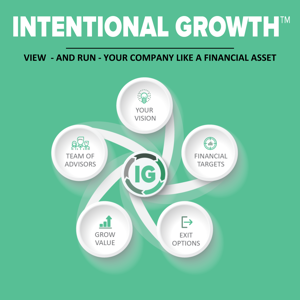
            Intentional Growth™ is a podcast is a podcast for entrepreneurs and business owners wanting to view - and run - their company like a financial asset so they can have fun, create wealth, and make an impact. Truly make the entire journey of owning and running a company "worth it".