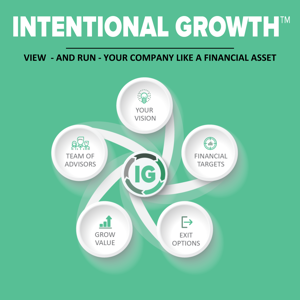
Intentional Growth

Intentional Growth

By Arkona - Intentional GrowthBusinessEntrepreneurshipInvestingManagement
Download on the App Store

Intentional Growth episodes

  • How to Play the M&A Game: De-Risking, Building Value and Selling a Company

    Today I am joined by Dave Kauppi, an investment banker with MidMarket Capital. We discuss the technology/software industry and what makes it different than traditional companies. Dave specializes in M&A (mergers and acquisitions.) He explains how he got into the tech industry and shares some examples of deals and business models he has seen over the course of his career.

    We explore what makes a company worth the investment to a buyer and how you can make sure you use that value to your advantage. It is very important that you do the due diligence for your company so you know what makes you different and how that difference can be leveraged.

    What you will learn about this episode:
    • Dave’s career background.
    • Who MidMarket Capital serves.
    • How the tech industry has changed over the years.
    • The pros and cons of the recurring revenue model.
    • How to convert your company to a recurring model.
    • Companies that are accidental software providers.
    • How the market dictates the value of a software company.
    • Common contingents that are included in tech company sale deals.
    • Dave’s Kindle book.
    • Dave’s tips for negotiating with experienced buyers.
    • Dave’s parting words for the audience.
    • Takeaways:

      It is very important that you keep an eye on the big picture. You need to know what makes you different in your field and how that is valuable to a potential buyer. Then you need to use that value to negotiate terms that are also good for you.

      Create a business that is sellable and can go on without you and educate yourself about your industry market.

      Links and Resources:

      Selling Your Software Company: An Insider’s Guide to Achieving Strategic Value by Dave Kauppi

      MidMarket Capital
      GEXP Collaborative
      Dave’s email
      269-231-5772

      About Dave:

      Dave began his Mergers & Acquisitions practice after a twenty-five-year career with a Multi-Industry background that included banking, high tech, and services. While in the leasing industry he gained a reputation for “finding a better way” through creative deal structure. During one fiscal year, Dave’s region successfully negotiated over $200 million in financing transactions. He was instrumental in negotiating three multi-million dollar strategic partnerships in the service industry and launched and managed a very successful division. In his M&A practice, Dave has completed transactions that range from succession planning exits to finding strategic buyers for healthy, rapidly growing companies seeking a partner to provide scale, to division divestitures, to troubled companies.

      His career focus has been in sales and sales management and he has received numerous awards for sales excellence. He brings his strong negotiating and facilitating skills to his practice, successfully managing transactions to a win-win result.

      Dave graduated from The Wharton School of Business, the University of Pennsylvania with a BS in Economics with a concentration in Finance. He received an MBA with a concentration in

      1 hr 4 min
    • #121: How to Play the M&A Game: De-Risking, Building Value and Selling a Company
      Today I am joined by Dave Kauppi, an investment banker with MidMarket Capital. We discuss the technology/software industry and what makes it different than traditional companies. Dave specializes in M&A (mergers and acquisitions.) He explains how he got into the tech industry and shares some examples of deals and business models he has seen over the course of his career.
      We explore what makes a company worth the investment to a buyer and how you can make sure you use that value to your advantage. It is very important that you do the due diligence for your company so you know what makes you different and how that difference can be leveraged.
      What you will learn about this episode:
      Dave’s career background.
      Who MidMarket Capital serves.
      How the tech industry has changed over the years.
      The pros and cons of the recurring revenue model.
      How to convert your company to a recurring model.
      Companies that are accidental software providers.
      How the market dictates the value of a software company.
      Common contingents that are included in tech company sale deals.
      Dave’s Kindle book.
      Dave’s tips for negotiating with experienced buyers.
      Dave’s parting words for the audience.
      Takeaways:
      It is very important that you keep an eye on the big picture. You need to know what makes you different in your field and how that is valuable to a potential buyer. Then you need to use that value to negotiate terms that are also good for you.
      Create a business that is sellable and can go on without you and educate yourself about your industry market.
      Links and Resources:
      Selling Your Software Company: An Insider’s Guide to Achieving Strategic Value by Dave Kauppi MidMarket Capital GEXP Collaborative Dave’s email269-231-5772
      About Dave:
      Dave began his Mergers & Acquisitions practice after a twenty-five-year career with a Multi-Industry background that included banking, high tech, and services. While in the leasing industry he gained a reputation for “finding a better way” through creative deal structure. During one fiscal year, Dave’s region successfully negotiated over $200 million in financing transactions. He was instrumental in negotiating three multi-million dollar strategic partnerships in the service industry and launched and managed a very successful division. In his M&A practice, Dave has completed transactions that range from succession planning exits to finding strategic buyers for healthy, rapidly growing companies seeking a partner to provide scale, to division divestitures, to troubled companies.
      His career focus has been in sales and sales management and he has received numerous awards for sales excellence. He brings his strong negotiating and facilitating skills to his practice, successfully managing transactions to a win-win result.
      Dave graduated from The Wharton School of Business, the University of Pennsylvania with a BS in Economics with a concentration in Finance. He received an MBA with a concentration in marketing from DePaul University. Dave is a Certified Business Intermediary (CBI), a licensed business broker, and a member of IBBA (International Business Brokers Association) and the MBBI (Midwest Business Brokers and Intermediaries).
      1 hr 4 min
    • 10 Year Economic Forecast: 2019 Downturn, 2030 Depression

      ITR Economics’ senior consulting advisor Alex Chausovsky speaks to me today about the current and possible future U.S. economic predictions. We discuss the slow down on its way during the 2020s and the chance of depression in the 2030s. Alex explains why he believes these trends are possible and what a business owner can do to be prepared.

      Alex explains how ITR gets their data and what services they offer their clients. These services include consulting, market forecasting, and public speaking.

      What you will learn:
      • My visit to the Vistage Summit.
      • Welcome, Alex Chausovsky to the podcast.
      • Alex’s business background.
      • ITR Economics’ mission.
      • How ITR collects their data.
      • The current state of the economy and what to expect in early 2019.
      • The economic slow down of the 2020s.
      • The economic crash of the 2030s.
      • Why recession cycles are predictable.
      • How trade policy affects the economy.
      • The 3 factors that drive an economy.
      • Why immigration is important to the U.S.
      • The industries that are suffering at the moment.
      • The reasons a depression or recession happen.
      • Why timing is everything.
      • Recessions are times of opportunity.
      • How other global economies affect our economy.
      • The steps that can extend government programs such as social security.
      • How healthcare contributes to the problem.
      • “People behave the way they are incented to behave.”
      • Alex’s parting thoughts.
      • Takeaway:

        You need to build your business to sell. Think ahead and plan for economic downturns, upswings, and be a step ahead of any predictions. Learn to be nimble and adjust with the economy.

        Links and Resources

        Big Debt Crises by Ray Dalio

        GEXP Collaborative
        How The Economic Machine Works by Ray Dalio
        Summary: Factfulness: Ten Reasons We’re Wrong About the World–and Why Things Are Better Than You Think by Hans Rosling
        Prosperity in The Age of Decline: How to Lead Your Business and Preserve Wealth Through the Coming Business Cycles by Alan Beaulieu & Brian Beaulieu            
        Vistage Summit
        Alex on Twitter
        Alex on LinkedIn
        ITR Economics
        Alex’s email

        About Alex:

        Alex Chausovsky is a highly experienced market researcher and analyst with more than a decade of expertise across subjects including macroeconomics,

        1 hr 13 min
      • 10 Year Economic Forecast: 2019 Downturn, 2030 Depression
        ITR Economics’ senior consulting advisor Alex Chausovsky speaks to me today about the current and possible future U.S. economic predictions. We discuss the slow down on its way during the 2020s and the chance of depression in the 2030s. Alex explains why he believes these trends are possible and what a business owner can do to be prepared.
        Alex explains how ITR gets their data and what services they offer their clients. These services include consulting, market forecasting, and public speaking.
        What you will learn:
        My visit to the Vistage Summit.
        Welcome, Alex Chausovsky to the podcast.
        Alex’s business background.
        ITR Economics’ mission.
        How ITR collects their data.
        The current state of the economy and what to expect in early 2019.
        The economic slow down of the 2020s.
        The economic crash of the 2030s.
        Why recession cycles are predictable.
        How trade policy affects the economy.
        The 3 factors that drive an economy.
        Why immigration is important to the U.S.
        The industries that are suffering at the moment.
        The reasons a depression or recession happen.
        Why timing is everything.
        Recessions are times of opportunity.
        How other global economies affect our economy.
        The steps that can extend government programs such as social security.
        How healthcare contributes to the problem.
        “People behave the way they are incented to behave.”
        Alex’s parting thoughts.
        Takeaway:
        You need to build your business to sell. Think ahead and plan for economic downturns, upswings, and be a step ahead of any predictions. Learn to be nimble and adjust with the economy.
        Links and Resources
        Big Debt Crises by Ray Dalio GEXP Collaborative How The Economic Machine Works by Ray Dalio Summary: Factfulness: Ten Reasons We’re Wrong About the World–and Why Things Are Better Than You Think by Hans Rosling Prosperity in The Age of Decline: How to Lead Your Business and Preserve Wealth Through the Coming Business Cycles by Alan Beaulieu & Brian Beaulieu             Vistage Summit Alex on Twitter Alex on LinkedIn ITR Economics Alex’s email
        About Alex:
        Alex Chausovsky is a highly experienced market researcher and analyst with more than a decade of expertise across subjects including macroeconomics, industrial manufacturing, energy efficiency, automation, and advanced technology trends. He has consulted and advised companies throughout the US, Europe, Brazil, China, and Japan for the last 15 years. Alex is currently responsible for providing reliable industry and company forecasts, presentations, webinars, and economic consulting services for small
        1 hr 13 min
      • Secrets of Growth: Data, Trends and Insights from the Middle Market

        Tom Stewart is the Executive Director of the National Center of the Middle Market. He joins me today to talk about the silent majority of middle market companies in the economy. Tom and his team research a segment of business that little is known about. Through this research, the Mid Market Center has found critical data that all business owners should know about their company.

        Tom and I discuss the 7 factors of growth, the 3 types of entrepreneurs, and the 9 value points that all businesses need to consider when they are assessing their company. Tom explains the methods that lead to this information and how business owners can benefit from the data collected. We also dive into a study Tom was recently involved in regarding M&A (Mergers & Acquisitions) and the information gleaned from it.

        If you are a middle-market company or you have hopes to be one someday this episode will offer a roadmap for your business growth. Tune in to hear how you can use this data to take your business to the next level!

        What you will learn:
        • What is the National Center of the Middle Market?
        • Who is the “middle market?”
        • Tom’s background in business.
        • Why middle market companies are important to the economy.
        • The 3 purposes of the Mid Market Center: Education, Research, and Outreach.
        • How innovation happens in business and what does the middle market have to do with it.
        • The importance of having this knowledge about your company for investors.
        • The cluster analysis and surveys conducted by the Mid Market Center.
        • The 7 Factors of Growth.
        • The 3 Groups of Leader Types.
        • The 2 factors that are uncontrollable by management.
        • A recent M&A study and the findings.
        • The 9 value points of fitness for a company.
        • Tom’s final thoughts.
        • Takeaway:

          Take advantage of all the resources GEXP Collaborative and the National Center of the Middle Market have to offer. This data is a playbook for business growth. Pay attention to the 7 growth factors, which type of entrepreneur you are, and look at all 9 of the value points mentioned today. This information is important for a healthy growth strategy.

          Links and Resources:

          GEXP Collaborative

          Tom Stewart on LinkedIn
          The National Center of the Middle Market

          About Tom:

          Thomas A. Stewart is the Executive Director of the National Center for the Middle Market, the leading source for knowledge, leadership, and research on mid-sized companies, based at the Fisher College of Business at The Ohio State University. Stewart is an influential thought leader on global management issues and ideas: an internationally recognized editor and publisher, an authority on intellectual capital and knowledge management, and a best-selling author.

          Before joining the National Center for the Middle Market, Stewart served as Chief Marketing and Knowledge Officer for international consulting firm Booz & Company (now called Strategy&), overseeing the firm’s intellectual agenda, major research projects, and strategy + business magazine. Prior to that, he was for six years the Editor and Managing Director of Harvard Business Review, leading it to multiple finalist nominations for a National Magazine Award. He earlier served as

          1 hr 6 min
        • Secrets of Growth: Data, Trends and Insights from the Middle Market
          Tom Stewart is the Executive Director of the National Center of the Middle Market. He joins me today to talk about the silent majority of middle market companies in the economy. Tom and his team research a segment of business that little is known about. Through this research, the Mid Market Center has found critical data that all business owners should know about their company.
          Tom and I discuss the 7 factors of growth, the 3 types of entrepreneurs, and the 9 value points that all businesses need to consider when they are assessing their company. Tom explains the methods that lead to this information and how business owners can benefit from the data collected. We also dive into a study Tom was recently involved in regarding M&A (Mergers & Acquisitions) and the information gleaned from it.
          If you are a middle-market company or you have hopes to be one someday this episode will offer a roadmap for your business growth. Tune in to hear how you can use this data to take your business to the next level!
          What you will learn:
          What is the National Center of the Middle Market?
          Who is the “middle market?”
          Tom’s background in business.
          Why middle market companies are important to the economy.
          The 3 purposes of the Mid Market Center: Education, Research, and Outreach.
          How innovation happens in business and what does the middle market have to do with it.
          The importance of having this knowledge about your company for investors.
          The cluster analysis and surveys conducted by the Mid Market Center.
          The 7 Factors of Growth.
          The 3 Groups of Leader Types.
          The 2 factors that are uncontrollable by management.
          A recent M&A study and the findings.
          The 9 value points of fitness for a company.
          Tom’s final thoughts.
          Takeaway:
          Take advantage of all the resources GEXP Collaborative and the National Center of the Middle Market have to offer. This data is a playbook for business growth. Pay attention to the 7 growth factors, which type of entrepreneur you are, and look at all 9 of the value points mentioned today. This information is important for a healthy growth strategy.
          Links and Resources:
          GEXP Collaborative Tom Stewart on LinkedIn The National Center of the Middle Market
          About Tom:
          Thomas A. Stewart is the Executive Director of the National Center for the Middle Market, the leading source for knowledge, leadership, and research on mid-sized companies, based at the Fisher College of Business at The Ohio State University. Stewart is an influential thought leader on global management issues and ideas: an internationally recognized editor and publisher, an authority on intellectual capital and knowledge management, and a best-selling author.
          Before joining the National Center for the Middle Market, Stewart served as Chief Marketing and Knowledge Officer for international consulting firm Booz & Company (now called Strategy&), overseeing the firm’s intellectual agenda, major research projects, and strategy + business magazine. Prior to that, he was for six years the Editor and Managing Director of Harvard Business Review, leading it to multiple finalist nominations for a National Magazine Award. He earlier served as the editorial director of Business 2.0 magazine and as a member of the Board of Editors of Fortune magazine.
          His new book, Woo, Wow, and Win: Service Design, Strategy, and the Art of Customer Delight (co-authored with Patricia O’Connell), was published by Harper Business in November 2016. He is also the author of Intellectual
          1 hr 6 min
        • 6-Year Lawsuit and $1 Million in Fees: What I Learned After My Exit

          Michael Dash is the CEO and President of Parallel HR Solutions. He is a life-long entrepreneur and the ultimate example of just how messy a business partnership break-up can be. We talk about the early days of Parallel HR and how a six-month commitment turned into eleven years. Michael also tells me about how he got tangled up in a six-year lawsuit and nearly lost his sanity in the process.

          After discussing his fall, he shares how he found peace of mind again and changed his life for the better. Today’s episode is a cautionary tale about how to keep your ego in check and when to know to cut your losses.

          What you will learn:
          • Michael’s business background.
          • How Michael got into the staffing service business.
          • The early years of Parallel HR and the move to Utah.
          • How Michael and his partner structured the business.
          • Why he decided to buy his partner out of the company.
          • How the buy-out led to a lawsuit and a counter lawsuit.
          • The danger of emotional decision making.
          • The 2 people not to ask advice from during a lawsuit.
          • How flow consciousness helped Michael make positive changes in his life.
          • The importance of small changes.
          • The power of positivity.
          • How the six-year lawsuit was settled.
          • Michael’s future plans moving forward.
          • The 5 principles of activation.
          • Michael’s final thoughts.
          • Takeaways:
            1. Make sure your business structure is set in stone. Have the hard conversations and discuss how a big business change will be handled before tempers flare and lawyers are called. Avoid ambiguity and lay it all out in the beginning.
            2. Keep your ego out of business decisions. Logic is the key to running a business, know why you are in the business and keep the why in mind so you don’t get sidetracked by personal feelings.
            3. Links and Resources:

              GEXP Collaborative

              Ignite Journeys
              Michael’s Thrive Global Articles
              FATE: From Addict to Entrepreneur
              Michael Dash on Instagram
              Michael Dash on LinkedIn
              Michael Dash on Facebook
              Michael Dash’s website

              About Michael:

              Michael grew up in a small town in New Jersey where he developed his passion for entrepreneurship while working with his father. Michael learned the value of hard work and the importance of a strong worth ethic during this time.

              He went on to study at the University of Maryland. He began his career in sports advertising and soon began working with a childhood friend in the staffing business. In 2007, he followed a  business opportunity to Utah. This was the birth of a thriving technology talent acquisition firm called Parallel HR Solutions where he is the CEO and President.

              Michael is also an active community member and philanthropist. He supports and is a member of the Leukemia Lymphoma Society’s Team-in-Training fundraising group. He is also a part of several national organizations such as Young Entrepreneur Council (YEC) and The Founders Organization. He has plans to finis

              1 hr
            4. 6-Year Lawsuit and $1 Million in Fees: What I Learned After My Exit
              Michael Dash is the CEO and President of Parallel HR Solutions. He is a life-long entrepreneur and the ultimate example of just how messy a business partnership break-up can be. We talk about the early days of Parallel HR and how a six-month commitment turned into eleven years. Michael also tells me about how he got tangled up in a six-year lawsuit and nearly lost his sanity in the process.
              After discussing his fall, he shares how he found peace of mind again and changed his life for the better. Today’s episode is a cautionary tale about how to keep your ego in check and when to know to cut your losses.
              What you will learn:
              Michael’s business background.
              How Michael got into the staffing service business.
              The early years of Parallel HR and the move to Utah.
              How Michael and his partner structured the business.
              Why he decided to buy his partner out of the company.
              How the buy-out led to a lawsuit and a counter lawsuit.
              The danger of emotional decision making.
              The 2 people not to ask advice from during a lawsuit.
              How flow consciousness helped Michael make positive changes in his life.
              The importance of small changes.
              The power of positivity.
              How the six-year lawsuit was settled.
              Michael’s future plans moving forward.
              The 5 principles of activation.
              Michael’s final thoughts.
              Takeaways:
              Make sure your business structure is set in stone. Have the hard conversations and discuss how a big business change will be handled before tempers flare and lawyers are called. Avoid ambiguity and lay it all out in the beginning.
              Keep your ego out of business decisions. Logic is the key to running a business, know why you are in the business and keep the why in mind so you don’t get sidetracked by personal feelings.
              Links and Resources:
              GEXP Collaborative Ignite Journeys Michael’s Thrive Global Articles FATE: From Addict to Entrepreneur Michael Dash on Instagram Michael Dash on LinkedIn Michael Dash on Facebook Michael Dash’s website
              About Michael:
              Michael grew up in a small town in New Jersey where he developed his passion for entrepreneurship while working with his father. Michael learned the value of hard work and the importance of a strong worth ethic during this time.
              He went on to study at the University of Maryland. He began his career in sports advertising and soon began working with a childhood friend in the staffing business. In 2007, he followed a  business opportunity to Utah. This was the birth of a thriving technology talent acquisition firm called Parallel HR Solutions where he is the CEO and President.
              Michael is also an active community member and philanthropist. He supports and is a member of the Leukemia Lymphoma Society’s Team-in-Training fundraising group. He is also a part of several national organizations such as Young Entrepreneur Council (YEC) and The Founders Organization. He has plans to finish his book Chasing the High early next year.
              1 hr
            5. 8 Ways to Increase The Value of Your Business

              This episode concludes my 3 part series on evaluating your business. To recap, my first episode on this topic was about improving the value of your business. Brandon Hall discussed his experience with business valuations and why they are important. The second episode featured Ryan Turbes, Ryan is a CPA who painted a realistic picture of payout and what a buyer looks for in a deal.

              This episode focuses on value building and the 8 key value drivers that buyers consider when purchasing a company. John Warrillow returns to my podcast to explain the value builder system and how it streamlines the due diligence process. There are a ton of resources and tools we will share with you during this episode, so tune in to learn how to create a clear roadmap to getting the best price possible for your business.

              What you will learn:
              • A recap of my business evaluation series.
              • The importance of creating a company that will run without you.
              • John’s background in business.
              • The beginnings of The Value Builder System company.
              • What his company does.
              • The Built to Sell podcast.
              • The Value Build survey and what it means for your business.
              • John’s typical customer.
              • Industry standards have nothing to do with company value.
              • The 8 key drivers the Value Builder System uses.
              • What to fix first based on your value builder score.
              • Why earn-outs are an imperfect tool.
              • What are vendor take-backs and how do they work?
              • The benefits of a high value builder score.
              • The cash flow teeter-totter and how it affects a deal.
              • How to find recurring value in your business.
              • What is monopoly control?
              • John’s advice on how to avoid shiny object syndrome.
              • John’s parting words for the listeners.
              • Takeaway:

                Obviously, you need to get your value builder report and see the areas your business needs to improve. Value builder reports are free, only take a few minutes to complete and give you a roadmap that will make your sales process smoother.

                Link and Resources

                Built to Sell Podcast

                GEXP Collaborative
                The Value Builder System
                John Warrillow on Twitter
                Built to Sell: Creating a Business That Can Thrive Without You by John Warrillow
                The Automatic Customer: Creating a Subscription Business in Any Industry by John Warrillow

                About John:

                John Warrillow is the founder of The Value Builder System, a company that helps business owners improve the value of their company. As of 2017, The Value Builder System has served 40,000 users.

                John is the author of the bestselling book Built to Sell: Creating a Business That Can Thrive Without You, which was recognized by both Fortune and Inc Magazine as one of the best business books of 2011. Built to Sell has

                52 min
              • 8 Ways to Increase The Value of Your Business
                This episode concludes my 3 part series on evaluating your business. To recap, my first episode on this topic was about improving the value of your business. Brandon Hall discussed his experience with business valuations and why they are important. The second episode featured Ryan Turbes, Ryan is a CPA who painted a realistic picture of payout and what a buyer looks for in a deal.
                This episode focuses on value building and the 8 key value drivers that buyers consider when purchasing a company. John Warrillow returns to my podcast to explain the value builder system and how it streamlines the due diligence process. There are a ton of resources and tools we will share with you during this episode, so tune in to learn how to create a clear roadmap to getting the best price possible for your business.
                What you will learn:
                A recap of my business evaluation series.
                The importance of creating a company that will run without you.
                John’s background in business.
                The beginnings of The Value Builder System company.
                What his company does.
                The Built to Sell podcast.
                The Value Build survey and what it means for your business.
                John’s typical customer.
                Industry standards have nothing to do with company value.
                The 8 key drivers the Value Builder System uses.
                What to fix first based on your value builder score.
                Why earn-outs are an imperfect tool.
                What are vendor take-backs and how do they work?
                The benefits of a high value builder score.
                The cash flow teeter-totter and how it affects a deal.
                How to find recurring value in your business.
                What is monopoly control?
                John’s advice on how to avoid shiny object syndrome.
                John’s parting words for the listeners.
                Takeaway:
                Obviously, you need to get your value builder report and see the areas your business needs to improve. Value builder reports are free, only take a few minutes to complete and give you a roadmap that will make your sales process smoother.
                Link and Resources
                Built to Sell Podcast GEXP Collaborative The Value Builder System John Warrillow on Twitter Built to Sell: Creating a Business That Can Thrive Without You by John Warrillow The Automatic Customer: Creating a Subscription Business in Any Industry by John Warrillow
                About John:
                John Warrillow is the founder of The Value Builder System, a company that helps business owners improve the value of their company. As of 2017, The Value Builder System has served 40,000 users.
                John is the author of the bestselling book Built to Sell: Creating a Business That Can Thrive Without You, which was recognized by both Fortune and Inc Magazine as one of the best business books of 2011. Built to Sell has been translated into four languages. John’s next book, The Automatic Customer: Creating A Subscription Business In Any Industry was released by Random House in February 2015.
                Prior to starting The Value Builder System, John started and exited four companies, including a quantitative market research business that was acquired by The Corporate Executive Board (NYSE: CEB)
                52 min

              About Intentional Growth

              From the publisher's feed

              Intentional Growth™ is a podcast is a podcast for entrepreneurs and business owners wanting to view - and run - their company like a financial asset so they can have fun, create wealth, and make an impact. Truly make the entire journey of owning and running a company "worth it".