Intentional Growth

Intentional Growth

By Arkona - Intentional GrowthBusinessEntrepreneurshipInvestingManagement
Download on the App Store

Intentional Growth episodes

  • Taxes and Selling a Business: How to Calculate Net Proceeds

    I continue my 3 part series on company valuation with a conversation with Ryan Turbes, the CPA manager for Boulay Accounting. The last episode we talked about certified valuations. Today’s episode focuses on how much you actually walk away with after a sale otherwise known as the net proceeds.

    Ryan is a numbers guy and he tries to make today’s topic accessible to the audience. We discuss the standard process Ryan and his team follow and the various caveats that pop up from time to time. He has worked both sides of the deal structure. so he shares what both the seller and the buyer are looking for during a negotiation.

    Net proceeds are a tedious journey and nobody gets their money upfront. However, Ryan can help you get a realistic picture of what to expect from your sale.

    What you will learn:
    • Why Ryan chose to be an accountant.
    • How the buy-side and sell-side differ.
    • Why you need a transitional CPA for a business sale.
    • What is EBITDA?
    • The steps Ryan and his team follow in the early stages of negotiation.
    • What is an add-back?
    • When should you make changes to your business?
    • How working capital affects the process.
    • When not to use a 12-month revenue measurement.
    • How to prepare for the net proceeds process.
    • The variables that affect the deal structure.
    • Why buyers want an asset deal.
    • Why sellers want a stock deal.
    • When to use a 338-H10.
    • What is a waterfall?
    • How installment payment agreements work.
    • How earn-out agreements work.
    • How employment agreements work.
    • The importance of a good negotiation team and attorneys.
    • The importance of a 1031 exchange.
    • How the 2017 tax law changes have changed the sale process.
    • Why you need to start planning early.
    • Takeaway:

      The first thing you need to consider when planning to sell is how much money you will need in retirement. If you haven’t listened to my interview with Brandon Wood about lifetime cash flow, then check that out before you start.

      You’ll find more information on business value in my previous interview with Brandon Hall. Ask yourself what your business needs to be worth and take steps to get to that goal.

      There are a number of tools that can help you at least begin the important net proceeds conversation. You’ll find those resources on GEXP’s website.

      Tune in for my last installment of this series with John Warlow to get the full benefit of today’s episode.

      Links & Resources

      GEXP Collaborative

      Boulay Group
      Ryan’s email
      Ryan’s direct line – 952-841-3104
      Basic Waterfall & Net Cash Proceeds

      About Ryan:

      Ryan is a manager at Boulay and is one of the leaders in the firm’s transaction advisory services practice. In addition to working with transaction services, he specializes in attest, tax, consulting and accounting services for clients in a wide variety of industries including con

      1 hr 5 min
    • Taxes and Selling a Business: How to Calculate Net Proceeds
      I continue my 3 part series on company valuation with a conversation with Ryan Turbes, the CPA manager for Boulay Accounting. The last episode we talked about certified valuations. Today’s episode focuses on how much you actually walk away with after a sale otherwise known as the net proceeds.
      Ryan is a numbers guy and he tries to make today’s topic accessible to the audience. We discuss the standard process Ryan and his team follow and the various caveats that pop up from time to time. He has worked both sides of the deal structure. so he shares what both the seller and the buyer are looking for during a negotiation.
      Net proceeds are a tedious journey and nobody gets their money upfront. However, Ryan can help you get a realistic picture of what to expect from your sale.
      What you will learn:
      Why Ryan chose to be an accountant.
      How the buy-side and sell-side differ.
      Why you need a transitional CPA for a business sale.
      What is EBITDA?
      The steps Ryan and his team follow in the early stages of negotiation.
      What is an add-back?
      When should you make changes to your business?
      How working capital affects the process.
      When not to use a 12-month revenue measurement.
      How to prepare for the net proceeds process.
      The variables that affect the deal structure.
      Why buyers want an asset deal.
      Why sellers want a stock deal.
      When to use a 338-H10.
      What is a waterfall?
      How installment payment agreements work.
      How earn-out agreements work.
      How employment agreements work.
      The importance of a good negotiation team and attorneys.
      The importance of a 1031 exchange.
      How the 2017 tax law changes have changed the sale process.
      Why you need to start planning early.
      Takeaway:
      The first thing you need to consider when planning to sell is how much money you will need in retirement. If you haven’t listened to my interview with Brandon Wood about lifetime cash flow, then check that out before you start.
      You’ll find more information on business value in my previous interview with Brandon Hall. Ask yourself what your business needs to be worth and take steps to get to that goal.
      There are a number of tools that can help you at least begin the important net proceeds conversation. You’ll find those resources on GEXP’s website.
      Tune in for my last installment of this series with John Warlow to get the full benefit of today’s episode.
      Links & Resources
      GEXP Collaborative Boulay Group Ryan’s emailRyan’s direct line – 952-841-3104 Basic Waterfall & Net Cash Proceeds
      About Ryan:
      Ryan is a manager at Boulay and is one of the leaders in the firm’s transaction advisory services practice. In addition to working with transaction services, he specializes in attest, tax, consulting and accounting services for clients in a wide variety of industries including construction, professional services, manufacturing, and insurance agencies.
      Ryan is proactive in helping his clients with their accounting needs and leads attest and transaction engagements. He prides himself on providing cost-efficient and practical solutions to his clients. He presents creative ways to help clien
      1 hr 5 min
    • Business Valuations: Deep Dive with a Certified Business Valuator

      Welcome to the first episode of my three-part series about evaluating your company. I start my series with Brandon Hall, the owner and founder of BGH Valuation. Brandon and his team access businesses so they can comfortably go to the negotiation table.

      We discuss how Brandon evaluated businesses and that means for the business owner and their company’s prospects. It is important for you to know your company’s worth. Brandon can help you get your numbers and be more confident when you approach buyers, loan officers, other legal processes (such as divorce.)

      What you will learn:
      • The other guests I will be including in my 3 part series.
      • Brandon’s beginnings in accounting and the beginning of BGH.
      • Why people come to Brandon and his team.
      • What is a certificated valuation?
      • How technology has changed valuations.
      • Common misconceptions about the process.
      • Why people need valuations.
      • How valuations are like investments.
      • The role EBITA plays in a valuation.
      • The two things owners need to consider during an evaluation.
      • How the income method works.
      • What to look at when comparing markets.
      • The importance of defined end goals.
      • Takeaways

        When you get an evaluation of your company, you need to consider your buyer’s point of view. Don’t make it complicated and know when to ask for help. Educate yourself on the process so you aren’t blindsided. Visit our GPX site for some resources and look into valuation.

        Links and Resources

        GEXP Collaborative

        BGH Valuations
        Brandon’s email
        763-777-7140

        About Brandon

        Brandon Hall, the owner of BGH Valuation Services, LLC, resides in Monticello, MN with his wife, Gloria and four children Piper, Rowan, London, and Leo. Brandon worked for various small construction companies growing up and has always possessed an entrepreneurial spirit.

        Brandon received his Bachelor of Science in Accounting at Saint Cloud State University. Brandon started his accounting career in public accounting, where he worked for two firms over the span of 3 years providing tax and auditing services.

        Brandon then continued his career working for Polaris Industries, Inc. In his time there Polaris acquired 4 companies and Brandon had the opportunity to be involved with different aspects of the acquisitions. Brandon also worked at Best Buy Corporate where he provided accounting support for the Information Technology division.

        Brandon has obtained his Certified Valuation Analyst® Designation and is a proud member of the National Association of Certified Valuators and Analysts (NACVA). Brandon has also obtained his Certified Machinery & Equipment Appraiser Designation with Nebb Institute. Brandon also is a Certified Business Mentor with Score Mentors.  Brandon continues to enhance his status, credentials, and esteem in the field of business valuations, financial forensics, and other related advisory services.

        Brandon enjoys golf, hunting, sports, and spending time with his family.

        1 hr 5 min
      • Business Valuations: Deep Dive with a Certified Business Valuator
        Welcome to the first episode of my three-part series about evaluating your company. I start my series with Brandon Hall, the owner and founder of BGH Valuation. Brandon and his team access businesses so they can comfortably go to the negotiation table.
        We discuss how Brandon evaluated businesses and that means for the business owner and their company’s prospects. It is important for you to know your company’s worth. Brandon can help you get your numbers and be more confident when you approach buyers, loan officers, other legal processes (such as divorce.)
        What you will learn:
        The other guests I will be including in my 3 part series.
        Brandon’s beginnings in accounting and the beginning of BGH.
        Why people come to Brandon and his team.
        What is a certificated valuation?
        How technology has changed valuations.
        Common misconceptions about the process.
        Why people need valuations.
        How valuations are like investments.
        The role EBITA plays in a valuation.
        The two things owners need to consider during an evaluation.
        How the income method works.
        What to look at when comparing markets.
        The importance of defined end goals.
        Takeaways
        When you get an evaluation of your company, you need to consider your buyer’s point of view. Don’t make it complicated and know when to ask for help. Educate yourself on the process so you aren’t blindsided. Visit our GPX site for some resources and look into valuation.
        Links and Resources
        GEXP Collaborative BGH Valuations Brandon’s email763-777-7140
        About Brandon
        Brandon Hall, the owner of BGH Valuation Services, LLC, resides in Monticello, MN with his wife, Gloria and four children Piper, Rowan, London, and Leo. Brandon worked for various small construction companies growing up and has always possessed an entrepreneurial spirit.
        Brandon received his Bachelor of Science in Accounting at Saint Cloud State University. Brandon started his accounting career in public accounting, where he worked for two firms over the span of 3 years providing tax and auditing services.
        Brandon then continued his career working for Polaris Industries, Inc. In his time there Polaris acquired 4 companies and Brandon had the opportunity to be involved with different aspects of the acquisitions. Brandon also worked at Best Buy Corporate where he provided accounting support for the Information Technology division.
        Brandon has obtained his Certified Valuation Analyst® Designation and is a proud member of the National Association of Certified Valuators and Analysts (NACVA). Brandon has also obtained his Certified Machinery & Equipment Appraiser Designation with Nebb Institute. Brandon also is a Certified Business Mentor with Score Mentors.  Brandon continues to enhance his status, credentials, and esteem in the field of business valuations, financial forensics, and other related advisory services.
        Brandon enjoys golf, hunting, sports, and spending time with his family.
        1 hr 5 min
      • Building a 134-Year-Old Company Using The Purest Form of Capitalism

        I welcome Daniel Goldstein, the President and CEO of Folience, to the show. Folience is an investment firm that specializes in ESOPs (Employee Stock Ownership Plans). ESOPs are an intriguing business strategy that every business owner should consider.

        Daniel explains what ESOPs are and why they are a viable option for exiting founders. He has an impressive professional background and he has a unique perspective on ESOPs and family legacy businesses. Daniel outlines what Folience offers their clients and what they look for in the ideal candidate.

        What you will learn:
        • Daniel’s banking background.
        • Folience’s history and movement to ESOP.
        • ESOPs are not socialist.
        • How company boards operate in an ESOP.
        • What does a trustee do for the board?
        • The legal side of an ESOP.
        • Folience’s goals for their partners.
        • What does Folience do for their companies?
        • How Folience is different from a private equity firm.
        • How watching company demographics can cultivate new talent.
        • When owners and employee owners get their payouts from the company.
        • E stands for “engagement.”
        • Why ESOPs have to pay fair market value and what that entails.
        • What Folience looks for in a possible company partnership.
        • Folience’s success to date.
        • Daniel’s final thoughts.
        • Takeaway:

          An ESOP is a serious option for business owners and should be looked into. GEXP Collaborative offers an ultimate guide about ESOPs. We also have a ton of resources for company owners who want to learn more about ESOPs. If you are interested in more information, reach out to me or the website.

          Links and Resources

          Daniel’s email

          Folience
          GEXP Collaborative
          GEXP Ultimate Guides

          About Daniel:

          Daniel Goldstein is President and CEO of Folience. He has 25 years of executive leadership experience that spans five continents and an irresistible wanderlust that’s carried him to more than 50 countries. It’s a spirit for exploration that’s essential as Daniel shares Folience with the world in his role as chief ambassador and educator.

          Daniel also guides investment strategy, which includes acquiring, integrating and advising each of the brands in the Folience portfolio.

          1 hr 7 min
        • Building a 134-Year-Old Company Using The Purest Form of Capitalism
          I welcome Daniel Goldstein, the President and CEO of Folience, to the show. Folience is an investment firm that specializes in ESOPs (Employee Stock Ownership Plans). ESOPs are an intriguing business strategy that every business owner should consider.
          Daniel explains what ESOPs are and why they are a viable option for exiting founders. He has an impressive professional background and he has a unique perspective on ESOPs and family legacy businesses. Daniel outlines what Folience offers their clients and what they look for in the ideal candidate.
          What you will learn:
          Daniel’s banking background.
          Folience’s history and movement to ESOP.
          ESOPs are not socialist.
          How company boards operate in an ESOP.
          What does a trustee do for the board?
          The legal side of an ESOP.
          Folience’s goals for their partners.
          What does Folience do for their companies?
          How Folience is different from a private equity firm.
          How watching company demographics can cultivate new talent.
          When owners and employee owners get their payouts from the company.
          E stands for “engagement.”
          Why ESOPs have to pay fair market value and what that entails.
          What Folience looks for in a possible company partnership.
          Folience’s success to date.
          Daniel’s final thoughts.
          Takeaway:
          An ESOP is a serious option for business owners and should be looked into. GEXP Collaborative offers an ultimate guide about ESOPs. We also have a ton of resources for company owners who want to learn more about ESOPs. If you are interested in more information, reach out to me or the website.
          Links and Resources
          Daniel’s email Folience GEXP Collaborative GEXP Ultimate Guides
          About Daniel:
          Daniel Goldstein is President and CEO of Folience. He has 25 years of executive leadership experience that spans five continents and an irresistible wanderlust that’s carried him to more than 50 countries. It’s a spirit for exploration that’s essential as Daniel shares Folience with the world in his role as chief ambassador and educator.
          Daniel also guides investment strategy, which includes acquiring, integrating and advising each of the brands in the Folience portfolio.
          1 hr 7 min
        • 3 Phases to a Transaction: How to Maximize the Sale

          The executive managing director of Watermark Advisors, Hagen Rogers tells me about his approach to M&A (mergers and acquisitions) counseling. He discusses the common issues he saw in the M&A process with is his clients. We explore how these issues changed his approach to M&A and what lead to Watermark’s service model.

          During today’s episode, we explain why M&A is like a bridge and how Watermark helps their clients across. The “bridge” model is a great visual and simplifies how the M&A process works. Tune in to learn how to cross the bridge and come out on the other side with a great deal and solid business relationship.

          What you will learn:
          • Hagen’s background in corporate banking.
          • What Watermark Advisors does for their clients.
          • The problems buyers have during the M&A process.
          • The problems sellers have during the M&A process.
          • What are contingency fees?
          • How to avoid these fees.
          • Why people agree to contingencies.
          • What is “the bridge?”
          • The ulterior motives of small investment banking firms.
          • The 3 phases of the bridge.
          • How to make your company a “top athlete.”
          • The 8 items that make a top athlete company.
          • Why strategy is the most important.
          • What is marketing positioning?
          • Why timing is everything.
          • The things that go wrong during the integration phase.
          • How buyers erode a company’s potential.
          • Why M&A is NOT like a marriage.
          • Hagen’s parting words for the audience.
          • Takeaway:

            Your company is like an athlete. You need to train for your company exit and you need a coach to get you through the process. That’s what Watermark Advisors or someone like them can do for you.

            Links and Resources

            GEXP Collaborative

            February Training (mentioned during the episode)
            Watermark Advisors
            Watermark Advisors on LinkedIn

            About Hagen:

            The more than 100 client assignments that Hagen Rogers has successfully completed in his 21-year investment banking career include sell-side, buy-side mergers and acquisitions, public and private capital financings, valuations, expert witness testimony, and fairness opinions. Prior to directing Watermark, Mr. Rogers served investment banking clients as Vice President at Wachovia Securities. He began his career with NationsBank in corporate banking and with Chase Securities in investment banking. He is a member of the Financial Executives Network Group. In addition, since 2007 Mr. Rogers has spoken nationally to hundreds of CEOs on the topic of “How to Win in Investment Banking Transactions,” in Atlanta, Birmingham, Greenville, Knoxville, Los Angeles, Louisville, Phoenix, San Diego, and Seattle. Mr. Rogers started Watermark Advisors in 2002.

            1 hr 5 min
          • 3 Phases to a Transaction: How to Maximize the Sale
            The executive managing director of Watermark Advisors, Hagen Rogers tells me about his approach to M&A (mergers and acquisitions) counseling. He discusses the common issues he saw in the M&A process with is his clients. We explore how these issues changed his approach to M&A and what lead to Watermark’s service model.
            During today’s episode, we explain why M&A is like a bridge and how Watermark helps their clients across. The “bridge” model is a great visual and simplifies how the M&A process works. Tune in to learn how to cross the bridge and come out on the other side with a great deal and solid business relationship.
            What you will learn:
            Hagen’s background in corporate banking.
            What Watermark Advisors does for their clients.
            The problems buyers have during the M&A process.
            The problems sellers have during the M&A process.
            What are contingency fees?
            How to avoid these fees.
            Why people agree to contingencies.
            What is “the bridge?”
            The ulterior motives of small investment banking firms.
            The 3 phases of the bridge.
            How to make your company a “top athlete.”
            The 8 items that make a top athlete company.
            Why strategy is the most important.
            What is marketing positioning?
            Why timing is everything.
            The things that go wrong during the integration phase.
            How buyers erode a company’s potential.
            Why M&A is NOT like a marriage.
            Hagen’s parting words for the audience.
            Takeaway:
            Your company is like an athlete. You need to train for your company exit and you need a coach to get you through the process. That’s what Watermark Advisors or someone like them can do for you.
            Links and Resources
            GEXP Collaborative
            February Training (mentioned during the episode)
            Watermark Advisors
            Watermark Advisors on LinkedIn
            About Hagen:
            The more than 100 client assignments that Hagen Rogers has successfully completed in his 21-year investment banking career include sell-side, buy-side mergers and acquisitions, public and private capital financings, valuations, expert witness testimony, and fairness opinions. Prior to directing Watermark, Mr. Rogers served investment banking clients as Vice President at Wachovia Securities. He began his career with NationsBank in corporate banking and with Chase Securities in investment banking. He is a member of the Financial Executives Network Group. In addition, since 2007 Mr. Rogers has spoken nationally to hundreds of CEOs on the topic of “How to Win in Investment Banking Transactions,” in Atlanta, Birmingham, Greenville, Knoxville, Los Angeles, Louisville, Phoenix, San Diego, and Seattle. Mr. Rogers started Watermark Advisors in 2002.
            1 hr 5 min
          • How to Grow Your Company with Storytelling and a Simple Message

            David Mann is an expert storyteller. He helps companies identify who their customer is and how to communicate with that customer. So many businesses make the mistake of making their marketing and sales pitch about themselves. David proves that a potential client wants to know how you can help them and advance their business.

            We talk about how to craft your company’s story so that you have a clear vision of the company’s future. If you don’t know how you help the client, how can you help them? This approach also helps with potential exit strategies and finding strategic partners who will carry the business into its new phase without you.

            David’s technique sounds simple but it is a complex way of thinking that leads to some heavy conversations. If you are struggling to find your audience, David Mann can offer some clarity.

            What you will learn:
            • David’s background in theatre.
            • Why storytelling is effective.
            • How products use storytelling to make a sale.
            • Why it is hard to translate that method to a service provider.
            • The two things your potential customer cares about.
            • What is a story?
            • How do you fit into the customer’s story?
            • What makes a story good or bad?
            • How to make the customer your main character.
            • The importance of the first impression.
            • How business exits and mergers change your company’s story.
            • The benefits of a live presentation.
            • How to structure the ideal presentation.
            • Are you selling an experience?
            • How your story influences the potential buyers you approach.
            • The questions to ask yourself when creating your company’s story.
            • The importance of an outside perspective during the process.
            • Takeaway:

              Bottom line, figure out what your customer wants. Once you know what they want, you can meet that need and create a story that will show them that is what you do. If you understand their problem, you can be the solution to that problem. When you decide to exit your business, the problem will help you identify the right buyer for your company and offer a new era of success for the business after you are gone.

              Links and Resources

              GEXP Collaborative

              David’s website
              David’s email

              About David:

              David Mann brings his unique array of talents to every engagement. He’s a playwright, an actor, and a director. He has taught performance skills for 25 years. And for the past decade, he has made professionals across the nation more successful by sharing performance secrets with them.

              David has spoken at events for many Fortune 500 companies, he has conducted training seminars for corporations nationwide, and he has helped lawyers win millions for their clients – all by using principles he learned as an actor, director, and playwright. David has directed and performed in plays at such internationally recognized theaters as the Guthrie, the Children’s Theater Company, and the Great River Shakespeare Festival. He is a recipient of the Bush Artist Fellowship for Storytelling, and he currently directs classic plays for theaters in the thriving Twin Cities theater scene.

              A former high school te

              0 min
            • How to Grow Your Company with Storytelling and a Simple Message
              David Mann is an expert storyteller. He helps companies identify who their customer is and how to communicate with that customer. So many businesses make the mistake of making their marketing and sales pitch about themselves. David proves that a potential client wants to know how you can help them and advance their business.
              We talk about how to craft your company’s story so that you have a clear vision of the company’s future. If you don’t know how you help the client, how can you help them? This approach also helps with potential exit strategies and finding strategic partners who will carry the business into its new phase without you.
              David’s technique sounds simple but it is a complex way of thinking that leads to some heavy conversations. If you are struggling to find your audience, David Mann can offer some clarity.
              What you will learn:
              David’s background in theatre.
              Why storytelling is effective.
              How products use storytelling to make a sale.
              Why it is hard to translate that method to a service provider.
              The two things your potential customer cares about.
              What is a story?
              How do you fit into the customer’s story?
              What makes a story good or bad?
              How to make the customer your main character.
              The importance of the first impression.
              How business exits and mergers change your company’s story.
              The benefits of a live presentation.
              How to structure the ideal presentation.
              Are you selling an experience?
              How your story influences the potential buyers you approach.
              The questions to ask yourself when creating your company’s story.
              The importance of an outside perspective during the process.
              Takeaway:
              Bottom line, figure out what your customer wants. Once you know what they want, you can meet that need and create a story that will show them that is what you do. If you understand their problem, you can be the solution to that problem. When you decide to exit your business, the problem will help you identify the right buyer for your company and offer a new era of success for the business after you are gone.
              Links and Resources
              GEXP Collaborative
              David’s website
              David’s email
              About David:
              David Mann brings his unique array of talents to every engagement. He’s a playwright, an actor, and a director. He has taught performance skills for 25 years. And for the past decade, he has made professionals across the nation more successful by sharing performance secrets with them.
              David has spoken at events for many Fortune 500 companies, he has conducted training seminars for corporations nationwide, and he has helped lawyers win millions for their clients – all by using principles he learned as an actor, director, and playwright. David has directed and performed in plays at such internationally recognized theaters as the Guthrie, the Children’s Theater Company, and the Great River Shakespeare Festival. He is a recipient of the Bush Artist Fellowship for Storytelling, and he currently directs classic plays for theaters in the thriving Twin Cities theater scene.
              A former high school te
              55 min

            About Intentional Growth

            From the publisher's feed

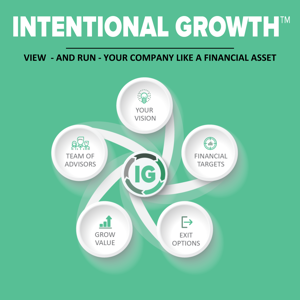
            Intentional Growth™ is a podcast is a podcast for entrepreneurs and business owners wanting to view - and run - their company like a financial asset so they can have fun, create wealth, and make an impact. Truly make the entire journey of owning and running a company "worth it".