Intentional Growth

Intentional Growth

By Arkona - Intentional GrowthBusinessEntrepreneurshipInvestingManagement
Download on the App Store

Intentional Growth episodes

  • Passion, Planning and Perseverance: One Man’s Story of Surviving Y2K as a Tech Company
    [et_pb_section bb_built=”1″ admin_label=”section” _builder_version=”3.15″ custom_margin=”|0px||0px” custom_padding=”|0px||0px”][et_pb_row admin_label=”row” _builder_version=”3.15″ background_size=”initial” background_position=”top_left” background_repeat=”repeat” custom_margin=”|0px||0px” custom_padding=”|0px||0px”][et_pb_column type=”4_4″][et_pb_text _builder_version=”3.15″ background_size=”initial” background_position=”top_left” background_repeat=”repeat”]
    My guest today is Scott Schwefel. Scott is a business coach, leadership, and team trainer. We talk about 3 of his businesses and how he sold 2 of them for over $1,000,000 (but not without a challenge or two) and how each one has taught him something about himself and the importance of good team dynamic and communication.
    Currently, Scott is living the life of his dreams as a speaker who promotes the Discovery method of business management. He is a facilitator and an enthusiastic trainer of the Discovery system. Discovery is a communication method that he has found to be essential in team communication. We discuss why he so passionate about improving business culture and communication and how you as the listener can find the passion you need to keep a business going.
    What you will learn:
    Scott’s early days in college, and a change in career.
    The Pro Net Marketing experience and what it taught Scott.
    The importance of having a good spouse who will support your entrepreneurial dreams.
    Scott’s time in the food industry and what he learned.
    What it is like working with a venture capital investor.
    The mistakes Scott and his partner made in the food business.
    How to measure the value of a business when there was no profit.
    The beginning of Benchmark.
    Why Scott chose to go into a tech business.
    Knowing your team and the role you play within it.
    The 2000 tech crash and how Scott bounced back.
    How the Discovery method changed how Scott does business.
    How Scott rebuilt Benchmark.
    What Discovery can do for your business.
    What Discovery can’t do for your business.
    How to build a company that doesn’t need you.
    Why Scott loves what he does.
    The benefits of CEO peer groups.
    Scott’s advice for the audience.
    Takeaways:
    Today’s takeaway is all about passion and knowing why you are in your business. Do the work ahead of time and figure out why you want to own a business. When you know why you are running the business you can hire the right people and keep doing the things you enjoy about it. Know what you are passionate about and stick with it.
    Links and Resources:
    GEXP Collaborative Scott’s Ted Talk Discover Yourself Scott’s website
    About Scott:
    A serial entrepreneur, Scott founded and grew Minnesota’s largest technology training company to over $12 million in sales, and then sold the company in 2003.  His company was named one of the 50 fastest-growing private companies in Minnes
    1 hr 8 min
  • Passion, Planning and Perseverance: One Man’s Story of Surviving Y2K as a Tech Company
    My guest today is Scott Schwefel. Scott is a business coach, leadership, and team trainer. He has had a bumpy road during his time as a struggling entrepreneur. We talk about 3 of his businesses and how each one has taught him something about himself and the importance of good team dynamic and communication.
    Currently, Scott is a speaker who promotes the Discovery method of business management. He is a facilitator and an enthusiastic trainer of the Discovery system. Discovery is a communication method that he has found to be essential in team communication. We discuss why he so passionate about improving business culture and communication and how you as the listener can find the passion you need to keep a business going.
    What you will learn:
    Scott’s early days in college, and a change in career.
    The Pro Net Marketing experience and what it taught Scott.
    The importance of having a good spouse who will support your entrepreneurial dreams.
    Scott’s time in the food industry and what he learned.
    What it is like working with a venture capital investor.
    The mistakes Scott and his partner made in the food business.
    How to measure the value of a business when there was no profit.
    The beginning of Benchmark.
    Why Scott chose to go into a tech business.
    Knowing your team and the role you play within it.
    The 2000 tech crash and how Scott bounced back.
    How the Discovery method changed how Scott does business.
    How Scott rebuilt Benchmark.
    What Discovery can do for your business.
    What Discovery can’t do for your business.
    How to build a company that doesn’t need you.
    Why Scott loves what he does.
    The benefits of CEO peer groups.
    Scott’s advice for the audience.
    Takeaways:
    Today’s takeaway is all about passion and knowing why you are in your business. Do the work ahead of time and figure out why you want to own a business. When you know why you are running the business you can hire the right people and keep doing the things you enjoy about it. Know what you are passionate about and stick with it.
    Links and Resources:
    GEXP Collaborative
    Scott’s Ted Talk
    Discover Yourself
    Scott’s website
    About Scott:
    A serial entrepreneur, Scott founded and grew Minnesota’s largest technology training company to over $12 million in sales, and then sold the company in 2003.  His company was named one of the 50 fastest-growing private companies in Minnesota in 1997 and 1998, and he was named to Minnesota’s 40 under 40 list of successful top executives. Scott then founded and grew Insights Twin Cities to over $3 million in sales and sold it to Insights in Scotland in 2014.
    For over a decade Scott Schwefel has been speaking and teaching new communication strategies to companies and associations globally. He has presented in Paris, London, Amsterdam, Geneva and Shanghai and Kuwait, and he has also trained and coached over 1500 CEOs personally. He is a published author, has lived remotely with the Hadza and Maasai tribes in Tanzania, Africa and is
    1 hr 8 min
  • Measure What Really Matters When You Exit Your Company

    Mike Rynchek is the founder of Spyder Trap, a digital marketing consulting agency. He sold it to Bright Health in 2017. He walks me through the history of Spyder Trap and how he transitioned the company for Bright Health’s use. He had to settle client relationships that didn’t fit into Bright’s new direction. Relationship is a big word for Mike. He spent most of his energy focusing on his company’s reputation. As well as building good working relationships with his clients.

    We discuss how Mike scaled his business and how he prepared it for sale. He also stresses the importance of integrating your work into life, rather than trying to find a “balance.” It is a point that many people don’t consider when they examine their family/work life relationship.

    You will learn about:
    • Mike’s entrepreneurial background.
    • How Mike got involved in consulting.
    • The services Spyder Trap offered their clients.
    • The milestones that marked Spyder Trap’s growth.
    • Why Mike chose hustle over strategy.
    • The benefits of using a service model.
    • The benefits of maintaining good client relationships.
    • How Mike created recurring revenue in his business.
    • The 3 Rs Mike follows in his businesses.
    • Mike’s goals for the business.
    • The opportunities that lead to Spyder Trap’s sale.
    • Why Mike chose to sell to Bright Health.
    • The emotional side of letting go of clients.
    • The questions you need ask before you consider selling.
    • Finding integration in your work and family life.
    • Mike’s advice to the audience.
    • Takeaway:

      Mike raises an interesting point about finding integration in your work and family life. There is a difference between integration and balance. Integration is ideal because balance is very unrealistic. Ask yourself what is important to you? How will those things change when you sell? Is that what you want? Ask all these questions and really self-examine yourself before you even consider selling your business.

      Links and Resources

      GEXP Collaborative

      Mike on LinkedIn
      Mike on Twitter

      About Mike:

      Mike Rynchek considers himself a natural born entrepreneur. He began his company Spyder Trap in college at St. Cloud State University. In 2017, he sold the company to Bright Health, a former client. After staying on for a year with Bright Health, he moved onto other endeavors. Mike now works as a consultant for numerous technology companies and Fortune 500 companies.

      1 hr 1 min
    • Measure What Really Matters When You Exit Your Company
      Mike Rynchek is the founder of Spyder Trap, a digital marketing consulting agency. He sold it to Bright Health in 2017. He walks me through the history of Spyder Trap and how he transitioned the company for Bright Health’s use. He had to settle client relationships that didn’t fit into Bright’s new direction. Relationship is a big word for Mike. He spent most of his energy focusing on his company’s reputation. As well as building good working relationships with his clients.
      We discuss how Mike scaled his business and how he prepared it for sale. He also stresses the importance of integrating your work into life, rather than trying to find a “balance.” It is a point that many people don’t consider when they examine their family/work life relationship.
      You will learn about:
      Mike’s entrepreneurial background.
      How Mike got involved in consulting.
      The services Spyder Trap offered their clients.
      The milestones that marked Spyder Trap’s growth.
      Why Mike chose hustle over strategy.
      The benefits of using a service model.
      The benefits of maintaining good client relationships.
      How Mike created recurring revenue in his business.
      The 3 Rs Mike follows in his businesses.
      Mike’s goals for the business.
      The opportunities that lead to Spyder Trap’s sale.
      Why Mike chose to sell to Bright Health.
      The emotional side of letting go of clients.
      The questions you need ask before you consider selling.
      Finding integration in your work and family life.
      Mike’s advice to the audience.
      Takeaway:
      Mike raises an interesting point about finding integration in your work and family life. There is a difference between integration and balance. Integration is ideal because balance is very unrealistic. Ask yourself what is important to you? How will those things change when you sell? Is that what you want? Ask all these questions and really self-examine yourself before you even consider selling your business.
      Links and Resources
      GEXP Collaborative Mike on LinkedIn Mike on Twitter
      About Mike:
      Mike Rynchek considers himself a natural born entrepreneur. He began his company Spyder Trap in college at St. Cloud State University. In 2017, he sold the company to Bright Health, a former client. After staying on for a year with Bright Health, he moved onto other endeavors. Mike now works as a consultant for numerous technology companies and Fortune 500 companies.
      1 hr 1 min
    • Selling Your Business: Plan for a Life After

      Everybody thinks about the big payout when they sell their business. However, very few people are prepared for the emotional toll the sale takes on them. My guest today is Laura Rich a successful former journalist who founded a publication called Street Fight. She took her experience of selling that business and built a community for other entrepreneurs who find themselves lost after the post-exit.

      The Exit Club is a podcast and an online community that helps post-exited entrepreneurs find a new focus and passion. Laura and I discuss the depression that sets in after the business sale. It is real and it is hard to talk about with other people. She tells me about her sale of Street Fight and why she chose to sell. She also offers some insight on what The Exit Club has taught her about the entrepreneur experience.

      You will learn about:
      • Laura’s background in journalism.
      • The pressures Laura dealt with after her business sold.
      • Laura’s new focus on post-exit transition.
      • Why Laura found her exit from the company isolating.
      • The trouble entrepreneurs have discussing their emotional reactions to their sales.
      • Experiences Laura has heard while doing The Exit Club podcast.
      • How to find your new passion.
      • Why Laura sold Street Fight.
      • The 4 stages of the post-exit transition.
      • Why entrepreneurial post-exit is similar to how athletes, veterans, and retirees experiences.
      • How to avoid getting stuck in your business.
      • The difference of post-exiting with millennials and gen-xers versus baby boomers.
      • The early days of Street Fighter.
      • The questions to ask yourself before you sell your business.
      • How planning can ease post-exiting stress.
      • The due diligence process and the surprises that come up.
      • Why you need to avoid “rebound” businesses.
      • Laura’s main points from today’s conversation.
      • Takeaway:

        Exiting a business is a complicated and wild emotional ride. It is important that we know as entrepreneurs that we all go through a post-exit lost feeling. You are not alone in the “what now?” feeling.

        Links and Resources

        The Exit Club

        Laura Rich on LinkedIn

        About Laura:

        Laura Rich is a former journalist who wrote for Condé Nast, Adweek, Fast Company, The Industry Standard, and others. After moving to Colorado, she founded Street Fight. She sold the company in February of 2017 and found a need for entrepreneurs during the process. Today, she hosts The Exit Club podcast, a show that helps entrepreneurs who have exited their companies cope with the emotional aspect of an exit.

        50 min
      • Selling Your Business: Plan for a Life After
        Everybody thinks about the big payout when they sell their business. However, very few people are prepared for the emotional toll the sale takes on them. My guest today is Laura Rich a successful former journalist who founded a publication called Street Fight. She took her experience of selling that business and built a community for other entrepreneurs who find themselves lost after the post-exit.
        The Exit Club is a podcast and an online community that helps post-exited entrepreneurs find a new focus and passion. Laura and I discuss the depression that sets in after the business sale. It is real and it is hard to talk about with other people. She tells me about her sale of Street Fight and why she chose to sell. She also offers some insight on what The Exit Club has taught her about the entrepreneur experience.
        You will learn about:
        Laura’s background in journalism.
        The pressures Laura dealt with after her business sold.
        Laura’s new focus on post-exit transition.
        Why Laura found her exit from the company isolating.
        The trouble entrepreneurs have discussing their emotional reactions to their sales.
        Experiences Laura has heard while doing The Exit Club podcast.
        How to find your new passion.
        Why Laura sold Street Fight.
        The 4 stages of the post-exit transition.
        Why entrepreneurial post-exit is similar to how athletes, veterans, and retirees experiences.
        How to avoid getting stuck in your business.
        The difference of post-exiting with millennials and gen-xers versus baby boomers.
        The early days of Street Fighter.
        The questions to ask yourself before you sell your business.
        How planning can ease post-exiting stress.
        The due diligence process and the surprises that come up.
        Why you need to avoid “rebound” businesses.
        Laura’s main points from today’s conversation.
        Takeaway:
        Exiting a business is a complicated and wild emotional ride. It is important that we know as entrepreneurs that we all go through a post-exit lost feeling. You are not alone in the “what now?” feeling.
        Links and Resources
        The Exit Club
        Laura Rich on LinkedIn
        About Laura:
        Laura Rich is a former journalist who wrote for Condé Nast, Adweek, Fast Company, The Industry Standard, and others. After moving to Colorado, she founded Street Fight. She sold the company in February of 2017 and found a need for entrepreneurs during the process. Today, she hosts The Exit Club podcast, a show that helps entrepreneurs who have exited their companies cope with the emotional aspect of an exit.
        50 min
      • Private Equity Recapitalization: How it Works
        Mike O’Neill is the director at Stone Arch Capital. Stone Arch is a mid-market, mid-western based private equity firm. I met Mike on a panel, during which he gave a very clear and articulate explanation of how the “second bite of the apple” works for companies who work with private equity firms.
        Today, Mike and I discuss why business owners choose to work with a private equity firm. He also gives us some insight into how it works from the firm’s side of the deal. Mike covers who Stone Arch serves, what they offer to their clients. He also touches on how the firm gets their money and what Stone Arch considers before they enter into a deal.
        You will learn about:
        Mike’s background in family business.
        How he got involved in private equity.
        Who Stone Arch serves and what they offer them.
        Private equity customers are the investors.
        How Stone Arch calculates the value of your business.
        The importance of maintaining a positive relationship.
        The 3 reasons people seek out private equity firms.
        Establishing expectations on both sides of the partnership.
        Why Stone Arch consults market experts before moving forward.
        The process of “getting the second bite.”
        The 3 levers that every business needs to pull to make their private equity deal work.
        The importance of working with the right people.
        Being in the business of creating goodwill.
        Mike’s final advice for my listeners.
        Takeaways:
        Planning an exit involves so many decisions. It is important that you research and are aware of all of your options. There is so much to think about that it is okay to seek out advice and counsel. Private equity is an option and it is a lucrative option, but consider everything before you are completely committed.
        Links and Resources
        Mike on LinkedIn
        Stone Arch Capital
        GEXP Collaborative
        About Mike:
        Michael O’Neill joined Stone Arch Capital in 2008. His primary responsibilities include sourcing, reviewing and structuring new investment opportunities for the firm. He also has experience in add-on acquisitions, debt and equity financing and supporting investment management activities from the board level.
        Prior to joining Stone Arch Capital in 2008, Michael was an investment banker at Lazard Middle Market. While at Lazard Middle Market, Michael focused on mergers and acquisitions transactions within a variety of industries, including industrial products, oil and gas services, business services, food and agriculture, and technology.
        Mike lives in Edina with his wife, son, daughter and dog. In his spare time, he enjoys running, drinking local beer, and letting the Iowa Hawkeyes get his hopes up.
        Michael is a graduate of the University of St. Thomas (B.A. in Finance and History) and the Samuel Curtis Johnson Graduate School of Management at Cornell University (M.B.A.).
        51 min
      • Private Equity Recapitalization: How it Works

        Mike O’Neill is the director at Stone Arch Capital. Stone Arch is a mid-market, mid-western based private equity firm. I met Mike on a panel, during which he gave a very clear and articulate explanation of how the “second bite of the apple” works for companies who work with private equity firms.

        Today, Mike and I discuss why business owners choose to work with a private equity firm. He also gives us some insight into how it works from the firm’s side of the deal. Mike covers who Stone Arch serves, what they offer to their clients. He also touches on how the firm gets their money and what Stone Arch considers before they enter into a deal.

        You will learn about:
        • Mike’s background in family business.
        • How he got involved in private equity.
        • Who Stone Arch serves and what they offer them.
        • Private equity customers are the investors.
        • How Stone Arch calculates the value of your business.
        • The importance of maintaining a positive relationship.
        • The 3 reasons people seek out private equity firms.
        • Establishing expectations on both sides of the partnership.
        • Why Stone Arch consults market experts before moving forward.
        • The process of “getting the second bite.”
        • The 3 levers that every business needs to pull to make their private equity deal work.
        • The importance of working with the right people.
        • Being in the business of creating goodwill.
        • Mike’s final advice for my listeners.
        • Takeaways:

          Planning an exit involves so many decisions. It is important that you research and are aware of all of your options. There is so much to think about that it is okay to seek out advice and counsel. Private equity is an option and it is a lucrative option, but consider everything before you are completely committed.

          Links and Resources

          Mike on LinkedIn

          Stone Arch Capital
          GEXP Collaborative

          About Mike:

          Michael O’Neill joined Stone Arch Capital in 2008. His primary responsibilities include sourcing, reviewing and structuring new investment opportunities for the firm. He also has experience in add-on acquisitions, debt and equity financing and supporting investment management activities from the board level.

          Prior to joining Stone Arch Capital in 2008, Michael was an investment banker at Lazard Middle Market. While at Lazard Middle Market, Michael focused on mergers and acquisitions transactions within a variety of industries, including industrial products, oil and gas services, business services, food and agriculture, and technology.

          Mike lives in Edina with his wife, son, daughter and dog. In his spare time, he enjoys running, drinking local beer, and letting the Iowa Hawkeyes get his hopes up.

          Michael is a graduate of the University of St. Thomas (B.A. in Finance and History) and the Samuel Curtis Johnson Graduate School of Management at Cornell University (M.B.A.).

          51 min
        • The Ability to Pivot: A Home Run Exit Story
          The co-founder of HAAWK, Inc. Ryan Born joins me for today’s episode. Before HAAWK, Ryan was the founder and CEO of AudioMicro, Inc. AudioMicro was a media rights management company. Its most successful venture was AdRev. Ryan explains what that service was and why he felt it worked.
          We take the journey with Ryan through AudioMicro’s beginnings, the pivots, the changes in the media rights industry, and what life was like after AudioMicro changed owners. This episode is a great example of the struggle and the hustle many entrepreneurs face on a daily basis.
          What you will learn about:
          Ryan’s early career as a CPA.
          His time with WireImage and what it taught him.
          The only two things that generate wealth.
          The changes in the media rights industry.
          The problems Ryan saw with the system.
          How AudioMicro and microstock changed the system.
          How Ryan raised the capital for AudioMicro.
          The mistakes he made early on in the business.
          Ryan’s advice for building an effective pitch.
          Why EBITA is important and not important at the same time.
          Other factors that buyers look at during a sale.
          Why you need to break even as soon as possible.
          The struggles AudioMicro had in the beginning.
          The list of avenues AudioMicro tried that didn’t work.
          Why you need to choose your investors wisely.
          How AdRev worked.
          Why Ryan didn’t hire an investment banker for his sale of AudioMicro.
          The indicators that it was time to sell.
          The dance Ryan and his investors did to get offers.
          How getting the best offer is like playing poker.
          The benefit of having a knowledgeable team around you.
          What happened after AudioMicro sold.
          The beginnings of HAAWK.
          The thing Ryan is doing differently with HAAWK.
          Ryan’s parting words for the audience.
          Takeaways:
          Ryan had a great point in today’s interview. If you want to own a business, try. All you can do is try and see what happens. Know what you want in your business and take steps to achieve it.
          Links and Resources:
          Ryan Born’s Website Ryan on Twitter
          About Ryan:
          Ryan Born started his career in the Atlanta office of Price Waterhouse Coopers’ (PwC) Assurance and Business Advisory Services Practice where he gained experience in an array of industries. He later transferred to New York City to broaden his experience in the firm’s Tax and Legal Services division. After PwC, he served as VP of Finance and Financial Controller at WireImage.com during which time the Company was acquired by Getty Images for $208 million. After WireImage, Ryan angel invested in Internet Marketing Inc. (a 2012 Inc 500 company) and NewCondosOnline.com, the largest one-stop resource for finding and comparing new condo developments, where he also served as CFO. Most recently, he relocated to Los Angeles and founded AdRev / AudioMicro, Inc, which ranked as the #5 fastest growing media company in the USA as part of the 2015 Inc 500, the #1 fastest growing company in the San Fernando Valley (by the SF Valley Business Journal in 2014), the #6 fastest
          1 hr 21 min
        • The Ability to Pivot: A Home Run Exit Story

          The co-founder of HAAWK, Inc. Ryan Born joins me for today’s episode. Before HAAWK, Ryan was the founder and CEO of AudioMicro, Inc. AudioMicro was a media rights management company. Its most successful venture was AdRev. Ryan explains what that service was and why he felt it worked.

          We take the journey with Ryan through AudioMicro’s beginnings, the pivots, the changes in the media rights industry, and what life was like after AudioMicro changed owners. This episode is a great example of the struggle and the hustle many entrepreneurs face on a daily basis.

          What you will learn about:
          • Ryan’s early career as a CPA.
          • His time with WireImage and what it taught him.
          • The only two things that generate wealth.
          • The changes in the media rights industry.
          • The problems Ryan saw with the system.
          • How AudioMicro and microstock changed the system.
          • How Ryan raised the capital for AudioMicro.
          • The mistakes he made early on in the business.
          • Ryan’s advice for building an effective pitch.
          • Why EBITA is important and not important at the same time.
          • Other factors that buyers look at during a sale.
          • Why you need to break even as soon as possible.
          • The struggles AudioMicro had in the beginning.
          • The list of avenues AudioMicro tried that didn’t work.
          • Why you need to choose your investors wisely.
          • How AdRev worked.
          • Why Ryan didn’t hire an investment banker for his sale of AudioMicro.
          • The indicators that it was time to sell.
          • The dance Ryan and his investors did to get offers.
          • How getting the best offer is like playing poker.
          • The benefit of having a knowledgeable team around you.
          • What happened after AudioMicro sold.
          • The beginnings of HAAWK.
          • The thing Ryan is doing differently with HAAWK.
          • Ryan’s parting words for the audience.
          • Takeaways:

            Ryan had a great point in today’s interview. If you want to own a business, try. All you can do is try and see what happens. Know what you want in your business and take steps to achieve it.

            Links and Resources:

            Ryan Born’s Website

            Ryan on Twitter

            About Ryan:

            Ryan Born started his career in the Atlanta office of Price Waterhouse Coopers’ (PwC) Assurance and Business Advisory Services Practice where he gained experience in an array of industries. He later transferred to New York City to broaden his experience in the firm’s Tax and Legal Services division. After PwC, he served as VP of Finance and Financial Controller at WireImage.com during which time the Company was acquired by Getty Images for $208 million. After WireImage, Ryan angel invested in Internet Marketing Inc. (a 2012 Inc 500 company) and NewCondosOnline.com, the largest one-stop resource for finding and comparing new condo developments, where he also served as CFO. Most recently, he relocated to Los Angeles and founded AdRev / AudioMicro, Inc, which ranked as the #5 fastest growing media company in the USA as part of the 2015 Inc 500, the #1 fastest growing company in the San Fernando Valley (by the SF Valley Business Journal in 2014), the #6 fastest growing company in LA (by the Los Angeles Business Journal in 2014), and the #40 fastest growing company

            1 hr 22 min

          About Intentional Growth

          From the publisher's feed

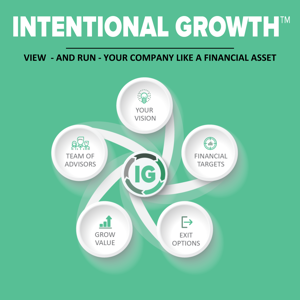
          Intentional Growth™ is a podcast is a podcast for entrepreneurs and business owners wanting to view - and run - their company like a financial asset so they can have fun, create wealth, and make an impact. Truly make the entire journey of owning and running a company "worth it".