Intentional Growth

Intentional Growth

By Arkona - Intentional GrowthBusinessEntrepreneurshipInvestingManagement
Download on the App Store

Intentional Growth episodes

  • Structuring the Deal: Equity, Debt, Mezzanine, Notes and more

    Matt Boettner is the CEO and President of All Safe Global, a compressed gas company. Matt came into the business in 2009 and bought it from his brother in 2013. Matt shares his story about approaching his brother about joining the company. He came into the company with the mutual understanding that he would buy the company.

    Matt studied the art of the deal at brokerages he worked for and learned how to build a complex deal structure that benefits everybody. We discuss some of these lesser-known equity tools and how Matt used them to create his deal with his brother.

    We also discuss the future of All Safe Global and what Matt gives advice for business owners considering finding equity partners.

    What you will learn:
    • Matt’s first attempt and failure in the tech sphere.
    • What he learned from this failure.
    • The lessons learned from his jobs afterward.
    • What he learned from his time at a brokerage firm.
    • Matt’s opinion about brokerage firms and how to find a good one.
    • Matt’s time with WinMark.
    • How he became involved in All Safe.
    • A brief history of the company.
    • Why Matt saw opportunity in the compressed gas industry.
    • The beginnings of the deal structure he made with his brother.
    • The methodology they agreed upon.
    • How Matt’s M&A background came in handy.
    • The capital stack they agreed upon.
    • The types of debt that are available.
    • Why debt can work well for a company.
    • The levels of debt Matt used in his deal with his brother.
    • The importance of an intercreditor agreement.
    • Matt’s strategy to repay his creditors.
    • Why you need a cushion in a deal.
    • How Matt found equity partners.
    • Lenders are not one-size-fits-all, do your homework.
    • Matt’s goal for his business in 2019.
    • The importance of good financial records.
    • Takeaways:

      There are tons of tools out there to create a deal structure. As a business owner, you need to know about those tools. Understand what options are available to you and create a deal structure that suits your situation.

      Links and Resources:

      GEXP Collaborative

      Matt on LinkedIn

      About Matt:

      Matt Boettner began his career in the tech industry. After his first company failed he embraced his talent for financials. He learned how to structure deals at a mid-market brokerage firm and became quite comfortable with complex deal structures. In 2009, Matt joined his brother at All Safe Global. He came into the business with the understanding he would buy his brother out. In 2013, that buy out went through.

      Matt is an accomplished leader with experience in start-up, private and public company roles. He is an expert in general management and leading growth initiatives for mid-size operations. He has experience with leading acquisitions, IPOs, business valuations and public/private company debt and equity financing.

      1 hr 12 min
    • #130: Structuring the Deal: Equity, Debt, Mezzanine, Notes and more
      Matt Boettner is the CEO and President of All Safe Global, a compressed gas company. Matt came into the business in 2009 and bought it from his brother in 2013. Matt shares his story about approaching his brother about joining the company. He came into the company with the mutual understanding that he would buy the company.
      Matt studied the art of the deal at brokerages he worked for and learned how to build a complex deal structure that benefits everybody. We discuss some of these lesser-known equity tools and how Matt used them to create his deal with his brother.
      We also discuss the future of All Safe Global and what Matt gives advice for business owners considering finding equity partners.
      What you will learn:
      Matt’s first attempt and failure in the tech sphere.
      What he learned from this failure.
      The lessons learned from his jobs afterward.
      What he learned from his time at a brokerage firm.
      Matt’s opinion about brokerage firms and how to find a good one.
      Matt’s time with WinMark.
      How he became involved in All Safe.
      A brief history of the company.
      Why Matt saw opportunity in the compressed gas industry.
      The beginnings of the deal structure he made with his brother.
      The methodology they agreed upon.
      How Matt’s M&A background came in handy.
      The capital stack they agreed upon.
      The types of debt that are available.
      Why debt can work well for a company.
      The levels of debt Matt used in his deal with his brother.
      The importance of an intercreditor agreement.
      Matt’s strategy to repay his creditors.
      Why you need a cushion in a deal.
      How Matt found equity partners.
      Lenders are not one-size-fits-all, do your homework.
      Matt’s goal for his business in 2019.
      The importance of good financial records.
      Takeaways:
      There are tons of tools out there to create a deal structure. As a business owner, you need to know about those tools. Understand what options are available to you and create a deal structure that suits your situation.
      Links and Resources:
      GEXP Collaborative Matt on LinkedIn
      About Matt:
      Matt Boettner began his career in the tech industry. After his first company failed he embraced his talent for financials. He learned how to structure deals at a mid-market brokerage firm and became quite comfortable with complex deal structures. In 2009, Matt joined his brother at All Safe Global. He came into the business with the understanding he would buy his brother out. In 2013, that buy out went through.
      Matt is an accomplished leader with experience in start-up, private and public company roles. He is an expert in general management and leading growth initiatives for mid-size operations. He has experience with leading acquisitions, IPOs, business valuations and public/private company debt and equity financing.
      1 hr 12 min
    • $9M in Revenue, $4.5M EBITDA and a $55 Million Exit

      Stephanie Breedlove was the CEO of a payroll and tax accounting firm for households. The focus of their company was families that wanted to legally pay their nannies and caregivers of elderly family members and have a reliable system for it. This new market took off and the company grew to impressive numbers.

      After 25 years, Care.com approached Stephanie about purchasing her business. She takes me on that emotional journey and gives some great insight on how the process worked. She is very open about the financials of the business. One of the most open guests I have ever interviewed.

      Stephanie tells me how she and her husband saw a need for what was at the time a novel industry. This episode is a great look into the nuts and bolts of merger and acquisitions and what it really takes to do it right. It is also a great example of even if you do put in the work, there will still be snags and problems that come up along the way. Stephanie shares how she navigated those and why she’s glad she took the time to know what she needed from the sale for herself and the good of the company.

      What you will learn:
      • Stephanie’s background in business and entrepreneurship.
      • The beginnings of her payroll and tax firm.
      • The 2 year, 4 month growth trajectory and bringing Stephanie’s husband into the business.
      • How they found their first clients.
      • Switching their mindset from “small firm” thinking to “big business” thinking.
      • How Stephanie and her husband learned about their industry and market trends.
      • Why “what-if” talks were beneficial to Stephanie and her husband when discussing the future of the business.
      • How they went about preparing the company for growth.
      • The conversations Stephanie and her husband had before going to market.
      • Why they decided to sell.
      • How emotion and ego can ruin a deal.
      • The relationship with Care.com and how the sale negotiations started.
      • Why Stephanie and her husband didn’t tell their executive team about the sale.
      • The team of advisors that Stephanie took into her negotiations.
      • The start and stop talks with Care.com and how Stephanie handled it.
      • The hang-ups that stalled the sale and how they were resolved.
      • What it was like to work for Care.com.
      • The positive effects of Stephanie’s earn-out and why it was good for the company.
      • Stephanie’s book All In.
      • What she does now to keep busy.
      • The natural high of entrepreneurship.
      • What’s next for Stephanie?
      • Takeaways:

        Stephanie is a rock star example of how to do a merger and acquisition right. Even if you are well versed in business, it still important to keep learning. Figure out what you want from your business and what you would want from a sale of that business and you will be better prepared for the process. Keep in mind, even if you do put the time in and do everything right, there are going to be hiccups along the way. That’s just reality.

        Links and Resources:

        GEXP Collaborative

        All In: How Women Entrepreneurs Can Think Bigger, Build Sustainable Businesses, and Change the World by Step

        1 hr 35 min
      • #129: $9M in Revenue, $4.5M EBITDA and a $55 Million Exit
        Stephanie Breedlove was the CEO of a payroll and tax accounting firm for households. The focus of their company was families that wanted to legally pay their nannies and caregivers of elderly family members and have a reliable system for it. This new market took off and the company grew to impressive numbers.
        After 25 years, Care.com approached Stephanie about purchasing her business. She takes me on that emotional journey and gives some great insight on how the process worked. She is very open about the financials of the business. One of the most open guests I have ever interviewed.
        Stephanie tells me how she and her husband saw a need for what was at the time a novel industry. This episode is a great look into the nuts and bolts of merger and acquisitions and what it really takes to do it right. It is also a great example of even if you do put in the work, there will still be snags and problems that come up along the way. Stephanie shares how she navigated those and why she’s glad she took the time to know what she needed from the sale for herself and the good of the company.
        What you will learn:
        Stephanie’s background in business and entrepreneurship.
        The beginnings of her payroll and tax firm.
        The 2 year, 4 month growth trajectory and bringing Stephanie’s husband into the business.
        How they found their first clients.
        Switching their mindset from “small firm” thinking to “big business” thinking.
        How Stephanie and her husband learned about their industry and market trends.
        Why “what-if” talks were beneficial to Stephanie and her husband when discussing the future of the business.
        How they went about preparing the company for growth.
        The conversations Stephanie and her husband had before going to market.
        Why they decided to sell.
        How emotion and ego can ruin a deal.
        The relationship with Care.com and how the sale negotiations started.
        Why Stephanie and her husband didn’t tell their executive team about the sale.
        The team of advisors that Stephanie took into her negotiations.
        The start and stop talks with Care.com and how Stephanie handled it.
        The hang-ups that stalled the sale and how they were resolved.
        What it was like to work for Care.com.
        The positive effects of Stephanie’s earn-out and why it was good for the company.
        Stephanie’s book All In.
        What she does now to keep busy.
        The natural high of entrepreneurship.
        What’s next for Stephanie?
        Takeaways:
        Stephanie is a rock star example of how to do a merger and acquisition right. Even if you are well versed in business, it still important to keep learning. Figure out what you want from your business and what you would want from a sale of that business and you will be better prepared for the process. Keep in mind, even if you do put the time in and do everything right, there are going to be hiccups along the way. That’s just reality.
        Links and Resources:
        GEXP Collaborative All In: How Women Entrepreneurs Can Think Bigger, Build Sustainable Businesses, and Change the World by Stephanie Breedlove Stephanie on Twitter Stephanie’s website
        1 hr 35 min
      • Planning a Strategic Exit From Your Business

        Today’s episode is a change of pace. I recently did an interview with the Quiet Light Podcast and I wanted to share it here. The founder of the Quiet Light Brokerage, Mark Daoust speaks to me about my experience with selling our family business and what I learned from the process.

        Specifically, we talk about strategic sales. I have learned a lot about building a good pitch for a buyer and I share that with Mark. If you aren’t familiar with my story and the path that led to Life After Business and GEXP Collaborative, this episode will answer a lot of your questions.

        What you will learn:
        • My entrepreneur journey and joining my dad in the family business.
        • The reasons people leave money on the table during a deal and how to avoid it.
        • Why due diligence is so important and will kill any deal if done wrong.
        • Strategic sales vs. marketplace sales
        • How to think like a buyer and present your best pitch to a potential buyer.
        • How to get your financials and value adds in perspective for the buyer.
        • Know your market and be proactive in finding potential partners and buyers.
        • The pros and cons of strategic sales.
        • The circumstances when a strictly financial sale makes more sense.
        • Good growth strategy is good exit strategy.
        • The importance of having a great team of advisors.
        • Takeaway:

          I really enjoyed my time on the Quiet Light Podcast. Mark and his team are really good at what they do. You can contact them through the Quiet Light Brokerage site which is down in the resources section. You can also reach me through LinkedIn and the resources I gave Mark during our interview. Just check out the resources section below.

          Links and Resources:

          GEXP Collaborative

          Life After Business Podcast
          Quiet Light Brokerage
          Quiet Light Podcast
          Me on LinkedIn

          (In case you want to feature Quiet Light Brokerage and/or GEXP Collaborative)

          About GEXP Collaborative:

          Ryan, Brandon, and Jim met at a National Exit Planning Conference. We hit it off with a shared extreme passion to change the way business owners look at the growth and exit of their company(s).

          We come from different backgrounds (Entrepreneur, M&A Attorney and Investment Advisor) but hold the same belief that the advice that business owners receive is fragmented and doesn’t align in a comprehensive plan.

          We created the GEXP Collaborative to bring together an ecosystem of different skills and perspectives to ensure that each business owner that we work with achieves the successful growth and exit of their businesses.  From experience, we provide our business owner clients with recommendations based upon good judgment to achieve their objectives.

          About Quiet Light Brokerage:

          Late in 2006, Mark Daoust, received a call from a good friend and fellow entrepreneur who was considering selling his 8-year-old web hosting website. Just 10 months prior Mark had sold his own profitable website and was looking for a new direc

          38 min
        • #128: Planning a Strategic Exit From Your Business
          Today’s episode is a change of pace. I recently did an interview with the Quiet Light Podcast and I wanted to share it here. The founder of the Quiet Light Brokerage, Mark Daoust speaks to me about my experience with selling our family business and what I learned from the process.
          Specifically, we talk about strategic sales. I have learned a lot about building a good pitch for a buyer and I share that with Mark. If you aren’t familiar with my story and the path that led to Life After Business and GEXP Collaborative, this episode will answer a lot of your questions.
          What you will learn:
          My entrepreneur journey and joining my dad in the family business.
          The reasons people leave money on the table during a deal and how to avoid it.
          Why due diligence is so important and will kill any deal if done wrong.
          Strategic sales vs. marketplace sales
          How to think like a buyer and present your best pitch to a potential buyer.
          How to get your financials and value adds in perspective for the buyer.
          Know your market and be proactive in finding potential partners and buyers.
          The pros and cons of strategic sales.
          The circumstances when a strictly financial sale makes more sense.
          Good growth strategy is good exit strategy.
          The importance of having a great team of advisors.
          Takeaway:
          I really enjoyed my time on the Quiet Light Podcast. Mark and his team are really good at what they do. You can contact them through the Quiet Light Brokerage site which is down in the resources section. You can also reach me through LinkedIn and the resources I gave Mark during our interview. Just check out the resources section below.
          Links and Resources:
          GEXP Collaborative Life After Business Podcast Quiet Light Brokerage Quiet Light Podcast Me on LinkedIn
          (In case you want to feature Quiet Light Brokerage and/or GEXP Collaborative)
          About GEXP Collaborative:
          Ryan, Brandon, and Jim met at a National Exit Planning Conference. We hit it off with a shared extreme passion to change the way business owners look at the growth and exit of their company(s).
          We come from different backgrounds (Entrepreneur, M&A Attorney and Investment Advisor) but hold the same belief that the advice that business owners receive is fragmented and doesn’t align in a comprehensive plan.
          We created the GEXP Collaborative™ to bring together an ecosystem of different skills and perspectives to ensure that each business owner that we work with achieves the successful growth and exit of their businesses.  From experience, we provide our business owner clients with recommendations based upon good judgment to achieve their objectives.
          About Quiet Light Brokerage:
          Late in 2006, Mark Daoust, received a call from a good friend and fellow entrepreneur who was considering selling his 8-year-old web hosting website. Just 10 months prior Mark had sold his own profitable website and was looking for a new direction.
          Quiet Light Brokerage was founded with this phone call.
          A lot changed since that first phone call in 2006. Today, entrepreneurs recognize Quiet Light Brokerage as a leading voice and authority in the emerging niche of selling and buying profitable websites.
          Today, over 500 websites have been sold and Quiet Light has over $100,000,000 in total transaction value. Even though they are recognized as one of the most successful website brokers in the marketplace, they still ta
          38 min
        • Buying a Company for $5,500 and Selling It for 6 Figures within 4 Years

          Colin Engstrom is my guest today. Colin is the former owner of a Bozeman, Montana commercial cleaning company. He bought the company off of Craigslist and took a disassembled business and grew it to forty-three employees.  He also made some crazy profits with the company.

          Colin and I discuss how he grew the company and the goals he had at the beginning. He explains why he sold the company and what he learned from the process. Colin is genuinely curious about entrepreneurship and asks some great questions. He has learned some helpful lessons and he is still willing to learn more, this was a really fun interview.

          What you will learn:
          • Colin’s move to Bozeman.
          • How Colin found his cleaning business on Craigslist.
          • How buying from Craigslist worked.
          • Colin’s goals for the business in the beginning.
          • How he structured his company.
          • How Colin grew the business.
          • Colin’s ideal employee.
          • How Colin dealt with clients.
          • Why Colin decided to sell the business.
          • Why he didn’t try outsourcing.
          • Why Colin wishes he hired a broker.
          • What he would have done differently.
          • The factors Colin will consider with his next deal.
          • Should you tell the employees?
          • Colin’s advice to the audience.
          • Takeaways:

            If you know you want to sell, know your exit options, growth possibilities, financial targets., and how to maximize your company. Then hire the right people to make it happen.

            Links and Resources:

            GEXP Collaborative

            617-710-1660 — Colin’s phone number
            Colin’s email

            About Colin:

            Colin Engstrom is the previous owner of Elite Commercial Cleaners in Bozeman, Montana. He purchased the company in 2014 and sold it in 2018.  Colin studied finance at Bryant University and is continually learning more about entrepreneurship every day.

            1 hr 7 min
          • #127: Buying a Company for $5,500 and Selling It for 6 Figures within 4 Years
            Colin Engstrom is my guest today. Colin is the former owner of a Bozeman, Montana commercial cleaning company. He bought the company off of Craigslist and took a disassembled business and grew it to forty-three employees.  He also made some crazy profits with the company.
            Colin and I discuss how he grew the company and the goals he had at the beginning. He explains why he sold the company and what he learned from the process. Colin is genuinely curious about entrepreneurship and asks some great questions. He has learned some helpful lessons and he is still willing to learn more, this was a really fun interview.
            What you will learn:
            Colin’s move to Bozeman.
            How Colin found his cleaning business on Craigslist.
            How buying from Craigslist worked.
            Colin’s goals for the business in the beginning.
            How he structured his company.
            How Colin grew the business.
            Colin’s ideal employee.
            How Colin dealt with clients.
            Why Colin decided to sell the business.
            Why he didn’t try outsourcing.
            Why Colin wishes he hired a broker.
            What he would have done differently.
            The factors Colin will consider with his next deal.
            Should you tell the employees?
            Colin’s advice to the audience.
            Takeaways:
            If you know you want to sell, know your exit options, growth possibilities, financial targets., and how to maximize your company. Then hire the right people to make it happen.
            Links and Resources:
            GEXP Collaborative 617-710-1660 — Colin’s phone number Colin’s email
            About Colin:
            Colin Engstrom is the previous owner of Elite Commercial Cleaners in Bozeman, Montana. He purchased the company in 2014 and sold it in 2018.  Colin studied finance at Bryant University and is continually learning more about entrepreneurship every day.
            1 hr 7 min
          • From Startup to Selling to GoDaddy

            Alex McClafferty moved to the U.S. to join WP Curve in 2013. He poured his heart and soul into the company and grew the company to incredible heights. Slowly Alex and his business partner went their separate ways and GoDaddy came a-courting.

            Alex describes what it was like to sit down with one of the biggest companies in the internet space. He also goes into how he approached such a big deal and when it was time for him to move on. Alex left a lot of money on the table when he left GoDaddy. He explains why he left and what he would say to other people in a similar situation.

            What you will learn:
            • Alex’s early career and move to the U.S.
            • How Dan and Alex built WP Curve.
            • When to dissolve a partnership.
            • Alex’s advice for people having partner issues.
            • How Alex prepared for his meetings with GoDaddy.
            • The importance of building a great M&A team.
            • How Alex worked with GoDaddy to make the deal go smoother.
            • The ups and downs of M&A.
            • Why Alex exited GoDaddy before his earn-out was completed.
            • The 2 questions you should ask yourself before changing jobs.
            • Alex’s final thoughts.
            • Takeaways:
              1. Alex took a lot of risk with his deal with GoDaddy. If you do your homework and prepare for the meetings you will walk away with a better deal and relationship.
              2. If you ever decide to walk away from a business deal, make sure you really consider what you are doing and why you are doing it.
              3. Links and Resources:

                GEXP Collaborative

                Productize.co
                Alex’s email

                About Alex:

                Alex McClafferty coaches founders of SaaS & productized service companies. In 2013, he joined WP Curve when the company was doing $478 in monthly revenue. By 2015, the company built a remote team around the world and grew revenue to $1MM ARR.

                In December 2016, GoDaddy acquired WP Curve.

                With the help of a rockstar team at GoDaddy, the WP Curve team, rebuilt and then relaunched the product as WP Premium Support. Alex left GoDaddy in 2018 to pursue business coaching full-time.

                57 min
              4. #126: From Startup to Selling to GoDaddy
                Alex McClafferty moved to the U.S. to join WP Curve in 2013. He poured his heart and soul into the company and grew the company to incredible heights. Slowly Alex and his business partner went their separate ways and GoDaddy came a-courting.
                Alex describes what it was like to sit down with one of the biggest companies in the internet space. He also goes into how he approached such a big deal and when it was time for him to move on. Alex left a lot of money on the table when he left GoDaddy. He explains why he left and what he would say to other people in a similar situation.
                What you will learn:
                Alex’s early career and move to the U.S.
                How Dan and Alex built WP Curve.
                When to dissolve a partnership.
                Alex’s advice for people having partner issues.
                How Alex prepared for his meetings with GoDaddy.
                The importance of building a great M&A team.
                How Alex worked with GoDaddy to make the deal go smoother.
                The ups and downs of M&A.
                Why Alex exited GoDaddy before his earn-out was completed.
                The 2 questions you should ask yourself before changing jobs.
                Alex’s final thoughts.
                Takeaways:
                Alex took a lot of risk with his deal with GoDaddy. If you do your homework and prepare for the meetings you will walk away with a better deal and relationship.
                If you ever decide to walk away from a business deal, make sure you really consider what you are doing and why you are doing it.
                Links and Resources:
                GEXP Collaborative Productize.co Alex’s email
                About Alex:
                Alex McClafferty coaches founders of SaaS & productized service companies. In 2013, he joined WP Curve when the company was doing $478 in monthly revenue. By 2015, the company built a remote team around the world and grew revenue to $1MM ARR.
                In December 2016, GoDaddy acquired WP Curve.
                With the help of a rockstar team at GoDaddy, the WP Curve team, rebuilt and then relaunched the product as WP Premium Support. Alex left GoDaddy in 2018 to pursue business coaching full-time.
                57 min

              About Intentional Growth

              From the publisher's feed

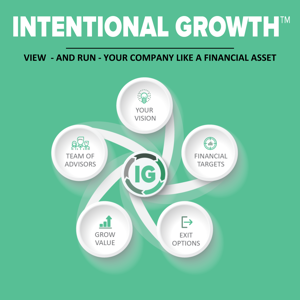
              Intentional Growth™ is a podcast is a podcast for entrepreneurs and business owners wanting to view - and run - their company like a financial asset so they can have fun, create wealth, and make an impact. Truly make the entire journey of owning and running a company "worth it".