Intentional Growth

Intentional Growth

By Arkona - Intentional GrowthBusinessEntrepreneurshipInvestingManagement
Download on the App Store

Intentional Growth episodes

  • #140: Selling the Family Business: A Son’s Perspective
    My guest today is John Garuti III. John spent the majority of his career in his family’s tile business. For anyone who has worked in a family business John’s story is all too familiar. He tells about his family dynamic during those years and why he finally asked his father to sale the company instead of taking it over himself.
    The sale process took two years to complete. It was a tedious due diligence and heavy negotiation process. John describes what it was like work for the company after the sale and dealing with the resentment of the management. We discuss the pain of laying off long-time employees and adjusting a different company culture. Sometimes, the grass isn’t always greener on the other side.
    John now works for a company called Digital Acquisitions, a boutique SaaS brokerage that specializes in digital businesses.
    What you will learn:
    The history of John’s family business.
    How he got involved with the business full-time.
    The family dynamic that led to a lot of frustration for John.
    How John dealt with an uncooperative atmosphere.
    Why John finally decided to leave the company and ask his father to sell.
    The main problems the company had on the basic level.
    Why location is important in a sale.
    The headaches of due diligence.
    Why egos can delay a sale.
    The two-year selling process that led to employee relation issues.
    John’s earn-out deal.
    How the company changed and why John felt it was worse.
    How the relationship to his dad held out.
    When John knew he wasn’t staying on with the new owners.
    What he would have done differently.
    John’s reflections on the situation in hindsight.
    What John is doing now for Digital Acquisitions.
    Takeaways:
    John’s story is completely relatable to anybody who has worked in a family business. The most important takeaway of his story is, make sure clear and direct expectations are set for anyone in the business, family or not. There needs to be a culture of accountability and a clear vision for the business. Also, keep your family business separate from the family estate so that they are not tied together and stressing the family dynamic.
    Links and Resources:
    GEXP Collaborative John on LinkedIn Digital Acquisitions
    About John:
    Growing up in Queens, New York within a small family business, John’s experience begins with 15 years of leadership which successfully ran a manufacturing plant. After experiencing the sale of his family’s business, he became hooked on the process of M&A. Combining this with a passion for digital marketing he found his calling as an online business broker. John is always thrilled to discuss ideas and strategize solutions with clients.
    1 hr 2 min
  • Selling the Family Business: A Son’s Perspective
    My guest today is John Garuti III. John spent the majority of his career in his family’s tile business. For anyone who has worked in a family business John’s story is all too familiar. He tells about his family dynamic during those years and why he finally asked his father to sale the company instead of taking it over himself.
    The sale process took two years to complete. It was a tedious due diligence and heavy negotiation process. John describes what it was like work for the company after the sale and dealing with the resentment of the management. We discuss the pain of laying off long-time employees and adjusting a different company culture. Sometimes, the grass isn’t always greener on the other side.
    John now works for a company called Digital Acquisitions, a boutique SaaS brokerage that specializes in digital businesses.
    What you will learn:
    The history of John’s family business.
    How he got involved with the business full-time.
    The family dynamic that led to a lot of frustration for John.
    How John dealt with an uncooperative atmosphere.
    Why John finally decided to leave the company and ask his father to sell.
    The main problems the company had on the basic level.
    Why location is important in a sale.
    The headaches of due diligence.
    Why egos can delay a sale.
    The two-year selling process that led to employee relation issues.
    John’s earn-out deal.
    How the company changed and why John felt it was worse.
    How the relationship to his dad held out.
    When John knew he wasn’t staying on with the new owners.
    What he would have done differently.
    John’s reflections on the situation in hindsight.
    What John is doing now for Digital Acquisitions.
    Takeaways:
    John’s story is completely relatable to anybody who has worked in a family business. The most important takeaway of his story is, make sure clear and direct expectations are set for anyone in the business, family or not. There needs to be a culture of accountability and a clear vision for the business. Also, keep your family business separate from the family estate so that they are not tied together and stressing the family dynamic.
    Links and Resources:
    GEXP Collaborative John on LinkedIn Digital Acquisitions
    About John:
    Growing up in Queens, New York within a small family business, John’s experience begins with 15 years of leadership which successfully ran a manufacturing plant. After experiencing the sale of his family’s business, he became hooked on the process of M&A. Combining this with a passion for digital marketing he found his calling as an online business broker. John is always thrilled to discuss ideas and strategize solutions with clients.
    1 hr 2 min
  • #139: Lost and Founder – Tales from Startup to Exit
    Rand Fishkin grew Moz alongside his mother during the mid-2000s. Once they found some venture capitalist investors, Rand was ushered into the CEO role. Moz became a giant in SEO consultation. They raised millions of venture capital and built an impressive reputation.
    Rand tells me what it was like being CEO of such a big company. He talks about the pressure of venture capitalism and how his thinking changed during his time with Moz. The balance of customer service and the bottom line tend to weigh out differently when investors are involved. Rand expresses his opinion about venture capital and private equity investments. He also encourages alternative funding paths and explains his involvement in TinySeed, a startup accelerator.
    Rand is currently working on a software called SparkToro. The goal is to help marketers and businesses research their audience and target market. He has made some major changes to his approach to SparkToro and he’s very honest about what he learned from his time at Moz.
    What you will learn:
    ● What was Moz and how it began.● What happened when venture capitalist investors approached Moz.● How venture capital investments change the business.● Rand’s push into the CEO position.● How the attitude toward SEO changed over time.● The reasons Rand left Moz.● How he coped with the exit.● The unfair stigma of self-funding.● The benefits of venture capitalism.● The benefits of private equity.● The 2 mindsets a founder can have after an exit.● Why Rand is involved in TinySeed.● What SparkToro is doing differently than Moz.● Ask yourself, what do you need to feel successful?
    Takeaways:
    I’m really excited for Rand and the future of SparkToro! Rand’s story reminds me of the basic questions you need to ask yourself when you are planning your company’s roadmap. Why are you in the business? What is your main goal? How do you find capital and potential partners? Do you like your partners? Ask yourself all of these things.
    Links and Resources:
    GEXP Collaborative SparkToro Rand on Twitter Rand on LinkedIn Lost and Founder by Rand Fishkin Small Giants by Bo Burlingham Finish Big by Bo Burlingham TinySeed
    About Rand:
    Rand runs most of the show at SparkToro. He was formerly co-founder and CEO of Moz, co-founder of Inbound.org, and author of Lost and Founder: A Painfully Honest Field Guide to the Startup World. He doesn’t take himself too seriously, but he does have a bit of a chip on his shoulder, and is deeply passionate about making SparkToro a great company (at least, by his own peculiar standards).
    1 hr 1 min
  • Lost and Founder – Tales from Startup to Exit
    Rand Fishkin grew Moz alongside his mother during the mid-2000s. Once they found some venture capitalist investors, Rand was ushered into the CEO role. Moz became a giant in SEO consultation. They raised millions of venture capital and built an impressive reputation.
    Rand tells me what it was like being CEO of such a big company. He talks about the pressure of venture capitalism and how his thinking changed during his time with Moz. The balance of customer service and the bottom line tend to weigh out differently when investors are involved. Rand expresses his opinion about venture capital and private equity investments. He also encourages alternative funding paths and explains his involvement in TinySeed, a startup accelerator.
    Rand is currently working on a software called SparkToro. The goal is to help marketers and businesses research their audience and target market. He has made some major changes to his approach to SparkToro and he’s very honest about what he learned from his time at Moz.
    What you will learn:
    ● What was Moz and how it began.● What happened when venture capitalist investors approached Moz.● How venture capital investments change the business.● Rand’s push into the CEO position.● How the attitude toward SEO changed over time.● The reasons Rand left Moz.● How he coped with the exit.● The unfair stigma of self-funding.● The benefits of venture capitalism.● The benefits of private equity.● The 2 mindsets a founder can have after an exit.● Why Rand is involved in TinySeed.● What SparkToro is doing differently than Moz.● Ask yourself, what do you need to feel successful?
    Takeaways:
    I’m really excited for Rand and the future of SparkToro! Rand’s story reminds me of the basic questions you need to ask yourself when you are planning your company’s roadmap. Why are you in the business? What is your main goal? How do you find capital and potential partners? Do you like your partners? Ask yourself all of these things.
    Links and Resources:
    GEXP Collaborative SparkToro Rand on Twitter Rand on LinkedIn Lost and Founder by Rand Fishkin Small Giants by Bo Burlingham Finish Big by Bo Burlingham TinySeed
    About Rand:
    Rand runs most of the show at SparkToro. He was formerly co-founder and CEO of Moz, co-founder of Inbound.org, and author of Lost and Founder: A Painfully Honest Field Guide to the Startup World. He doesn’t take himself too seriously, but he does have a bit of a chip on his shoulder, and is deeply passionate about making SparkToro a great company (at least, by his own peculiar standards).
    1 hr 1 min
  • #138: Opportunity Zones: What are they and how do they work?
    Brian Forcier returns to the show to discuss the exciting development of the 2017 Tax reform and especially the component of the bill that focuses on Opportunity Zones. Brian is the managing partner in Titanium Partners, an investment firm. He tells me about the U.S. Treasury sponsored program and how it can be a game changer for your business.
    Opportunity Zones are rural areas in America that never fully came back from the 2008 recession. Titanium Partners have dove into this new program and are helping their clients take advantage of the numerous benefits. Brian shares some of those benefits and which business investors would do well to take advantage of the program.
    What you will learn:
    Welcome back, Brian Forcier to the show.
    What is Titanium Partners and what do they do?
    How Brian and his team develop long-term relationships with clients.
    What is a 1031 exchange and what does it do?
    What are Opportunity Zones?
    The 3 steps to investing in an Opportunity Zone.
    How simple it is to register the investment as a fund.
    How are Opportunity Zone investments different from 1031 exchanges.
    The importance of reinvesting in an Opportunity Zone deal.
    Why you shouldn’t solely focus on Opportunity Zones.
    The time window for the program and possible extensions.
    Why nobody is really talking about this.
    Who should look into this opportunity and who shouldn’t.
    The top 5 concerns Brian sees his clients have with the Opportunity Zone option.
    Takeaways:
    Don’t jump on this just because it’s cool. Make sure Opportunity Zone investments are a smart play for you. It needs to fit into your plan. Don’t try to shoehorn it in, and make sure you consult someone like Brian before you completely jump into it.
    Links and Resources:
    GEXP Collaborative
    Titanium Partners
    Conscious Capitalism by John Mackey
    Brian’s previous episode
    About Titanium Partners:
    Titanium Partners operates primarily in the Midwest and the Western US; advising high net worth individuals, family offices, and private businesses on new business developments.
    Titanium Partners focuses on investment advising and private placement partnerships. Titanium Partners handles acquisitions and sales of commercial real estate and business assets across all investment classes.
    Currently, Titanium Partners is looking to network with Advisors such as Business Brokers, Real Estate Brokers, Attorneys, Accountants, and Family Office Managers looking for alternative investment options in the private capital space. Titanium Partners plays multiple roles in a variety of investments every day and we have handled hundreds of transactions, worth over $800 million dollars.
    48 min
  • Opportunity Zones: What are they and how do they work?
    Brian Forcier returns to the show to discuss the exciting development of the 2017 Tax reform and especially the component of the bill that focuses on Opportunity Zones. Brian is the managing partner in Titanium Partners, an investment firm. He tells me about the U.S. Treasury sponsored program and how it can be a game changer for your business.
    Opportunity Zones are rural areas in America that never fully came back from the 2008 recession. Titanium Partners have dove into this new program and are helping their clients take advantage of the numerous benefits. Brian shares some of those benefits and which business investors would do well to take advantage of the program.
    What you will learn:
    Welcome back, Brian Forcier to the show.
    What is Titanium Partners and what do they do?
    How Brian and his team develop long-term relationships with clients.
    What is a 1031 exchange and what does it do?
    What are Opportunity Zones?
    The 3 steps to investing in an Opportunity Zone.
    How simple it is to register the investment as a fund.
    How are Opportunity Zone investments different from 1031 exchanges.
    The importance of reinvesting in an Opportunity Zone deal.
    Why you shouldn’t solely focus on Opportunity Zones.
    The time window for the program and possible extensions.
    Why nobody is really talking about this.
    Who should look into this opportunity and who shouldn’t.
    The top 5 concerns Brian sees his clients have with the Opportunity Zone option.
    Takeaways:
    Don’t jump on this just because it’s cool. Make sure Opportunity Zone investments are a smart play for you. It needs to fit into your plan. Don’t try to shoehorn it in, and make sure you consult someone like Brian before you completely jump into it.
    Links and Resources:
    GEXP Collaborative
    Titanium Partners
    Conscious Capitalism by John Mackey
    Brian’s previous episode
    About Titanium Partners:
    Titanium Partners operates primarily in the Midwest and the Western US; advising high net worth individuals, family offices, and private businesses on new business developments.
    Titanium Partners focuses on investment advising and private placement partnerships. Titanium Partners handles acquisitions and sales of commercial real estate and business assets across all investment classes.
    Currently, Titanium Partners is looking to network with Advisors such as Business Brokers, Real Estate Brokers, Attorneys, Accountants, and Family Office Managers looking for alternative investment options in the private capital space. Titanium Partners plays multiple roles in a variety of investments every day and we have handled hundreds of transactions, worth over $800 million dollars.
    48 min
  • #137: Why Culture Matters – One BHAG and a $38 Million PE Recap
    Jill Nelson is an entrepreneur who studied business as, in her words, “an act of rebellion.” She wound up as a receptionist for a business broker. She learned firsthand what buyers are looking for in a business acquisition and what gives a company value. That experience led her to build an answering service called Ruby Receptionist.
    She built a unique product and culture that made buyers flock to her door. Jill explains how she built such a strong culture and made sure Ruby had value beyond the bottom line. Jill’s story is a perfect example of how to do it right and go to market on your own terms. She is still CEO of Ruby Receptionist but she sold her company in a stock sale to a private equity firm. She walks me through the process and explores how it was so different from any other experience she’s had previously in her career.
    What you will learn:
    Jill’s decision to study business.
    How she built Ruby Receptionist.
    The struggle to get Ruby off the ground.
    Why metrics are so important.
    The things Jill believes contributed to her success.
    Jill’s motto: easy to hire, hard to empower.
    How she built a unique and valuable business culture.
    How Jill dealt with the sales process and due diligence.
    How to create organic growth by empowering.
    Why an investment broker was a key part of Jill’s deal.
    How finding alignment with buyers is a lot like dating.
    What life is like as Ruby’s CEO.
    Jill’s advice to the audience.
    Takeaways:
    Jill is a textbook example of the five principals.
    She had the vision of what she wanted.
    She aimed for targets to build value into her business.
    She researched her exit plan options and found the right one for her.
    She created a system that could run without her.
    She was on top of due diligence and hired the right people to help her.
    Links and Resources:
    GEXP Collaborative Ruby Receptionist Jill on LinkedIn Jill on Twitter
    About Jill:
    A driven entrepreneur passionate about building a one-of-kind company, Jill Nelson has grown Ruby Receptionists into a nationally recognized organization for its inclusive, people-powered company culture and its record-breaking position as one of Oregon’s fastest growing companies for the past 11 years. Since founding the company in 2003, Jill has led Ruby to double-digit revenue growth every year, and in 2015 sold the majority share of Ruby for $38.8 million to Updata Partners.
    In addition to her own entrepreneurial endeavors, Jill has been recognized by her peers, receiving the Pacific NW 2017 Ernst & Young Entrepreneur of the Year Award and named the 2017 Oregon Technology Executive of the Year—the first woman to receive this recognition.
    A fervent supporter of local business, Jill has served on the board of Entrepreneurs Organization in a variety of roles including President of the Portland chapter and acted as a mentor in its Accelerator program, successfully helping business owners reach the $1,000,000 revenue mark.
    59 min
  • Why Culture Matters – One BHAG and a $38 Million PE Recap
    Jill Nelson is an entrepreneur who studied business as, in her words, “an act of rebellion.” She wound up as a receptionist for a business broker. She learned firsthand what buyers are looking for in a business acquisition and what gives a company value. That experience led her to build an answering service called Ruby Receptionist.
    She built a unique product and culture that made buyers flock to her door. Jill explains how she built such a strong culture and made sure Ruby had value beyond the bottom line. Jill’s story is a perfect example of how to do it right and go to market on your own terms. She is still CEO of Ruby Receptionist but she sold her company in a stock sale to a private equity firm. She walks me through the process and explores how it was so different from any other experience she’s had previously in her career.
    What you will learn:
    Jill’s decision to study business.
    How she built Ruby Receptionist.
    The struggle to get Ruby off the ground.
    Why metrics are so important.
    The things Jill believes contributed to her success.
    Jill’s motto: easy to hire, hard to empower.
    How she built a unique and valuable business culture.
    How Jill dealt with the sales process and due diligence.
    How to create organic growth by empowering.
    Why an investment broker was a key part of Jill’s deal.
    How finding alignment with buyers is a lot like dating.
    What life is like as Ruby’s CEO.
    Jill’s advice to the audience.
    Takeaways:
    Jill is a textbook example of the five principals.
    She had the vision of what she wanted.
    She aimed for targets to build value into her business.
    She researched her exit plan options and found the right one for her.
    She created a system that could run without her.
    She was on top of due diligence and hired the right people to help her.
    Links and Resources:
    GEXP Collaborative Ruby Receptionist Jill on LinkedIn Jill on Twitter
    About Jill:
    A driven entrepreneur passionate about building a one-of-kind company, Jill Nelson has grown Ruby Receptionists into a nationally recognized organization for its inclusive, people-powered company culture and its record-breaking position as one of Oregon’s fastest growing companies for the past 11 years. Since founding the company in 2003, Jill has led Ruby to double-digit revenue growth every year, and in 2015 sold the majority share of Ruby for $38.8 million to Updata Partners.
    In addition to her own entrepreneurial endeavors, Jill has been recognized by her peers, receiving the Pacific NW 2017 Ernst & Young Entrepreneur of the Year Award and named the 2017 Oregon Technology Executive of the Year—the first woman to receive this recognition.
    A fervent supporter of local business, Jill has served on the board of Entrepreneurs Organization in a variety of roles including President of the Portland chapter and acted as a mentor in its Accelerator program, successfully helping business owners reach the $1,000,000 revenue mark.
    59 min
  • #136: The ‘Texas Shootout’ Partnership Exit [Part 2 – The Exit]
    Welcome back to Life After Business. This episode is part two to my interview with Michael Kaplan. Michael was a financial partner in a carpet cleaning business called ZeroRez. To recap, episode 135 is the companion episode to this one. During the last episode, Michael told the story of how he got involved in ZeroRez and how they grew a 300 thousand dollar business to 18 million.
    This episode, Michael explains why he exited the business and how his relationship with his partner changed. Michael and his partner had an agreement laid out since day one. There was a clear protocol to solve problems established. As time went on, however, the agreements began to erode. Michael honestly explores how the communication broke down and the last straw event that led to what he calls “the Mexican Standoff.”
    Michael is very candid about what happened in his partnership and he doesn’t shift all the blame to his partner. It is a real glimpse of how business partnerships work and why you need to lay all your cards out and stick to your guns.
    What you will learn:
    A quick recap of part one of this interview.
    How the original partnership began and the initial agreements.
    How Michael protected himself when other partners left.
    How they handled the first departures.
    What is a “shotgun clause” and why do you need one?
    A change in capital structure.
    A new Omaha location and the lessons learned from the experience.
    An offer to purchase equity in the franchise.
    Why they didn’t just buy the franchise.
    The beginning of agreement erosion and the issues that developed.
    The launch of new locations and the success and growth rate.
    Addressing the problem of “meddling” with the technicians.
    A change in company culture and Michael’s view on it.
    Why he left the leadership team and the fallout.
    The last straw that led to Michael’s exit from the company.
    The Mexican Stand-Off that got Michael out of the bad situation.
    The lessons learned from the experience.
    How Michael vets business relationships now.
    Links and Resources:
    GEXP Collaborative Red Hook Investments Michael’s emailBooya Capital Partners Life After Business Episode 135
    Takeaway:
    Make sure you have solid agreements with any partners from the very beginning of your business. Be transparent and make sure everybody is on the same page.
    About Michael:
    Michael Kaplan spent most of his 20s thinking he would go into some sort of law practice. However, he found himself partnering with a friend to purchase ZeroRez. After a few stumbles and lucky economic breaks, Michael and his partners were able to scale the carpet cleaning business to 18 million dollars.
    After erosion of partnership agreements and some company culture issues came to light, Michael exited ZeroRez. He credits the use of a “shotgun clause” for diffusing the situation and teaching him something about his business expectations moving forward.
    He currently works with Red Hook Investments, a firm that specializes in turnarounds, private equity, and cash infusions.

    1 hr 1 min
  • The ‘Texas Shootout’ Partnership Exit [Part 2 – The Exit]
    Welcome back to Life After Business. This episode is part two to my interview with Michael Kaplan. Michael was a financial partner in a carpet cleaning business called ZeroRez. To recap, episode 135 is the companion episode to this one. During the last episode, Michael told the story of how he got involved in ZeroRez and how they grew a 300 thousand dollar business to 18 million.
    This episode, Michael explains why he exited the business and how his relationship with his partner changed. Michael and his partner had an agreement laid out since day one. There was a clear protocol to solve problems established. As time went on, however, the agreements began to erode. Michael honestly explores how the communication broke down and the last straw event that led to what he calls “the Mexican Standoff.”
    Michael is very candid about what happened in his partnership and he doesn’t shift all the blame to his partner. It is a real glimpse of how business partnerships work and why you need to lay all your cards out and stick to your guns.
    What you will learn:
    A quick recap of part one of this interview.
    How the original partnership began and the initial agreements.
    How Michael protected himself when other partners left.
    How they handled the first departures.
    What is a “shotgun clause” and why do you need one?
    A change in capital structure.
    A new Omaha location and the lessons learned from the experience.
    An offer to purchase equity in the franchise.
    Why they didn’t just buy the franchise.
    The beginning of agreement erosion and the issues that developed.
    The launch of new locations and the success and growth rate.
    Addressing the problem of “meddling” with the technicians.
    A change in company culture and Michael’s view on it.
    Why he left the leadership team and the fallout.
    The last straw that led to Michael’s exit from the company.
    The Mexican Stand-Off that got Michael out of the bad situation.
    The lessons learned from the experience.
    How Michael vets business relationships now.
    Links and Resources:
    GEXP Collaborative Red Hook Investments Michael’s emailBooya Capital Partners Life After Business Episode 135
    Takeaway:
    Make sure you have solid agreements with any partners from the very beginning of your business. Be transparent and make sure everybody is on the same page.
    About Michael:
    Michael Kaplan spent most of his 20s thinking he would go into some sort of law practice. However, he found himself partnering with a friend to purchase ZeroRez. After a few stumbles and lucky economic breaks, Michael and his partners were able to scale the carpet cleaning business to 18 million dollars.
    After erosion of partnership agreements and some company culture issues came to light, Michael exited ZeroRez. He credits the use of a “shotgun clause” for diffusing the situation and teaching him something about his business expectations moving forward.
    He currently works with Red Hook Investments, a firm that specializes in turnarounds, private equity, and cash infusions.
    1 hr 1 min

About Intentional Growth

From the publisher's feed

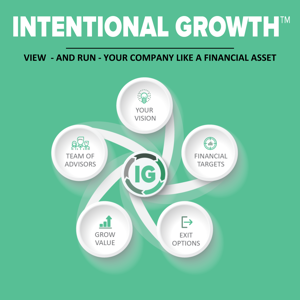
Intentional Growth™ is a podcast is a podcast for entrepreneurs and business owners wanting to view - and run - their company like a financial asset so they can have fun, create wealth, and make an impact. Truly make the entire journey of owning and running a company "worth it".