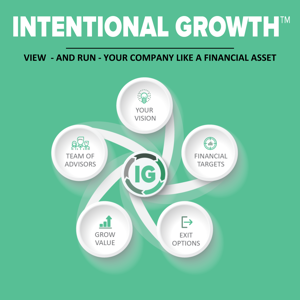
Intentional Growth

Intentional Growth

By Arkona - Intentional GrowthBusinessEntrepreneurshipInvestingManagement
Download on the App Store

Intentional Growth episodes

  • #135: Scaling from $300k to $18 Million [Part 1 The Growth Story]
    Today’s guest has a story so big and honest, I had to break it into two episodes. Michael Kaplan was a financial partner in ZeroRez, a Minnesota based carpet cleaning company. He is super authentic and honest about what it was like to scale a 300 thousand dollar business up to 18 million.
    Part one of this interview focuses on how Michael stumbled into the carpet cleaning business and the ups and downs that he and his partners encountered. We discuss the mistakes Michael and his partners made with money and hiring. Both are costly to a business. Michael also leveraged an economic downturn and existing radio budget to work in the business’s favor. It is really an impressive story of a radio campaign changing things overnight.
    I ask Michael to tell me about how they handled the sudden growth and what the business did to encourage repeat customers. He answered with brutal and refreshing honesty that I think every business owner should hear. If you really want to know what it’s like in the trenches in a business, today’s episode is an accurate depiction.
    What you will learn:
    Michael’s early experience in startups, law, and how he wound up in the carpet cleaning business.
    What the purchase of ZeroRez looked like and why it was a bad deal.
    The mistakes that Michael and his partners made early on.
    How the 2008 housing crisis worked in ZeroRez’s favor.
    The radio budget and how it transformed the business.
    The things Michael thinks made the company successful.
    The hiring mistakes that ZeroRez made early on and how they corrected them.
    Why investing in good people can help you fix outgrown SOPs.
    How Michael shifted his mindset to a value-based one.
    The cliffhanger for part two.
    Takeaways:
    Michael’s story is a great example of what it takes to build a company. It takes balls and you can’t just be passive. Part two of this interview has some great nuggets about working with partners. Everybody has drama in their business, especially behind closed doors. Having a partner changes how you do anything in a business and part two showcases that.
    Links and Resources:
    GEXP Collaborative Red Hook Investments Michael’s email
    About Michael:
    Michael Kaplan spent most of his 20s thinking he would go into some sort of law practice. However, he found himself partnering with a friend to purchase ZeroRez. After a few stumbles and lucky economic breaks, Michael and his partners were able to scale the carpet cleaning business to 18 million dollars. He currently works with Red Hook Investments, a firm that specializes in turnarounds, private equity, and cash infusions. Tune in for the second part of this interview to hear Michael’s complete story.
    1 hr 6 min
  • Scaling from $300k to $18 Million [Part 1 The Growth Story]
    Today’s guest has a story so big and honest, I had to break it into two episodes. Michael Kaplan was a financial partner in ZeroRez, a Minnesota based carpet cleaning company. He is super authentic and honest about what it was like to scale a 300 thousand dollar business up to 18 million.
    Part one of this interview focuses on how Michael stumbled into the carpet cleaning business and the ups and downs that he and his partners encountered. We discuss the mistakes Michael and his partners made with money and hiring. Both are costly to a business. Michael also leveraged an economic downturn and existing radio budget to work in the business’s favor. It is really an impressive story of a radio campaign changing things overnight.
    I ask Michael to tell me about how they handled the sudden growth and what the business did to encourage repeat customers. He answered with brutal and refreshing honesty that I think every business owner should hear. If you really want to know what it’s like in the trenches in a business, today’s episode is an accurate depiction.
    What you will learn:
    Michael’s early experience in startups, law, and how he wound up in the carpet cleaning business.
    What the purchase of ZeroRez looked like and why it was a bad deal.
    The mistakes that Michael and his partners made early on.
    How the 2008 housing crisis worked in ZeroRez’s favor.
    The radio budget and how it transformed the business.
    The things Michael thinks made the company successful.
    The hiring mistakes that ZeroRez made early on and how they corrected them.
    Why investing in good people can help you fix outgrown SOPs.
    How Michael shifted his mindset to a value-based one.
    The cliffhanger for part two.
    Takeaways:
    Michael’s story is a great example of what it takes to build a company. It takes balls and you can’t just be passive. Part two of this interview has some great nuggets about working with partners. Everybody has drama in their business, especially behind closed doors. Having a partner changes how you do anything in a business and part two showcases that.
    Links and Resources:
    GEXP Collaborative Red Hook Investments Michael’s email
    About Michael:
    Michael Kaplan spent most of his 20s thinking he would go into some sort of law practice. However, he found himself partnering with a friend to purchase ZeroRez. After a few stumbles and lucky economic breaks, Michael and his partners were able to scale the carpet cleaning business to 18 million dollars. He currently works with Red Hook Investments, a firm that specializes in turnarounds, private equity, and cash infusions. Tune in for the second part of this interview to hear Michael’s complete story.
    1 hr 6 min
  • #134: 6 Figure Income After the Exit Through a Leveraged Funded Platform
    Bill Smith is a principal consultant for Navigate Group, a strategic business solution provider. Navigate works with business owners and high-level executives to find ways to save the company money through tax benefits and expense evaluation. It is a win-win situation that provides leverage to your company and takes a lot of the stress out of the equation.
    Bill tells me about the leverage funded program and the other services Navigate offers to its clients. We cover who should use this service and why it is essential to getting your business past a hump and moving into a new stage of growth. He also shares why CPAs and banks tend to love Navigate’s involvement and why insurance guys don’t so much. If you’ve hit a wall in your business, then today’s episode is a must-listen for you!
    What you will learn:
    How Navigate got started and why they exist.
    Why you want Navigate involved in your end-game.
    The 3 silos of service Navigate provides its customers.
    How Navigate is different from other loan services.
    Navigate partners with CPA firms.
    How Navigate’s deferred compensation contract works.
    How the system works for the client.
    How the system works for the banks.
    The 3 events that will end a contract and what happens next.
    The pros and cons of release mechanisms in your deals.
    A typical Navigate policy.
    Why Navigate prefers a narrowed focus of services.
    Who should use Navigate’s service?
    The changes to and 4 components of the RND Tax Credit.
    Takeaways:
    You should totally look into this! Call Bill! Call me! This company is providing something valuable and there aren’t a lot of downsides to the process. Look into the Navigate Group and see it’s something worth your time.
    Links and Resources:
    GEXP Collaborative Bill on LinkedIn Navigate Group 617-529-8577 Life After Business Episode 131 Life After Business Episode 107
    About Navigate Group:
    We are a unique group of professionals bringing active consulting services to a wide range of clients. Our unique ability to dig into a business and ask the right questions allows us to bring true value to Business Owners, CEOs and CFOs by providing solutions that increase overall profitability and cash flow. Navigate Strategic Resources will increase overall profitability while providing cost reduction solutions and consulting services. We are a Trusted Source increasing business value and guiding our clients with sound business solutions.
    1 hr
  • 6 Figure Income After the Exit Through a Leveraged Funded Platform
    Bill Smith is a principal consultant for Navigate Group, a strategic business solution provider. Navigate works with business owners and high-level executives to find ways to save the company money through tax benefits and expense evaluation. It is a win-win situation that provides leverage to your company and takes a lot of the stress out of the equation.
    Bill tells me about the leverage funded program and the other services Navigate offers to its clients. We cover who should use this service and why it is essential to getting your business past a hump and moving into a new stage of growth. He also shares why CPAs and banks tend to love Navigate’s involvement and why insurance guys don’t so much. If you’ve hit a wall in your business, then today’s episode is a must-listen for you!
    What you will learn:
    How Navigate got started and why they exist.
    Why you want Navigate involved in your end-game.
    The 3 silos of service Navigate provides its customers.
    How Navigate is different from other loan services.
    Navigate partners with CPA firms.
    How Navigate’s deferred compensation contract works.
    How the system works for the client.
    How the system works for the banks.
    The 3 events that will end a contract and what happens next.
    The pros and cons of release mechanisms in your deals.
    A typical Navigate policy.
    Why Navigate prefers a narrowed focus of services.
    Who should use Navigate’s service?
    The changes to and 4 components of the RND Tax Credit.
    Takeaways:
    You should totally look into this! Call Bill! Call me! This company is providing something valuable and there aren’t a lot of downsides to the process. Look into the Navigate Group and see it’s something worth your time.
    Links and Resources:
    GEXP Collaborative Bill on LinkedIn Navigate Group 617-529-8577 Life After Business Episode 131 Life After Business Episode 107
    About Navigate Group:
    We are a unique group of professionals bringing active consulting services to a wide range of clients. Our unique ability to dig into a business and ask the right questions allows us to bring true value to Business Owners, CEOs and CFOs by providing solutions that increase overall profitability and cash flow. Navigate Strategic Resources will increase overall profitability while providing cost reduction solutions and consulting services. We are a Trusted Source increasing business value and guiding our clients with sound business solutions.
    1 hr
  • #133: Scaling from $10 to $30 Million in 3 yrs through Sales and M&A
    Troy Berg is the owner of Dane Manufacturing. Today he tells me about purchasing the company and how he grew the business by 3x! Troy is a great motivational speaker and has smart advice for my listeners.
    Troy credits 8 acquisitions for his impressive business growth. He used a combination of organic growth and M&A deals. Troy covers both of these subjects and has some awesome insight. He shares his experience with hiring salespeople and why he believes A-players will pay for themselves. We also discuss why M&A is a broken system and how you can work around that brokenness.
    We also discuss the baby boomer problem and how young entrepreneurs can court these business owners and help relieve the problem. Troy is a firm believer in a positive attitude and having confidence in your abilities and business vision.
    There are tons of great takeaways from today’s episode and no matter if you are an established business owner or just getting started.
    What you will learn:
    Troy’s career “working for the man.”
    His shift to the “get in the black or you’re going back” mindset.
    How Troy approached the deal with Dane Manufacturing.
    Why it is hard to say no and why you need too.
    How Dane Manufacturing grew 3 times in 3 years!
    What is organic growth?
    How Troy used organic growth to find great team members.
    The 5 things you need to look at when hiring a top-notch salesperson.
    Why advisors aren’t interested in completing a deal.
    The 3 steps to a successful M&A deal meeting.
    Why attitude and belief are essential.
    Don’t worry about the money.
    The benefits of using an SBA and other advice for finding the right bank for your deal.
    The baby boomer problem and how to combat it.
    The deal that didn’t happen for Troy and why it didn’t work.
    Troy’s book recommendations.
    Troy’s final 2 pieces of advice for the audience.
    Takeaway:
    First and foremost, it is important that you have confidence in your abilities and your vision for your business. Do your homework and look for the investors, partners, and advisors that will help you get where you want with your business and career.
    Links and Resources:
    GEXP Collaborative Troy on LinkedIn The Entrepreneur Roller Coaster: Why Now Is the Time to #JoinTheRide by Darren Hardy The Compound Effect by Darren Hardy DaneMfg.com
    About Troy:
    Troy graduated with a Mechanical Engineering Degree in the 1980s and worked in several manufacturing industries. He worked in the Aerospace and Automotive industry building NASA Space Shuttle and large commercial & military jet systems and then went on to work in the elite production engineering department in a car assembly plant helping launch new car model introductions.
    While pursuing his Master’s Degree in Operations and Business Management, he decided to leave Corporate America and start his own company over twenty-four years ago. That original start-up company was merged with his current company in 2001 after they purchased Dane Manufacturing. They purchased two other ‘Add-on’ companies to join with Dane in 2007 and 2009.
    In 2013, they started another division inside Dane that manufactures our own products for the residential green energy markets making Geothermal
    1 hr 15 min
  • Scaling from $10 to $30 Million in 3 yrs through Sales and M&A
    Troy Berg is the owner of Dane Manufacturing. Today he tells me about purchasing the company and how he grew the business by 3x! Troy is a great motivational speaker and has smart advice for my listeners.
    Troy credits 8 acquisitions for his impressive business growth. He used a combination of organic growth and M&A deals. Troy covers both of these subjects and has some awesome insight. He shares his experience with hiring salespeople and why he believes A-players will pay for themselves. We also discuss why M&A is a broken system and how you can work around that brokenness.
    We also discuss the baby boomer problem and how young entrepreneurs can court these business owners and help relieve the problem. Troy is a firm believer in a positive attitude and having confidence in your abilities and business vision.
    There are tons of great takeaways from today’s episode and no matter if you are an established business owner or just getting started.
    What you will learn:
    Troy’s career “working for the man.”
    His shift to the “get in the black or you’re going back” mindset.
    How Troy approached the deal with Dane Manufacturing.
    Why it is hard to say no and why you need too.
    How Dane Manufacturing grew 3 times in 3 years!
    What is organic growth?
    How Troy used organic growth to find great team members.
    The 5 things you need to look at when hiring a top-notch salesperson.
    Why advisors aren’t interested in completing a deal.
    The 3 steps to a successful M&A deal meeting.
    Why attitude and belief are essential.
    Don’t worry about the money.
    The benefits of using an SBA and other advice for finding the right bank for your deal.
    The baby boomer problem and how to combat it.
    The deal that didn’t happen for Troy and why it didn’t work.
    Troy’s book recommendations.
    Troy’s final 2 pieces of advice for the audience.
    Takeaway:
    First and foremost, it is important that you have confidence in your abilities and your vision for your business. Do your homework and look for the investors, partners, and advisors that will help you get where you want with your business and career.
    Links and Resources:
    GEXP Collaborative Troy on LinkedIn The Entrepreneur Roller Coaster: Why Now Is the Time to #JoinTheRide by Darren Hardy The Compound Effect by Darren Hardy DaneMfg.com
    About Troy:
    Troy graduated with a Mechanical Engineering Degree in the 1980s and worked in several manufacturing industries. He worked in the Aerospace and Automotive industry building NASA Space Shuttle and large commercial & military jet systems and then went on to work in the elite production engineering department in a car assembly plant helping launch new car model introductions.
    While pursuing his Master’s Degree in Operations and Business Management, he decided to leave Corporate America and start his own company over twenty-four years ago. That original start-up company was merged with his current company in 2001 after they purchased Dane Manufacturing. They purchased two other ‘Add-on’ companies to join with Dane in 2007 and 2009.
    In 2013, they started another division inside Dane that manufactures our own products for the residential green energy markets making Geothermal
    1 hr 15 min
  • #132: Philanthropy, Charitable Tax Strategies and a Life After Business
    St. Paul & Minnesota Foundations (SPMCF) helps charitable organizations and investors determine the purpose of funds and measure their impact. It gives funds to the right people, for the right reasons.
    Luther Ranheim is a gift planner at SPMCF. He connects professional advisors, clients, and community members with philanthropic resources to help them reach charitable giving goals. Also, Luther assists non-profit organizations with planned giving and endowment opportunities.
    Where do you want to put your money? How much should you put in? What’s going to be done with it? What are the tax ramifications?
    Luther shares how philanthropy, charitable donations, and non-profits give you a sense of purpose and fit into your life after business. Let Luther and SPMCF guide you on your journey.
    What you will learn:
    Luther’s background in financial services.
    Why Luther transitioned to fundraising and philanthropy.
    SPMCF grants assets to charitable organizations and helps set up philanthropy tools.
    The definition of philanthropy, and how it works.
    How conversations identify your passion, purpose, and possibilities.
    The challenges that come with fundraising and philanthropy.
    The number of nonprofits that SPMCF works with and success to significance stories.
    How to find charities and become involved by using your knowledge to make an impact.
    Who do you know? Who can you call? Connecting with the right people.
    One of the silver linings with baby boomers retiring is the significant transfer of wealth.
    How to track, measure, and evaluate return on investment (ROI).
    SPMCF’s process to evaluate and assess organization’s potential to receive funds.
    The different ways to address your “why” and financial targets.
    Luther offers an overview of donor-advised funds and how they are used.
    What are the different tax implications and write offs?
    Entrepreneurs who sell their business lose their platform for funding charitable donations.
    Create a structure to leave a legacy and continue to support the community.
    Takeaways:
    Anyone can be a philanthropist. You don’t need to have millions of dollars. Find your passion, something that’s near-and-dear to your heart, to make an impact. There’s a way to include philanthropic planning as a part of the exit strategy from your business. Connect with SPMCF to talk about the possibilities of adding a charitable component to your business transition.
    Links and Resources:
    GEXP Collaborative St. Paul & Minnesota Foundations (SPMCF) Luther’s email address651-325-4206 Stephanie Breedlove The Halftime Institute Taxes and Selling a Business: How to Calculate Net Proceeds with Ryan Turbes
    About Luther:
    Luther Ranheim was born and raised in Minneapolis. His love for the Twin Cities is an integral piece to his job as a gift planner at St. Paul & Minnesota Foundations (SPMCF).
    Luther combines his early career knowledge in banking with more recent non-profit development experience. Previously, he worked for Wells Fargo Private Client Services and Bremer Bank. Recently, he has been involved with non-profit development for the MacPhail Center for Music, Greater Twin Cities United Way, Minnesota Orchestra, and Alzheimer’s Association.
    He graduated from Lawrence University. Currently, Luther serves on several boar
    1 hr 3 min
  • Philanthropy, Charitable Tax Strategies and a Life After Business
    St. Paul & Minnesota Foundations (SPMCF) helps charitable organizations and investors determine the purpose of funds and measure their impact. It gives funds to the right people, for the right reasons.
    Luther Ranheim is a gift planner at SPMCF. He connects professional advisors, clients, and community members with philanthropic resources to help them reach charitable giving goals. Also, Luther assists non-profit organizations with planned giving and endowment opportunities.
    Where do you want to put your money? How much should you put in? What’s going to be done with it? What are the tax ramifications?
    Luther shares how philanthropy, charitable donations, and non-profits give you a sense of purpose and fit into your life after business. Let Luther and SPMCF guide you on your journey.
    What you will learn:
    Luther’s background in financial services.
    Why Luther transitioned to fundraising and philanthropy.
    SPMCF grants assets to charitable organizations and helps set up philanthropy tools.
    The definition of philanthropy, and how it works.
    How conversations identify your passion, purpose, and possibilities.
    The challenges that come with fundraising and philanthropy.
    The number of nonprofits that SPMCF works with and success to significance stories.
    How to find charities and become involved by using your knowledge to make an impact.
    Who do you know? Who can you call? Connecting with the right people.
    One of the silver linings with baby boomers retiring is the significant transfer of wealth.
    How to track, measure, and evaluate return on investment (ROI).
    SPMCF’s process to evaluate and assess organization’s potential to receive funds.
    The different ways to address your “why” and financial targets.
    Luther offers an overview of donor-advised funds and how they are used.
    What are the different tax implications and write offs?
    Entrepreneurs who sell their business lose their platform for funding charitable donations.
    Create a structure to leave a legacy and continue to support the community.
    Takeaways:
    Anyone can be a philanthropist. You don’t need to have millions of dollars. Find your passion, something that’s near-and-dear to your heart, to make an impact. There’s a way to include philanthropic planning as a part of the exit strategy from your business. Connect with SPMCF to talk about the possibilities of adding a charitable component to your business transition.
    Links and Resources:
    GEXP Collaborative St. Paul & Minnesota Foundations (SPMCF) Luther’s email address651-325-4206 Stephanie Breedlove The Halftime Institute Taxes and Selling a Business: How to Calculate Net Proceeds with Ryan Turbes
    About Luther:
    Luther Ranheim was born and raised in Minneapolis. His love for the Twin Cities is an integral piece to his job as a gift planner at St. Paul & Minnesota Foundations (SPMCF).
    Luther combines his early career knowledge in banking with more recent non-profit development experience. Previously, he worked for Wells Fargo Private Client Services and Bremer Bank. Recently, he has been involved with non-profit development for the MacPhail Center for Music, Greater Twin Cities United Way, Minnesota Orchestra, and Alzheimer’s Association.
    He graduated from Lawrence University. Currently, Luther serves on several boar
    1 hr 3 min
  • Understanding Business Valuations & Value Drivers: How to Double the Value of Your Company

    Ken Sanginario is the founder of Corporate Value Metrics and creator of the Value Opportunity Profile. He is also an educator who teaches business owners about the importance of intrinsic value. He has a myriad of certifications and credentials that make him the ideal guest for this subject.

    If you are a business owner or looking purchase a business today’s episode is chalked full of information about the Value Opportunity Profile and Company Specific Risk. This standard system will help business owners create a business that stands up to due diligence and draws in the ideal buyer.

    We also discuss the disturbing trend that is surfacing in the market. Many baby boomers are getting ready to go to market, and there aren’t enough buyers to help them all. Because of this issue, only 6-7% of baby boomer sellers get a favorable outcome from their sell.

    Ken is quick to explain how his assessment system is important to the baby boomer issue. He also explains how the assessing process came about and how it has reached an international audience.

    What you will learn:
    • Ken’s time as a business consultant.
    • His experience as a CPA, CFO, and his multiple credentials.
    • How Ken designed the Value Opportunity Profile.
    • Why Ken felt the need to create a standardized process.
    • The Company Specific Risk metric and what it means.
    • The 3 traditional approaches of value assessment.
    • Why the market approach is a shaky approach and multiples are meaningless.
    • Why the income approach is considered the one true method.
    • The pros and cons of value assessment approaches.
    • The 3 parts of the discounted cash flow method.
    • The 8 primary categories to create maximum value.
    • The 50 subcategories that are based off the prime 8.
    • How Ken’s system is connected to due diligence.
    • The 2 components of cost of capital.
    • What is intrinsic value?
    • The difference between a financial and a strategic buyer.
    • The baby boomer issue and how younger business owners can help.
    • Run your company at the highest quality at all times.
    • Takeaways:

      If you are a business owner, Ken’s program is essential to maximizing your business’s value. You need to focus on intrinsic value and create a business that is ready to sell. The more work you put into your value building, the more confident you’ll be at the negotiation table.

      Links and Resources:

      GEXP Collaborative

      Corporate Value Metrics
      Ken’s email address
      508-870-5805

      About Ken:

      Ken Sanginario is the Founder of Corporate Value Metrics, creator of the Value Opportunity Profile® (“VOP®”), and developer of the prestigious new Certified Value Growth Advisortm (“CVGAtm”) training and certification program.

      Ken has more than 30 years of experience providing executive leadership and strategic advisory services to private middle market companies, developing and executing business improvement initiatives, turning around distressed operations, managing M&A transactions, valuing companies, and securing equity and debt growth capital.

      He is an instructor in the training and certification programs of the Alliance of M&A Advisors, Pinnacle Equity Solutions, and the Exit Planning Institute, teaching about b

      1 hr 22 min
    • #131: Understanding Business Valuations & Value Drivers: How to Double the Value of Your Company
      Ken Sanginario is the founder of Corporate Value Metrics and creator of the Value Opportunity Profile. He is also an educator who teaches business owners about the importance of intrinsic value. He has a myriad of certifications and credentials that make him the ideal guest for this subject.
      If you are a business owner or looking purchase a business today’s episode is chalked full of information about the Value Opportunity Profile and Company Specific Risk. This standard system will help business owners create a business that stands up to due diligence and draws in the ideal buyer.
      We also discuss the disturbing trend that is surfacing in the market. Many baby boomers are getting ready to go to market, and there aren’t enough buyers to help them all. Because of this issue, only 6-7% of baby boomer sellers get a favorable outcome from their sell.
      Ken is quick to explain how his assessment system is important to the baby boomer issue. He also explains how the assessing process came about and how it has reached an international audience.
      What you will learn:
      Ken’s time as a business consultant.
      His experience as a CPA, CFO, and his multiple credentials.
      How Ken designed the Value Opportunity Profile.
      Why Ken felt the need to create a standardized process.
      The Company Specific Risk metric and what it means.
      The 3 traditional approaches of value assessment.
      Why the market approach is a shaky approach and multiples are meaningless.
      Why the income approach is considered the one true method.
      The pros and cons of value assessment approaches.
      The 3 parts of the discounted cash flow method.
      The 8 primary categories to create maximum value.
      The 50 subcategories that are based off the prime 8.
      How Ken’s system is connected to due diligence.
      The 2 components of cost of capital.
      What is intrinsic value?
      The difference between a financial and a strategic buyer.
      The baby boomer issue and how younger business owners can help.
      Run your company at the highest quality at all times.
      Takeaways:
      If you are a business owner, Ken’s program is essential to maximizing your business’s value. You need to focus on intrinsic value and create a business that is ready to sell. The more work you put into your value building, the more confident you’ll be at the negotiation table.
      Links and Resources:
      GEXP Collaborative Corporate Value Metrics Ken’s email address508-870-5805
      About Ken:
      Ken Sanginario is the Founder of Corporate Value Metrics, creator of the Value Opportunity Profile® (“VOP®”), and developer of the prestigious new Certified Value Growth Advisortm (“CVGAtm”) training and certification program.
      Ken has more than 30 years of experience providing executive leadership and strategic advisory services to private middle market companies, developing and executing business improvement initiatives, turning around distressed operations, managing M&A transactions, valuing companies, and securing equity and debt growth capital.
      He is an instructor in the training and certification programs of the Alliance of M&A Advisors, Pinnacle Equity Solutions, and the Exit Planning Institute, teaching about business value growth in each program.  He also serves on the advisory board of the MidMarket Alliance as its educational leader, and serves on the Boards of Directors of several privately held companies.
      Ken is a frequent speaker at national and regional conferences and private busin
      1 hr 18 min

    About Intentional Growth

    From the publisher's feed

    Intentional Growth™ is a podcast is a podcast for entrepreneurs and business owners wanting to view - and run - their company like a financial asset so they can have fun, create wealth, and make an impact. Truly make the entire journey of owning and running a company "worth it".