Intentional Growth

Intentional Growth

By Arkona - Intentional GrowthBusinessEntrepreneurshipInvestingManagement
Download on the App Store

Intentional Growth episodes

  • Tax Advantages of an ESOP Exit Strategy

    Today’s guest is Dan Zugell. Dan is the ESOP guy. Dan works for Business Transition Advisors and has been doing ESOPs for 19 years. The reason I wanted to have Dan on the show is because there are a lot of different messages about ESOPs out there. I wanted to get the full ESOP 101. Dan explains law changes, previous failures, how to value the business, payouts, finance structure and more. He totally demystifies the process including what life is like before and after ESOPs.

    In This Episode You’ll Learn:
    • Dan shares how he got involved working with ESOPs by accident. He was helping a business owner exit and discovered that ESOPs were a great way to exit. He ended up starting and running the ESOP department at MetLife.
    • Employee Stock Ownership Plan is a qualified retirement plan. The primary investment is the stock of the company. There are a lot of tax benefits for everyone involved. Employees get shares with no out of pocket costs.
    • Good candidates for ESOPs need a company worth 5 million or more with 20 or more employees and about a million in payroll.
    • They are also an excellent vehicle for passing a business from one generation to another.
    • Dan shares concerns that may rise when looking into ESOPs, and how they are an internal sale with no outside buyer or influence.
    • Tax advantages include deferred capital gains tax, the company gets to write off the sale over a period of years, the company becomes an S Corporation and the profits aren’t taxed by federal or state bodies, and estate planning advantages.
    • The ESOP borrows money from a bank and buys the company stock. The company uses the tax savings to make ESOP contributions that pay off the loan.
    • Dan’s company takes the ESOPs to the banks. Financing is a combination of a bank loan and the seller taking back a portion of the note at market rate interest.
    • What life is like before and after an ESOP. The company owner can still sit on the board and run the company after establishing the ESOP. They even get board fees, salaries, and perks, but they can’t take money out of the company for personal use.  
    • How to pick a trustee and how they ask for the financials.  
    • The importance of preparing for liability and paying employees when they retire by making sure the company knows their numbers and plans properly.
    • Share allocation. The shares are given out over time. An example would be 5 shares a year over 30 years.
    • Takeaways:
      1. The amount of control you have over the process of an ESOP with the structure and financing enables you to reverse engineer your goals into the actual structure.  
      2. You still have control over running the business after a properly structured ESOP s
      3. 0 min
      4. Tax Advantages of an ESOP Exit Strategy
        Today’s guest is Dan Zugell. Dan is the ESOP guy. Dan works for Business Transition Advisors and has been doing ESOPs for 19 years. The reason I wanted to have Dan on the show is because there are a lot of different messages about ESOPs out there. I wanted to get the full ESOP 101. Dan explains law changes, previous failures, how to value the business, payouts, finance structure and more. He totally demystifies the process including what life is like before and after ESOPs.
        In This Episode You’ll Learn:
        Dan shares how he got involved working with ESOPs by accident. He was helping a business owner exit and discovered that ESOPs were a great way to exit. He ended up starting and running the ESOP department at MetLife.
        Employee Stock Ownership Plan is a qualified retirement plan. The primary investment is the stock of the company. There are a lot of tax benefits for everyone involved. Employees get shares with no out of pocket costs.
        Good candidates for ESOPs need a company worth 5 million or more with 20 or more employees and about a million in payroll.
        They are also an excellent vehicle for passing a business from one generation to another.
        Dan shares concerns that may rise when looking into ESOPs, and how they are an internal sale with no outside buyer or influence.
        Tax advantages include deferred capital gains tax, the company gets to write off the sale over a period of years, the company becomes an S Corporation and the profits aren’t taxed by federal or state bodies, and estate planning advantages.
        The ESOP borrows money from a bank and buys the company stock. The company uses the tax savings to make ESOP contributions that pay off the loan.
        Dan’s company takes the ESOPs to the banks. Financing is a combination of a bank loan and the seller taking back a portion of the note at market rate interest.
        What life is like before and after an ESOP. The company owner can still sit on the board and run the company after establishing the ESOP. They even get board fees, salaries, and perks, but they can’t take money out of the company for personal use.  
        How to pick a trustee and how they ask for the financials.  
        The importance of preparing for liability and paying employees when they retire by making sure the company knows their numbers and plans properly.
        Share allocation. The shares are given out over time. An example would be 5 shares a year over 30 years.
        Takeaways:
        The amount of control you have over the process of an ESOP with the structure and financing enables you to reverse engineer your goals into the actual structure.  
        You still have control over running the business after a properly structured ESOP s
        1 hr 17 min
      5. Choosing IPO as an Exit Strategy

        Today’s guest is Cathy Demers. Cathy started her career at IBM and Microsoft before developing a startup with her business partner. With a $10,000 investment, they built up their business and eventually went public for $20 million. Today she’s going to share with us the challenges she encountered along the way.

        In This Episode You’ll Learn:
        • All about the day that Cathy decided to become an entrepreneur, what her business idea was, and how she and her business partner went about gathering up the money needed for them to get started.
        • How Cathy got into using recurring software before it was popular.
        • Why the partnership needed investors and what type they were looking for, as well as why they chose the angel investor that they did.
        • Cathy’s thoughts about the negotiation process.
        • How the growth process went once the company went public, as well as some of the stressors that Cathy didn’t anticipate.
        • Some of the key things that had to be done to prepare for the IPO.
        • What the process was like, Cathy’s emotions, and how her day-to-day role changed.
        • The decision to exit: how Cathy and her partner knew it was the right move.
        • What Cathy did after she exited the company.
        • Takeaways:
          1. Start with the end in mind. If you have an IPO goal, you need to start working now to make your company valuable.
          2. He who has the money wins. Money and influence will dictate the outcome of your sale.
          3. Every business is a game. Being an entrepreneur means playing strategically and knowing what a win entails.
          4.  

            Links and Resources:

            BusinessSuccess.com

            The Business Success Cafe

            Cathy on Facebook

            Cathy on LinkedIn

            Cathy on Twitter

            About Cathy Demers:

            Founder of BusinessSuccess.com, and host of the Business Success Cafe, Cathy Demers is known for her direct but friendly and supportive style as well as her business savvy and “let’s get ‘er done” approach. She combines the wisdom that comes from her vast business experience with her unique talent for helping business owners get fantastic results by being clear, staying focused, and taking inspired action.

            When it comes to proven business success, Cathy Demers is not a “wanna be”. In fact, she co-founded a company with a tiny $10K investment and successfully launched an IPO, turning it into a publicly listed company worth over $20M.

            0 min
          5. Choosing IPO as an Exit Strategy
            Today’s guest is Cathy Demers. Cathy started her career at IBM and Microsoft before developing a startup with her business partner. With a $10,000 investment, they built up their business and eventually went public for $20 million. Today she’s going to share with us the challenges she encountered along the way.
            In This Episode You’ll Learn:
            All about the day that Cathy decided to become an entrepreneur, what her business idea was, and how she and her business partner went about gathering up the money needed for them to get started.
            How Cathy got into using recurring software before it was popular.
            Why the partnership needed investors and what type they were looking for, as well as why they chose the angel investor that they did.
            Cathy’s thoughts about the negotiation process.
            How the growth process went once the company went public, as well as some of the stressors that Cathy didn’t anticipate.
            Some of the key things that had to be done to prepare for the IPO.
            What the process was like, Cathy’s emotions, and how her day-to-day role changed.
            The decision to exit: how Cathy and her partner knew it was the right move.
            What Cathy did after she exited the company.
            Takeaways:
            Start with the end in mind. If you have an IPO goal, you need to start working now to make your company valuable.
            He who has the money wins. Money and influence will dictate the outcome of your sale.
            Every business is a game. Being an entrepreneur means playing strategically and knowing what a win entails.
             
            Links and Resources:
            BusinessSuccess.com
            The Business Success Cafe
            Cathy on Facebook
            Cathy on LinkedIn
            Cathy on Twitter
            About Cathy Demers:
            Founder of BusinessSuccess.com, and host of the Business Success Cafe, Cathy Demers is known for her direct but friendly and supportive style as well as her business savvy and “let’s get ‘er done” approach. She combines the wisdom that comes from her vast business experience with her unique talent for helping business owners get fantastic results by being clear, staying focused, and taking inspired action.
            When it comes to proven business success, Cathy Demers is not a “wanna be”. In fact, she co-founded a company with a tiny $10K investment and successfully launched an IPO, turning it into a publicly listed company worth over $20M.
            1 hr 1 min
          6. Exit Your Business to Find Passion Again

            Exiting your business with zero regrets is a goal that many of us have. Today’s guest, Troy Schuette, owned a waste disposal business for 23 years. He made his decisions carefully so he knew he’d be able to exit happily without wishing he’d done things differently. He’s going to talk to us today about the process he went through, from creating his valuations to choosing his buyers to finally signing his closing documents. You won’t want to miss Troy’s story!

            In This Episode You’ll Learn:
            • How and why Troy decided to become an entrepreneur.
            • Where Troy got his passion: Garbage, recycling, and scrap were not actually his passion, but they were the vehicle for his passion.
            • Some of the pitfalls of growing too quickly, as well as what finally clued Troy in that he had lost his passion.
            • How Troy, with the help of his father, decided to sell and how he determined the value.
            • The mental process that Troy went through to choose a buyer.
            • Some of the lifestyle changes that went along with exiting the business.
            • The emotions that Troy went through on the closing date.
            • How Troy told his employees about the sale of the company.
            • What Troy did to let his brain rest after he exited his company.
            • Takeaways:
              1. Self-reflection: Troy recognized that he wasn’t happy anymore and he knew himself well enough to make a plan that he would be happy with.
              2. Knowing numbers: Troy really had to know what his business was worth in order to take a calculated risk and make a good decision.
              3. Retirement: You need to make sure you’re going to spend your days with who you want and do what you love. Make retirement into just having a blast all day, every day.
              4. About Troy Schuette:

                Email Troy

                0 min
              5. Exit Your Business to Find Passion Again
                Exiting your business with zero regrets is a goal that many of us have. Today’s guest, Troy Schuette, owned a waste disposal business for 23 years. He made his decisions carefully so he knew he’d be able to exit happily without wishing he’d done things differently. He’s going to talk to us today about the process he went through, from creating his valuations to choosing his buyers to finally signing his closing documents. You won’t want to miss Troy’s story!
                In This Episode You’ll Learn:
                How and why Troy decided to become an entrepreneur.
                Where Troy got his passion: Garbage, recycling, and scrap were not actually his passion, but they were the vehicle for his passion.
                Some of the pitfalls of growing too quickly, as well as what finally clued Troy in that he had lost his passion.
                How Troy, with the help of his father, decided to sell and how he determined the value.
                The mental process that Troy went through to choose a buyer.
                Some of the lifestyle changes that went along with exiting the business.
                The emotions that Troy went through on the closing date.
                How Troy told his employees about the sale of the company.
                What Troy did to let his brain rest after he exited his company.
                Takeaways:
                Self-reflection: Troy recognized that he wasn’t happy anymore and he knew himself well enough to make a plan that he would be happy with.
                Knowing numbers: Troy really had to know what his business was worth in order to take a calculated risk and make a good decision.
                Retirement: You need to make sure you’re going to spend your days with who you want and do what you love. Make retirement into just having a blast all day, every day.
                About Troy Schuette:
                Email Troy
                53 min
              6. ‘The SBA Guy’ Talks Business Financing

                Financing is an important aspect when buying or selling a business. The SBA can play a huge role in this process. An important step in the process is knowing where you are trying to go before knowing what tools you will need to use. When structuring a deal the fundamentals come first before the deal structure.

                Today we’ll be talking to John Thwing who is known as The SBA Guy. John has closed over 400 SBA financed transactions and is currently at Anchor Bank. Today, John shares a ton of insights about SBA structure, the loans, how they work, and the role the lender plays in relationship to the buyer, seller, and broker. He also provides great insights on all the deals that he has done, and what constitutes a qualified buyer for going into a business and how a seller can use the SBA to exit their business.

                In This Episode You’ll Learn:
                • John shares how he started at his first bank in the mail department and ended up becoming The SBA Guy today.
                • How the role of the SBA is to guarantee loans for financial institutions.
                • Deal structures and restrictions with SBA financing.
                • How the SBA tool may not be a good fit and how John helps sellers and agents recognize that.
                • How cash flow is the driver of value, and banks want loans that will be repaid.
                • Due diligence, determining value and prequalifying for financing.
                • How SBA lenders validate 3 years of tax records for ecommerce businesses.
                • Marketplaces for matching buyers and sellers.
                • How hiring an appraiser is not always the best first step.
                • Change of ownership is not part of the SBA loan structure.
                • Qualifying buyers and looking at liquidity, transferable skills, background, and expenses.
                • Discuss financial fundamentals and listen to the market and your advisors.
                • Takeaways:
                  1. The resume and skill sets of the buyer and the seller building themselves out of the company affect the transferability of the business.
                  2. Going from a technician to an entrepreneur to becoming an investor and replacing yourself.
                  3. Make sure that your lender understands the structure of the SBA being a tool. 
                  4.  

                    Links and resources:

                    Valued Advantage

                    SBA

                    Anchor Bank

                    About John Thwing:

                    John Thwing is The SBA Guy. John is one of the busiest lenders in Minn

                    59 min
                  5. ‘The SBA Guy’ Talks Business Financing
                    Financing is an important aspect when buying or selling a business. The SBA can play a huge role in this process. An important step in the process is knowing where you are trying to go before knowing what tools you will need to use. When structuring a deal the fundamentals come first before the deal structure.
                    Today we’ll be talking to John Thwing who is known as The SBA Guy. John has closed over 400 SBA financed transactions and is currently at Anchor Bank. Today, John shares a ton of insights about SBA structure, the loans, how they work, and the role the lender plays in relationship to the buyer, seller, and broker. He also provides great insights on all the deals that he has done, and what constitutes a qualified buyer for going into a business and how a seller can use the SBA to exit their business.
                    In This Episode You’ll Learn:
                    John shares how he started at his first bank in the mail department and ended up becoming The SBA Guy today.
                    How the role of the SBA is to guarantee loans for financial institutions.
                    Deal structures and restrictions with SBA financing.
                    How the SBA tool may not be a good fit and how John helps sellers and agents recognize that.
                    How cash flow is the driver of value, and banks want loans that will be repaid.
                    Due diligence, determining value and prequalifying for financing.
                    How SBA lenders validate 3 years of tax records for ecommerce businesses.
                    Marketplaces for matching buyers and sellers.
                    How hiring an appraiser is not always the best first step.
                    Change of ownership is not part of the SBA loan structure.
                    Qualifying buyers and looking at liquidity, transferable skills, background, and expenses.
                    Discuss financial fundamentals and listen to the market and your advisors.
                    Takeaways:
                    The resume and skill sets of the buyer and the seller building themselves out of the company affect the transferability of the business.
                    Going from a technician to an entrepreneur to becoming an investor and replacing yourself.
                    Make sure that your lender understands the structure of the SBA being a tool. 
                     
                    Links and resources:
                    Valued Advantage
                    SBA
                    Anchor Bank
                    About John Thwing:
                    John Thwing is The SBA Guy. John is one of the busiest lenders in Minn
                    59 min
                  6. Find Your Purpose in Business and Life

                    The valuation of your life work and business is a direct reflection of the leadership remaining in place after you exit. What does it mean to build a company of leaders? How do you do that? What does it mean to be increasing wealth so everyone profits?

                    Today we’ll be talking to Kevin McCarthy, the Chief Leadership Officer of On-Purpose Partners, a deep strategy and planning business advisory firm. Kevin is also the author of several books, including The On-Purpose Person and The On-Purpose Business Person. Today he’s going to talk to us about how to find your purpose and his multi-decade journey trying to reinvent how an entrepreneur can change his or her business.

                    In This Episode You’ll Learn:
                    • Information about Kevin’s background that helped him get where he is now as the CLO of On-Purpose Partners.
                    • Where entrepreneurs go off-course when it comes to identifying and sticking to their purposes.
                    • What purpose means to Kevin as well as how having purpose minimizes confusion.
                    • How the On-Purpose Pal can help you stay aligned with your values, as well why Kevin recommends a two-word purpose statement.
                    • How to figure out your purpose without having a tragedy.
                    • How an amortization chart can help you get on track with your purpose, as well as what “hellegation” means and how it might apply to you.
                    • Tips on how finding your purpose relates to your exit plan.
                    • An explanation of the Chief Leadership Officer title.
                    • Takeaways:
                      1. The greatest fear is that of exposure: You don’t have to have it all figured out.
                      2. Balance vs. integration: Being able to integrate everything in your life is important.
                      3. Hellegation: It’s the state of not being able to delegate, and it’s vital to get past it.
                      4.  

                        Links and resources:

                        Valued Advantage

                        CLO Now

                        On Purpose

                        The On-Purpose Person

                        The On-Purpose Business Person

                        I’m OK–You’re OK

                        The E-Myth

                        The On-Purpose Pal

                        More Books by Kevin McCarthy

                        Onpurpose.me

                        About Kevin McCarthy:

                        Kevin McCarthy is a natural entrepreneur with a classic business school education. His MBA is from The Darden School on the grounds of the University of Virginia, and his undergraduate BS business degree is in Business and Economics from Lehigh University. He lives in Winter Park, Florida, which is near Orlando.

                        The best ways to get in touch with Kevin are through OnPurpose.com, by email, and through LinkedIn:

                        Email Kevin

                        Kevin McCarthy on LinkedIn

                        0 min
                      5. Find Your Purpose in Business and Life
                        The valuation of your life work and business is a direct reflection of the leadership remaining in place after you exit. What does it mean to build a company of leaders? How do you do that? What does it mean to be increasing wealth so everyone profits?
                        Today we’ll be talking to Kevin McCarthy, the Chief Leadership Officer of On-Purpose Partners, a deep strategy and planning business advisory firm. Kevin is also the author of several books, including The On-Purpose Person and The On-Purpose Business Person. Today he’s going to talk to us about how to find your purpose and his multi-decade journey trying to reinvent how an entrepreneur can change his or her business.
                        In This Episode You’ll Learn:
                        Information about Kevin’s background that helped him get where he is now as the CLO of On-Purpose Partners.
                        Where entrepreneurs go off-course when it comes to identifying and sticking to their purposes.
                        What purpose means to Kevin as well as how having purpose minimizes confusion.
                        How the On-Purpose Pal can help you stay aligned with your values, as well why Kevin recommends a two-word purpose statement.
                        How to figure out your purpose without having a tragedy.
                        How an amortization chart can help you get on track with your purpose, as well as what “hellegation” means and how it might apply to you.
                        Tips on how finding your purpose relates to your exit plan.
                        An explanation of the Chief Leadership Officer title.
                        Takeaways:
                        The greatest fear is that of exposure: You don’t have to have it all figured out.
                        Balance vs. integration: Being able to integrate everything in your life is important.
                        Hellegation: It’s the state of not being able to delegate, and it’s vital to get past it.
                         
                        Links and resources:
                        Valued Advantage
                        CLO Now
                        On Purpose
                        The On-Purpose Person
                        The On-Purpose Business Person
                        I’m OK–You’re OK
                        The E-Myth
                        The On-Purpose Pal
                        More Books by Kevin McCarthy
                        Onpurpose.me
                        About Kevin McCarthy:
                        Kevin McCarthy is a natural entrepreneur with a classic business school education. His MBA is from The Darden School on the grounds of the University of Virginia, and his undergraduate BS business degree is in Business and Economics from Lehigh University. He lives in Winter Park, Florida, which is near Orlando.
                        The best ways to get in touch with Kevin are through OnPurpose.com, by email, and through LinkedIn:
                        Email Kevin
                        Kevin McCarthy on LinkedIn
                        55 min

                      About Intentional Growth

                      From the publisher's feed

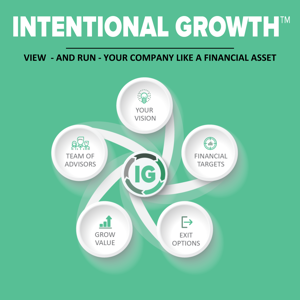
                      Intentional Growth™ is a podcast is a podcast for entrepreneurs and business owners wanting to view - and run - their company like a financial asset so they can have fun, create wealth, and make an impact. Truly make the entire journey of owning and running a company "worth it".